Artwork
Interior
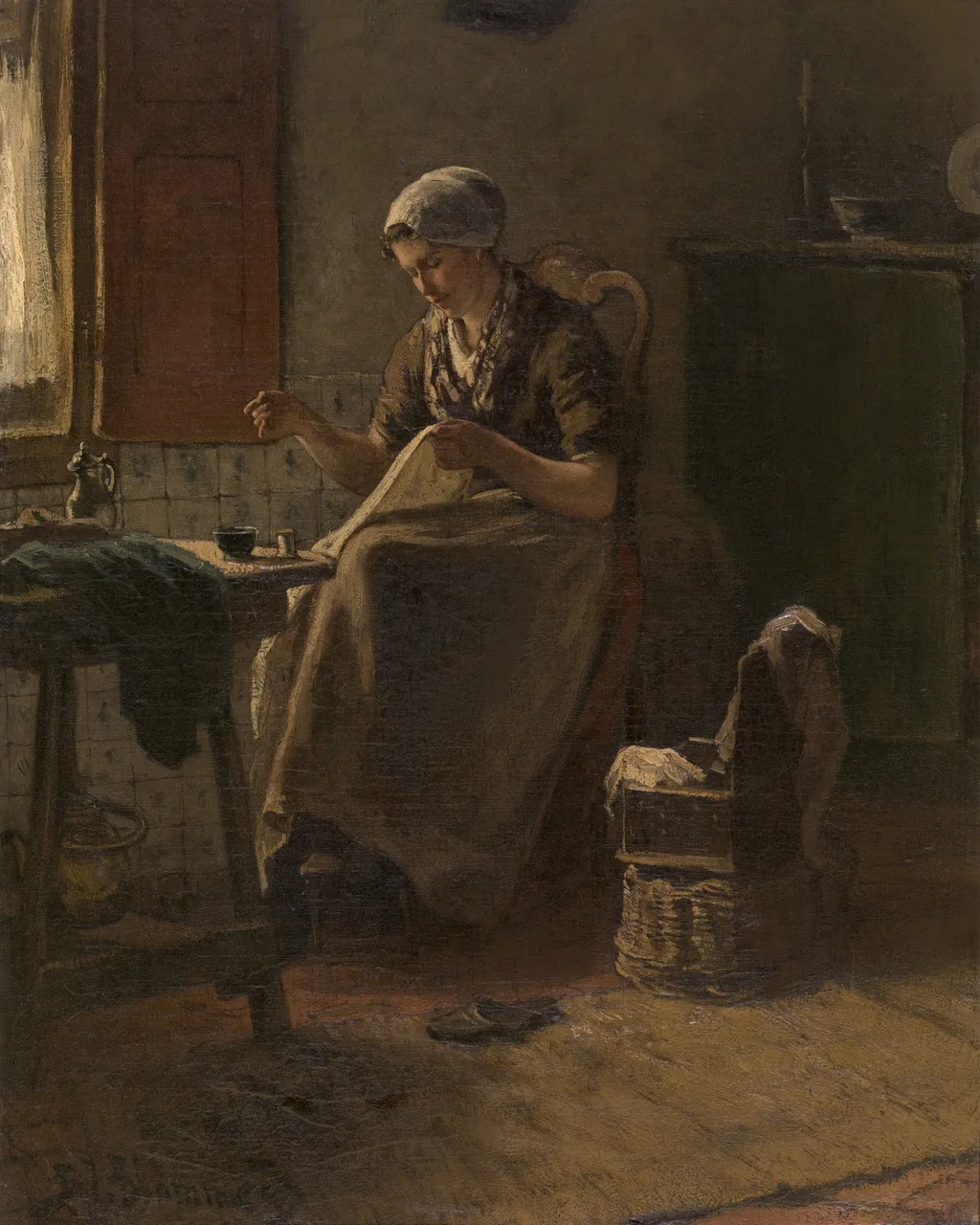
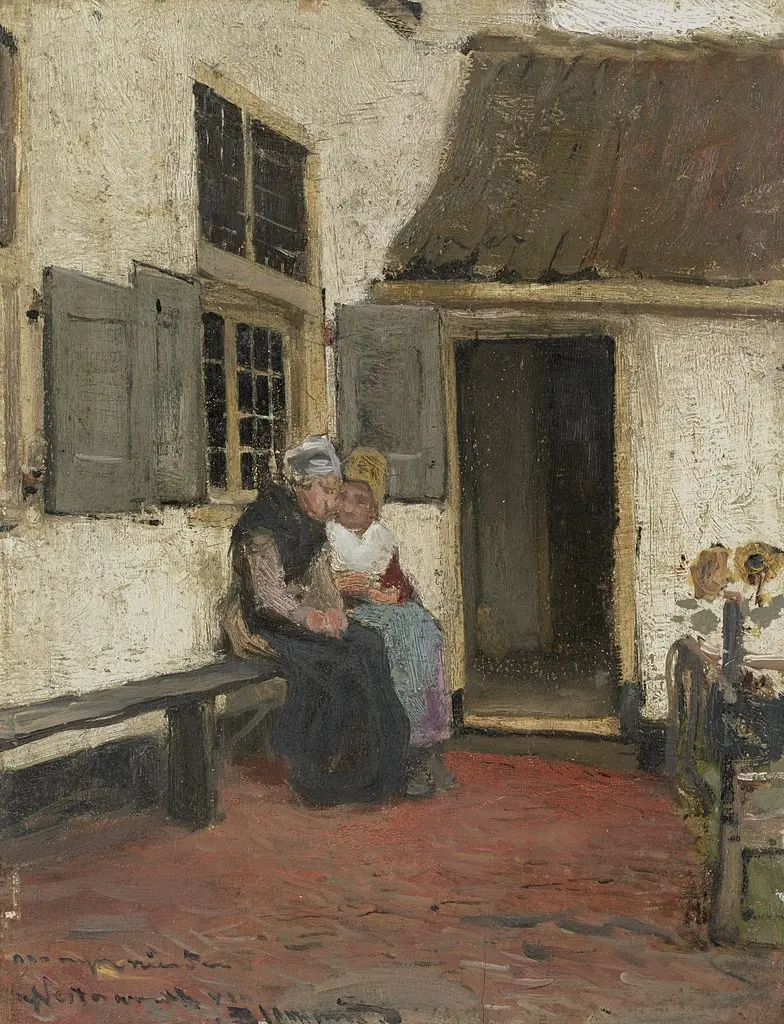
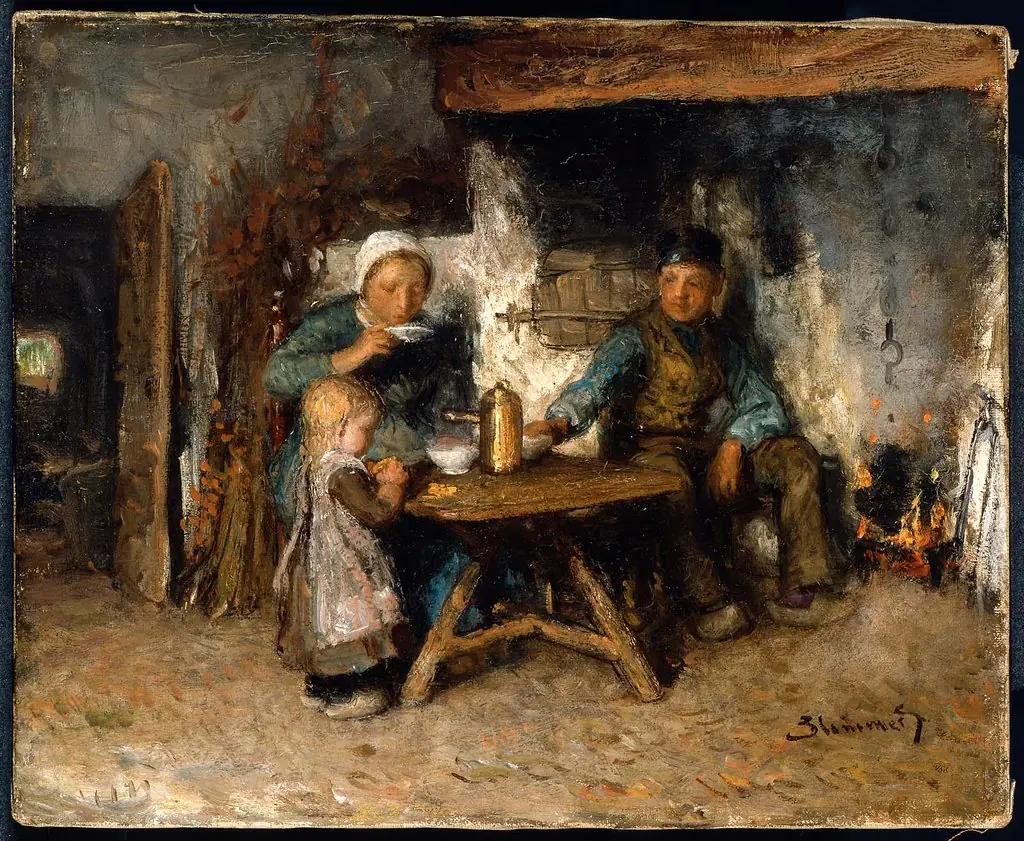
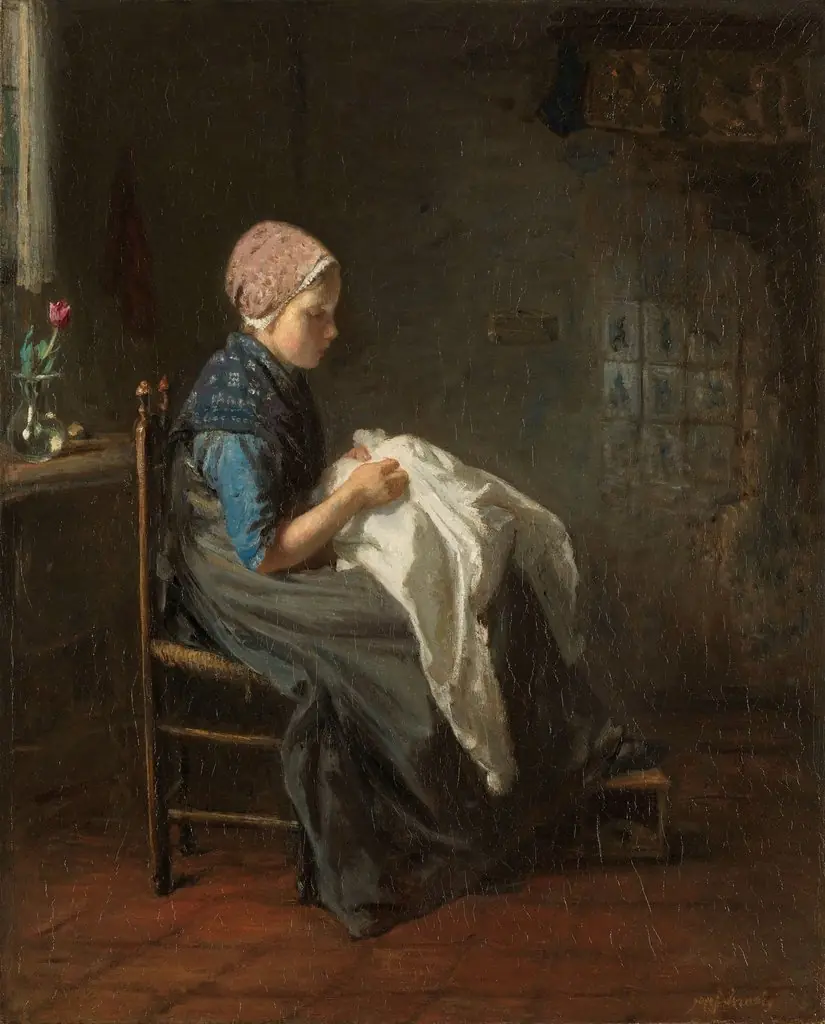
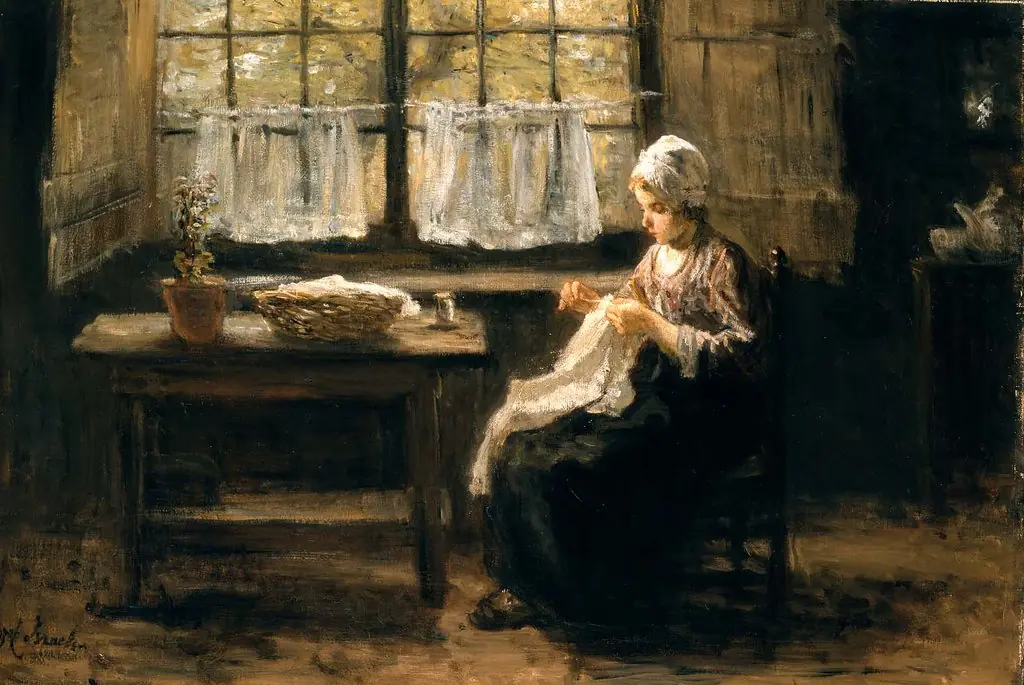
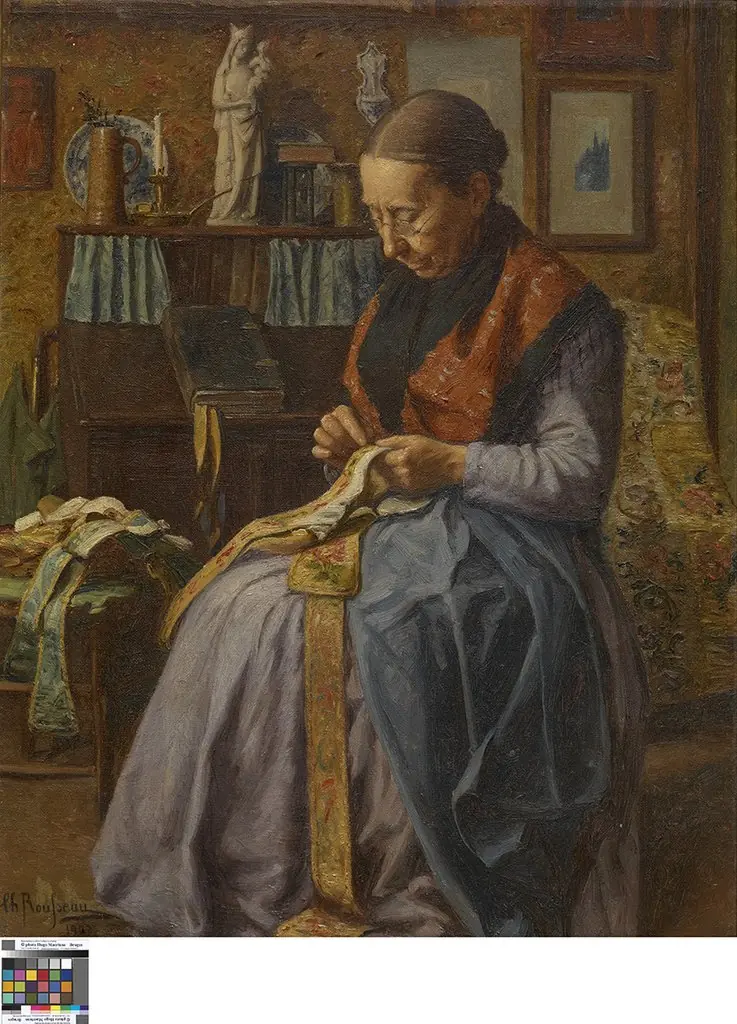
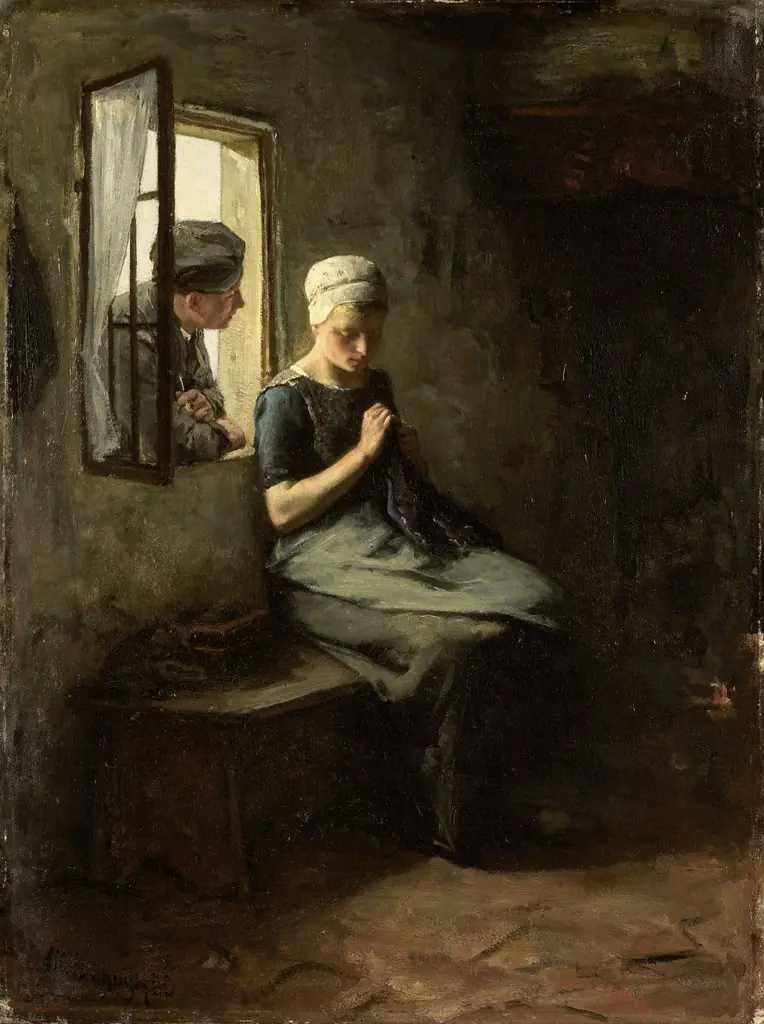
Interior is an oil painting by Bernard Blommers. It dates from 1889 and is held in the collection of the Royal Museum of Fine Arts Antwerp.
About this work
Overview
This work exemplifies his shift toward a more expressive brushwork while retaining thematic continuity with his earlier focus on labor and introspection.
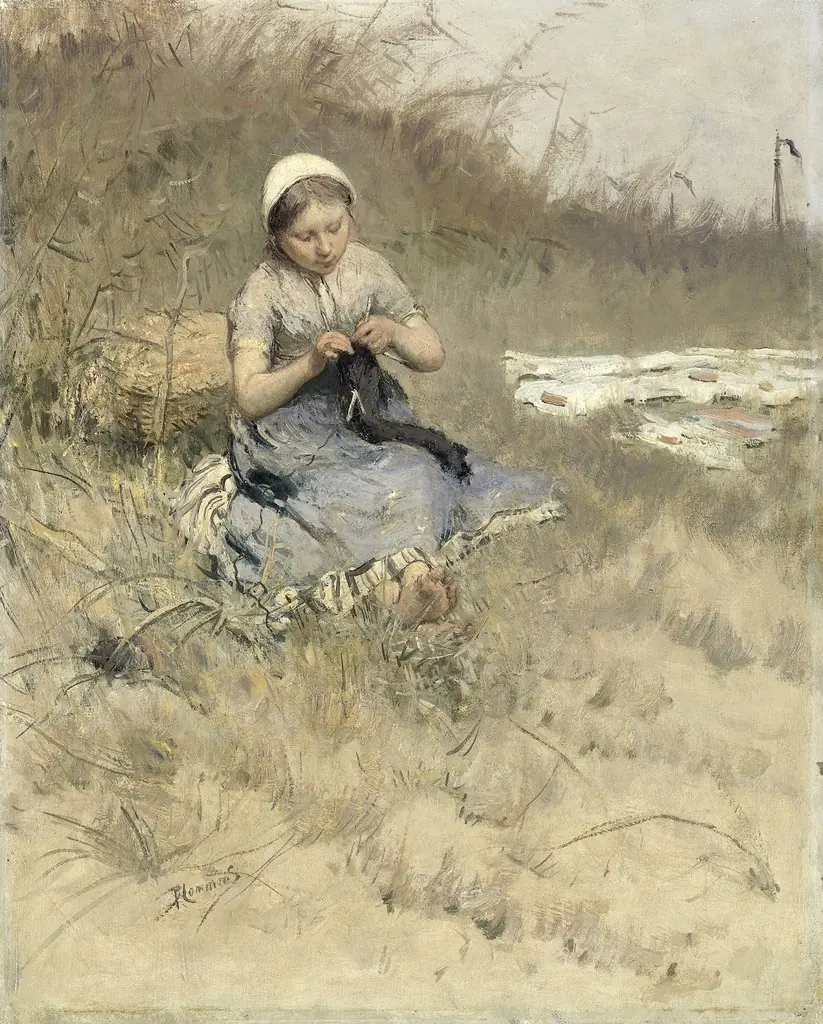
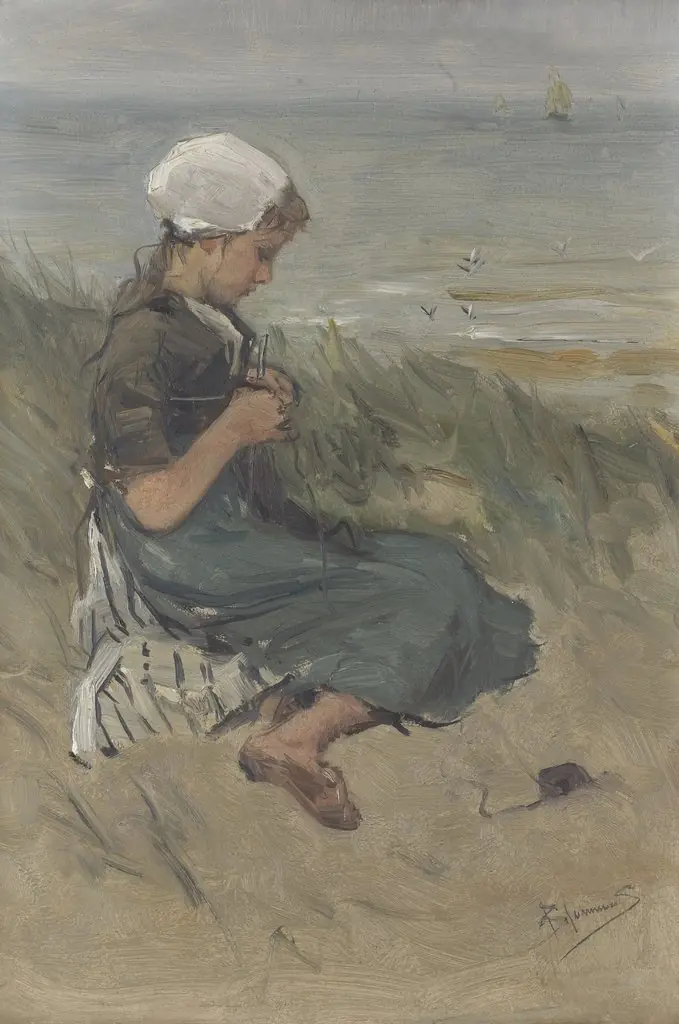
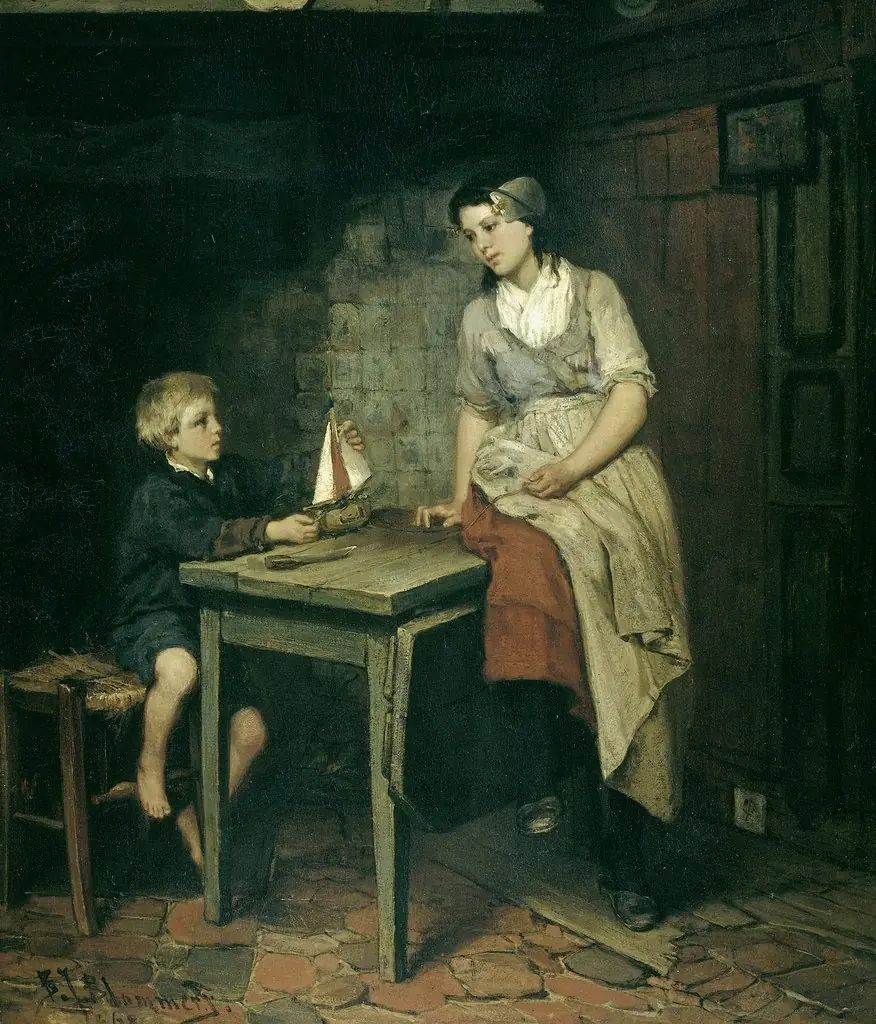
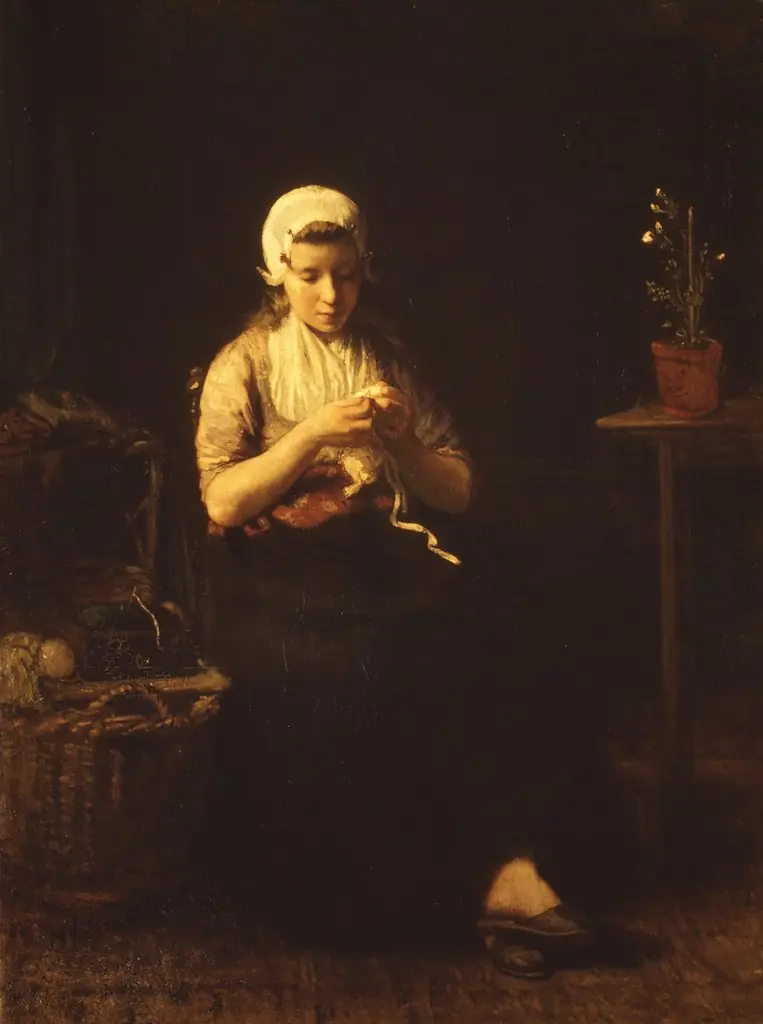
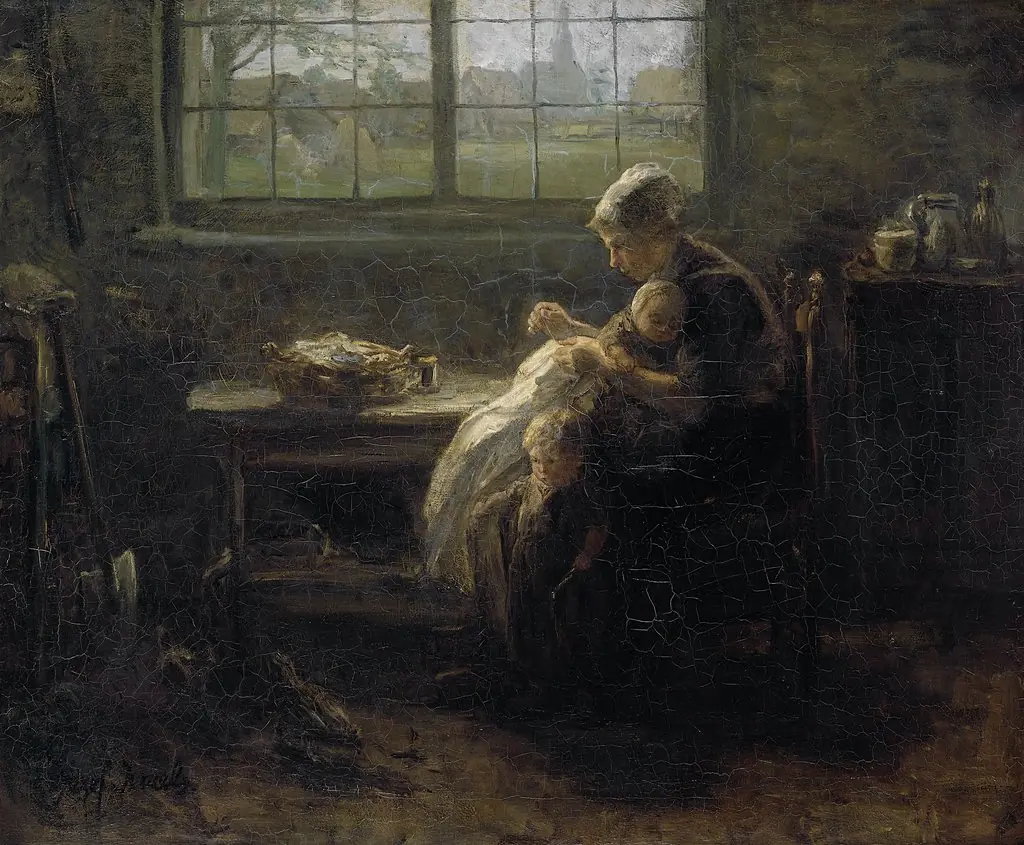
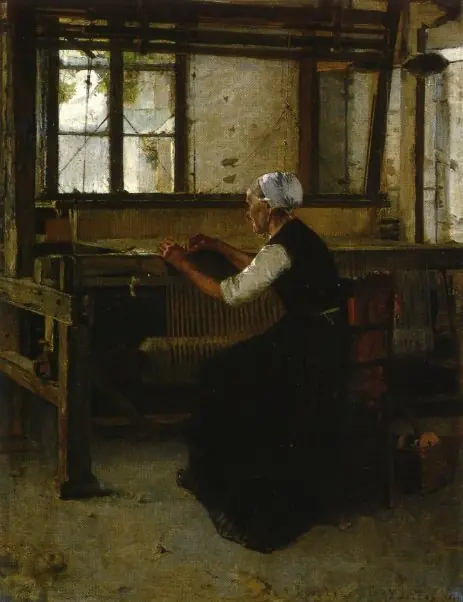
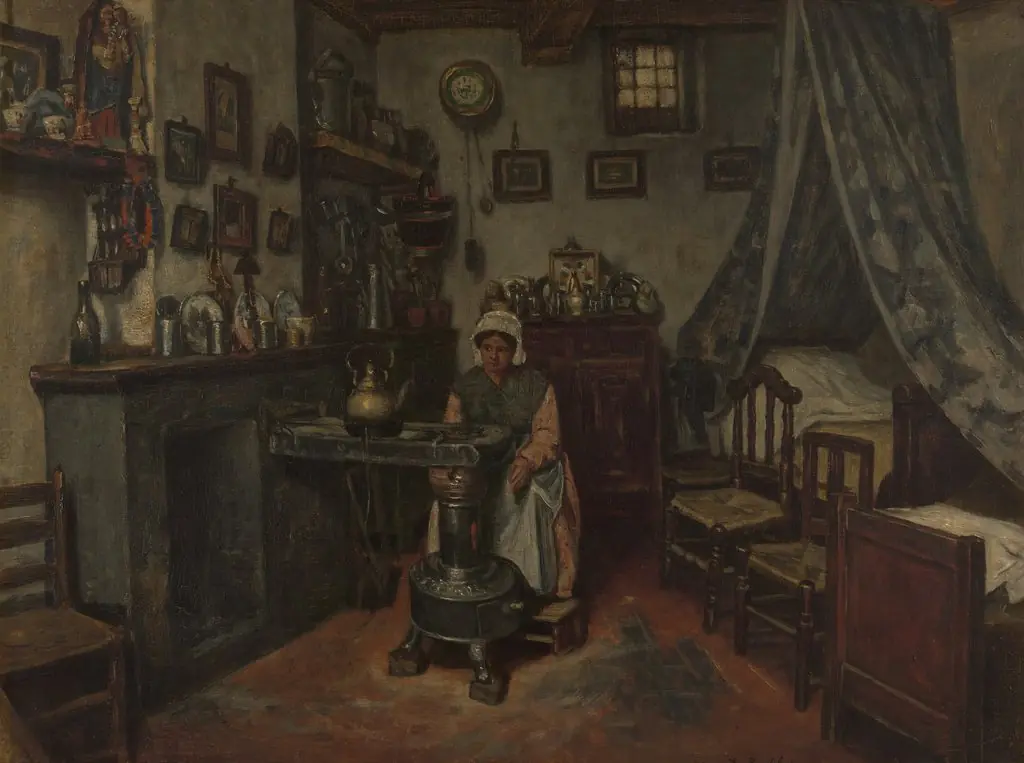
Created around 1889 by Dutch artist Bernard Blommers, *Interior* is an oil painting that captures a solitary woman engaged in needlework within a modest domestic space. A member of the Hague School, Blommers specialized in quiet, everyday scenes, often portraying rural and maritime life with sensitivity. This work exemplifies his shift toward a more expressive brushwork while retaining thematic continuity with his earlier focus on labor and introspection.
Subject & Meaning
The painting centers on a woman absorbed in her needlework, her head bowed and hands occupied, suggesting a moment of quiet routine. Her headscarf and simple dress indicate modest means, while the stillness of the scene evokes contemplation rather than narrative. The absence of overt drama or interaction emphasizes the dignity of private, repetitive labor, inviting reflection on the rhythms of domestic life without sentimentality.
Technique & Style
Blommers employs a restrained palette of muted earth tones, with a narrow band of light entering from the left to define the room’s spatial depth. His brushwork is looser than in his earlier works, allowing texture to emerge in fabric and wood without overdetailing. The dim interior is rendered with subtle gradations, enhancing the sense of intimacy and quietude, while the figure remains the focal point through contrast and placement.
History & Provenance
The painting has been held in the collection of the Royal Museum of Fine Arts Antwerp since at least the late 19th century. It was acquired during a period when the museum actively expanded its holdings of Dutch and Belgian genre paintings. No significant changes in ownership are documented, and it has remained in institutional care, reflecting its status as a representative work of regional realism.
Context
In the late 1880s, Dutch artists of the Hague School turned away from romanticized landscapes toward intimate portrayals of working-class life. Blommers, influenced by Jozef Israëls, contributed to this movement by depicting domestic solitude with psychological nuance. *Interior* aligns with broader European trends in naturalism, where ordinary moments were treated with solemnity, resisting theatricality in favor of emotional restraint.
Legacy
Though not widely exhibited outside the Low Countries, *Interior* remains a quiet testament to Blommers’ commitment to unadorned realism. It reflects a broader artistic interest in the emotional weight of daily tasks, influencing later generations of regional painters who sought to elevate the mundane. The painting endures as a study in stillness, valued for its understated humanity rather than its public acclaim.
Own this work as a print
Artist & collection
Artist
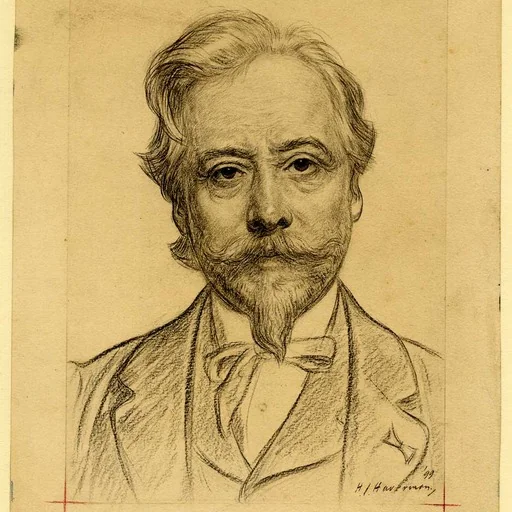
Bernardus Johannes (Bernard) Blommers (30 January 1845 in The Hague – 12 December 1914 in The Hague) was a Dutch etcher and painter of the Hague School.