Artwork
Henry VIII, Elizabeth I, and Edward VI
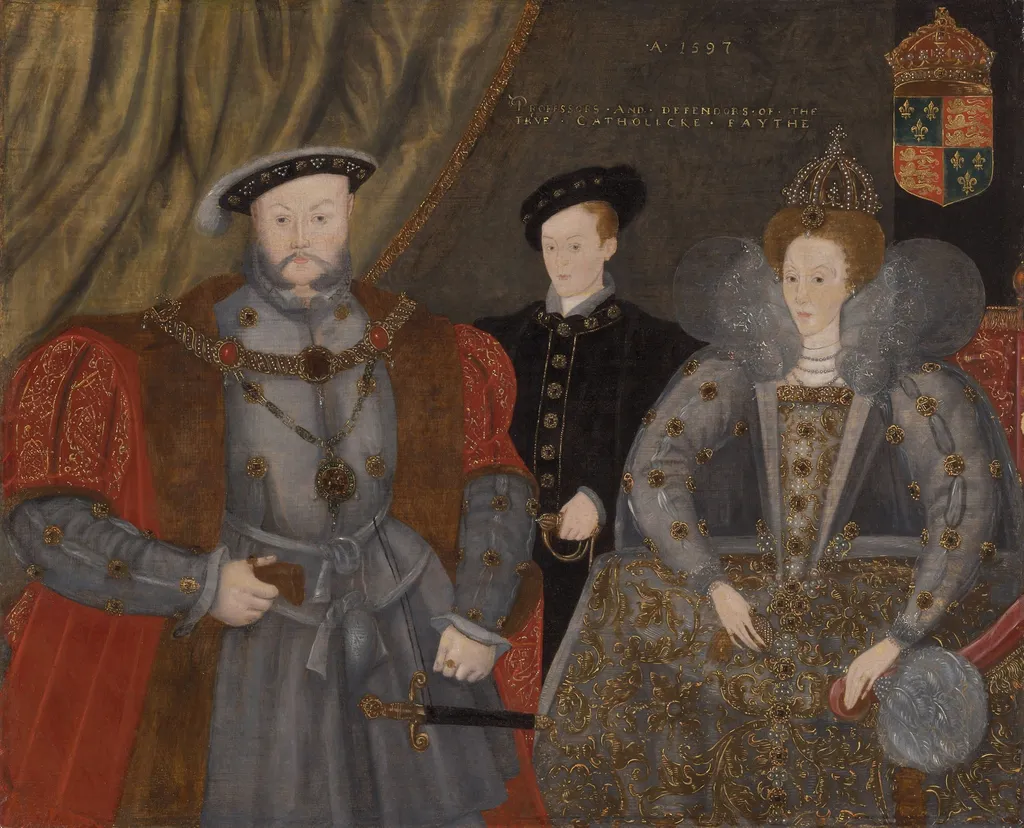
Henry VIII, Elizabeth I, and Edward VI is an oil painting by the Mannerist artist Unknown. It dates from 1599 and is held in the collection of the Art Institute of Chicago. This oil painting presents three Tudor monarchs—Henry VIII, Edward VI, and Elizabeth I—in a formal, hierarchical arrangement.
About this work
Overview
The background’s dark wall and draped curtain focus attention on the subjects, while the coat of arms reinforces their dynastic authority.
This oil painting presents three Tudor monarchs—Henry VIII, Edward VI, and Elizabeth I—in a formal, hierarchical arrangement. The composition emphasizes their royal status through rigid posture, rich textiles, and symbolic objects. The figures are arranged left to right by age and succession, with Henry on the left, Edward in the center, and Elizabeth on the right. The background’s dark wall and draped curtain focus attention on the subjects, while the coat of arms reinforces their dynastic authority.
Subject & Meaning
The painting visually asserts the continuity of Tudor rule. Henry VIII, holding a sword, symbolizes martial power and sovereign authority. Edward VI, in youthful black attire, represents the male heir and religious reform. Elizabeth I, seated and crowned, signifies legitimacy and stability. Together, they form a dynastic triad, communicating succession and divine right. The inclusion of all three underscores the legitimacy of Elizabeth’s reign following her brother’s death and her father’s legacy.
Technique & Style
The painting employs precise, detailed brushwork to render fabric, jewelry, and armor. Gold thread in embroidery and metallic highlights on crowns and collars create a luminous effect against dark backgrounds. The figures are rendered with stiff, frontal poses typical of court portraiture, prioritizing symbolic presence over naturalism. The limited palette of red, gold, and gray enhances the sense of formality, while the flat, unmodeled background avoids distraction from the subjects’ regalia.
History & Provenance
The painting likely dates to the late 16th century, produced after Edward VI’s death and during Elizabeth I’s reign. It was not created from life, as the figures were painted together long after Henry VIII’s death. It may have been commissioned to legitimize Elizabeth’s rule by visually linking her to her father and brother. Its early ownership is undocumented, but it entered public collections in the 19th century, where it was identified as a composite Tudor portrait.
Context
In post-Reformation England, visual representations of royalty served political ends. Portraits like this reinforced the Tudor claim to power amid religious upheaval and succession anxieties. Depicting Henry, Edward, and Elizabeth together was a deliberate act of historical consolidation, countering narratives of instability. Such images circulated among elites and were displayed in palaces to affirm continuity, legitimacy, and the monarch’s sacred role in governing the realm.
Legacy
This painting remains a key example of Tudor dynastic imagery, illustrating how portraiture functioned as state propaganda. Its composite nature reflects the era’s willingness to manipulate historical time for political clarity. Though not a contemporary record, it shaped later perceptions of the Tudor line. Modern historians value it not for accuracy, but for what it reveals about the visual language of power in early modern England.
Artist & collection

 Domestic Scene
 Giacomo and Cardinal Marco, investing Andrea, Abbot of San Zeno, with his Benefice
 The Nymph of Fontainebleau
 Portrait of a Woman
 Madonna and Child with Saints in the Enclosed Garden
 Venus and Minerva
 Family Group of Four on Sofa
 Wall painting from Room H of the Villa of P. Fannius Synistor at Boscoreale
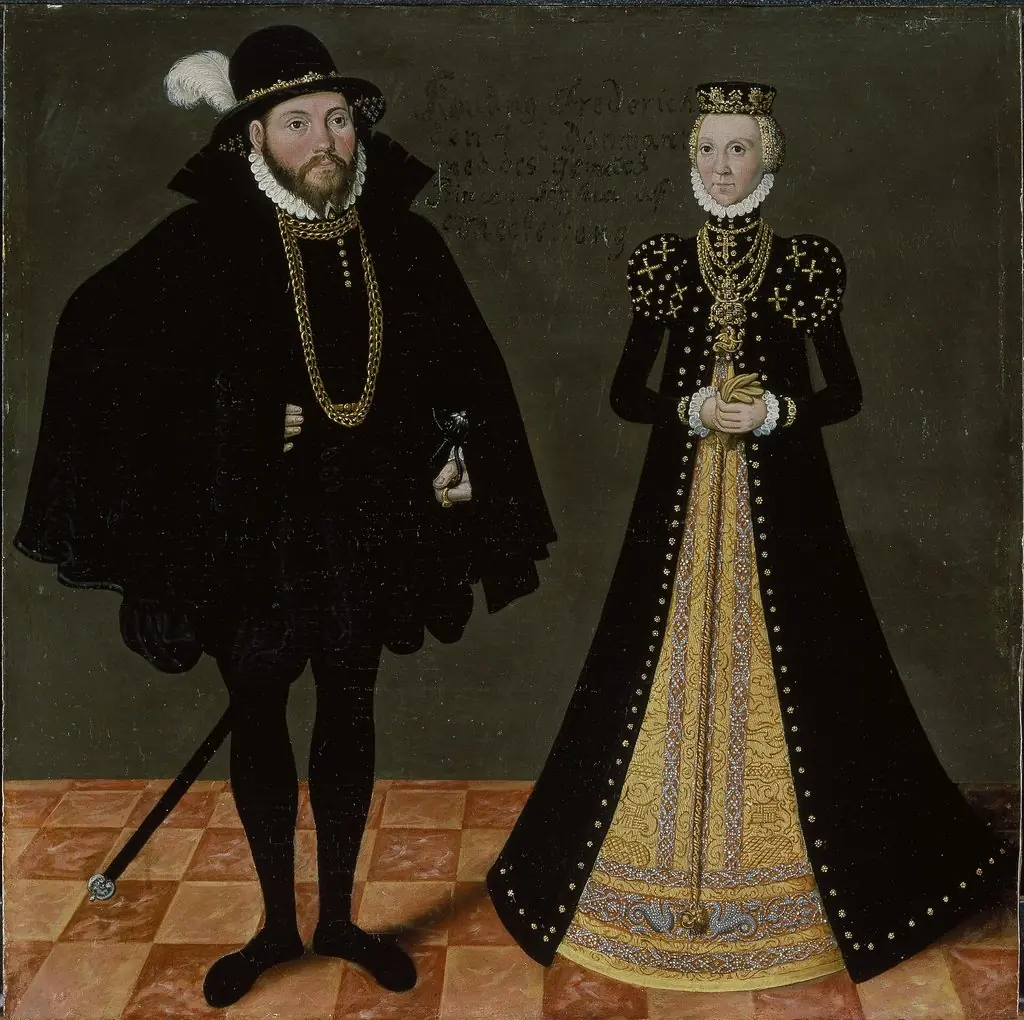 Okänt tyskt furstepar
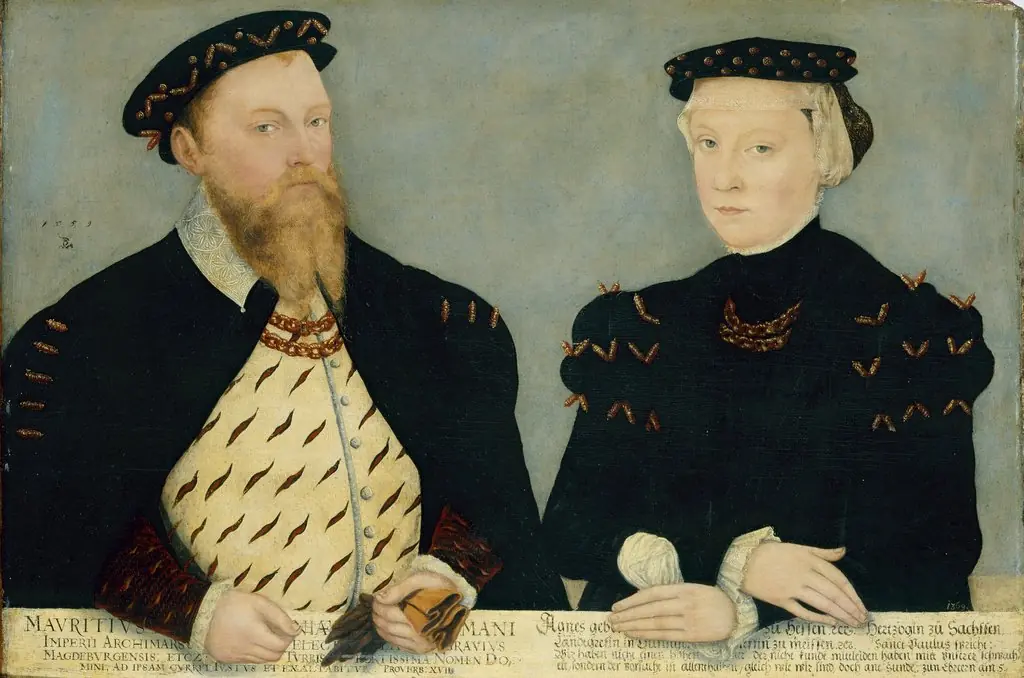 Moritz, Elector of Saxony and his wife Agnes
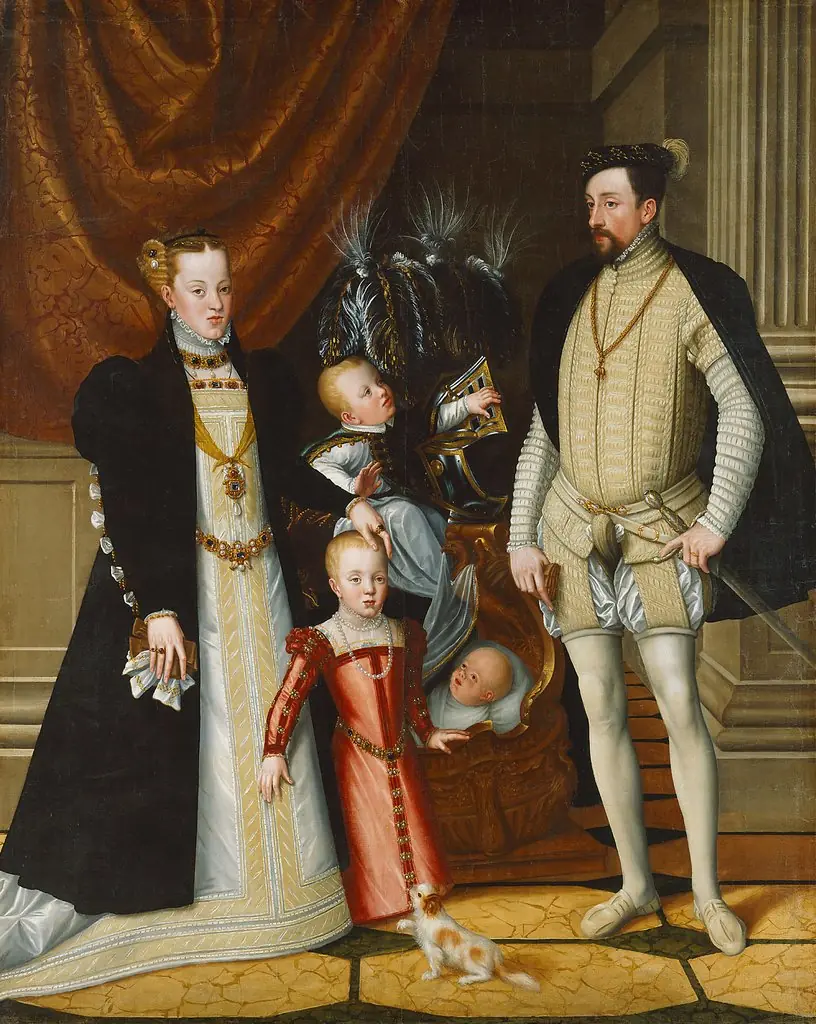 Maximilian II, His Wife and Three Children
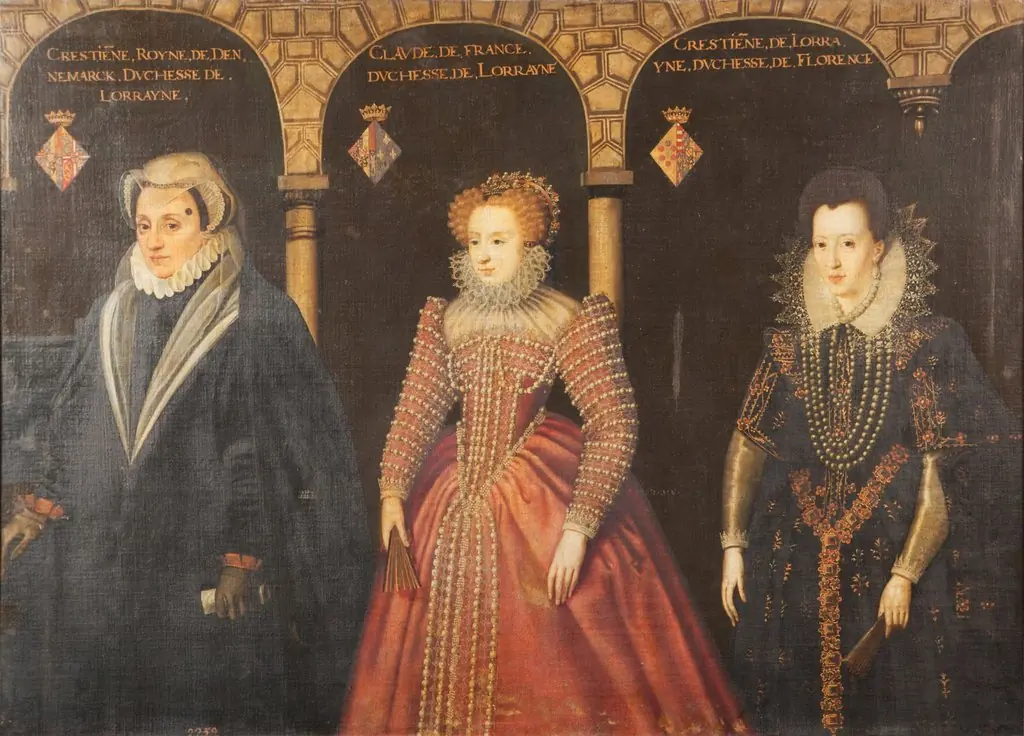 Portrait of Christina of Denmark, Claude of Valois and Christina of Lorraine
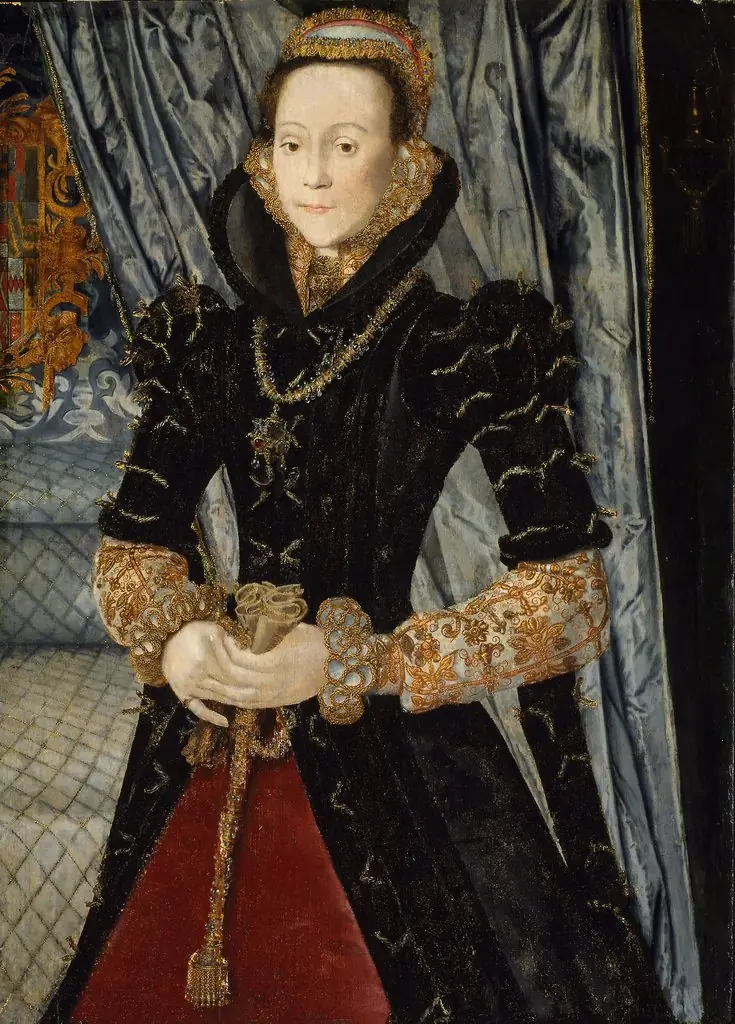 Portrait of a Lady of the Wentworth Family (Probably Jane Cheyne)
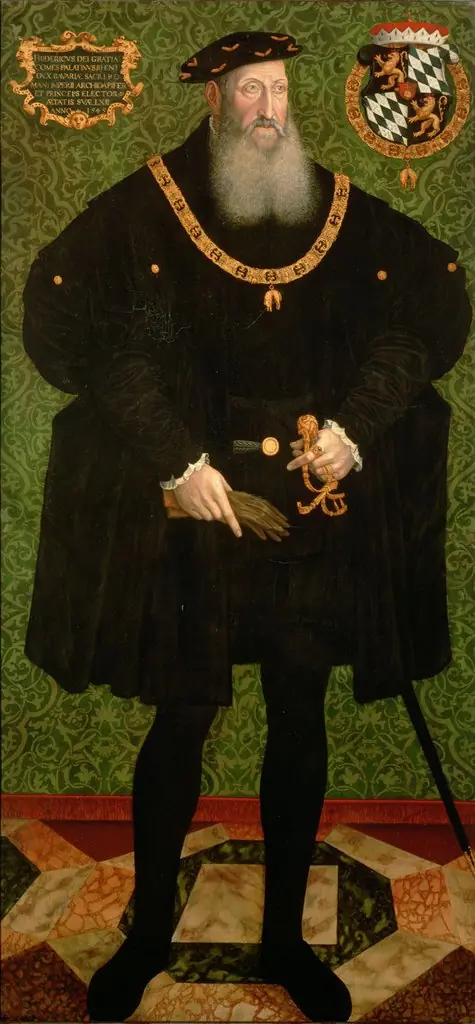 Pfalzgraf Friedrich II. (1482-1556), in ganzer Figur
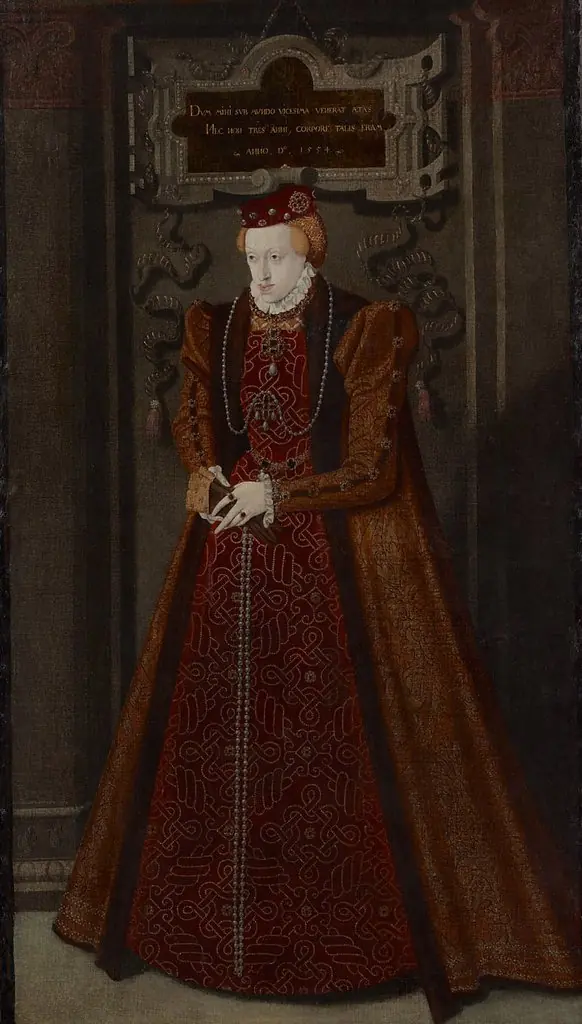 Erzherzogin Maria (1531-1581), Herzogin von Jülich - Cleve - Berg, Bildnis in ganzer Figur
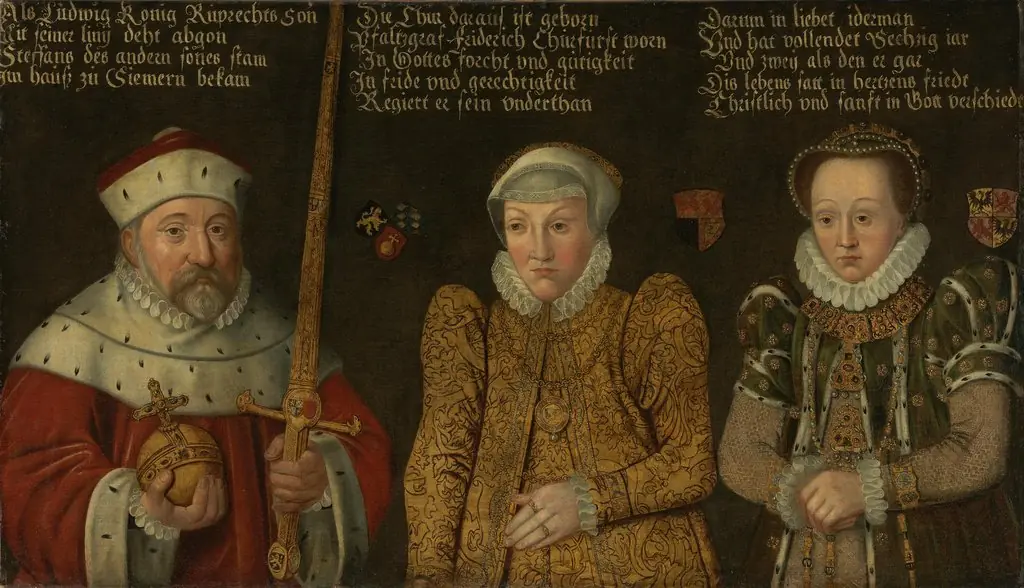 Bildnis des Kurfürsten Friedrich III. von der Pfalz (1515-1576) mit Gemahlinnen Maria von Brandenburg-Kulmbach und Amalia von Neuenar