Artwork
Portrait of Christina of Denmark, Claude of Valois and Christina of Lorraine
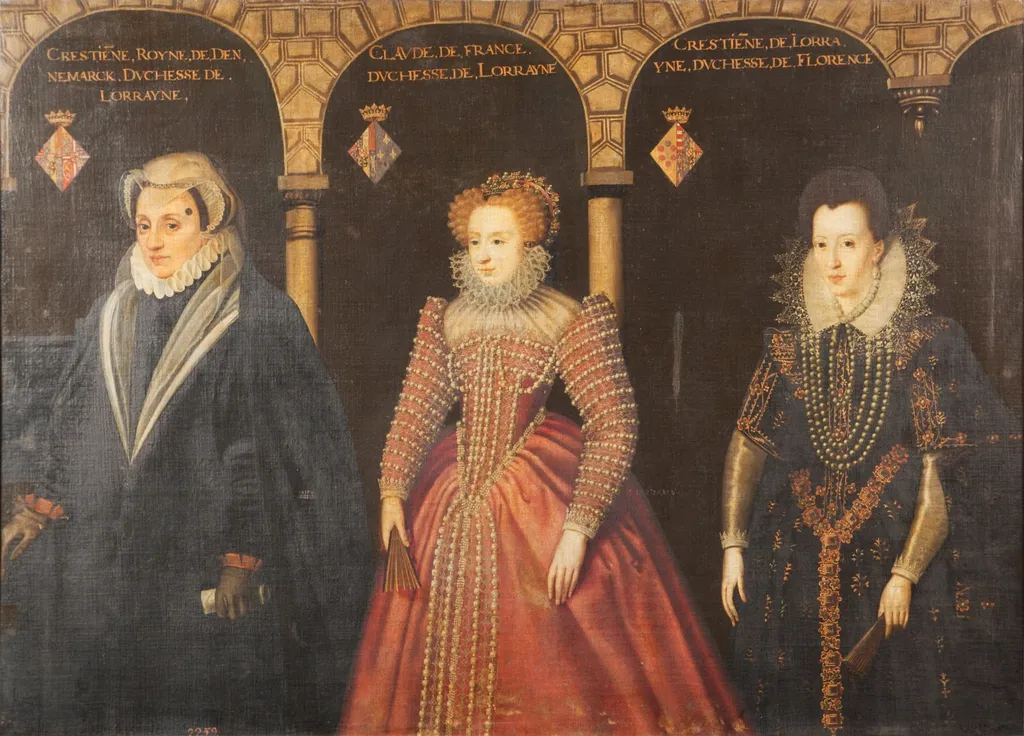
Portrait of Christina of Denmark, Claude of Valois and Christina of Lorraine is an oil painting by the Mannerist artist Jean de Wayembourg. It dates from 1600 and is held in the collection of the Museo del Prado.
About this work
Overview
Jean de Wayembourg completed this oil painting in 1600, depicting three prominent European noblewomen: Christina of Denmark, Claude of Valois, and Christina of Lorraine. The work serves as a formal group portrait, showcasing the sitters in elaborate attire that reflects their high social standing. It is currently housed in the collection of the Museo del Prado.
Subject & Meaning
Her companions wear equally rich dark garments, featuring intricate gold patterns and distinctive ruff collars, emphasizing their aristocratic status.
The composition presents the three women standing side-by-side, each identified by a name and royal insignia, including coats of arms and crowns, positioned within arches above them. The central figure, in a striking red gown adorned with gold embroidery and what appear to be sewn-in gemstones, holds a fan. Her companions wear equally rich dark garments, featuring intricate gold patterns and distinctive ruff collars, emphasizing their aristocratic status.
Technique & Style
Executed in oil paint, the portrait demonstrates a meticulous attention to detail, particularly in rendering the luxurious fabrics and embellishments worn by the sitters. The artist captures the texture of the gold embroidery and the sparkle of individual gemstones on the central figure's dress, suggesting a sophisticated handling of light and shadow. This precision underscores the opulence associated with the European aristocracy of the early 17th century.
History & Provenance
Created in 1600 by Jean de Wayembourg, this triple portrait has been preserved over centuries. It currently resides in the esteemed collection of the Museo del Prado, where it offers insight into the representation of royal and noble figures from the period. Its continued presence in a major museum highlights its historical and artistic significance.
Own this work as a print
Artist & collection
Artist
Jean de Wayembourg painted formal portraits in the late 1500s, the kind where nobles posed stiffly in dark costumes to show off their rank.
