Artwork
Portrait of Artur Potocki (1788–1832)
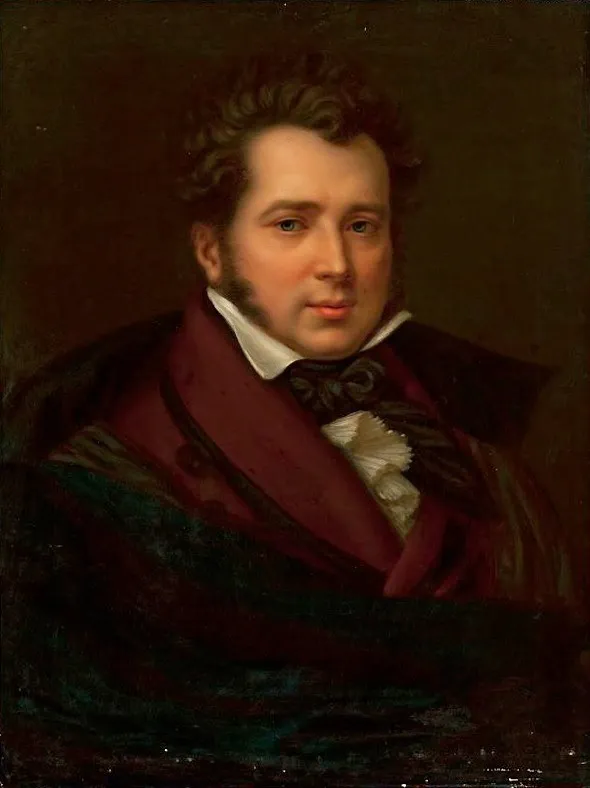
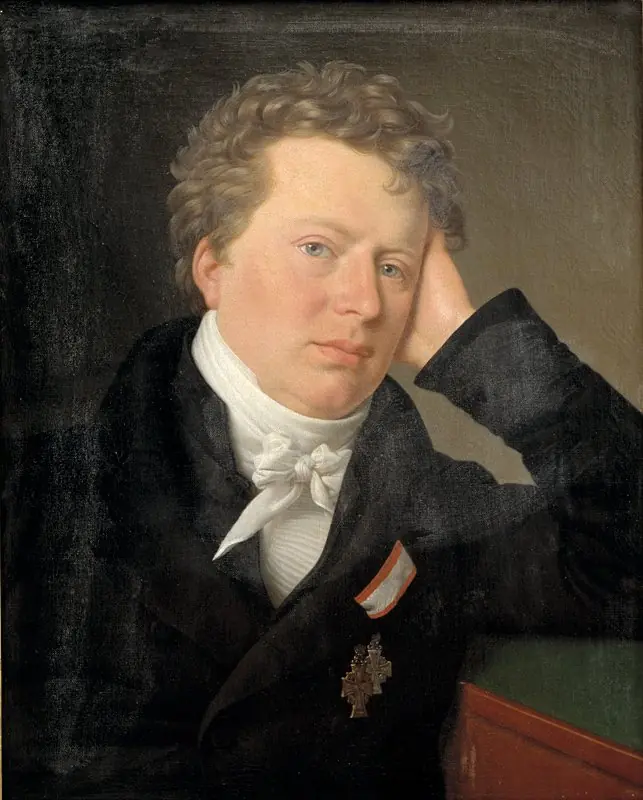
Portrait of Artur Potocki (1788–1832) is an oil painting by Unknown. It is held in the collection of the National Museum in Warsaw. The oil painting depicts Artur Potocki, a Polish nobleman who lived from 1788 to 1832.
About this work
The subject's attire and hairstyle suggest that the painting may have been created in the early 19th century.
This portrait features a man with dark, curly hair and a serious expression. He is dressed in a dark jacket with a red sash and a white shirt with a high collar. The background of the painting is a solid, dark color.
The subject's attire and hairstyle suggest that the painting may have been created in the early 19th century. The artist's use of chiaroscuro, a technique that uses strong contrasts between light and dark to create a sense of volume and depth, adds depth and dimension to the portrait.
To learn more about the artist's use of chiaroscuro, explore the technique of chiaroscuro.
Overview
The oil painting depicts Artur Potocki, a Polish nobleman who lived from 1788 to 1832. Rendered in a restrained palette, the work presents the sitter in a dark jacket accented by a vivid red sash, set against an unadorned, sombre background. The composition focuses tightly on the figure, emphasizing his solemn expression and the formal attire typical of his social rank.
Subject & Meaning
Potocki is shown with dark, tightly curled hair and a high‑collared white shirt, elements that signal early‑nineteenth‑century aristocratic fashion. His direct gaze and restrained demeanor convey a sense of personal gravitas, reflecting the expectations of dignity and responsibility associated with his lineage and public role within the Polish‑Lithuanian nobility.
Technique & Style
The artist employs chiaroscuro, contrasting illuminated areas of the face and clothing with deep shadows that recede into the background. This manipulation of light creates a three‑dimensional effect, modeling the folds of the jacket and the texture of the hair. The overall approach aligns with neoclassical portrait conventions, privileging clarity of form and restrained emotional tone.
Artist & collection

 Domestic Scene
 Giacomo and Cardinal Marco, investing Andrea, Abbot of San Zeno, with his Benefice
 The Nymph of Fontainebleau
 Portrait of a Woman
 Madonna and Child with Saints in the Enclosed Garden
 Venus and Minerva
 Family Group of Four on Sofa
 Wall painting from Room H of the Villa of P. Fannius Synistor at Boscoreale
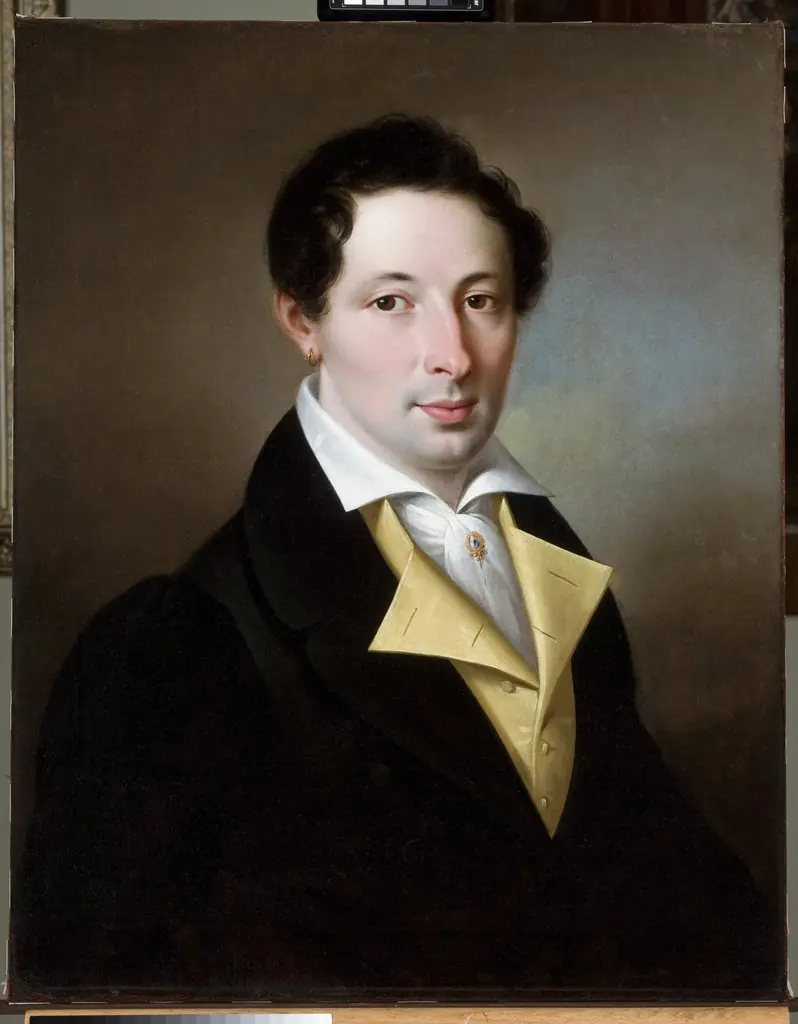 Portrait of Karol Kollarzowski
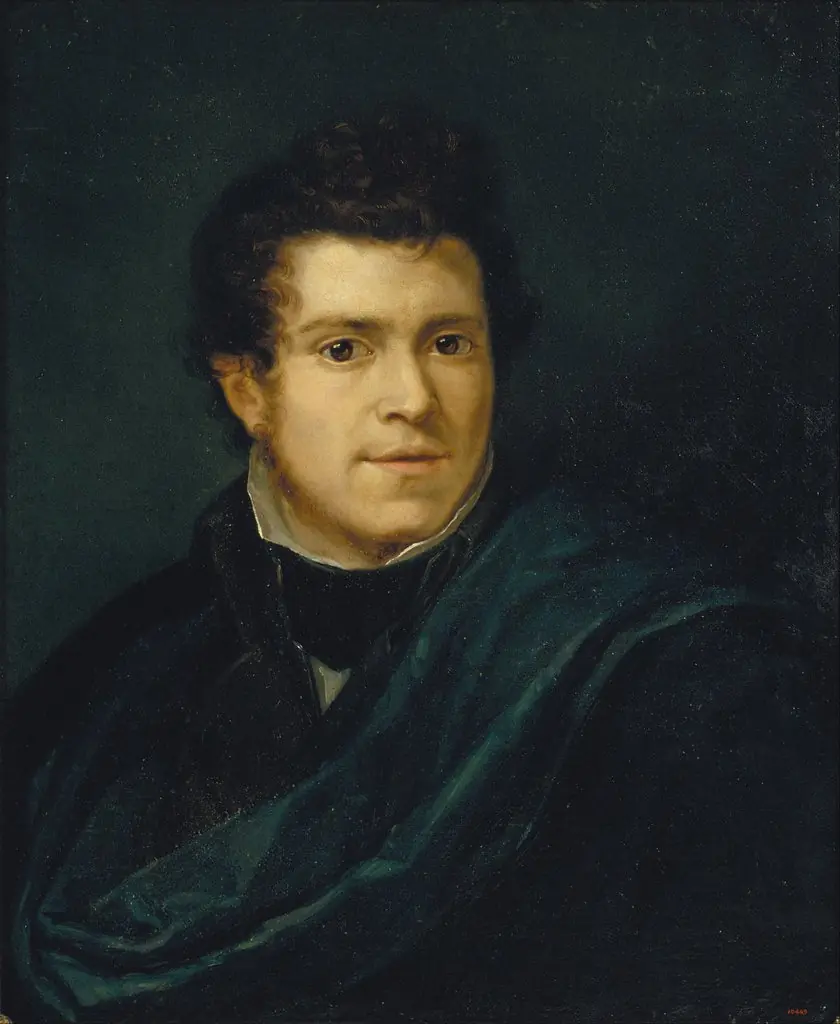 Self-portrait
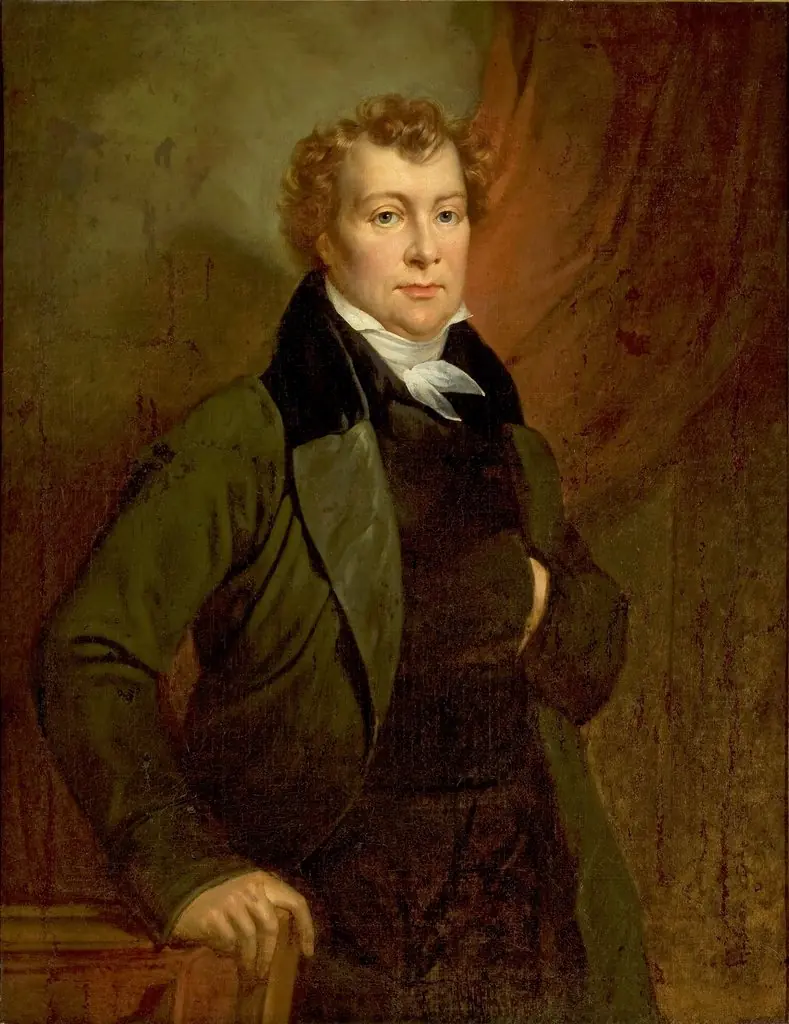 Portrait of Ludwik Osiński
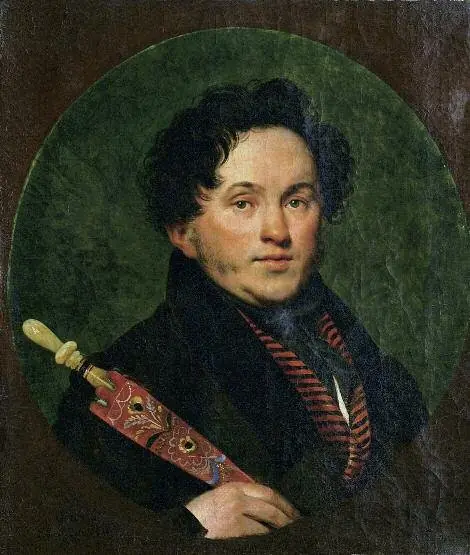 Portrait of D. N. Filosofov
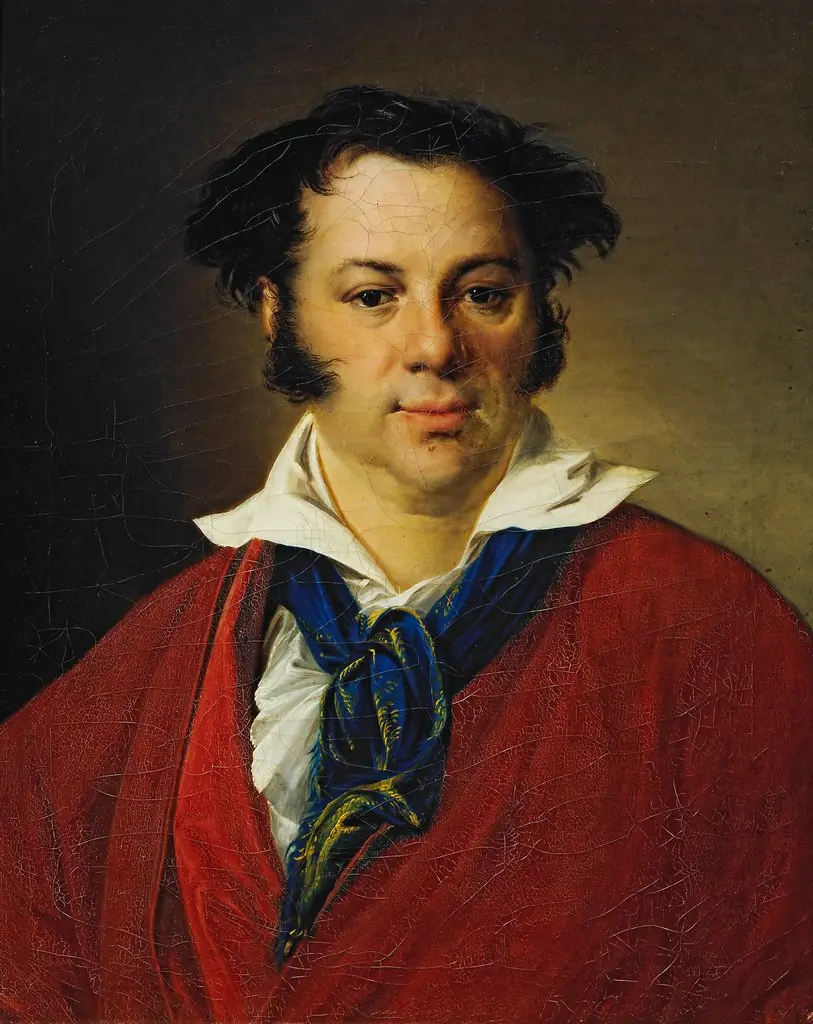 Portrait of K.G.Ravich
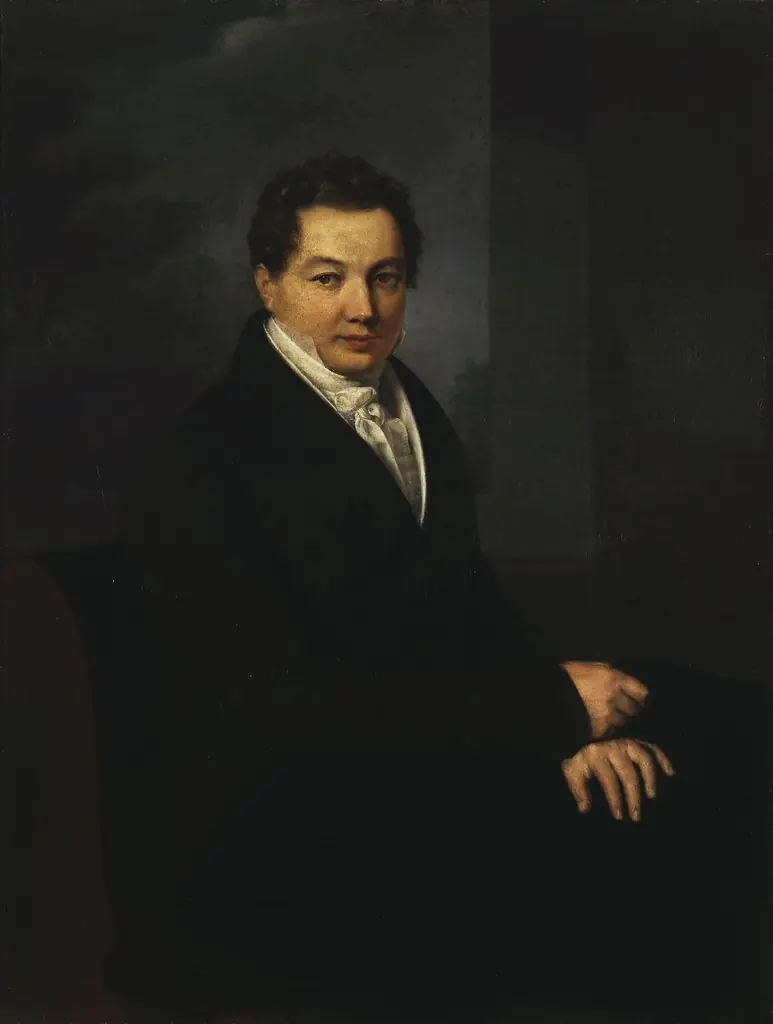 Portrait of F.A.Paskov-Sharapov
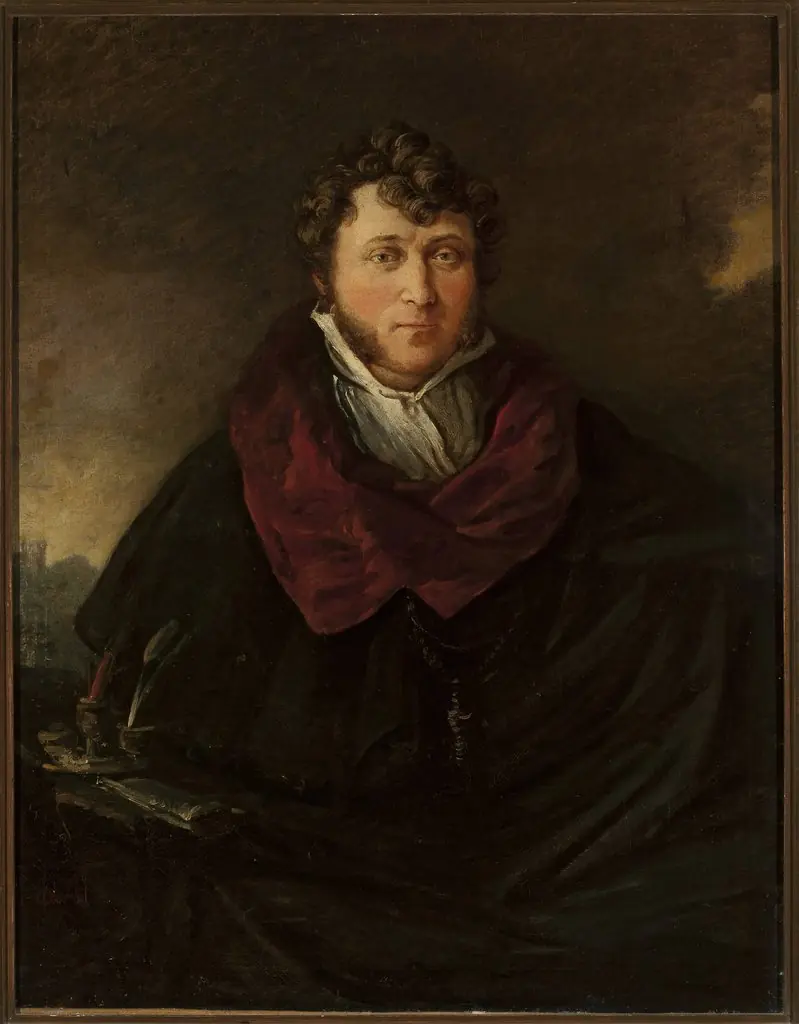 Portrait of Antoni Ostrowski
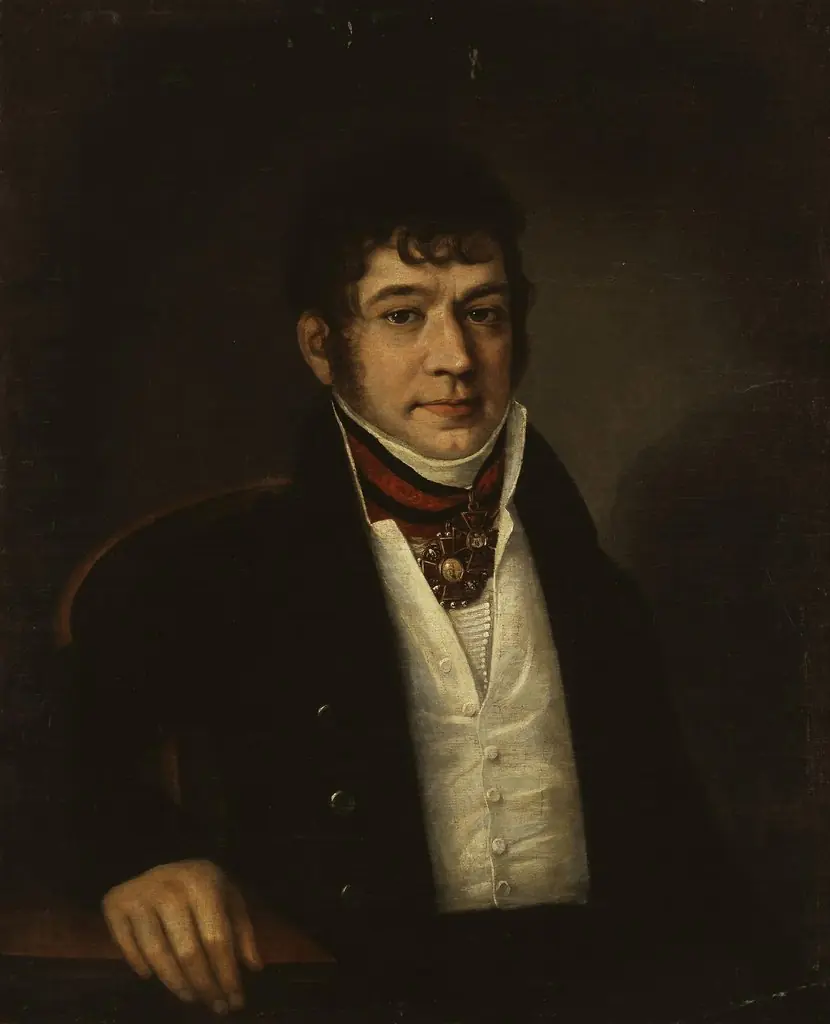 "Portrait of an Unknown Man from the Ogariov Family" (Platon Bogdanovich Ogariov?)
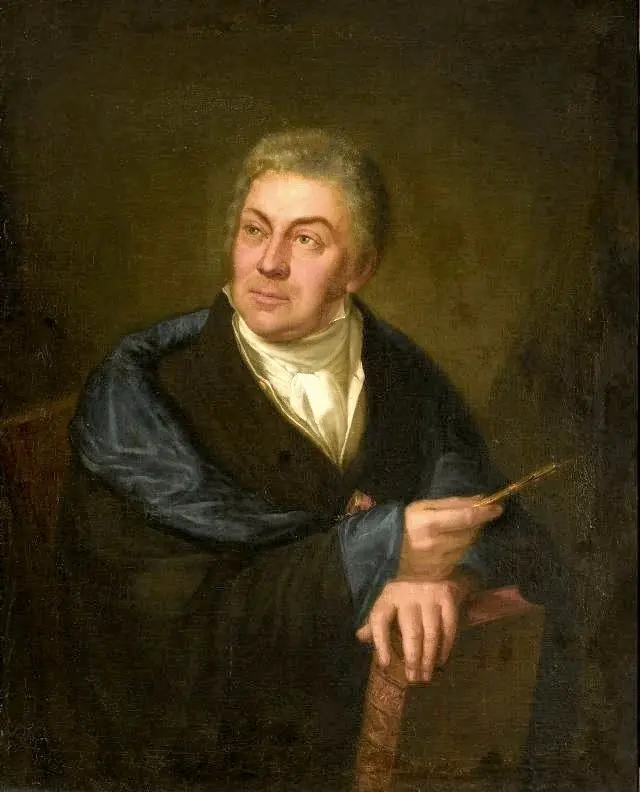 Portrait of Zygmunt Vogel
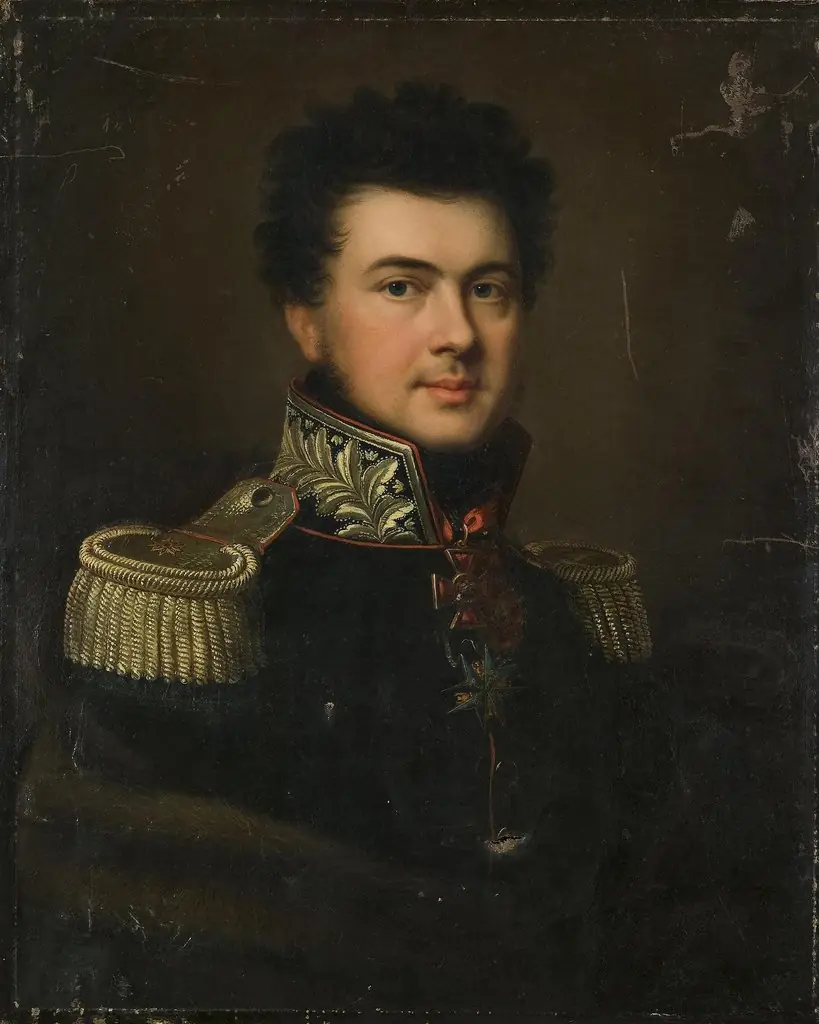 Portrait of Major General I.I. Sabir
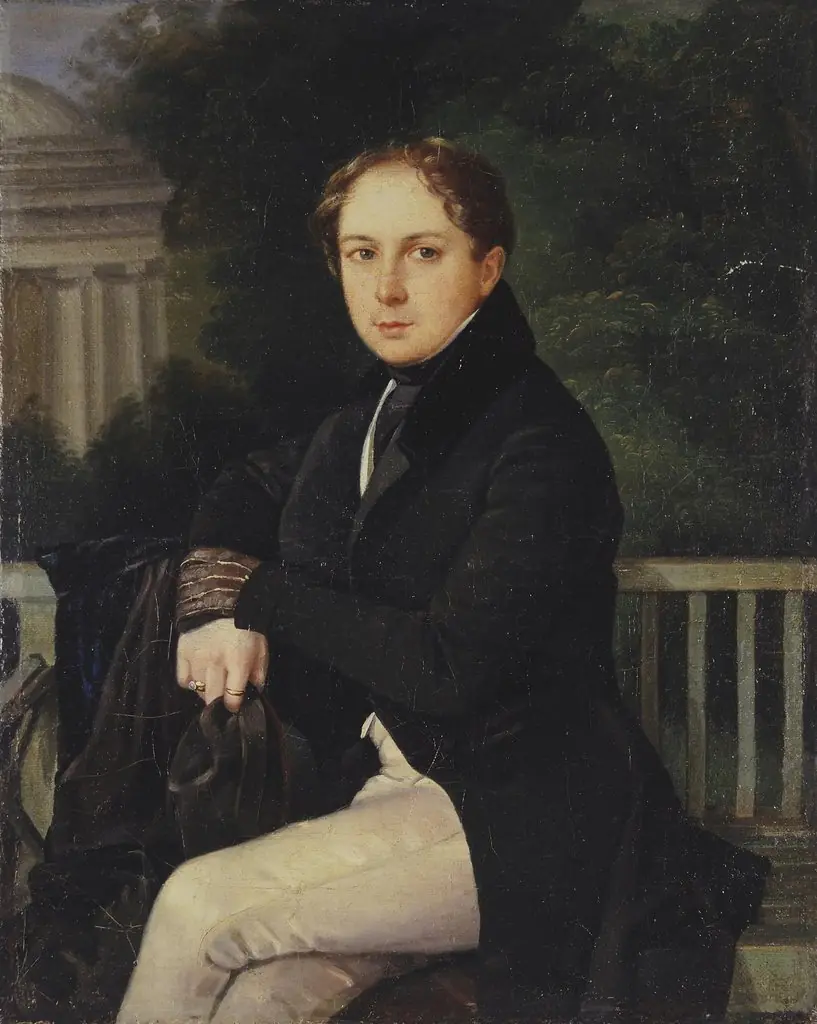 Portrait of an Unknown Man, a Stroganov Family Descendant
 Juristen og statsmanden Anders Sandøe Ørsted