Artwork
Memorial tablet of Jacob Jan van Assendelft (1396-1478) and his wife Haesgen van Outshoorn (?-1471)
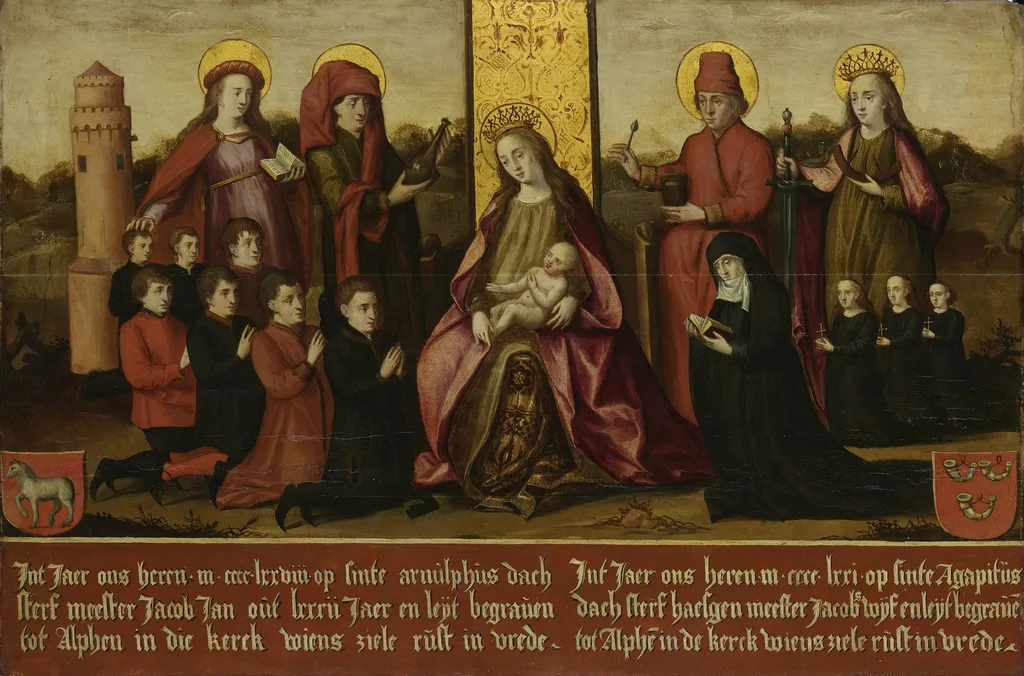
Memorial tablet of Jacob Jan van Assendelft (1396-1478) and his wife Haesgen van Outshoorn (?-1471) is an oil painting by the Northern Renaissance artist Unknown. It dates from 1500 and is held in the collection of the Rijksmuseum.
About this work
Overview
The Memorial tablet of Jacob Jan van Assendelft and his wife Haesgen van Outshoorn is an oil painting depicting a scene of devotion centered around a woman and infant, set against a detailed, symbolic backdrop.
Subject & Meaning
The primary figures are a woman in a red robe and golden crown holding a baby in light cloth, surrounded by kneeling and standing individuals in medieval attire, some holding religious or symbolic objects (books, staff). The scene likely represents a religious or allegorical tableau, potentially alluding to the Holy Family or a similar sacred narrative, with the mourned subjects (Jacob Jan van Assendelft and Haesgen van Outshoorn) possibly being commemorated through association with these figures.
Technique & Style
The painting employs chiaroscuro, leveraging strong contrasts of light and dark to enhance the three-dimensionality of the figures against a somber, golden-patterned wall and a distant castle in the background. The color palette is characterized by bright yet muted tones, with the red robes of the central figure dominating the visual composition.
History & Provenance
Created to memorialize Jacob Jan van Assendelft (1396-1478) and his wife Haesgen van Outshoorn (?-1471), the painting's exact date and artist remain unspecified in the provided details, though its style suggests a late medieval or early Renaissance European origin.
Context
The work reflects the religious and commemorative art practices of its time, blending sacred themes with the patron's desire for posthumous remembrance, common among the nobility and upper classes of the period.
Legacy
While specific influence or widespread recognition of this piece is not detailed, it contributes to the broader understanding of late medieval/early Renaissance artistic techniques, particularly in the use of chiaroscuro and symbolic composition in memorial art.
Artist & collection

 Domestic Scene
 Giacomo and Cardinal Marco, investing Andrea, Abbot of San Zeno, with his Benefice
 The Nymph of Fontainebleau
 Portrait of a Woman
 Madonna and Child with Saints in the Enclosed Garden
 Venus and Minerva
 Family Group of Four on Sofa
 Wall painting from Room H of the Villa of P. Fannius Synistor at Boscoreale
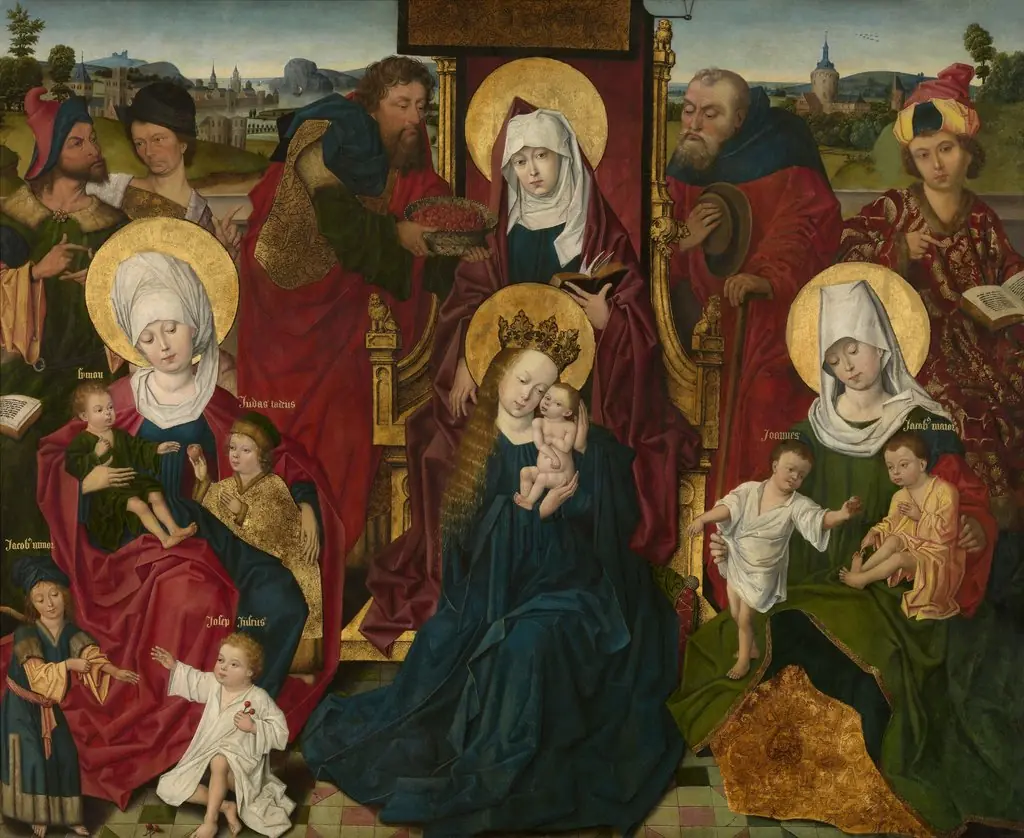 Holy Kinship
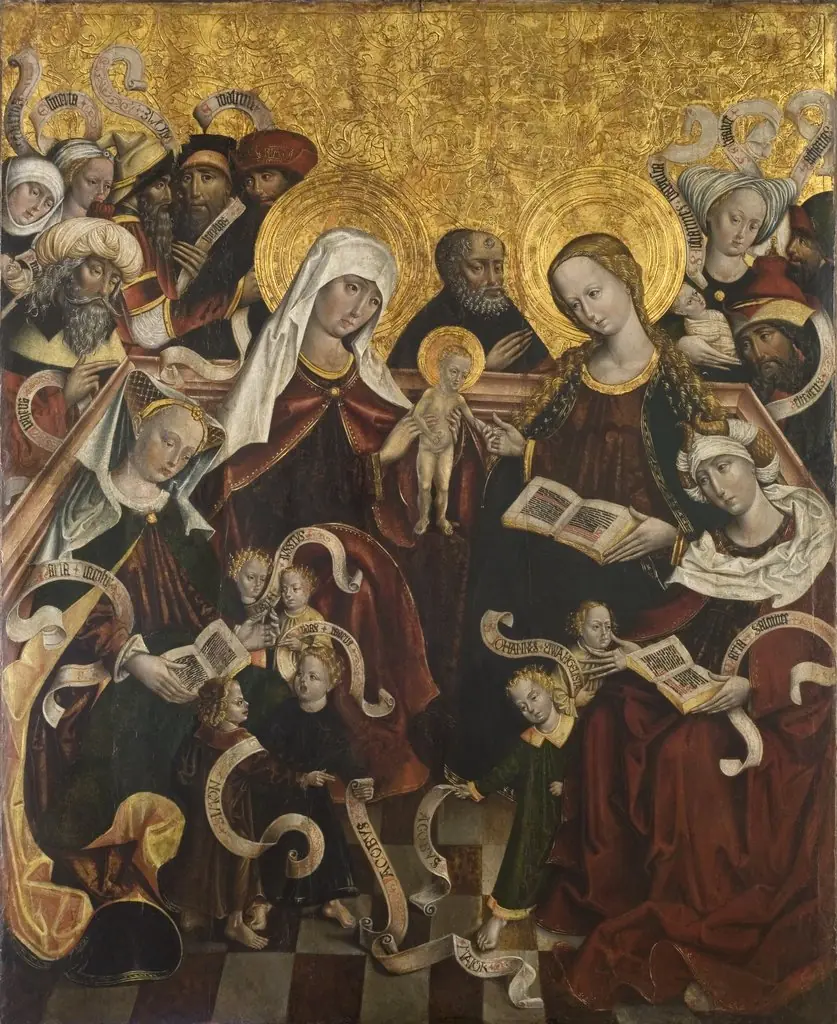 Family of the Virgin Mary, from Ołpiny
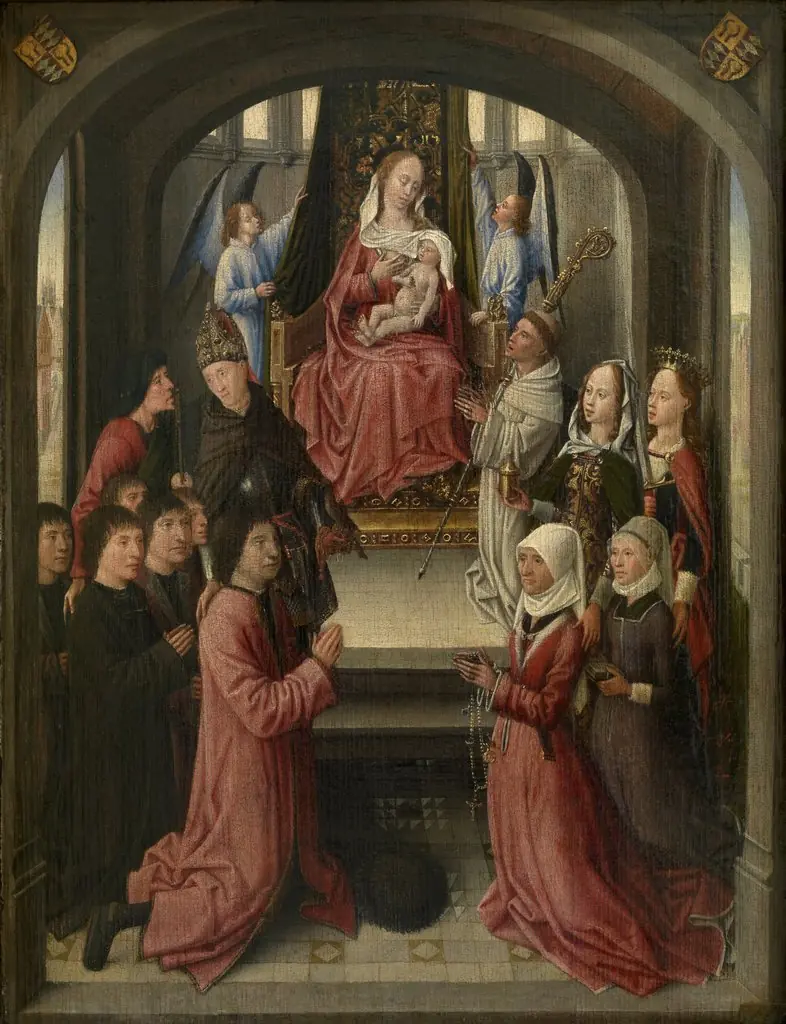 Lactatio of Saint Bernard of Clairvaux with Donors
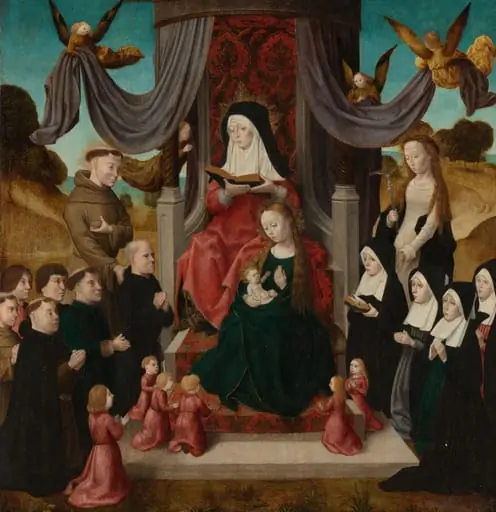 Virgin and Child with Saint Anne and Saints Francis and Lidwina, with Donors (Anna Selbdritt)
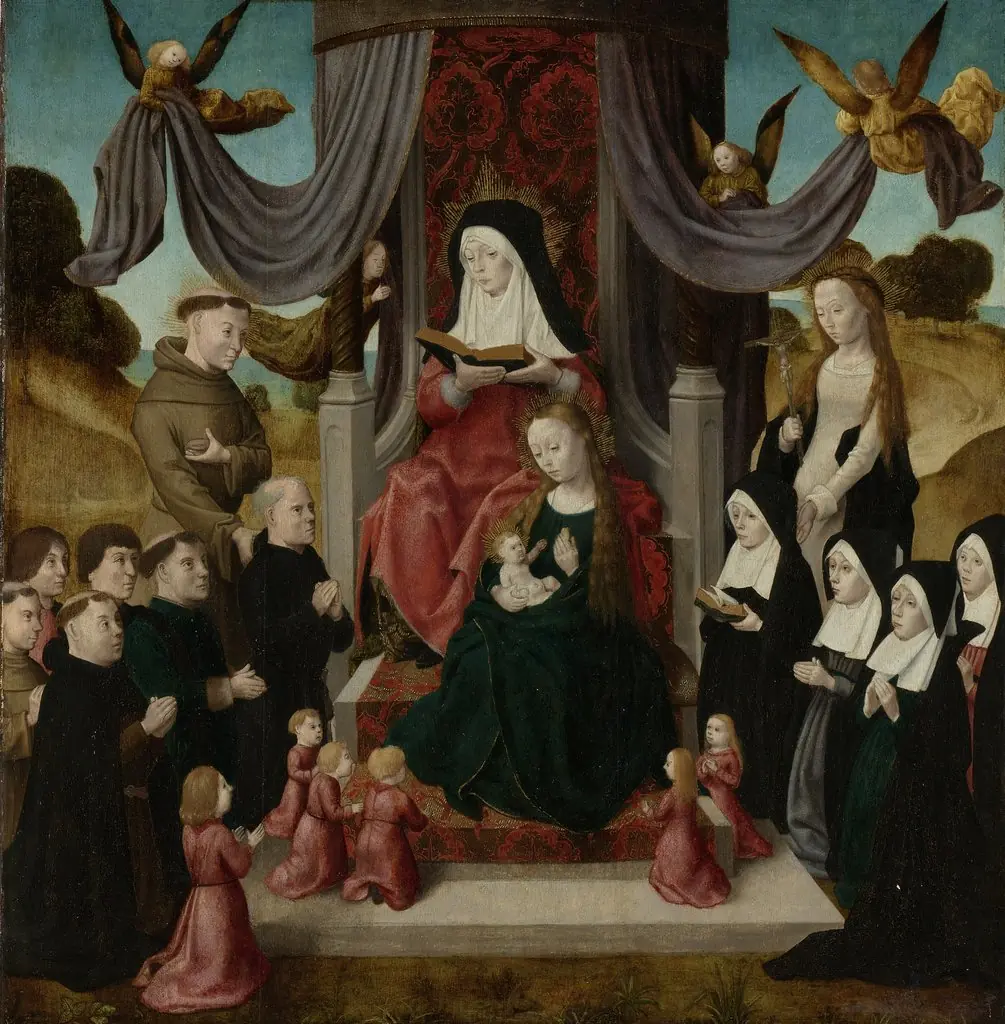 The Virgin and Child with St Anne, donors and Sts Francis and Lidwina
 Rosenkranzfest
 Triptych of the Virgin and Child with Saints
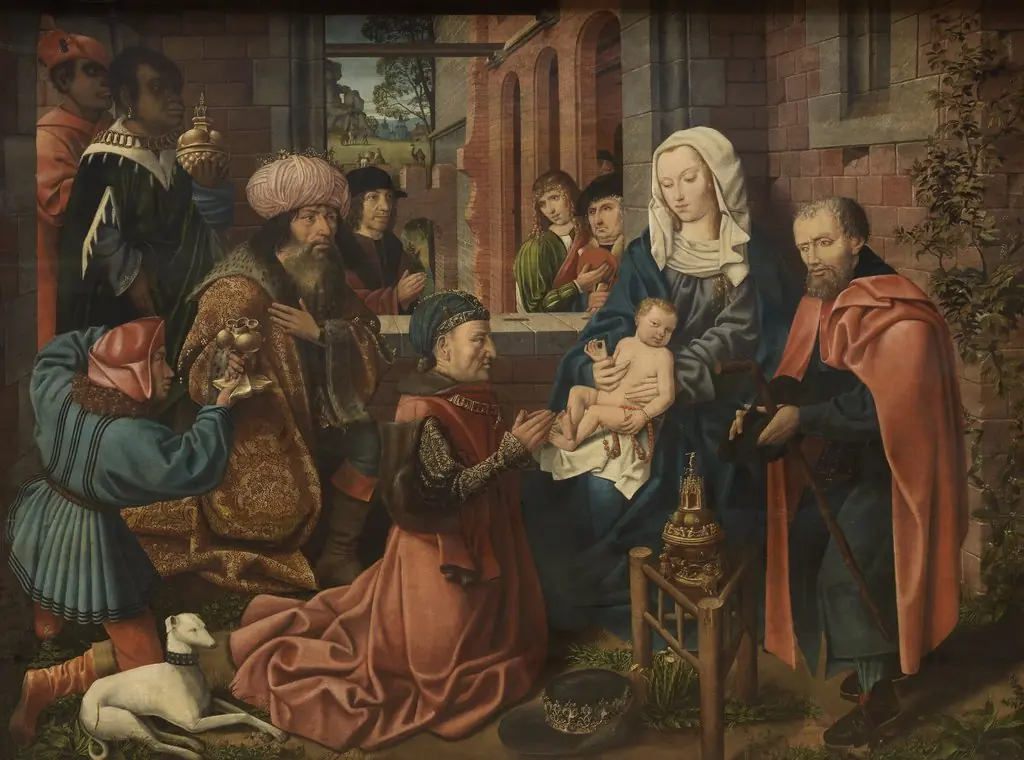 The Adoration of the Magi
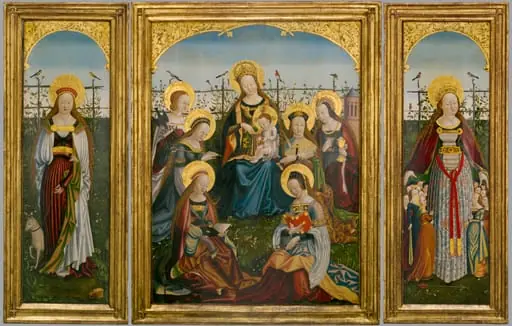 Triptych of the Virgin and Child with Saints
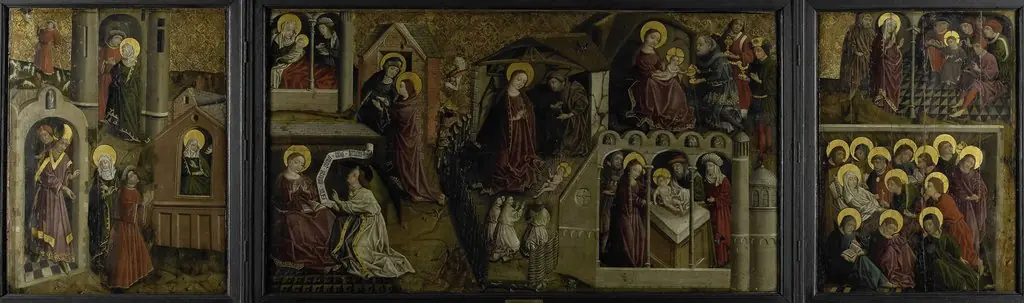 Triptych with Scenes from the Life of the Virgin
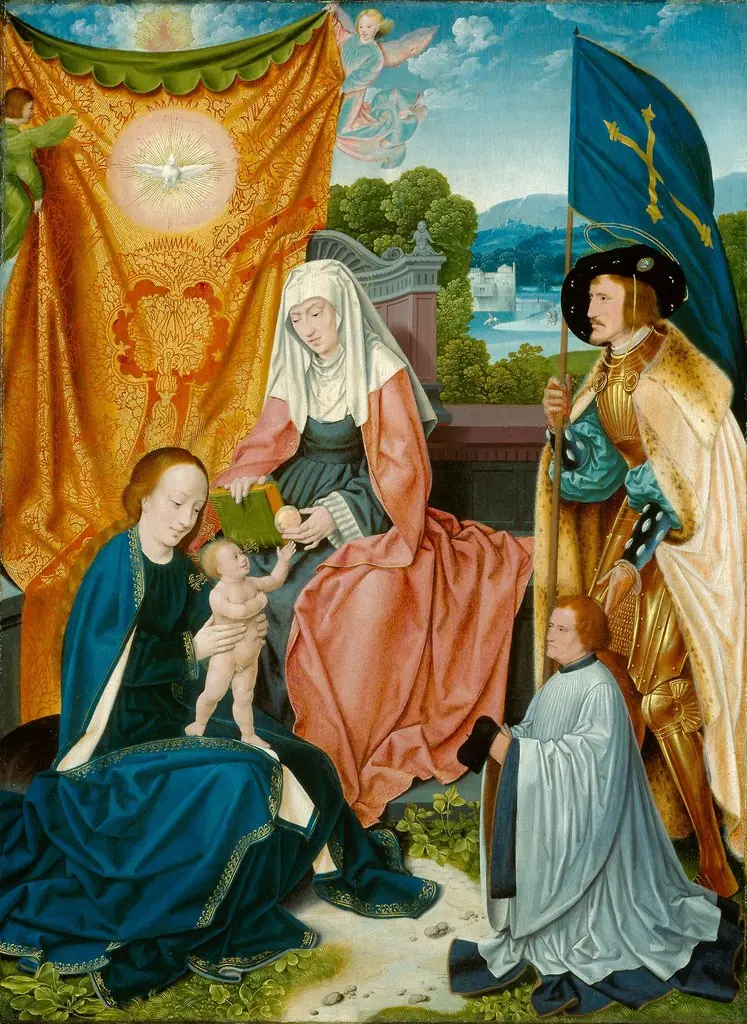 Virgin and Child with Saint Anne, Saint Gereon, and a Donor