Artwork
The Adoration of the Magi
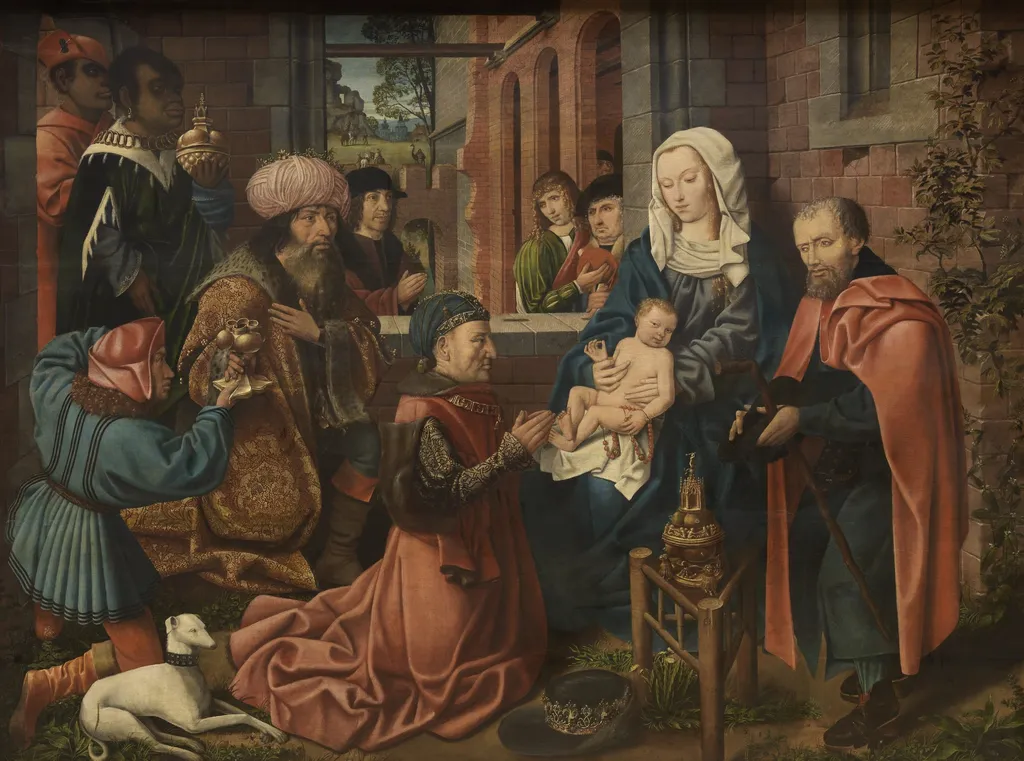
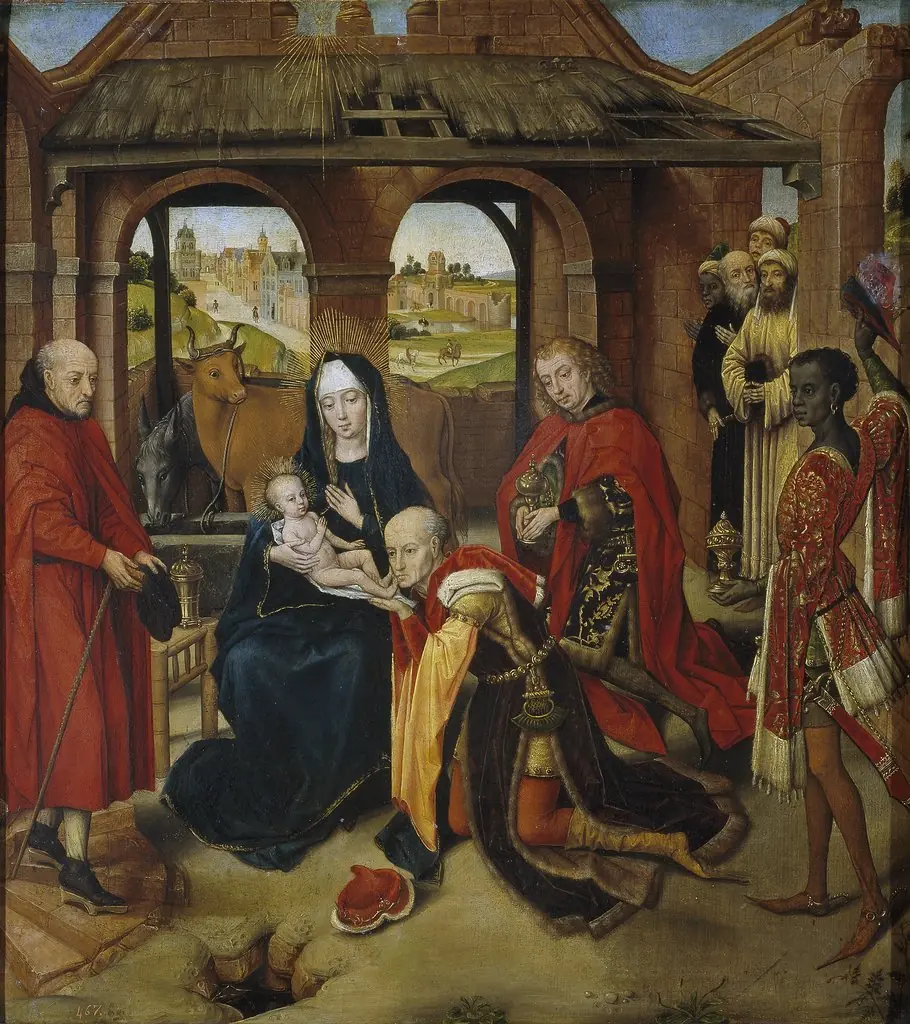
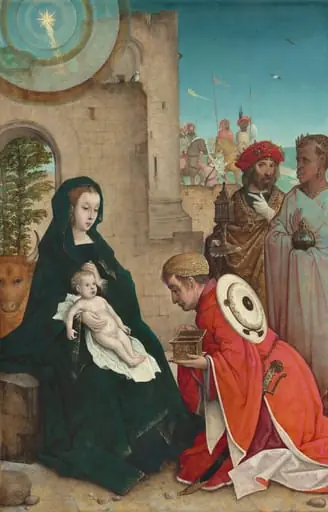
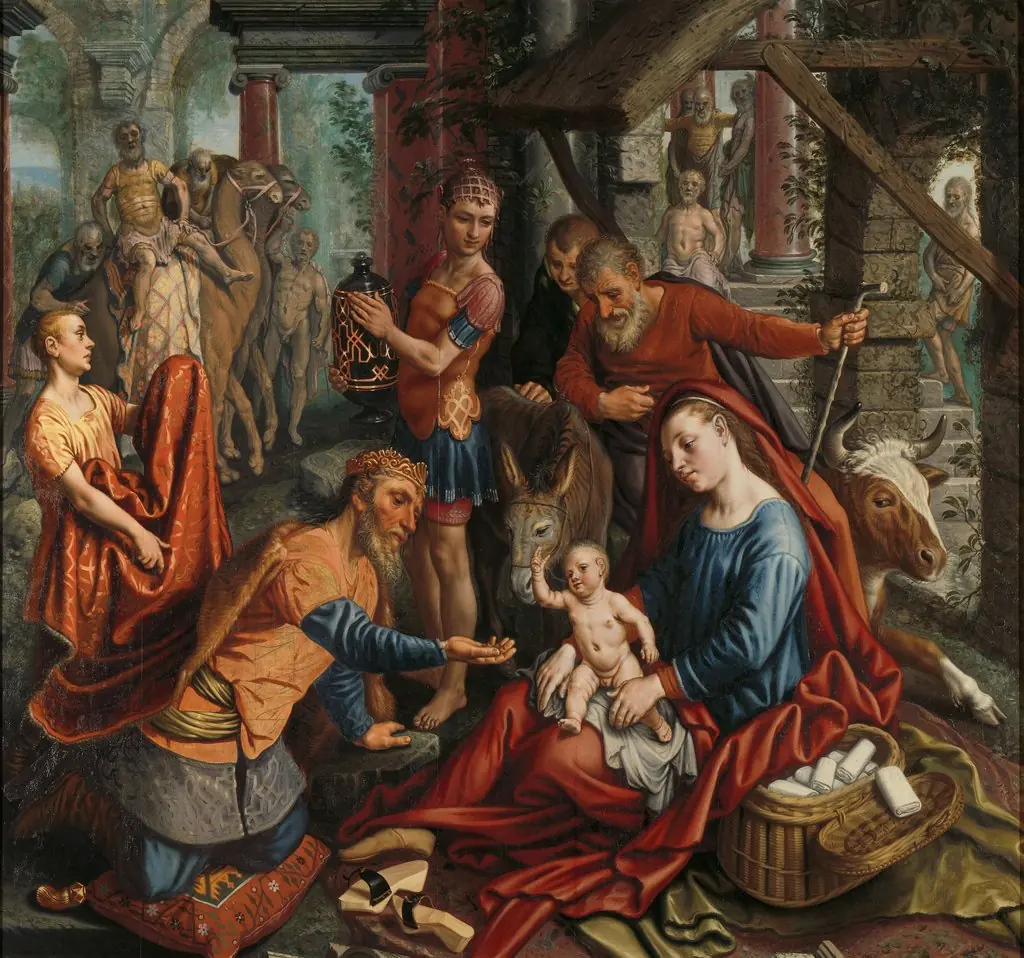
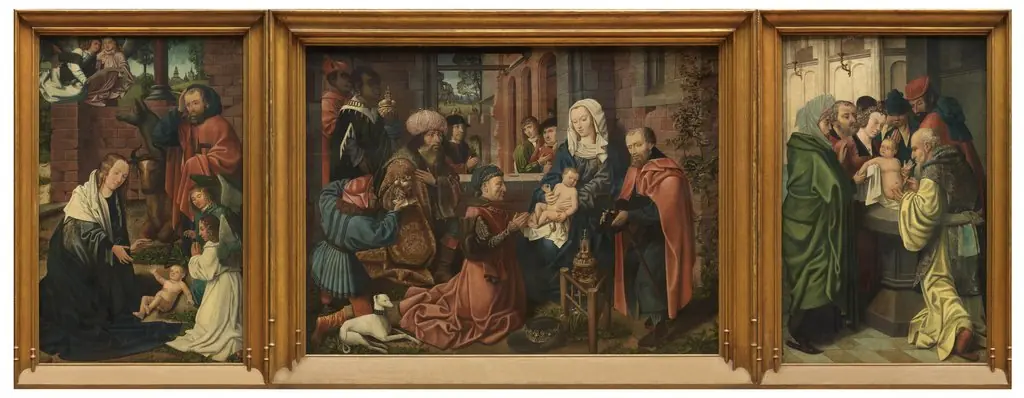
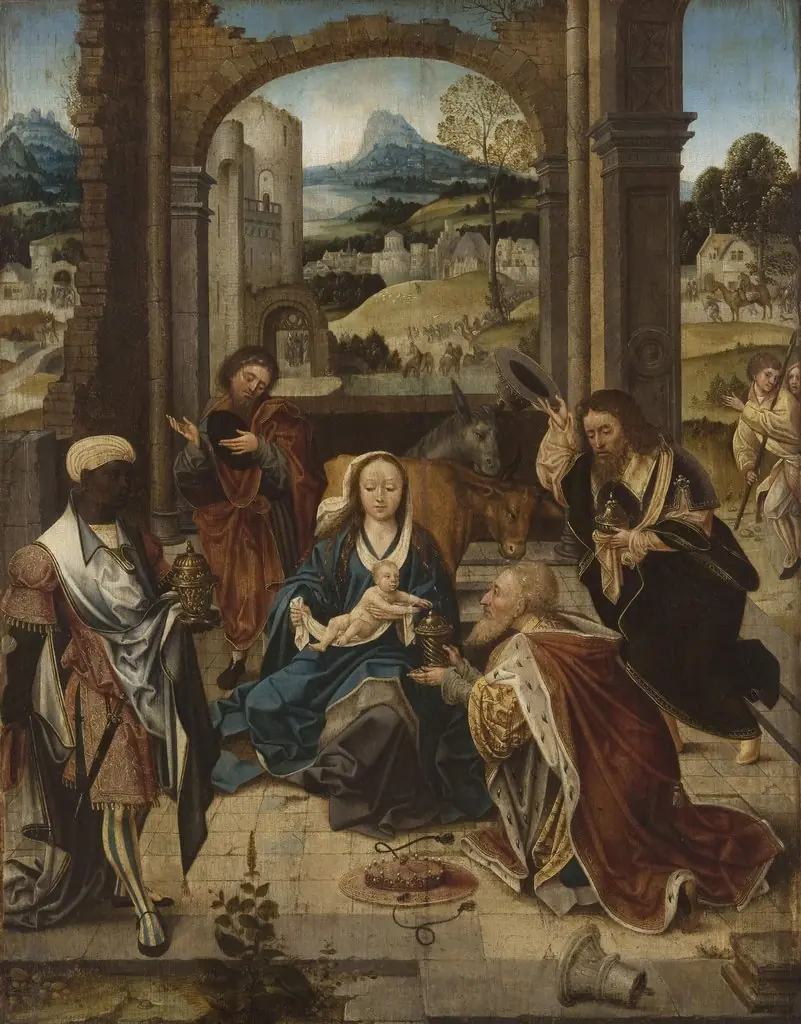
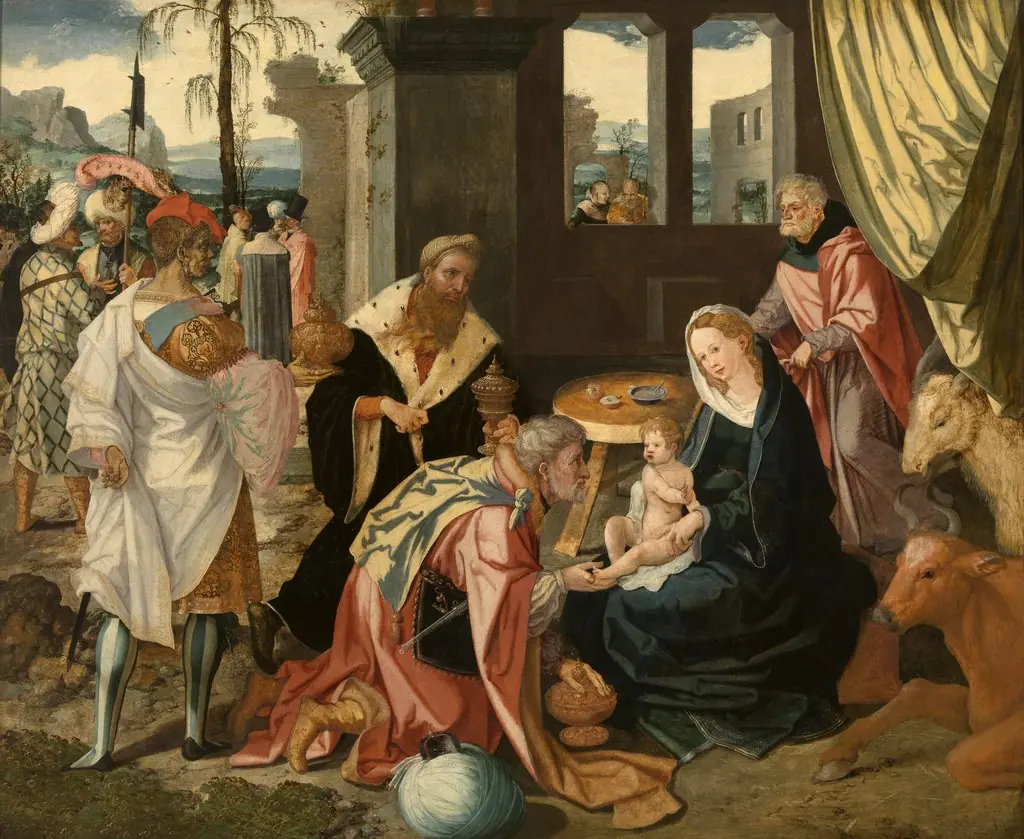
The Adoration of the Magi is an oil painting by the Northern Renaissance artist Master of Frankfurt. It dates from 1512 and is held in the collection of the Royal Museum of Fine Arts Antwerp.
About this work
Overview
The canvas is part of the collection of the Royal Museum of Fine Arts in Antwerp, where it is displayed among other early‑sixteenth‑century religious works.
The work titled *Adoration of the Magi* is an oil painting executed in 1512 by the anonymous artist known as the Master of Frankfurt. Measuring a modest size, it portrays a biblical scene centered on the infant Jesus and the visiting dignitaries. The canvas is part of the collection of the Royal Museum of Fine Arts in Antwerp, where it is displayed among other early‑sixteenth‑century religious works.
Subject & Meaning
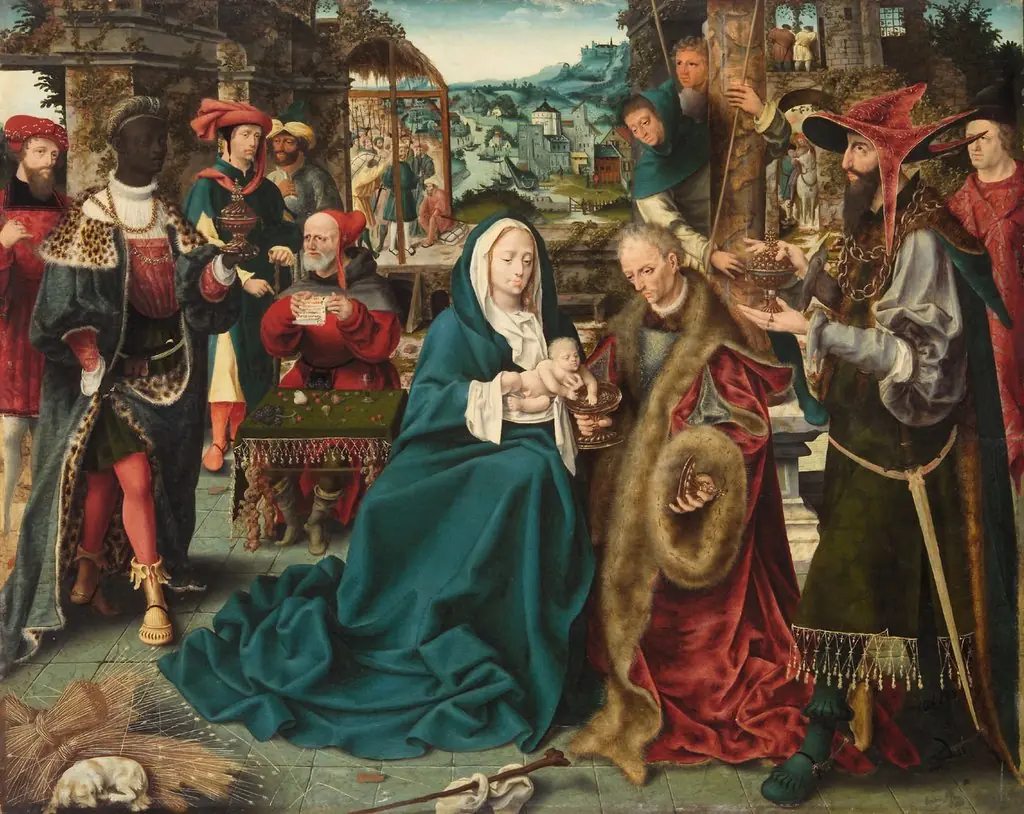
The composition gathers a group of richly dressed figures around a seated woman in blue who cradles the newborn Christ. The men, identifiable as the Magi, present gifts—a golden cup, a jeweled box—while one kneels beside a small dog, a traditional symbol of fidelity. The calm expression of the mother contrasts with the eager curiosity of the visitors, emphasizing the theological theme of humble devotion receiving regal homage.
Technique & Style
The painter employs a pronounced chiaroscuro, allowing light to strike the vivid reds and blues of the garments while casting deeper shadows around the architecture. Fine brushwork renders the infant’s tiny hands and the texture of the furred dog. The background features a stone edifice and distant trees, creating atmospheric depth that guides the viewer’s eye toward the central figures.
History & Provenance
Created in the early 16th century, the painting entered the Royal Museum of Fine Arts Antwerp’s holdings during the 19th‑century acquisition drive that expanded the museum’s Flemish and Germanic collections. Documentation traces its ownership back to a private Antwerp collector before its transfer to the public institution, where it has remained under conservation.
Context
The work reflects the devotional trends of Northern Renaissance art, where biblical narratives were rendered with meticulous detail and domestic intimacy. The Master of Frankfurt, active in the Germanic regions, often blended Gothic compositional structures with emerging naturalistic lighting, situating this piece within a transitional artistic moment between medieval iconography and Renaissance realism.
Own this work as a print
Artist & collection


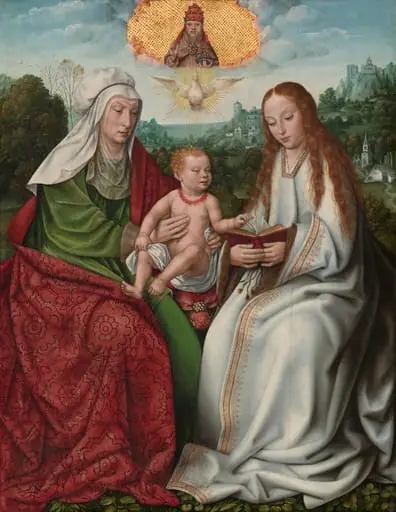 Saint Anne with the Virgin and the Christ Child
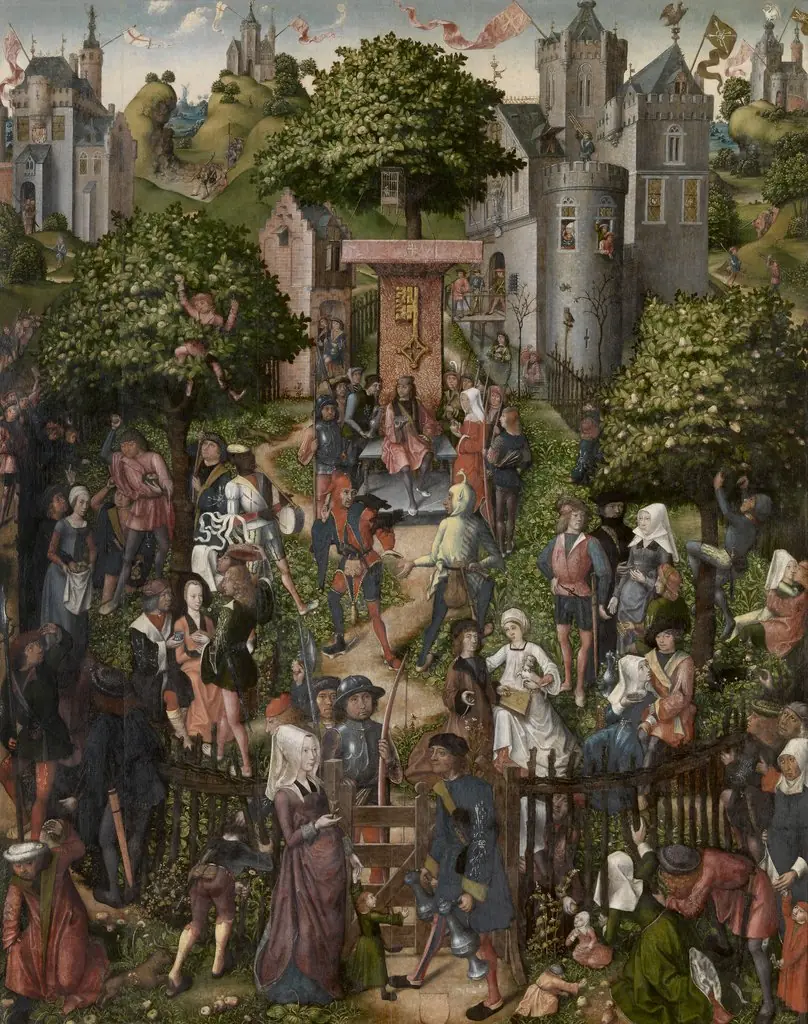 Festival of the Archers
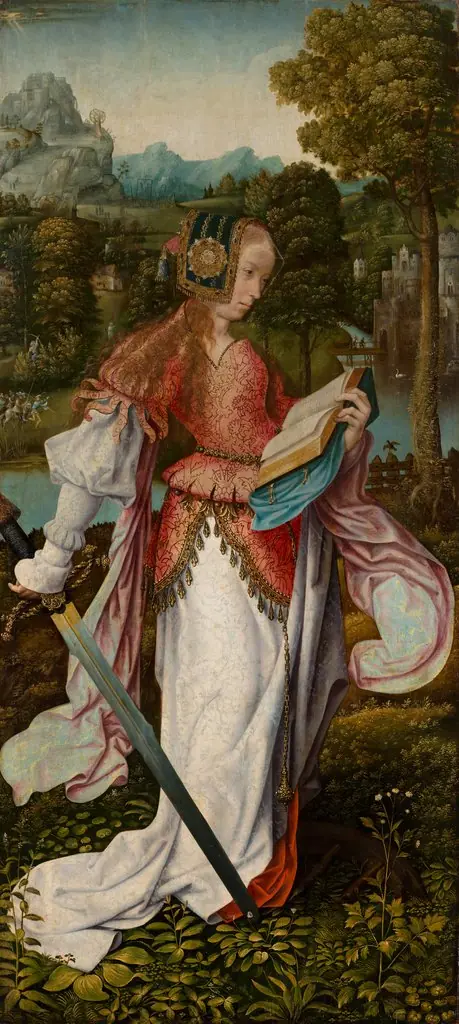 Saint Catherine
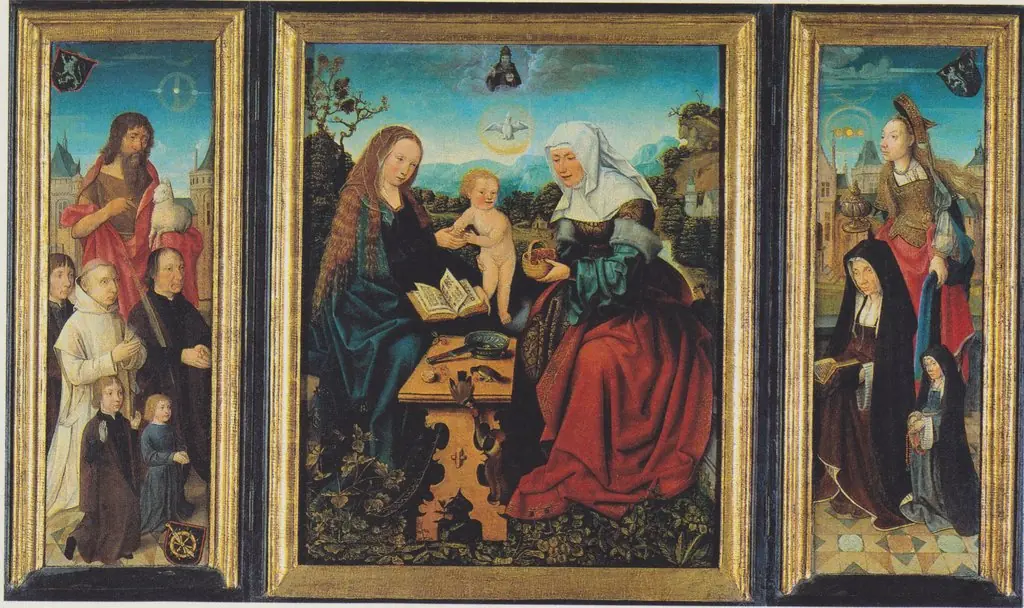 Portrait of Dirck van Heemskerck van Beest & sons with John the Baptist, Madonna and Child with St Anne, and Gertruid van Diemen & daughter with Mary Magdalene
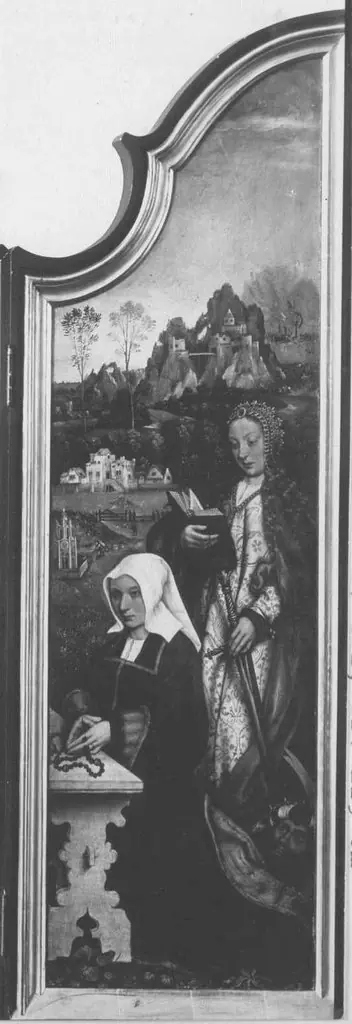 Beweinungsaltar: Hl. Katharina mit Stifterin
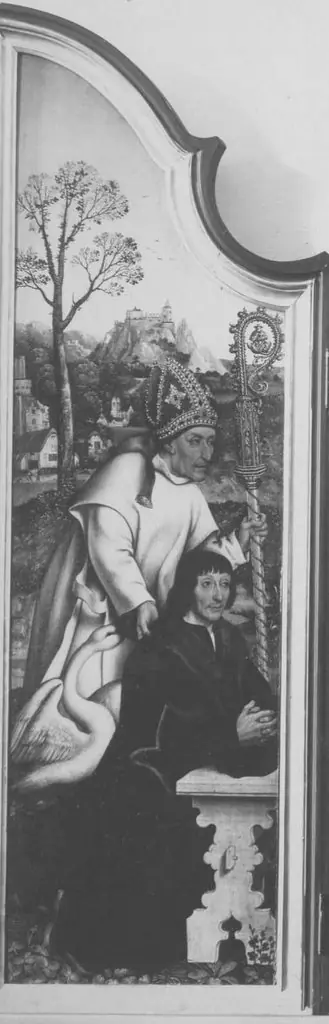 Beweinungsaltar: Hl. Hugo von Lincoln mit Stifter
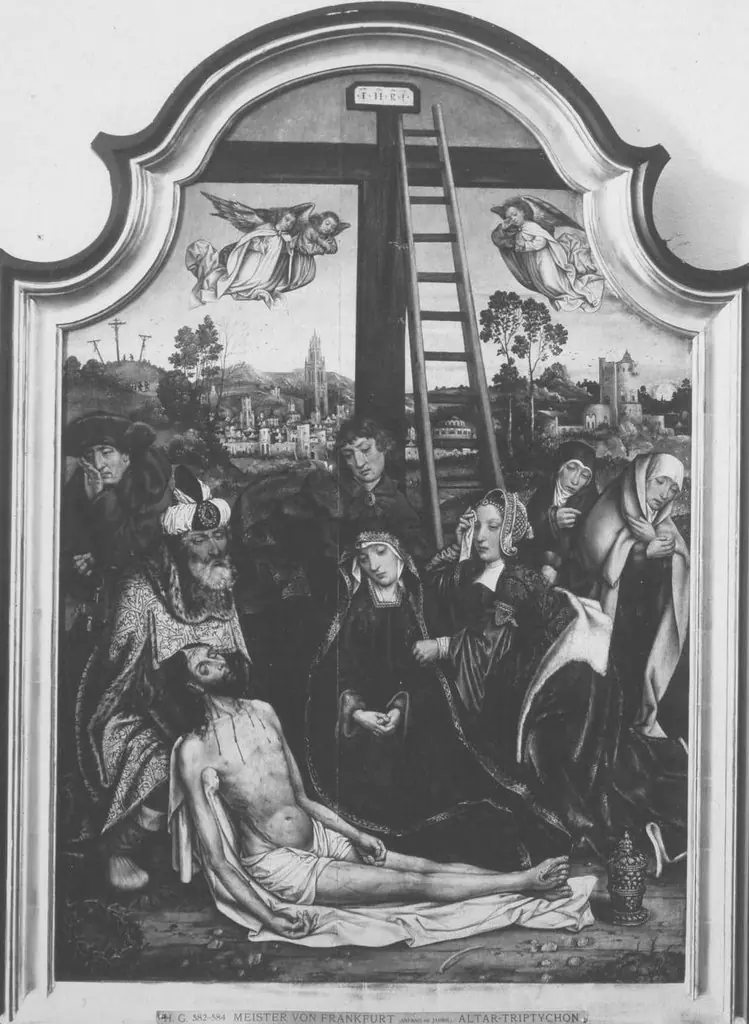 Beweinungsaltar: Beweinung Christi
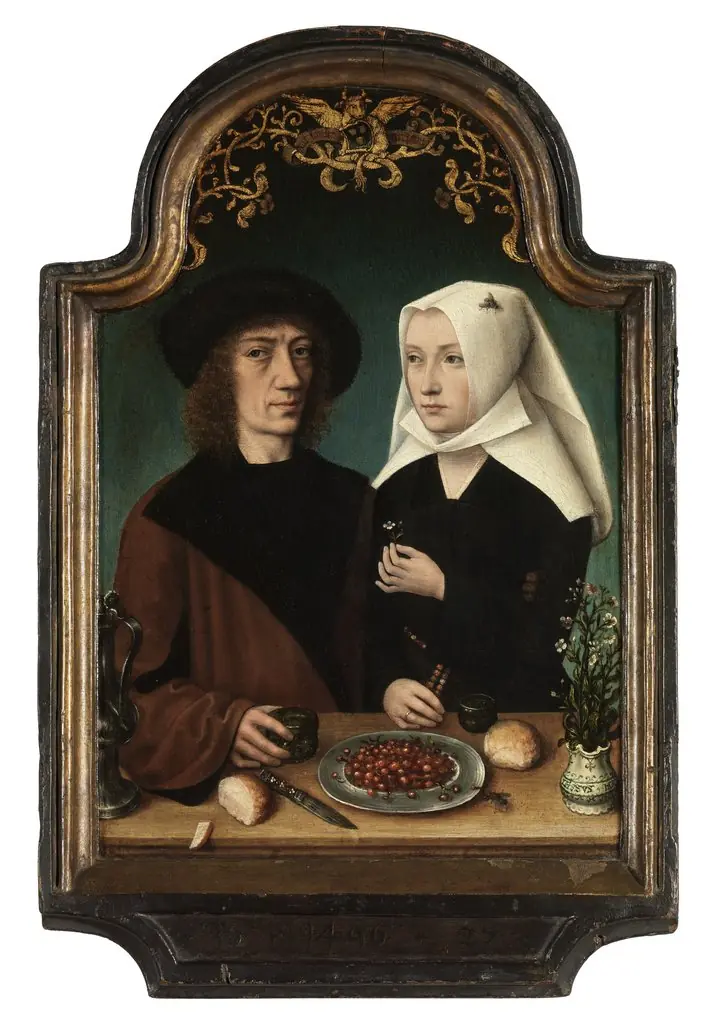 The Painter and his Wife