Artwork
Radha and Hindu God Krishna celebrating the festival Holi
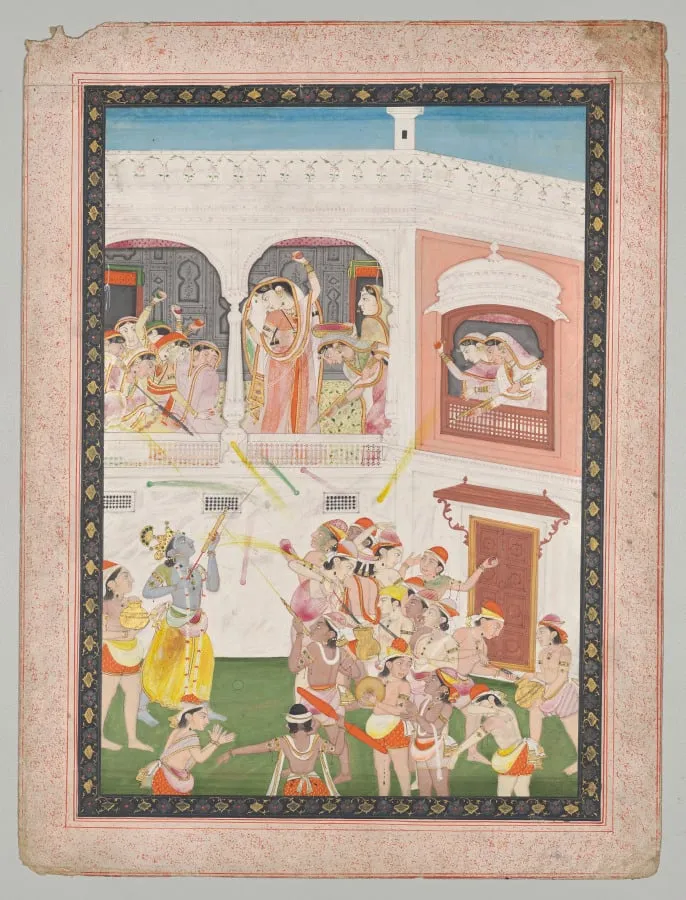
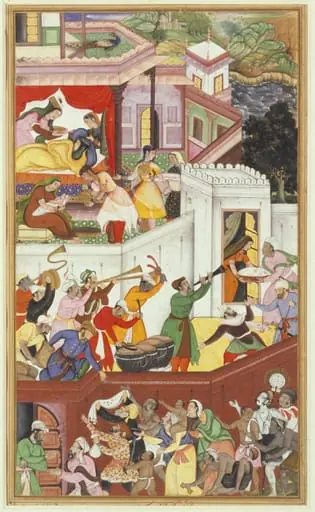
Radha and Hindu God Krishna celebrating the festival Holi is an unspecified painting by the Mughal Painting artist Unknown. It dates from 1805 and is held in the collection of the Cleveland Museum of Art.
About this work
Overview
This painting captures a vibrant outdoor celebration of Holi, the Hindu spring festival marked by the playful throwing of colored powders and water.
This painting captures a vibrant outdoor celebration of Holi, the Hindu spring festival marked by the playful throwing of colored powders and water. Centered on two figures—a blue-skinned male and a pink-robed female—surrounded by a lively crowd, the scene radiates movement and communal joy. Musicians play in the background, while observers watch from elevated balconies, framing the event within a structured yet dynamic composition.
Subject & Meaning
The central figures are Radha and Krishna, divine lovers in Hindu tradition, often depicted in scenes of devotion and revelry. Their presence elevates the festival beyond mere merriment, symbolizing divine love and the dissolution of social boundaries through shared joy. The act of dousing one another in color reflects spiritual renewal and the triumph of light over darkness, core themes of Holi.
Technique & Style
The artist employs bold, saturated hues—emerald greens, crimson reds, and gold accents—to convey energy and festivity. Figures are rendered with fluid outlines and minimal shading, emphasizing pattern and movement over realism. The composition layers foreground activity with distant balconies and musicians, creating depth without perspective, characteristic of regional Indian miniature traditions.
History & Provenance
The painting likely originates from the Pahari or Rajasthani school, active between the 17th and 19th centuries, where devotional themes were commonly illustrated in small-scale works for royal courts. Its preservation suggests it was once part of a private collection, possibly commissioned to honor religious festivals or courtly celebrations, though its exact origin remains undocumented.
Context
Holi celebrations in North Indian courts often blended religious observance with aristocratic entertainment. Paintings like this served both as devotional aids and as records of cultural life, reflecting how spiritual narratives were woven into daily rituals. The inclusion of musicians and elevated observers hints at the patronage of nobility, who participated in and commissioned such imagery.
Legacy
This work contributes to a broader visual tradition of depicting Krishna and Radha in festive settings, influencing later regional styles and modern interpretations of Hindu iconography. While not widely exhibited, such paintings remain important for understanding how religious festivals were visually codified and preserved in pre-colonial India.
Artist & collection

 Domestic Scene
 Giacomo and Cardinal Marco, investing Andrea, Abbot of San Zeno, with his Benefice
 The Nymph of Fontainebleau
 Portrait of a Woman
 Madonna and Child with Saints in the Enclosed Garden
 Venus and Minerva
 Family Group of Four on Sofa
 Wall painting from Room H of the Villa of P. Fannius Synistor at Boscoreale
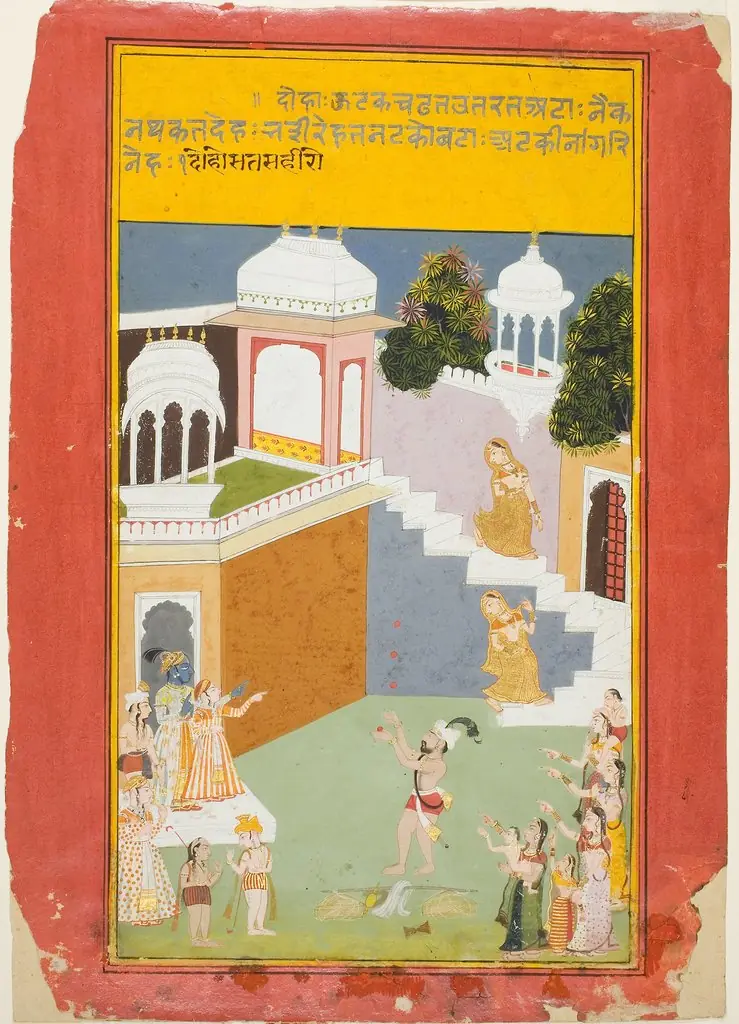 Krishna Watches A Juggler, from a copy of Bihari's Sat Sai
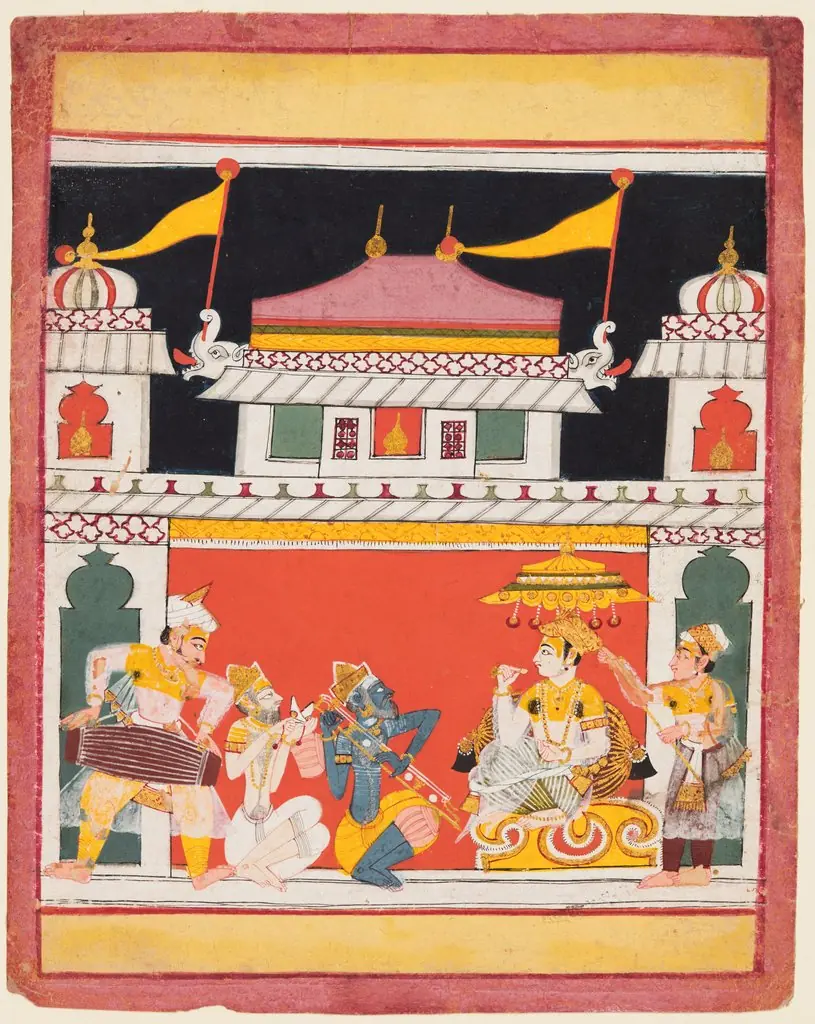 Three Musicians Perform Before a King: Shri Raga, from a Ragamala
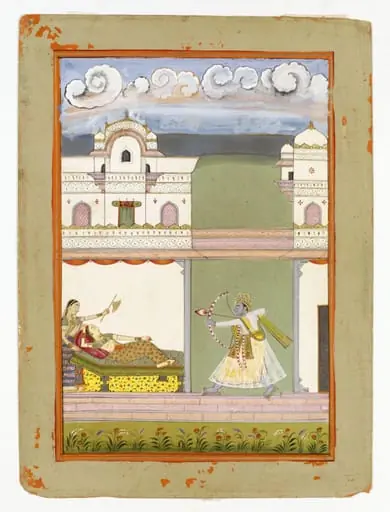 Vibhasa Ragini
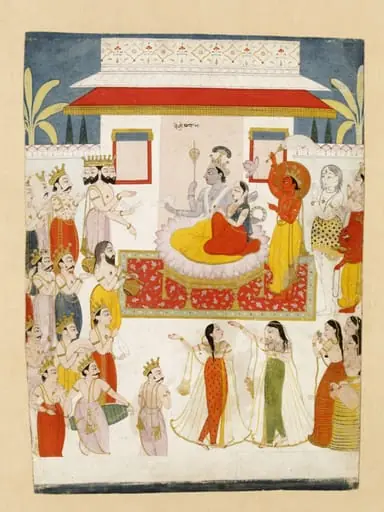 Vishnu
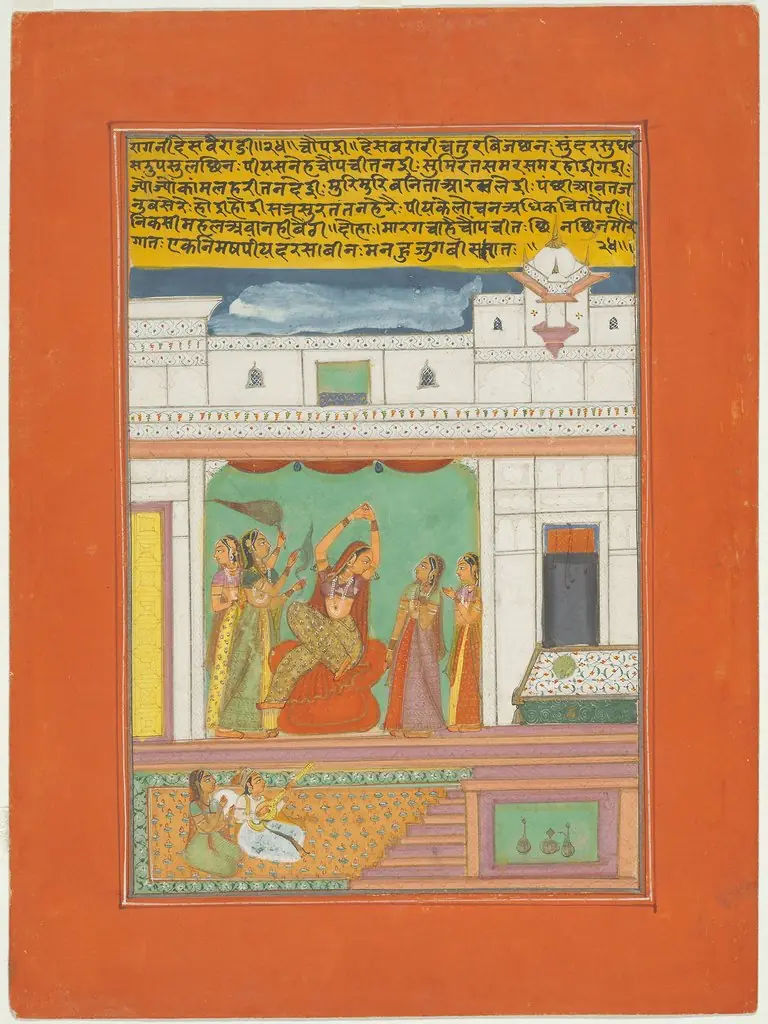 Ragini Desavaradi, Page from a Jaipur Ragamala Set
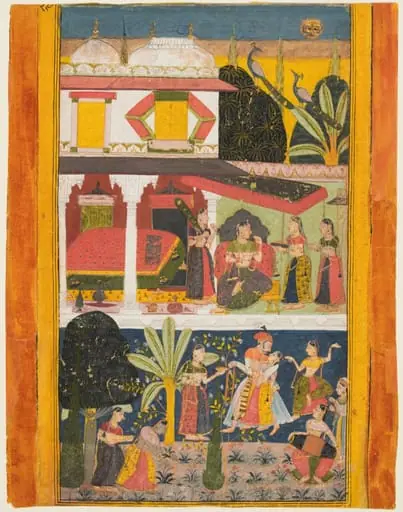 A Heroine and Her Paramour: Malavi Ragini, from a Ragamala
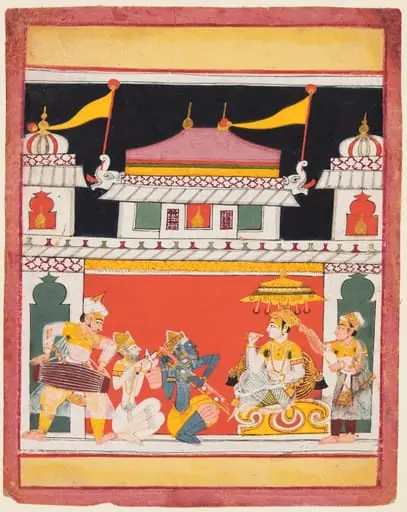 Three Musicians Perform Before a King: Shri Raga, from a Ragamala
 Prince Salim