Artwork
Page from Tales of a Parrot (Tuti-nama): text page
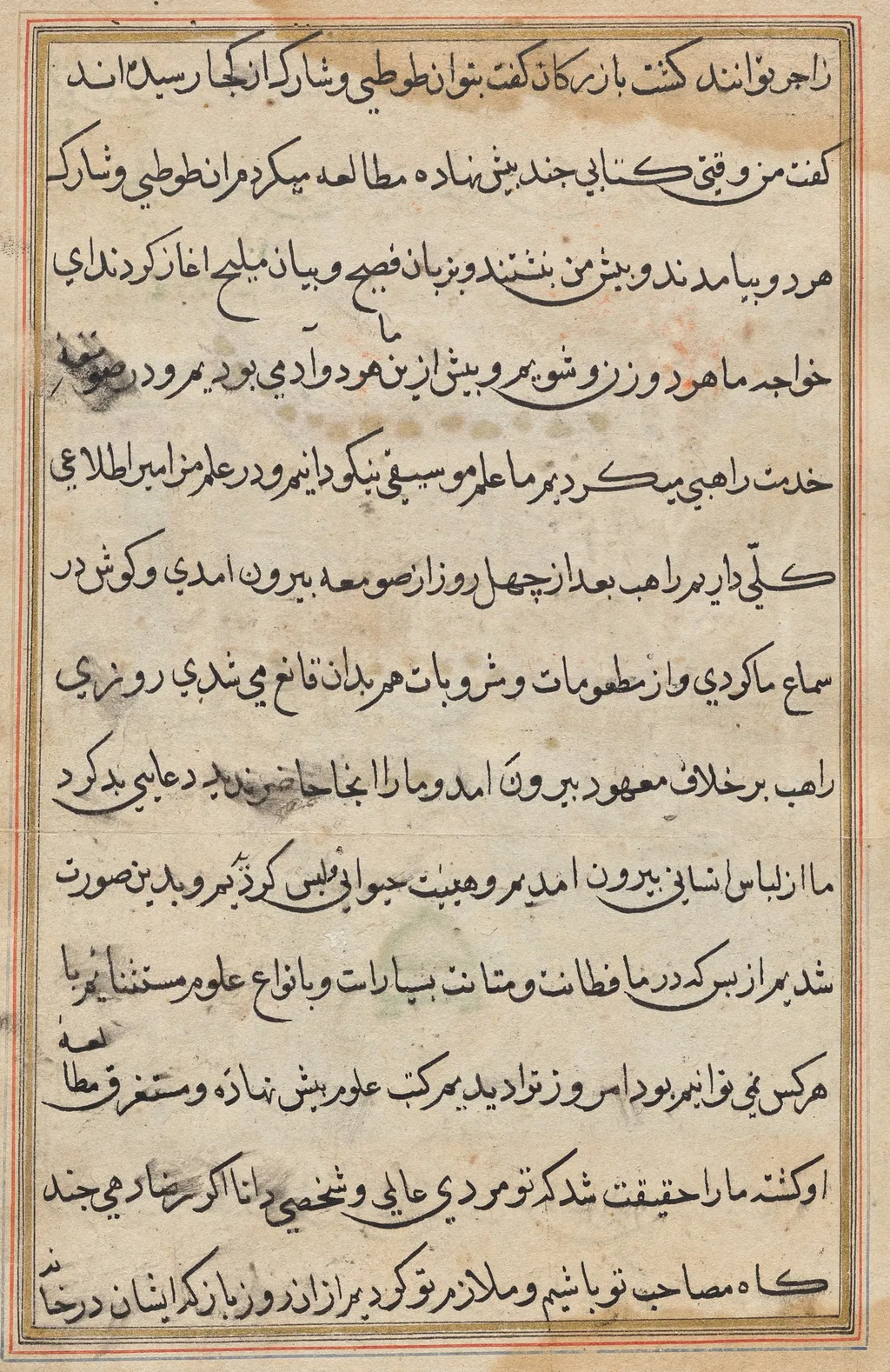
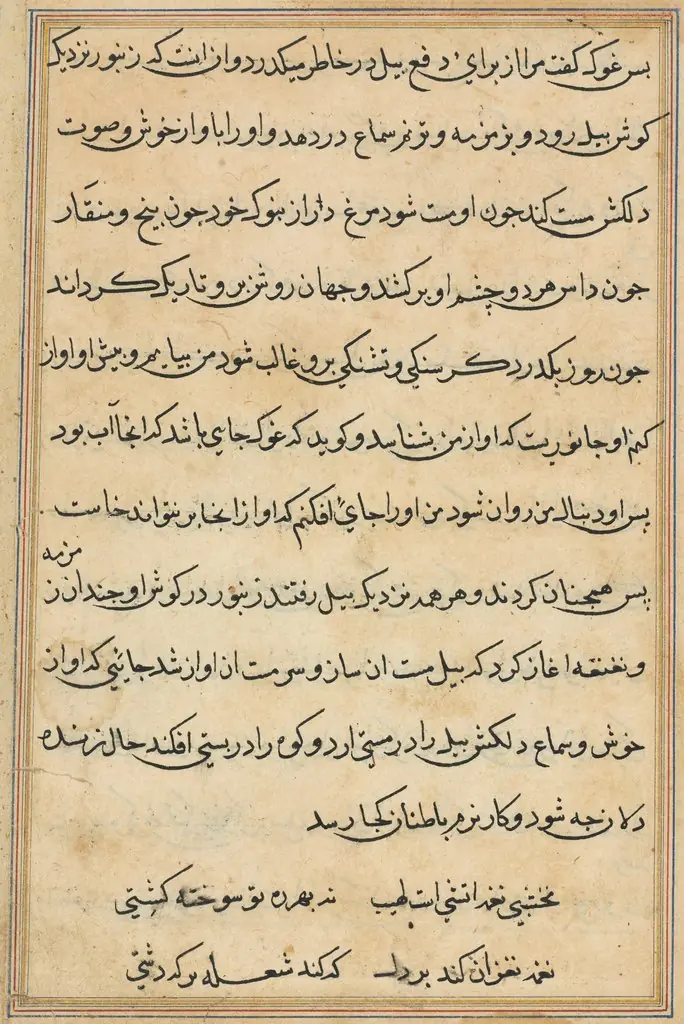
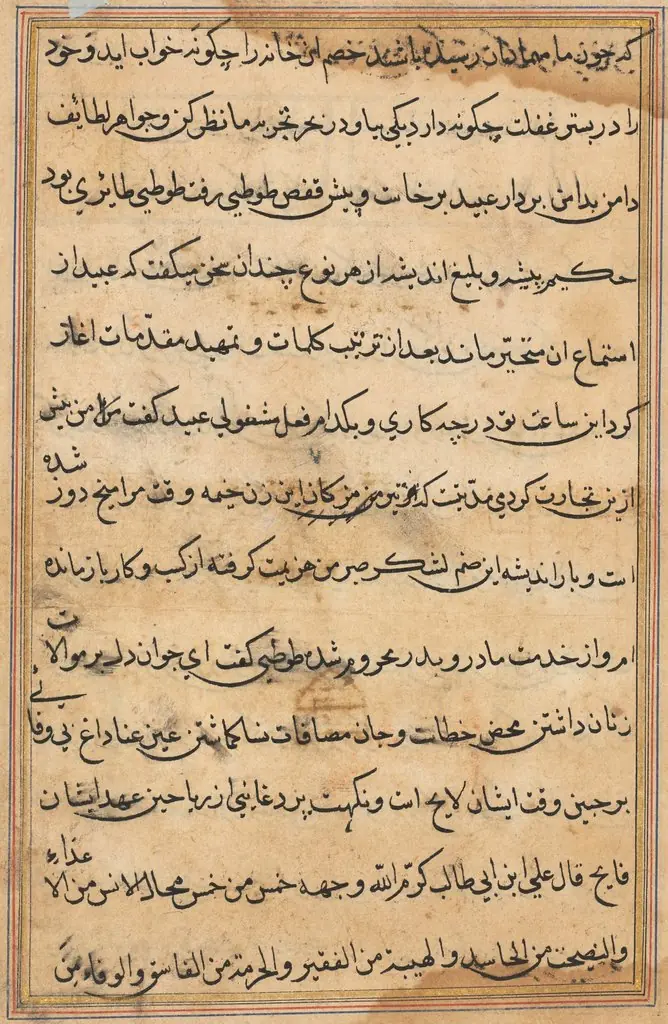
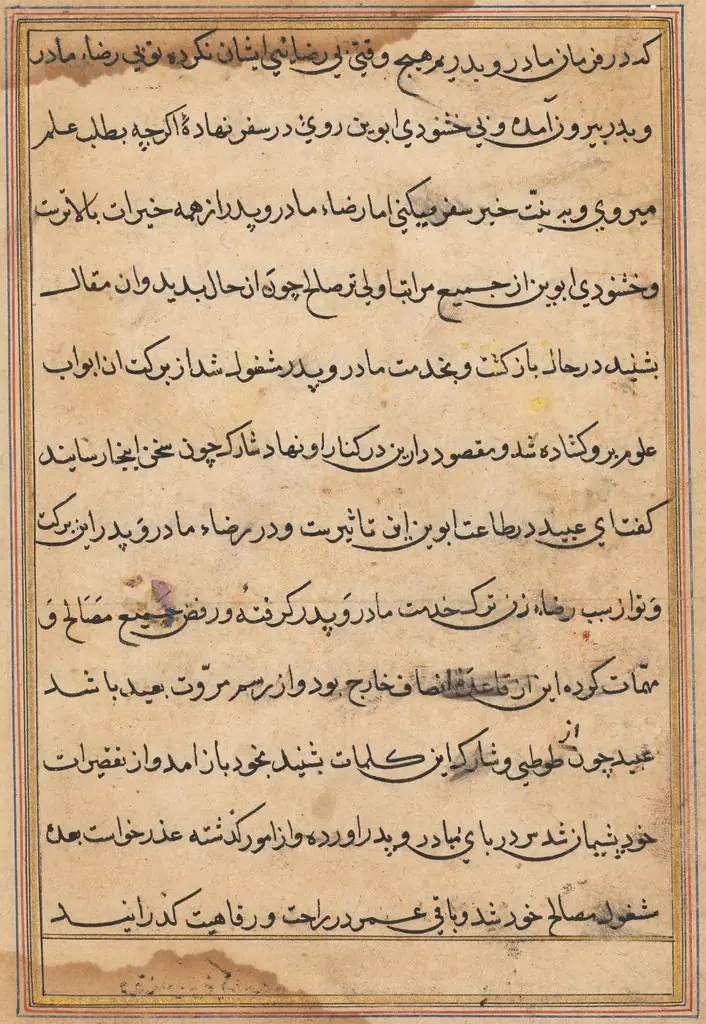
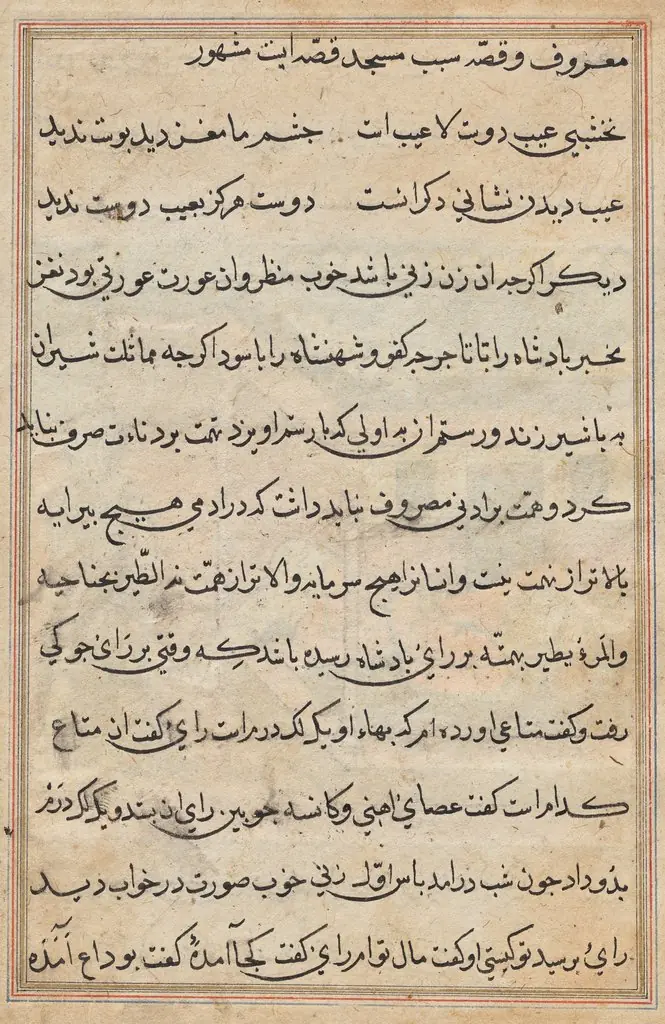
Page from Tales of a Parrot (Tuti-nama): text page is an unspecified painting. It dates from 1560 and is held in the collection of the Cleveland Museum of Art. The object is a single folio from the illustrated manuscript known as *Tuti‑nama* (Tales of a Parrot).
About this work
Overview
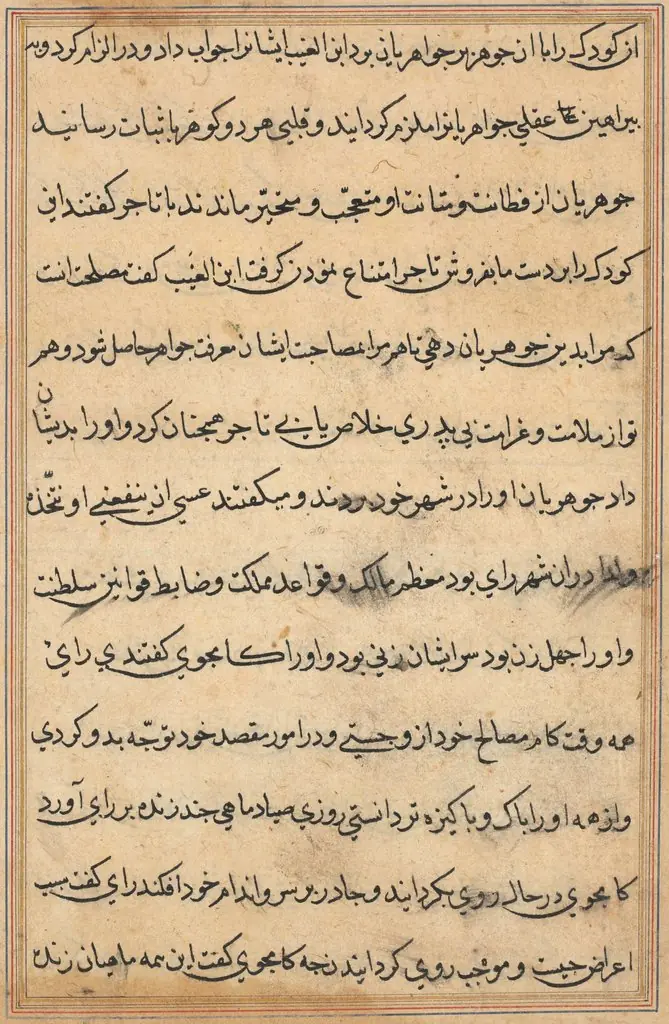
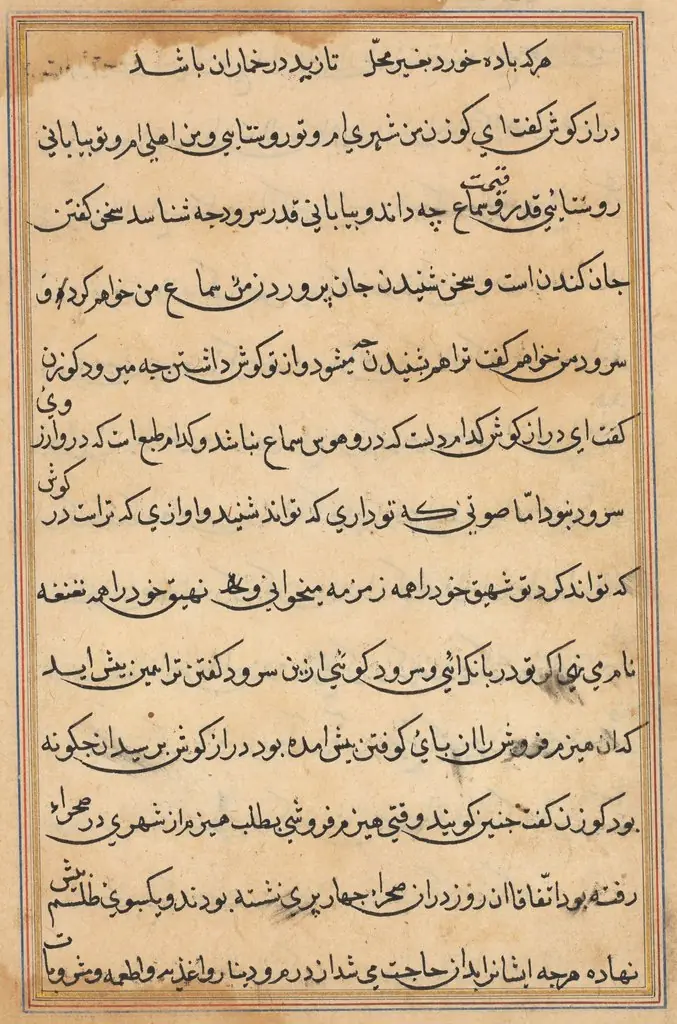
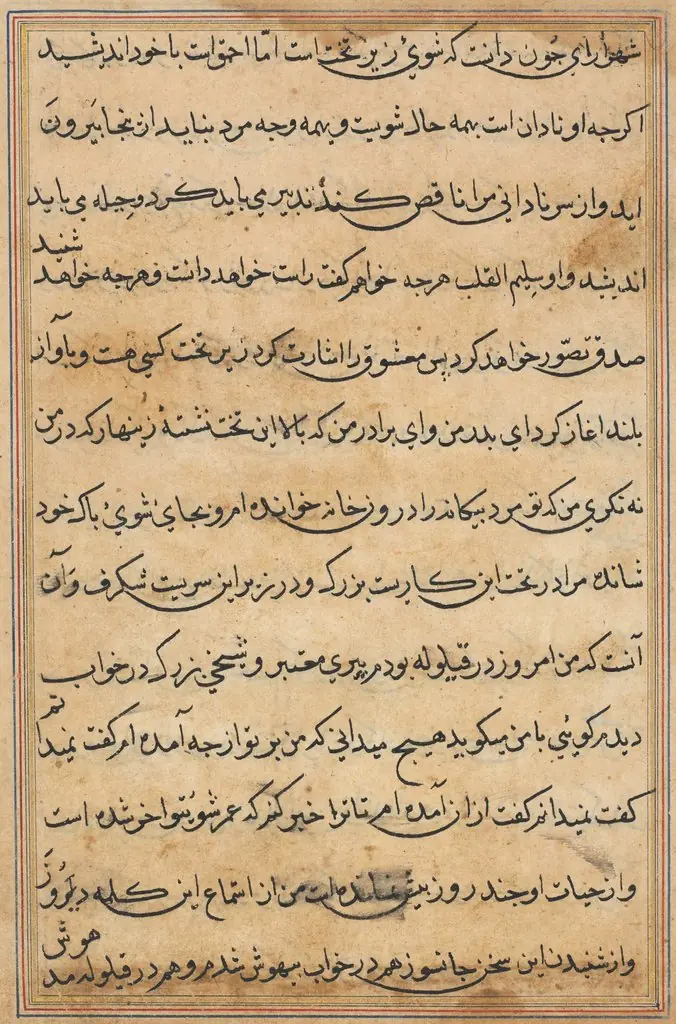
The object is a single folio from the illustrated manuscript known as *Tuti‑nama* (Tales of a Parrot). Rendered on aged, yellowed paper, the page bears a block of text in a flowing Arabic‑Persian script, framed by a narrow red line and a broader gold border. Despite signs of wear—stains and minor tears—the ink remains clear, allowing the calligraphy to be read with ease.
Subject & Meaning
The written passage forms part of a larger collection of moral and didactic stories traditionally conveyed through the voice of a parrot. Such narratives were employed to impart ethical lessons and cultural values, using allegorical animal characters to engage readers in reflective contemplation of proper conduct and social norms.
Technique & Style
The calligrapher employed a formal cursive hand characterized by elongated strokes and ornamental flourishes, typical of Persian literary manuscripts of the period. The decorative border combines a thin vermilion line with a more substantial gilded strip, a motif that frames the text while signaling the manuscript’s prestige and the patron’s investment in visual refinement.
History & Provenance
*Tuti‑nama* was compiled in the Persianate world during the late medieval era, circulating among elite courts and scholarly circles.
*Tuti‑nama* was compiled in the Persianate world during the late medieval era, circulating among elite courts and scholarly circles. This particular leaf, though its exact origin remains undocumented, reflects the manuscript’s broader transmission across regions where Persian literary culture thrived, suggesting it may have belonged to a private collection before entering a museum or library repository.
Artist & collection

 Page from Tales of a Parrot (Tuti-nama): text page
 Page from Tales of a Parrot (Tuti-nama): text page
 Page from Tales of a Parrot (Tuti-nama): text page
 Page from Tales of a Parrot (Tuti-nama): text page
 Page from Tales of a Parrot (Tuti-nama): text page
 Page from Tales of a Parrot (Tuti-nama): text page
 Page from Tales of a Parrot (Tuti-nama): text page
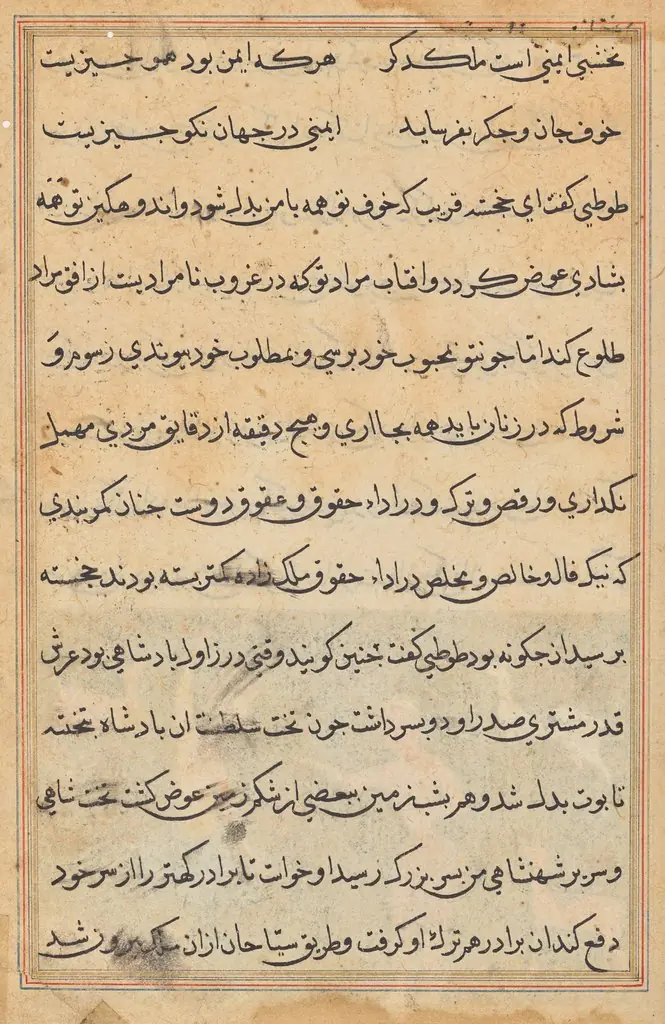 Page from Tales of a Parrot (Tuti-nama): text page
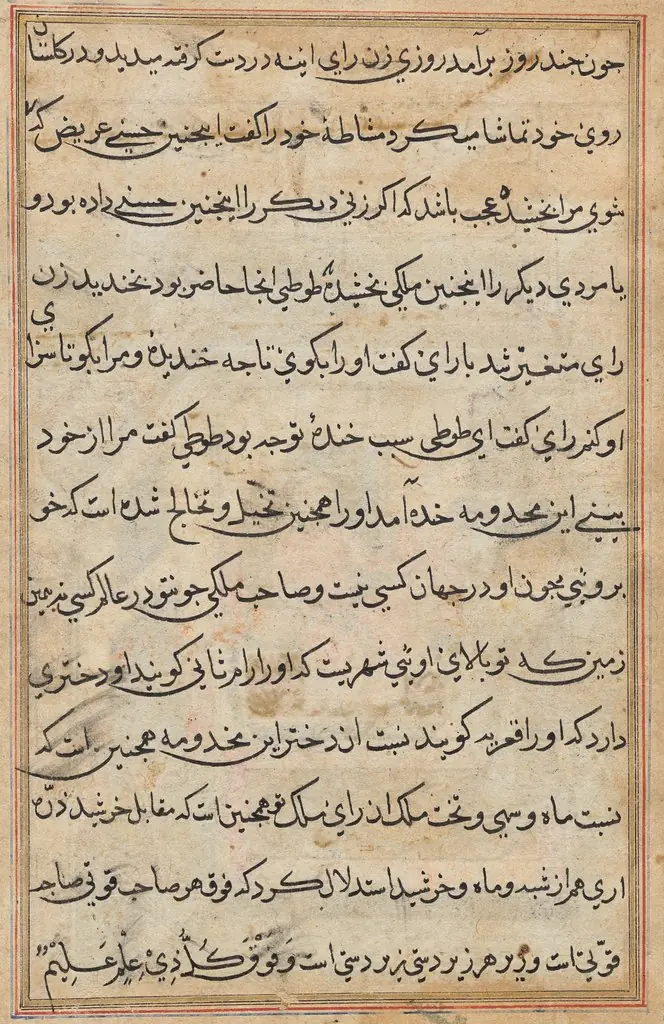 Page from Tales of a Parrot (Tuti-nama): text page