Artwork
Page from Tales of a Parrot (Tuti-nama): text page
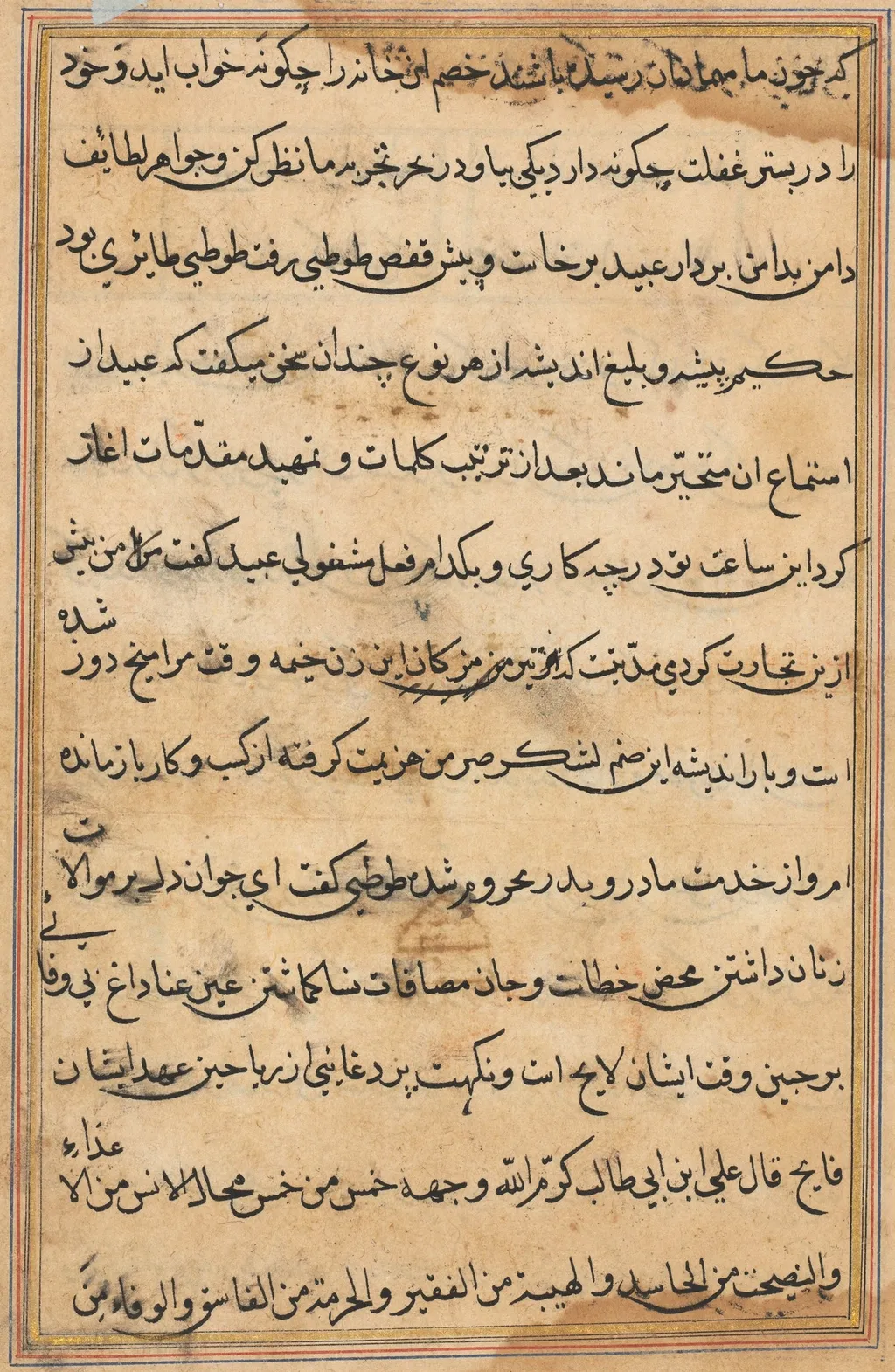
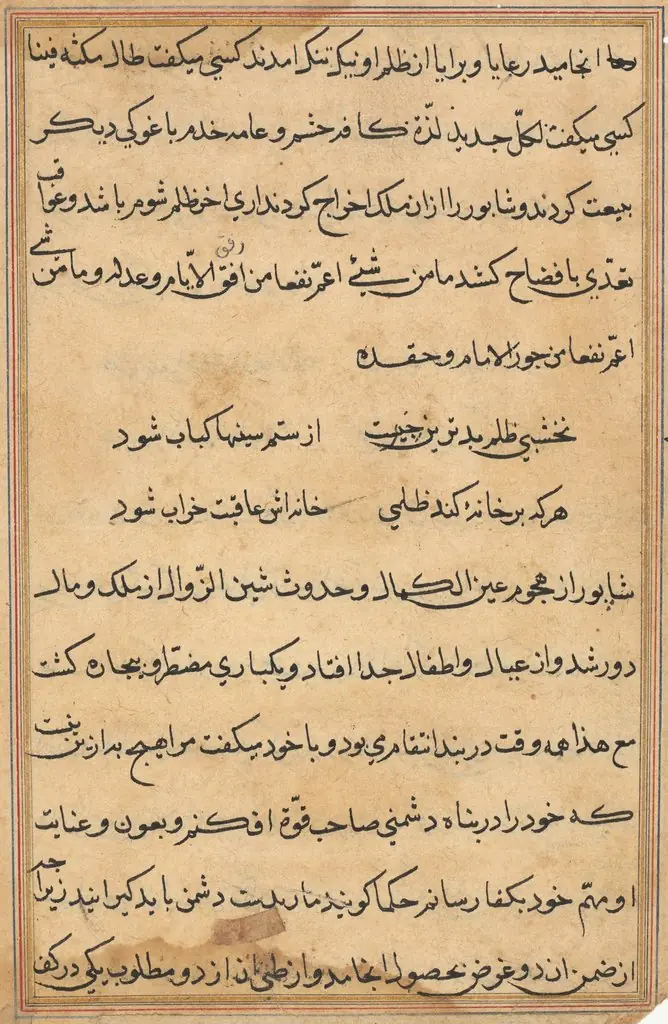
Page from Tales of a Parrot (Tuti-nama): text page is an unspecified painting. It dates from 1560 and is held in the collection of the Cleveland Museum of Art. This illuminated page belongs to the Persian manuscript known as the Tales of a Parrot (Tuti‑nama).
About this work
The script looks like it was written carefully, with some words slightly larger or smaller for emphasis.
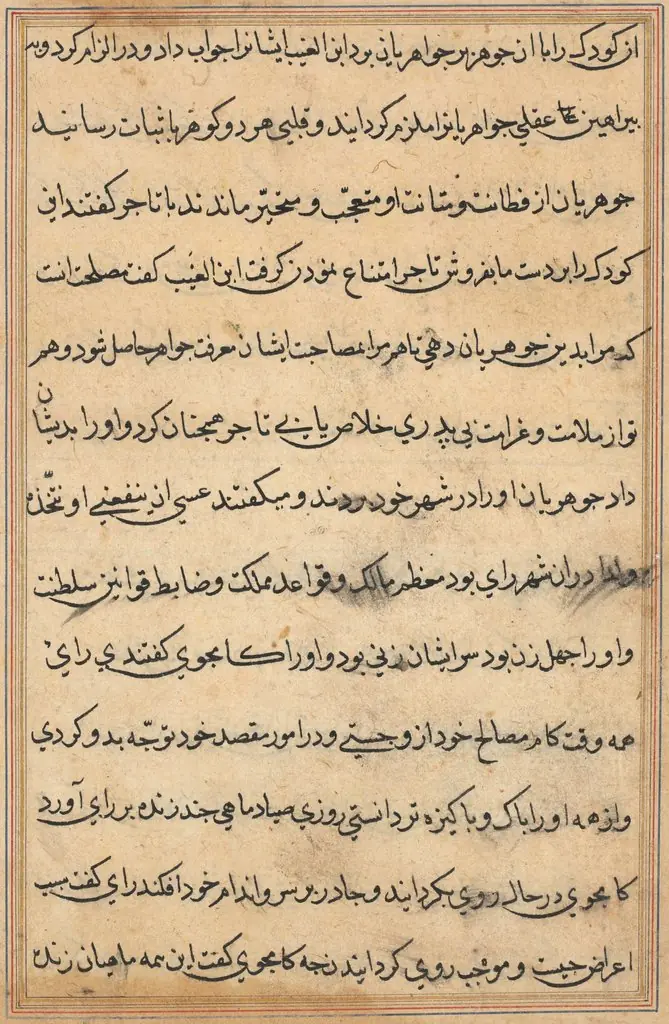
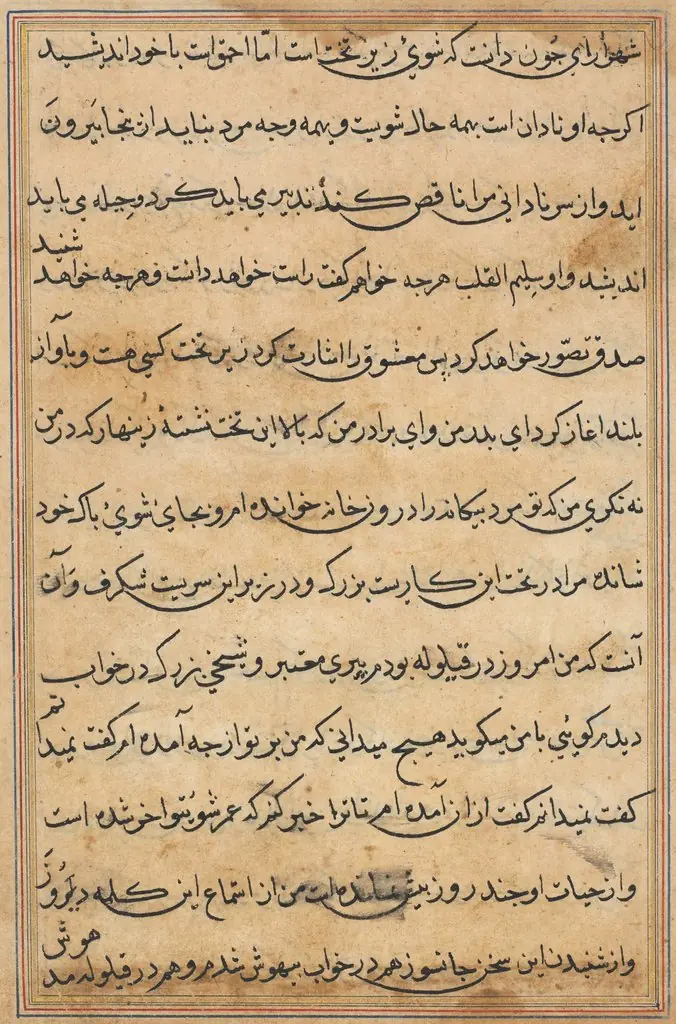
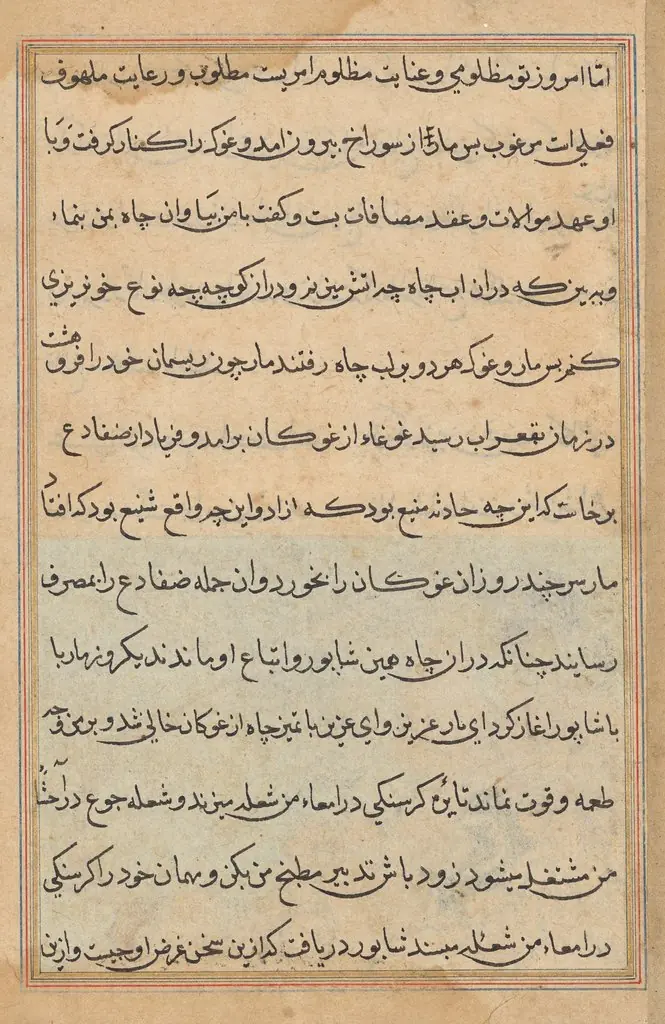
This page is covered in flowing black script, neatly lined up in rows. The paper has a soft tan color with faint brown spots, like old tea stains. A thin red border frames the edges, and the text curves gracefully, almost like handwriting.
The script looks like it was written carefully, with some words slightly larger or smaller for emphasis. This page was made for someone important—Prince Salim—around 1560.
Want to see more? Check out The Cleveland Museum of Art.
Overview
This illuminated page belongs to the Persian manuscript known as the Tales of a Parrot (Tuti‑nama). Executed around 1560, it was created as a luxury presentation copy for Prince Salim, a member of the Mughal court. The sheet functions as a textual illustration rather than a conventional painted scene, showcasing the refined calligraphic art of the period.
Subject & Meaning
The page contains a continuous block of black Persian script, arranged in neat rows that convey a narrative excerpt from the Tuti‑nama. Variations in letter size highlight particular words or phrases, a common technique to guide the reader’s attention and underscore moral or poetic emphasis within the story.
Technique & Style
Written on a soft, tan‑hued paper that bears faint brown stains reminiscent of tea, the calligrapher employed a flowing, cursive hand typical of 16th‑century Persian court manuscripts. A thin red border frames the page, providing a subtle decorative element that delineates the text area without overwhelming the script.
History & Provenance
Commissioned for Prince Salim, the son of Emperor Akbar, the page reflects the Mughal practice of producing lavishly written gifts for royal family members. The manuscript later entered European collections, eventually becoming part of the holdings of the Cleveland Museum of Art, where it is displayed as an example of Mughal book art.
Context
During the mid‑16th century, the Mughal empire fostered a synthesis of Persian literary traditions and Indian artistic sensibilities. The Tuti‑nama, a collection of moral tales, was a popular text for instruction and entertainment among the elite, and its presentation copies often featured elaborate calligraphy and modest ornamentation.
Legacy
The page illustrates the high value placed on calligraphic excellence in Mughal court culture, influencing subsequent manuscript production across the empire. Its preservation in a major museum allows scholars to study the material qualities of Mughal paper, ink, and decorative borders, contributing to broader understandings of South Asian book arts.
Artist & collection

 Page from Tales of a Parrot (Tuti-nama): text page
 Page from Tales of a Parrot (Tuti-nama): text page
 Page from Tales of a Parrot (Tuti-nama): text page
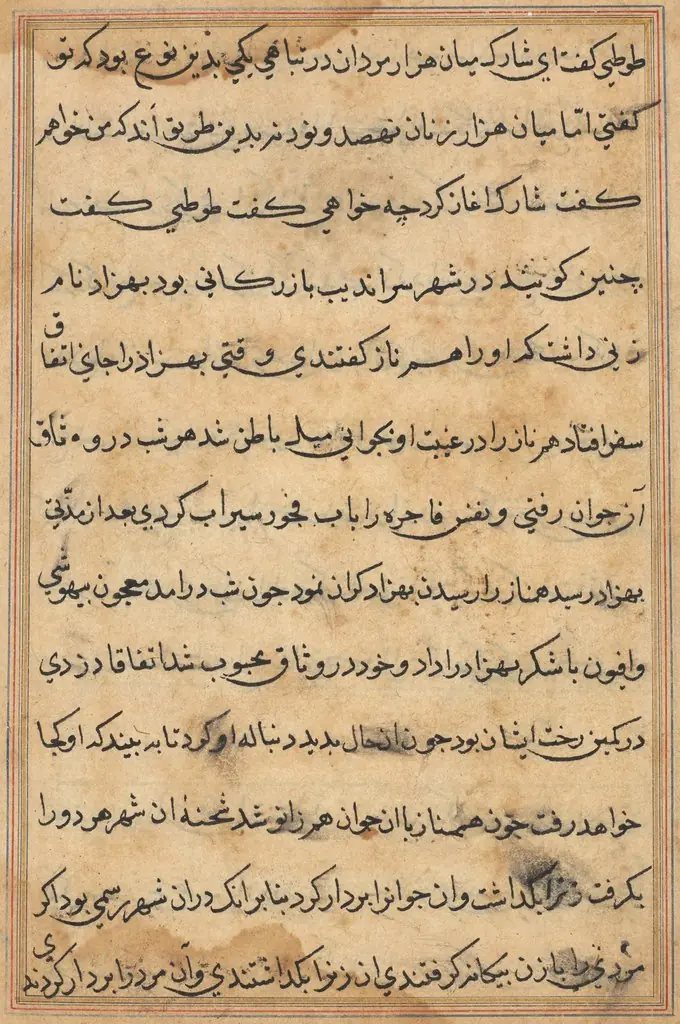 Page from Tales of a Parrot (Tuti-nama): text page
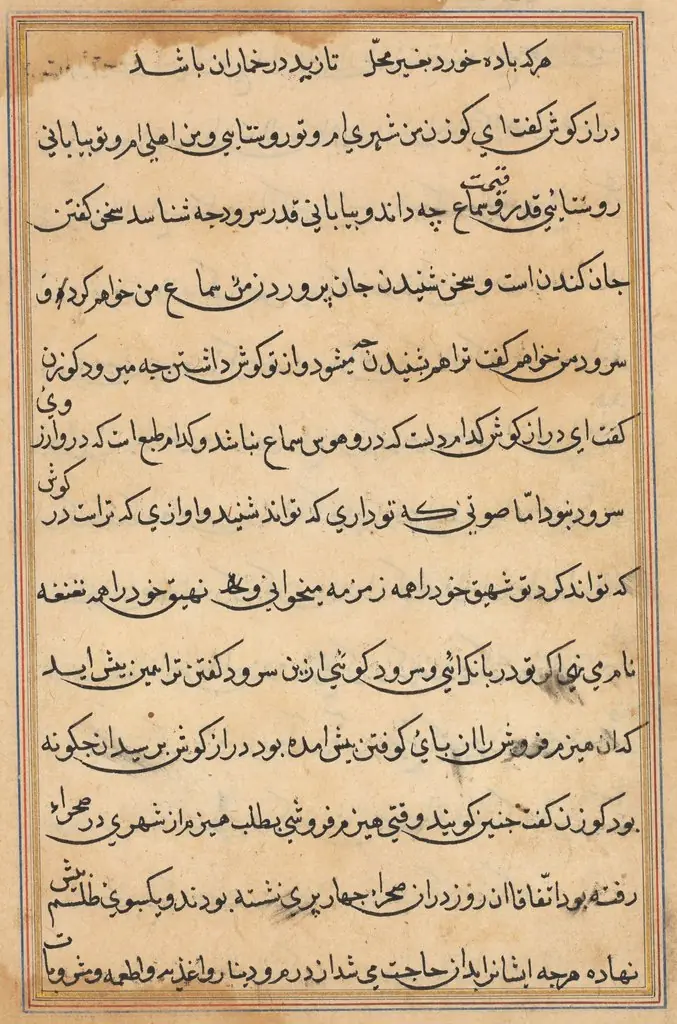 Page from Tales of a Parrot (Tuti-nama): text page
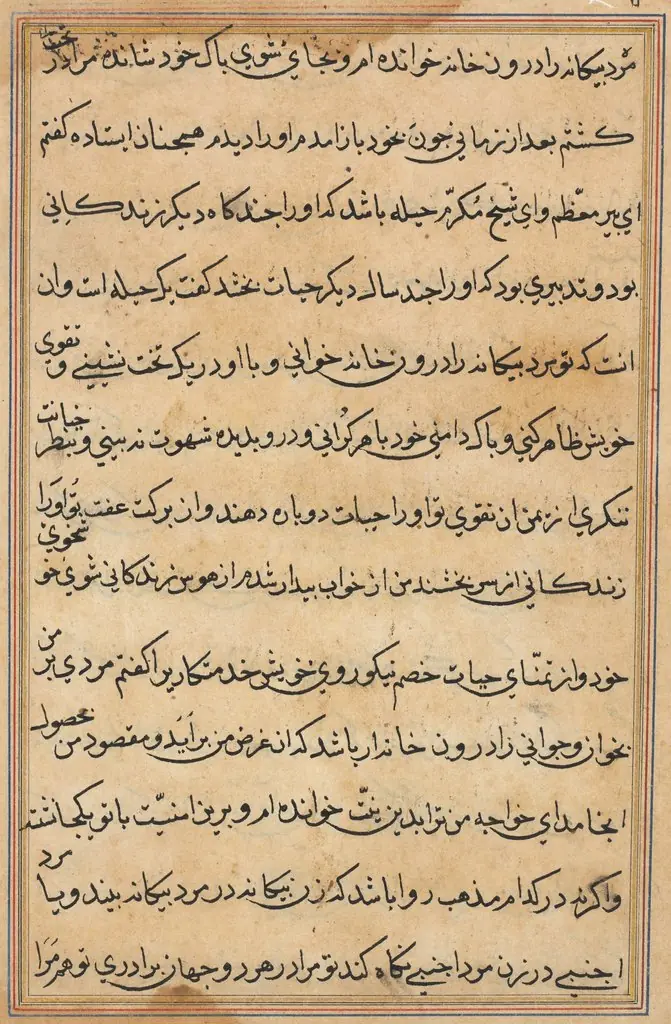 Page from Tales of a Parrot (Tuti-nama): text page
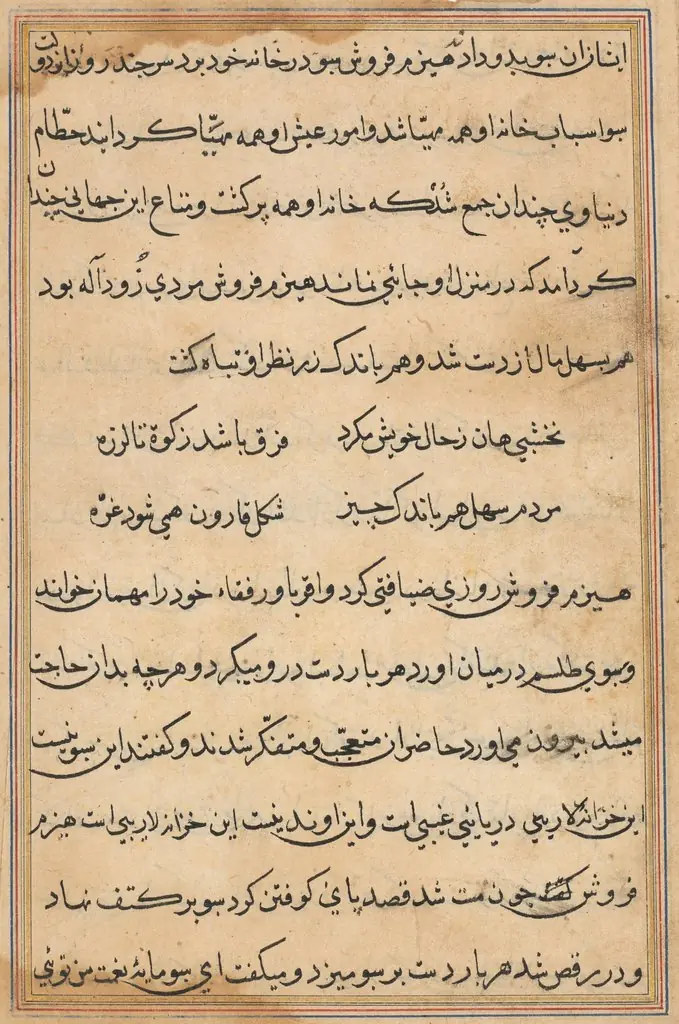 Page from Tales of a Parrot (Tuti-nama): text page
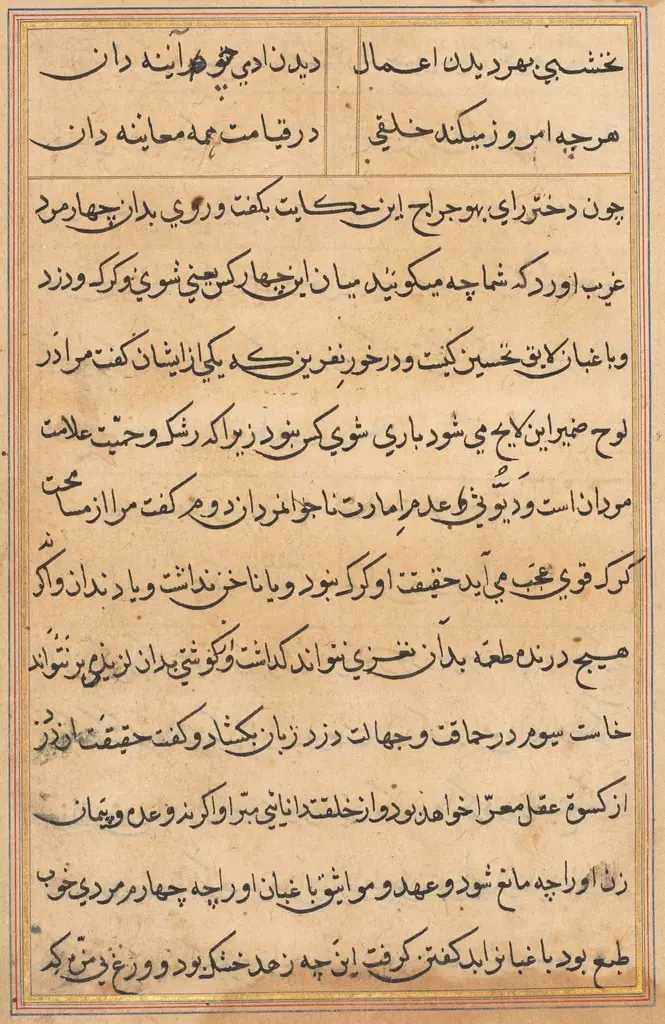 Page from Tales of a Parrot (Tuti-nama): text page
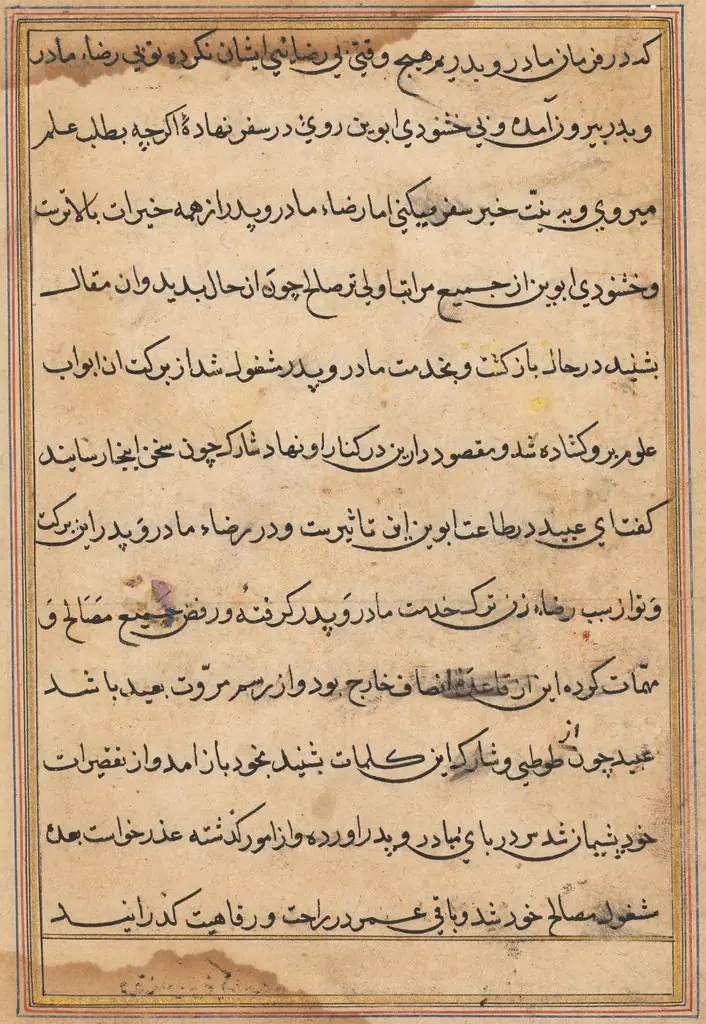 Page from Tales of a Parrot (Tuti-nama): text page
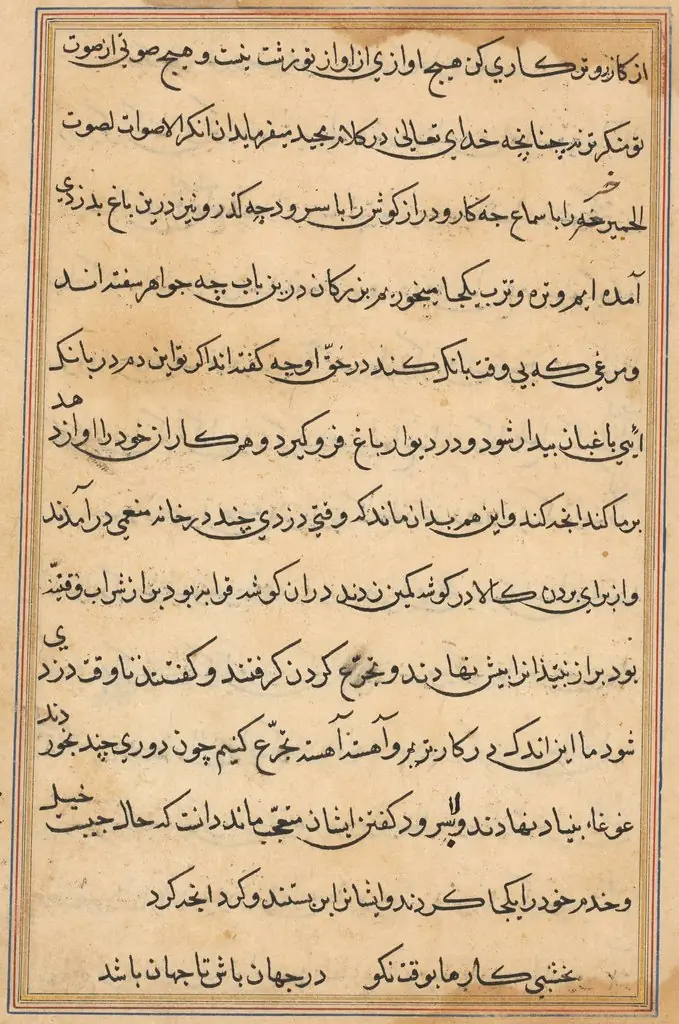 Page from Tales of a Parrot (Tuti-nama): text page
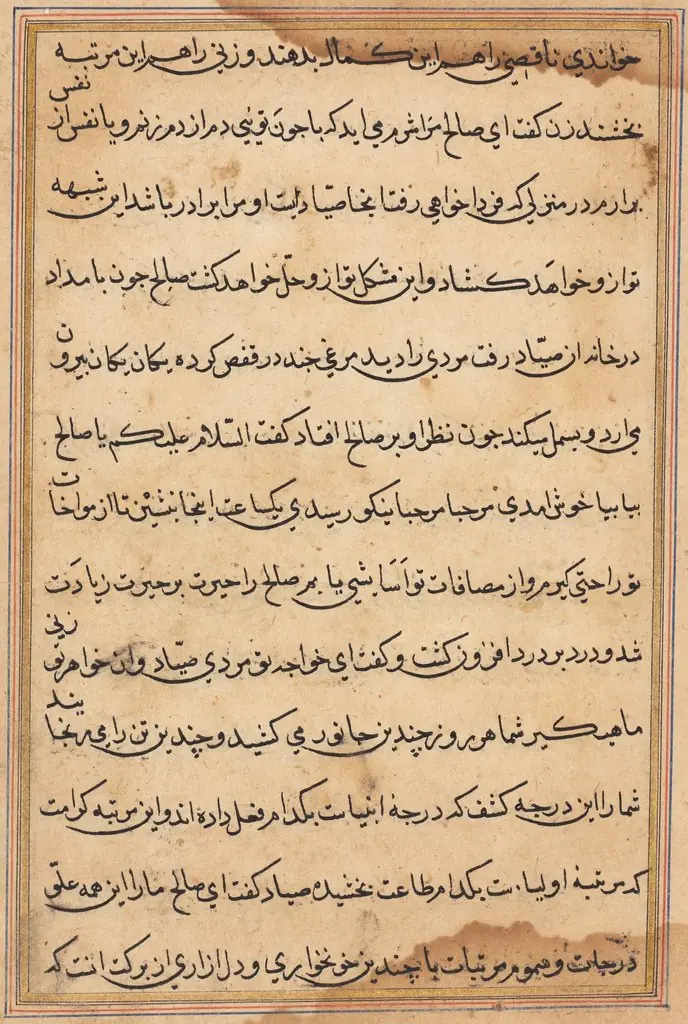 Page from Tales of a Parrot (Tuti-nama): text page
 Page from Tales of a Parrot (Tuti-nama): text page