Artwork
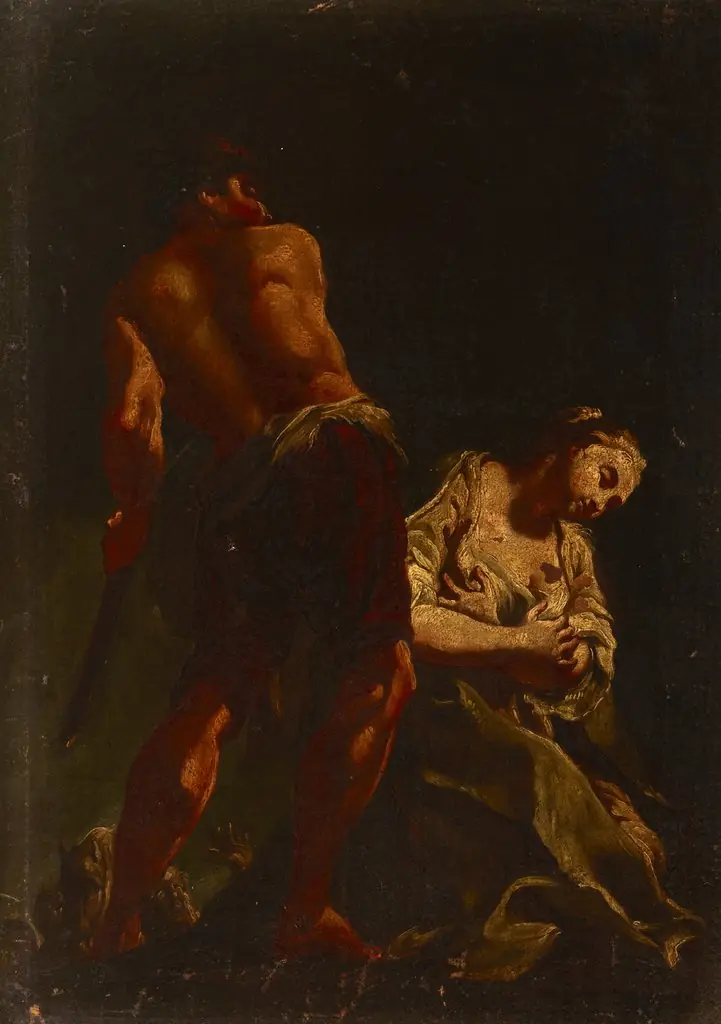
St. Juliana of Nicomedia defeats the devil
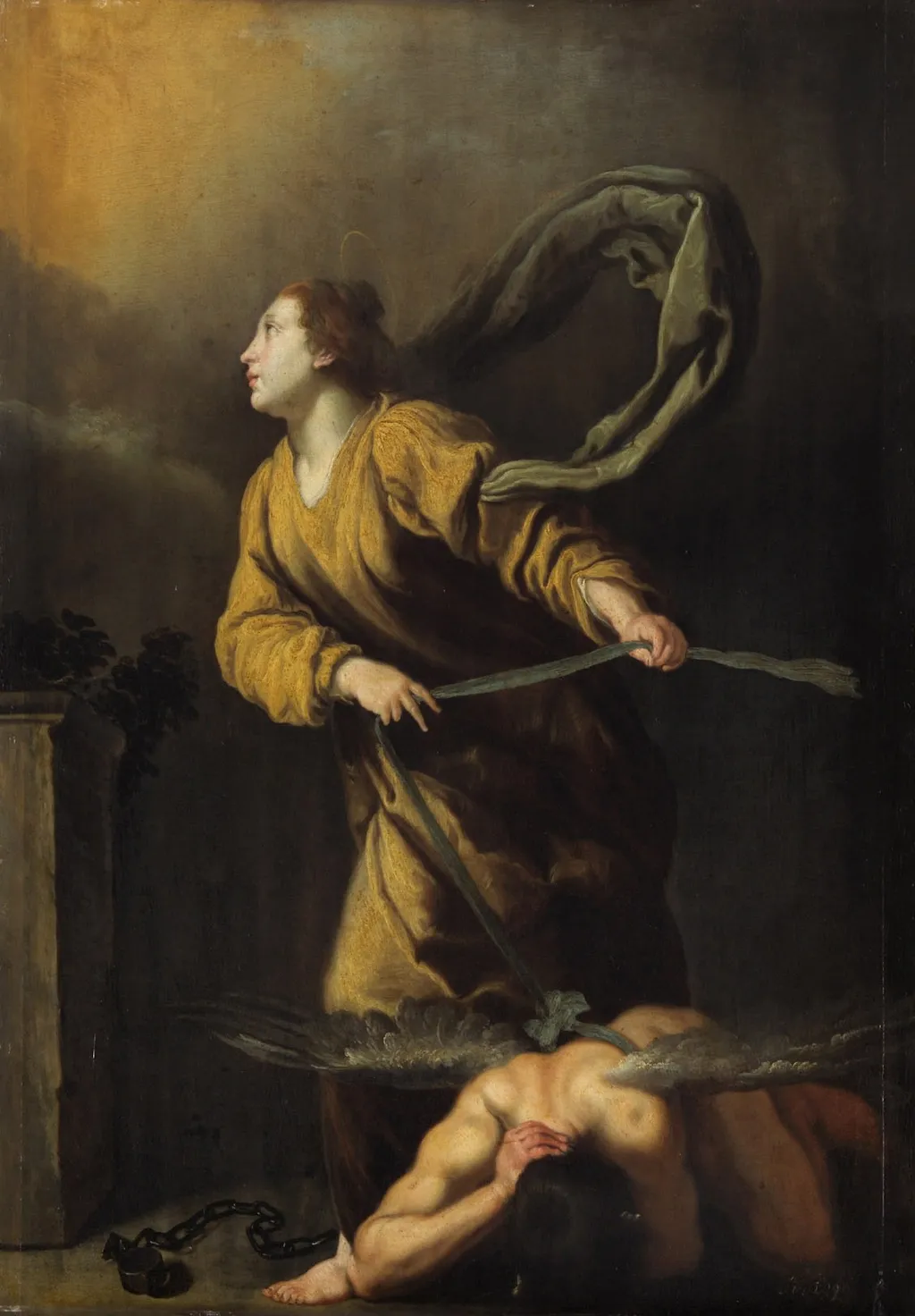
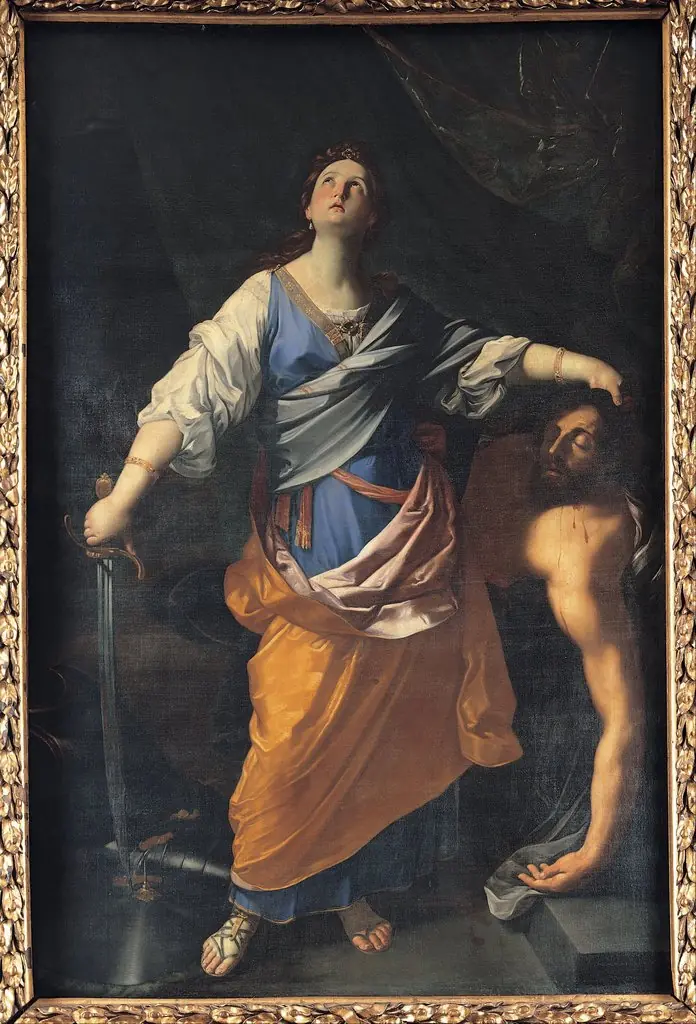
St. Juliana of Nicomedia defeats the devil is an oil painting by the Early Baroque Italian artist Unknown. It dates from 1620 and is held in the collection of the Kunsthistorisches Museum. This oil painting portrays St.
About this work
Overview
Juliana of Nicomedia in a moment of spiritual victory over a fallen male figure, traditionally interpreted as the devil.
This oil painting portrays St. Juliana of Nicomedia in a moment of spiritual victory over a fallen male figure, traditionally interpreted as the devil. The composition centers on her upright, commanding stance above the prostrate man, with symbolic elements like a sword, a draped cloth, and a broken chain reinforcing her triumph. Dramatic lighting and textured brushwork heighten the emotional intensity of the scene.
Subject & Meaning
St. Juliana, a Christian martyr, is depicted overcoming a demonic force, symbolizing the triumph of faith over evil. Her upward gaze suggests divine guidance, while the chain on the ground implies broken bondage. The nudity of both figures strips away social identity, focusing attention on moral and spiritual conflict. The green cloth may reference healing or divine grace, contrasting with the sword’s violence.
Technique & Style
The artist employs chiaroscuro to sharply define the figures against a dark background, enhancing their three-dimensionality and emotional weight. Impasto is used in the folds of Juliana’s yellow robe to create tactile richness, while glazing adds luminosity to her skin and fabric. These methods combine to produce a sculptural quality, grounding the supernatural subject in physical presence.
History & Provenance
The painting’s origin is tied to Counter-Reformation devotional art, likely commissioned for a religious institution in Italy or Spain during the late 16th or early 17th century. Its subject aligns with popular hagiographic imagery of the period, meant to inspire piety through dramatic martyrdom narratives. Early records suggest it remained in ecclesiastical collections until the 19th century.
Context
Created amid heightened religious fervor following the Council of Trent, the image reflects the Church’s emphasis on visual storytelling to reinforce doctrine. St. Juliana’s depiction as a warrior-saint responds to contemporary demands for strong female exemplars of faith. The absence of traditional martyrdom symbols—like instruments of torture—shifts focus to inner spiritual victory rather than physical suffering.
Legacy
Though not widely reproduced, the painting contributes to a niche tradition of female saint imagery that emphasizes agency and divine authority. Its stylistic choices influenced later devotional works in southern Europe, particularly in regions where personal piety and visual symbolism were closely linked. It remains a rare example of a female saint portrayed as an active conqueror rather than a passive victim.
Artist & collection

 Domestic Scene
 Giacomo and Cardinal Marco, investing Andrea, Abbot of San Zeno, with his Benefice
 The Nymph of Fontainebleau
 Portrait of a Woman
 Madonna and Child with Saints in the Enclosed Garden
 Venus and Minerva
 Family Group of Four on Sofa
 Wall painting from Room H of the Villa of P. Fannius Synistor at Boscoreale