Artwork
Apoteosis de Judith (Tit. Ant.: Judith llevando -en triunfo- la cabeza de Holofernes)
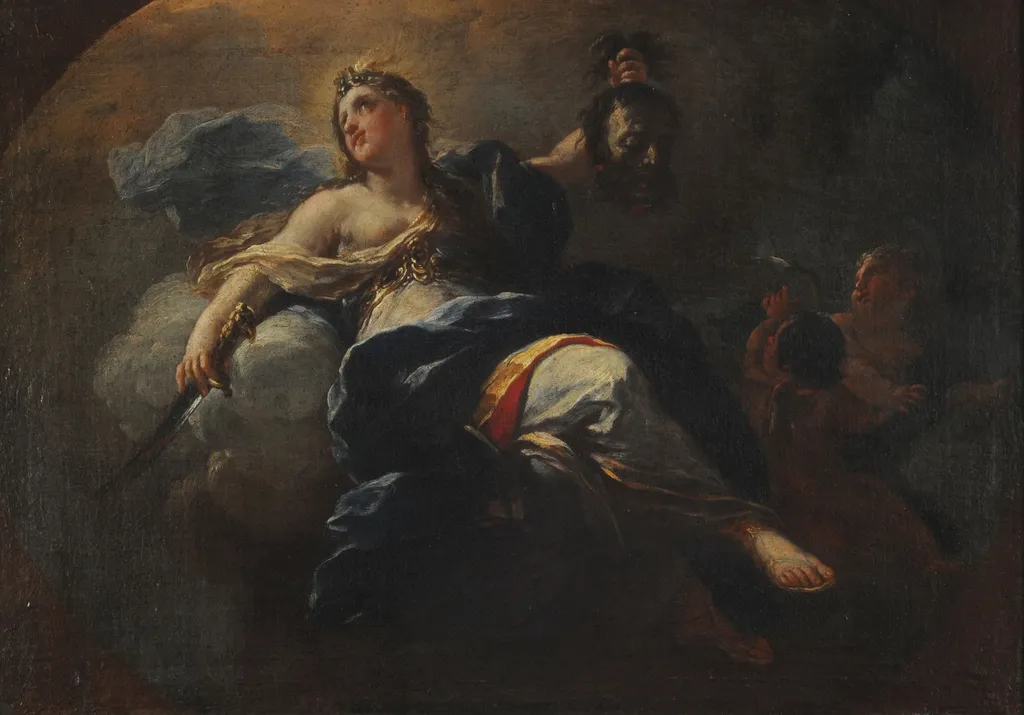
Apoteosis de Judith (Tit. Ant.: Judith llevando -en triunfo- la cabeza de Holofernes) is an oil painting by Giacomo del Pò. It dates from 1699 and is held in the collection of the National Museum of Fine Arts, Argentina.
About this work
Overview
The composition emphasizes stillness and divine sanction rather than martial triumph, distinguishing it from more dynamic portrayals of the same narrative.
Painted around 1699 by Giacomo del Pò, this oil work presents a celestial reinterpretation of the biblical story of Judith. Unlike traditional depictions of her in action, the subject is shown in repose, elevated above the earthly scene of violence. The composition emphasizes stillness and divine sanction rather than martial triumph, distinguishing it from more dynamic portrayals of the same narrative.
Subject & Meaning
Judith is portrayed not as a warrior but as a crowned, serene figure resting on clouds, suggesting her ascension to a heavenly realm. The beheading of Holofernes occurs in the background, rendered as a distant, almost detached event. This arrangement shifts focus from physical victory to spiritual elevation, framing Judith as an instrument of divine justice rather than a mere heroine of war.
Technique & Style
Del Pò employs soft chiaroscuro to model Judith’s flowing robes, contrasting their luminous white and blue tones against the stormy, dark sky. The figures below are rendered with looser brushwork, creating spatial depth and emotional distance. The composition leans toward Baroque theatricality but tempers it with a quiet, almost ethereal calm, reflecting the artist’s engagement with both Roman and Neapolitan traditions.
History & Provenance
The painting entered the collection of the National Museum of Fine Arts in Buenos Aires in the early 20th century, likely through acquisitions of European works during a period of institutional expansion. Its origins trace to del Pò’s Roman circle, where biblical subjects were frequently reimagined with allegorical weight. No earlier provenance records are publicly documented beyond its association with the artist’s late career.
Context
Created near the end of the 17th century, the work reflects the enduring popularity of Judith as a symbol of virtue overcoming tyranny, particularly in Catholic contexts. Del Pò’s version aligns with Counter-Reformation ideals that favored moral allegory over graphic violence. The celestial setting echoes contemporary devotional imagery, where saints and righteous figures were shown in heavenly glory.
Legacy
While not widely reproduced or studied in mainstream art history, the painting remains a distinctive example of late Baroque reinterpretation of biblical heroines. Its emphasis on spiritual transcendence over physical action offers a rare visual counterpoint to more common depictions of Judith. It continues to serve as a quiet, contemplative presence within the Buenos Aires museum’s European collection.
Own this work as a print
Artist & collection

Museum
National Museum of Fine Arts, Argentina
Continue through works from the same source collection.
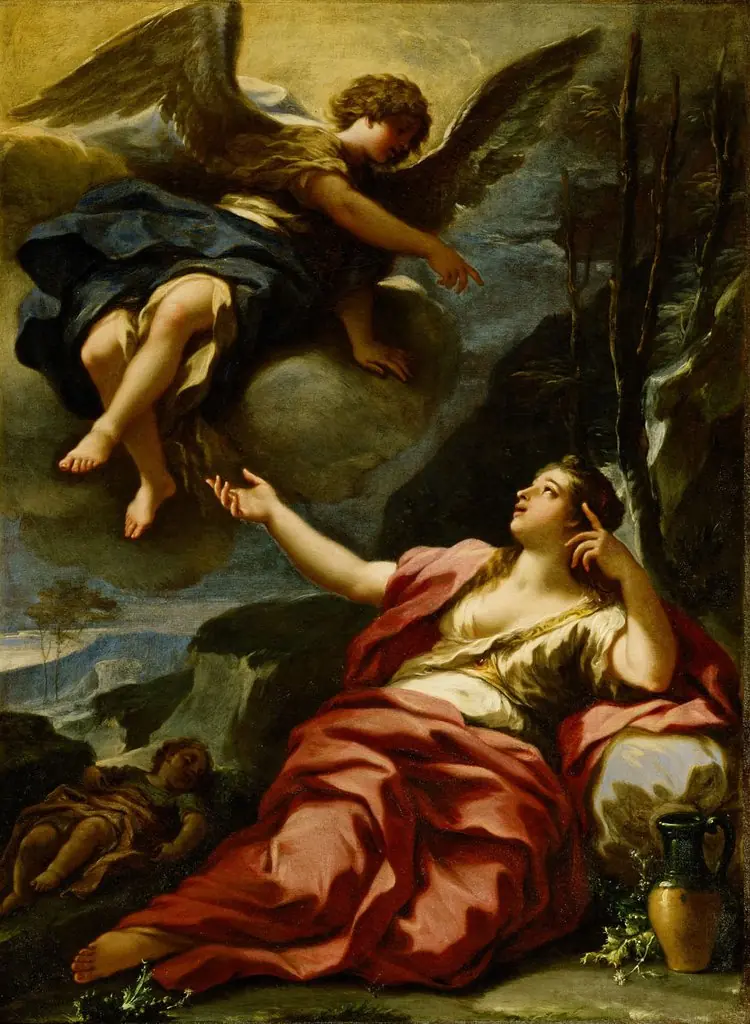 The angel appears to Hagar in the desert
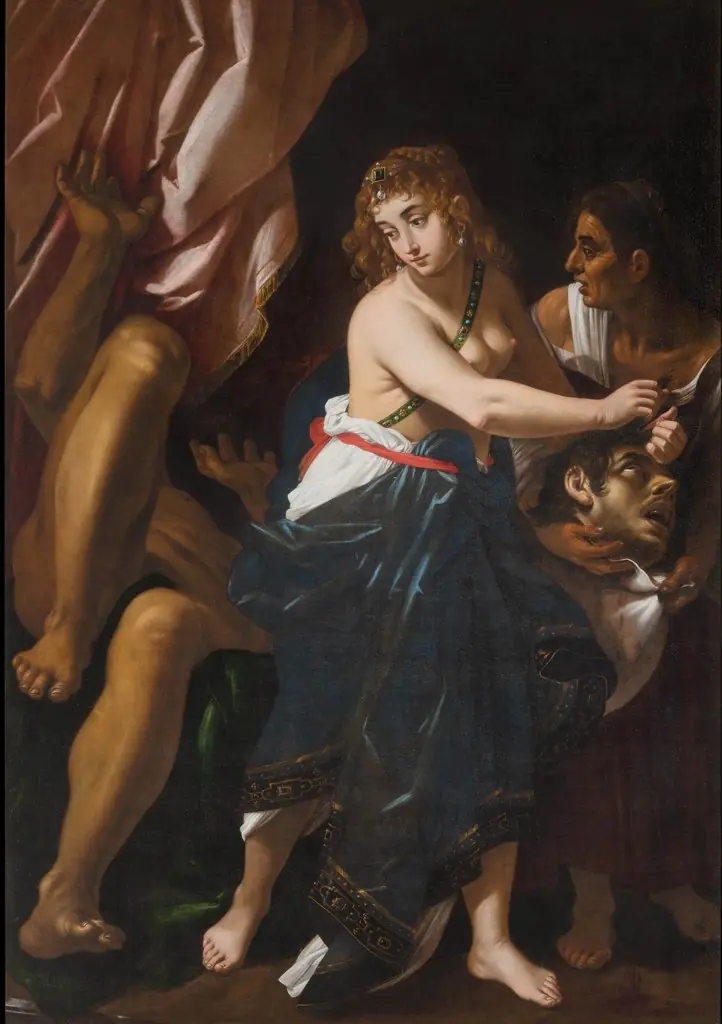 Judith and the Head of Holofernes
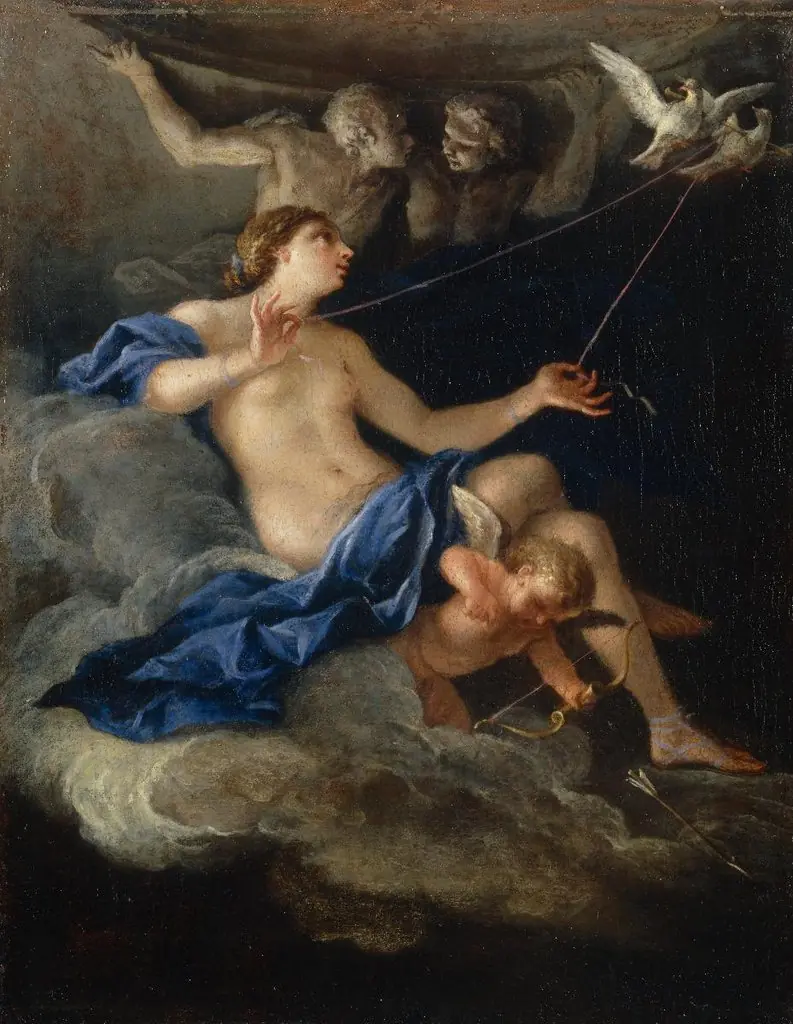 Venere e Amore nel segno dei Gemelli
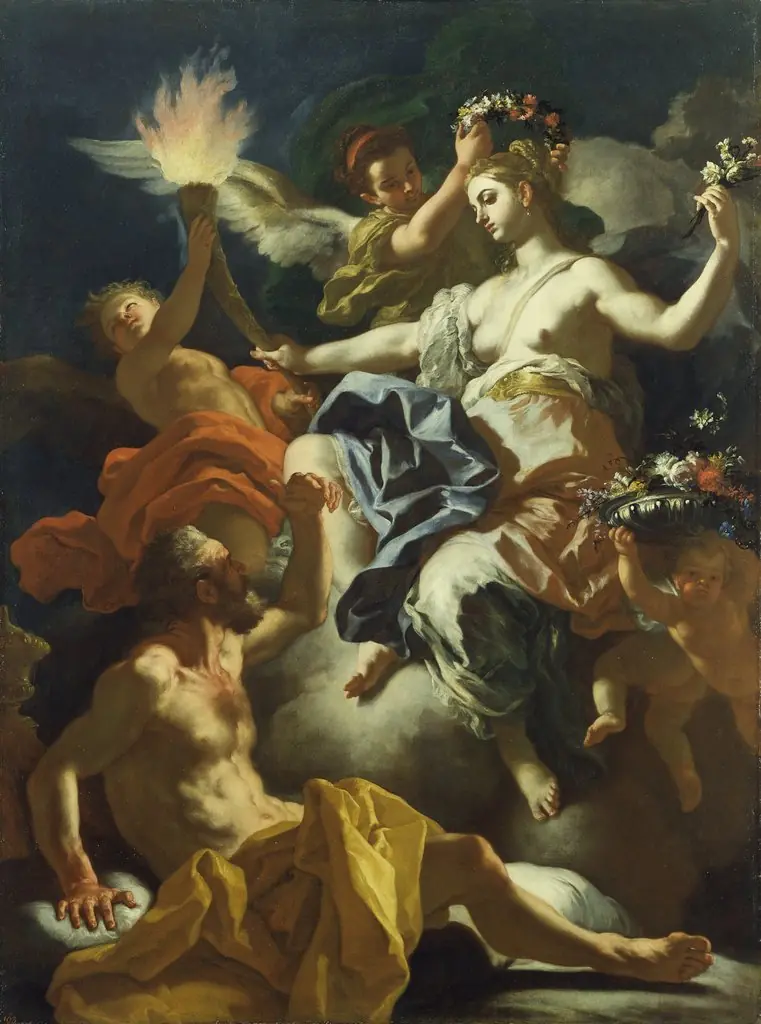 Aurora Taking Leave of Tithonus
 Hero mourns the dead Leander
 Allegorical Figure
 Penitent Magdalene
 Astraea leaves the earth
 Mary Magdalene
 Judit y Holofernes
 Sketch for a Ceiling Fresco
 Rinaldo and Armida