Artwork
Saint George and the Dragon
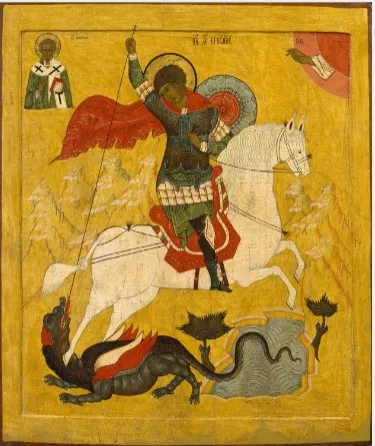
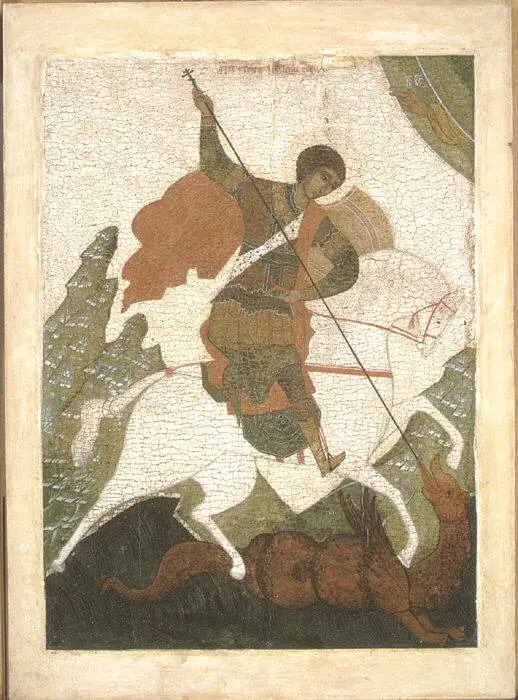
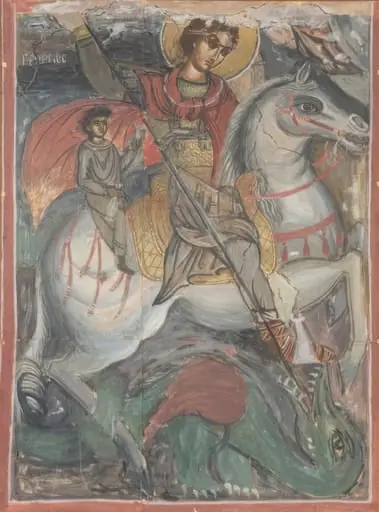
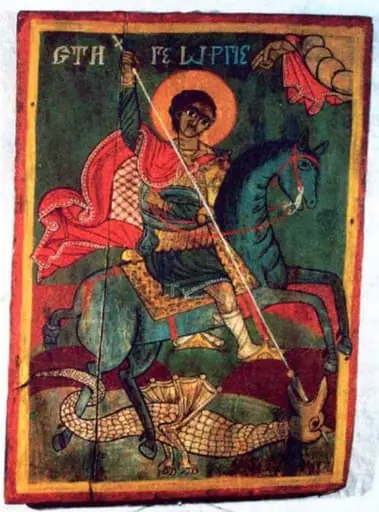
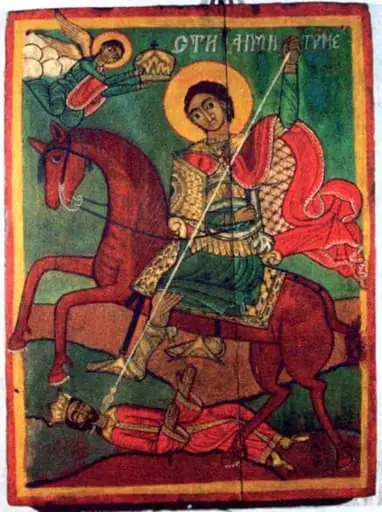
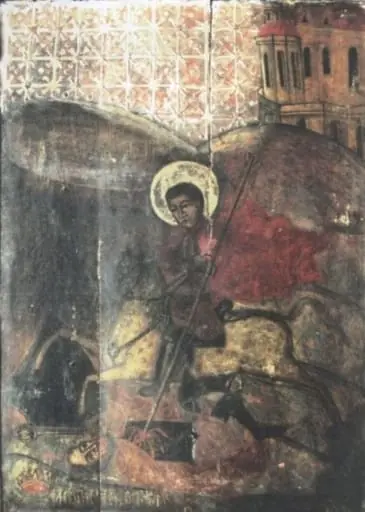
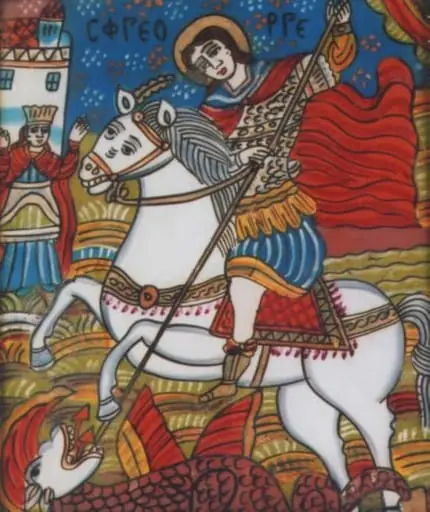
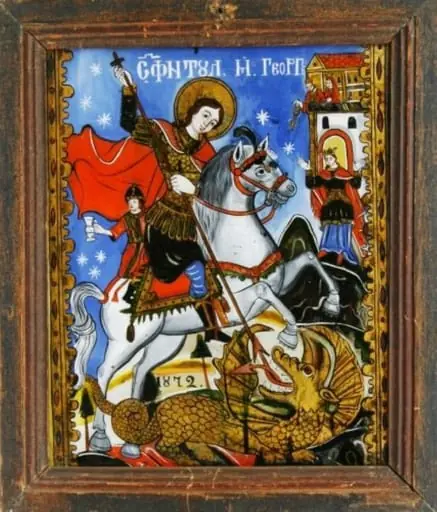
Saint George and the Dragon is an unspecified painting by the Early Renaissance artist Unknown. It dates from 1425 and is held in the collection of the National Gallery of Ireland. This painting portrays Saint George, a Christian martyr and military saint, in the moment of his legendary confrontation with a dragon.
About this work
Overview
This painting portrays Saint George, a Christian martyr and military saint, in the moment of his legendary confrontation with a dragon.
This painting portrays Saint George, a Christian martyr and military saint, in the moment of his legendary confrontation with a dragon. Rendered with vivid color and dynamic motion, the scene captures the saint mid-action on a rearing white horse. The composition emphasizes movement through diagonal lines and energetic posture, while the bright, flat background enhances the figure’s dramatic presence without distracting detail.
Subject & Meaning
Saint George is depicted as a chivalric hero, embodying virtue overcoming chaos. The dragon, though not fully rendered here, symbolizes evil or paganism, and the saint’s poised spear suggests imminent triumph. His turned gaze implies awareness beyond the immediate struggle, reinforcing his role as a divine instrument. The imagery aligns with medieval hagiography, where saintly valor was linked to moral and spiritual conquest.
Technique & Style
The artist employs bold, unmodulated colors—green tunic, red cape, white horse—against a luminous yellow field to heighten visual impact. Forms are simplified, with sharp contours and minimal shading, suggesting influence from late Gothic or early Renaissance panel painting. The horse’s rearing posture and the saint’s tilted torso create a sense of arrested motion, typical of narrative panels designed for devotional focus.
History & Provenance
The painting likely originated in late medieval Europe, possibly as part of a devotional altarpiece or private chapel decoration. Its stylistic features suggest production in the 14th or early 15th century, a period when Saint George’s cult was widespread across Western Christendom. Exact origins remain undocumented, but similar works were commissioned by knightly orders and civic patrons in regions such as Italy and the Low Countries.
Context
During the late Middle Ages, Saint George was venerated as a protector of soldiers and a symbol of Christian chivalry. His legend, popularized through the Golden Legend, resonated in both religious and secular spheres. This painting reflects the era’s fusion of martial ideals and spiritual devotion, where saints were invoked for protection and moral guidance in turbulent times.
Legacy
The image of Saint George on horseback became a recurring motif in European art, influencing later depictions in both religious and civic contexts. This particular rendering, with its emphasis on motion and symbolic color, contributed to a visual language that persisted into the Renaissance. Though not attributed to a major master, it exemplifies the enduring power of saintly iconography in medieval visual culture.
Artist & collection

 Domestic Scene
 Giacomo and Cardinal Marco, investing Andrea, Abbot of San Zeno, with his Benefice
 The Nymph of Fontainebleau
 Portrait of a Woman
 Madonna and Child with Saints in the Enclosed Garden
 Venus and Minerva
 Family Group of Four on Sofa
 Wall painting from Room H of the Villa of P. Fannius Synistor at Boscoreale