Artwork
Sfântul Mare Mucenic Gheorghe
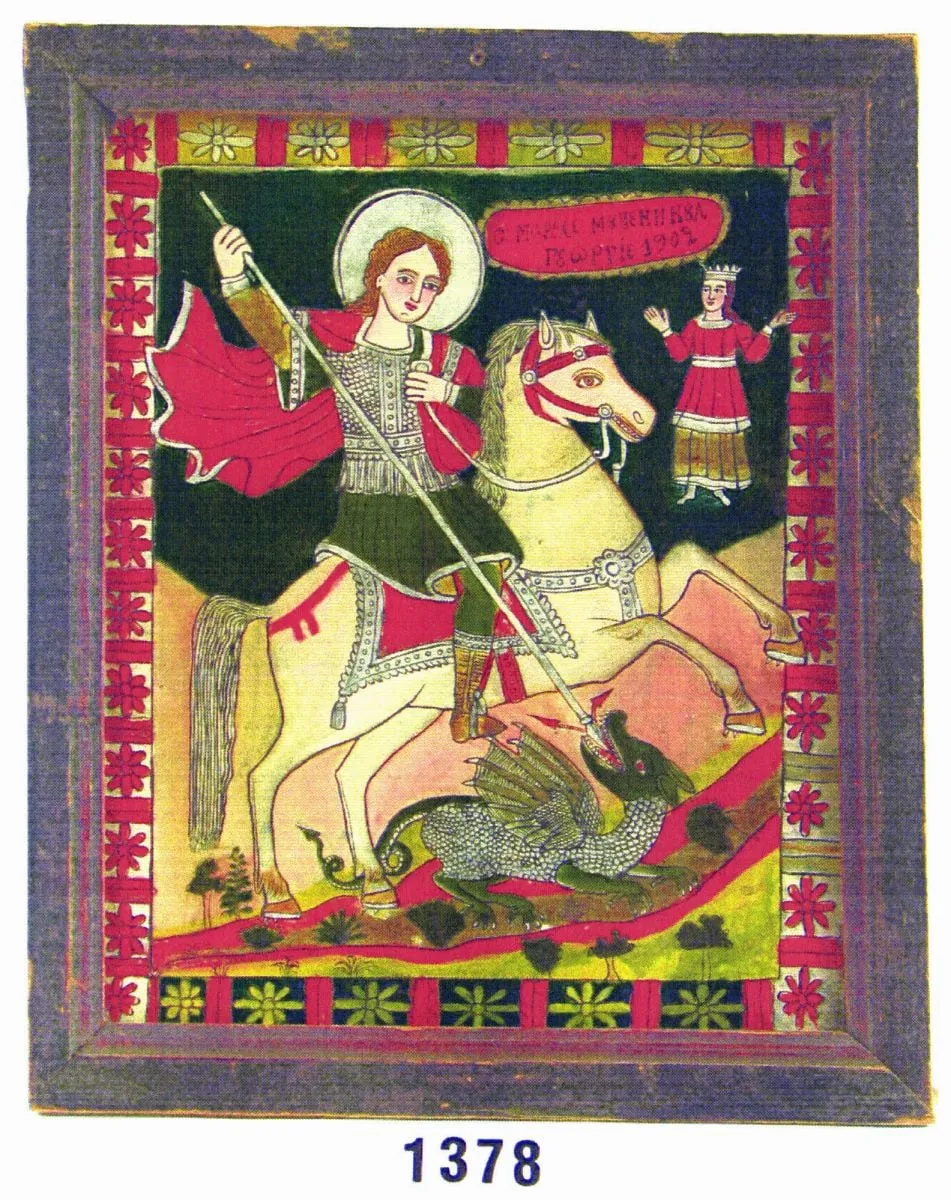
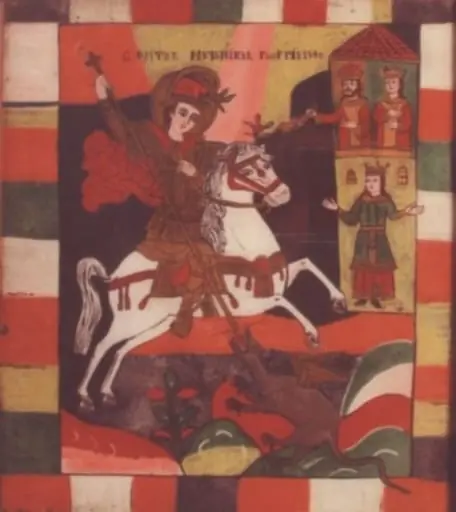
Sfântul Mare Mucenic Gheorghe is a drawing by Unknown. It dates from 1902 and is held in the collection of the ASTRA National Museum Complex. Created in 1902, this drawing portrays Saint George on horseback, spearing a serpent-like creature.
About this work
In the top-right corner of the painting, there is a small figure of a woman wearing a red dress and a crown.
This painting depicts a man riding a horse, with a spear in his hand. He is dressed in a red and white outfit, complete with a halo around his head. The horse is white, and it appears to be trampling a dragon or serpent. The background of the painting is black, and there is a border of red and yellow flowers around the edges.
In the top-right corner of the painting, there is a small figure of a woman wearing a red dress and a crown. She appears to be waving or gesturing towards the man on the horse.
The painting is a drawing, created in 1902, and is held at the Museum of Ethnography. To learn more about the technique used in this painting, look up cross-hatching.
Overview
Created in 1902, this drawing portrays Saint George on horseback, spearing a serpent-like creature. Rendered in ink or pencil with cross-hatching, the image is mounted within a decorative border of red and yellow floral motifs. The black background isolates the figures, emphasizing their symbolic contrast. Held by the Museum of Ethnography, the work reflects devotional art traditions in Eastern Europe during the early 20th century.
Subject & Meaning
The scene illustrates Saint George, a Christian martyr and military saint, slaying a dragon to symbolize the triumph of faith over evil. His halo identifies his sanctity, while the white horse conveys purity. The crowned woman in the upper right, likely the Virgin Mary or a celestial figure, gestures as a divine witness or intercessor. The imagery aligns with hagiographic narratives common in Orthodox Christian iconography.
Technique & Style
The artist employed cross-hatching to model form and depth, using layered lines to define the rider’s armor, the horse’s musculature, and the dragon’s scales. The limited palette—black, white, red, and yellow—enhances symbolic clarity. The stylized figures and flattened perspective reflect folk artistic conventions rather than Renaissance naturalism, suggesting a regional, devotional rather than academic origin.
History & Provenance
Dating to 1902, the drawing entered the collection of the Museum of Ethnography, likely through regional collection efforts in the late 19th or early 20th century. Its modest scale and medium indicate it was not commissioned for a church but may have served domestic or communal veneration. No record of the artist’s identity survives, pointing to anonymous craftsmanship common in folk religious art.
Context
In early 20th-century Eastern Europe, images of Saint George remained popular in rural communities as protectors against chaos and disease. This drawing aligns with a broader tradition of portable religious imagery, often produced for home altars or processions. The floral border and stylized figures echo local embroidery and woodcarving motifs, blending sacred narrative with vernacular aesthetics.
Legacy
The drawing preserves a localized interpretation of a widespread Christian legend, illustrating how religious iconography adapted in folk contexts. Its preservation in an ethnographic museum underscores its value as cultural artifact rather than fine art. It continues to inform studies on the transmission of religious symbols in pre-industrial societies across the region.
Artist & collection

 Domestic Scene
 Giacomo and Cardinal Marco, investing Andrea, Abbot of San Zeno, with his Benefice
 The Nymph of Fontainebleau
 Portrait of a Woman
 Madonna and Child with Saints in the Enclosed Garden
 Venus and Minerva
 Family Group of Four on Sofa
 Wall painting from Room H of the Villa of P. Fannius Synistor at Boscoreale
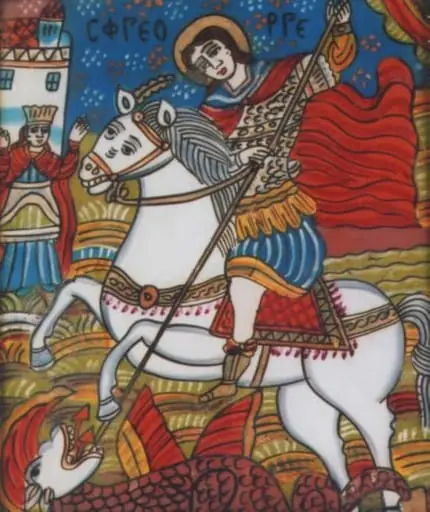 Sfântul Gheorghe
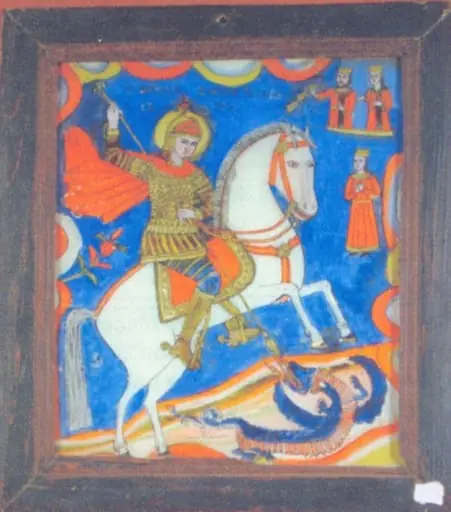 Sfântul Mare Mucenic Gheorghe
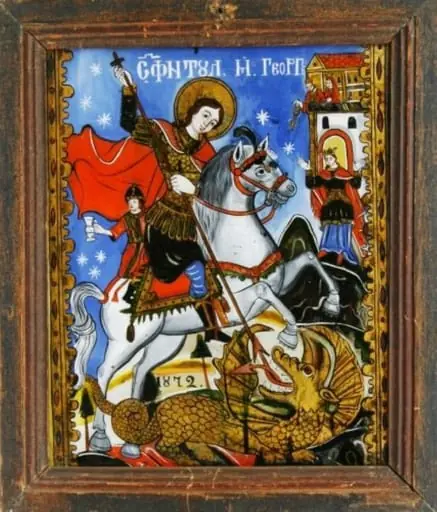 Sfântul Mare Mucenic Gheorghe
 Sfântul Mare Mucenic Gheorghe
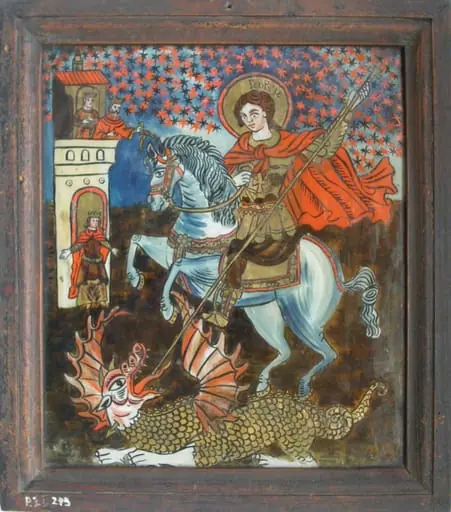 Sf. Gheorghe, ucigând balaurul
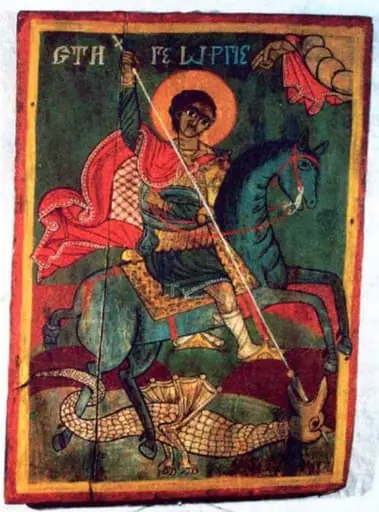 Sfântul Gheorghe
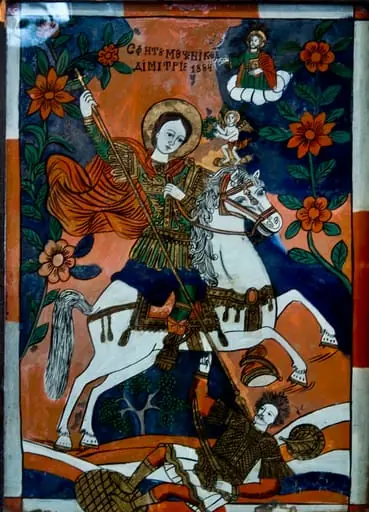 Sf. Mare Mucenic Dimitrie
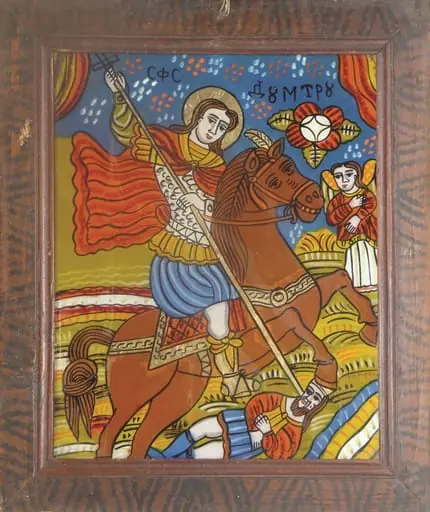 Sf. Mucenic Gheorghe, ucigând balaurul
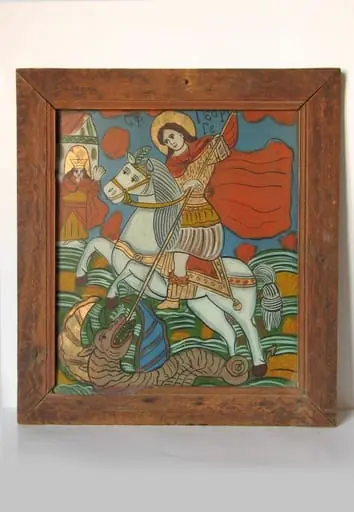 Sfântul Mare Mucenic Gheorghe Purtător de Biruință
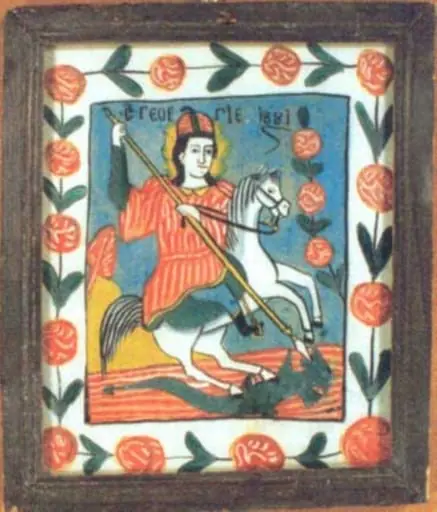 Sfântul Gheorghe
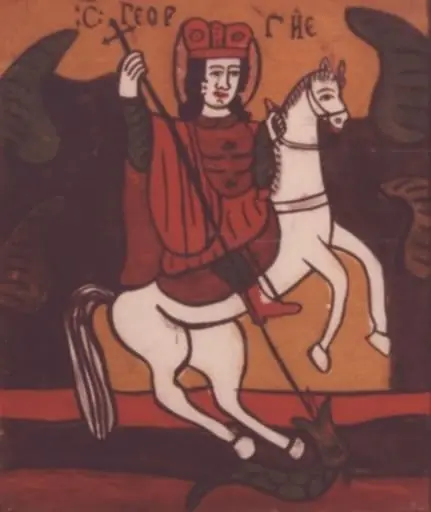 Sfântul Mare Mucenic Gheorghe