Artwork
Arhanghelul Mihail
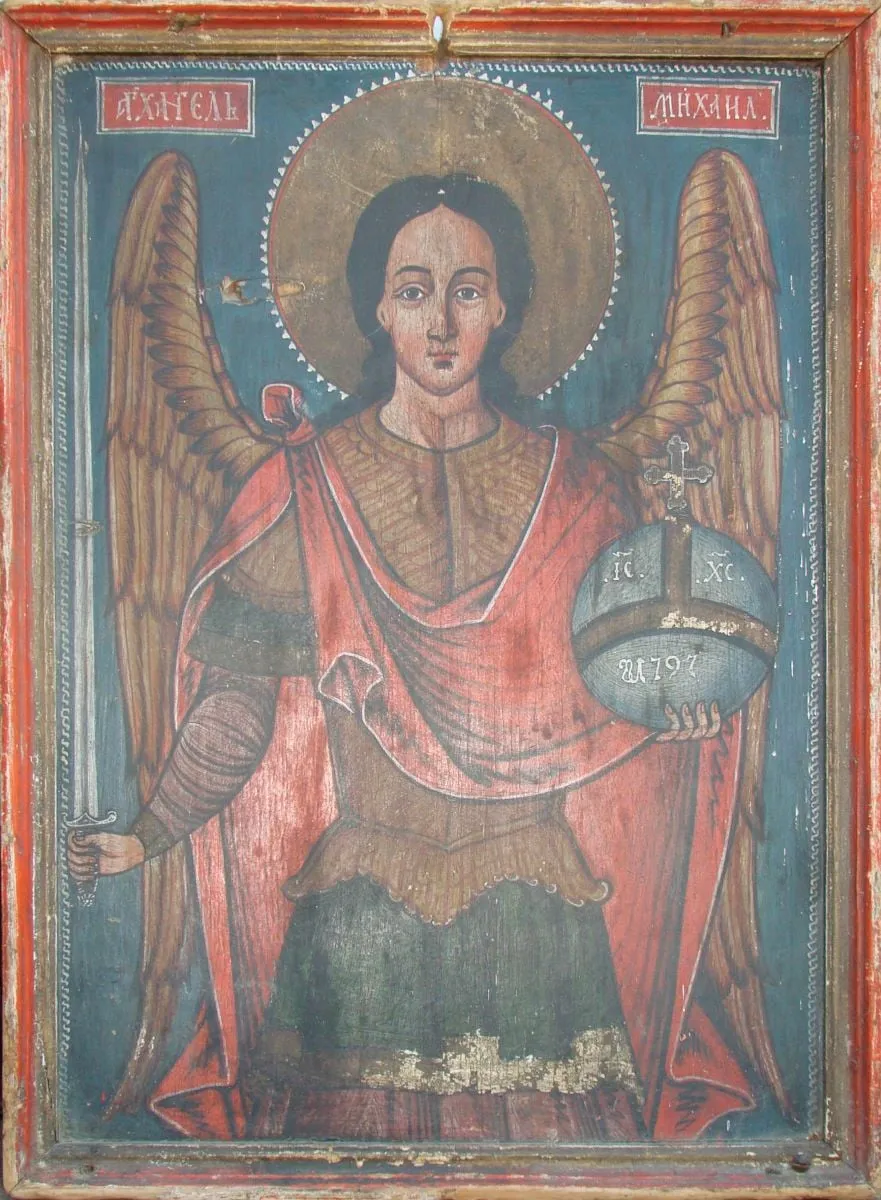
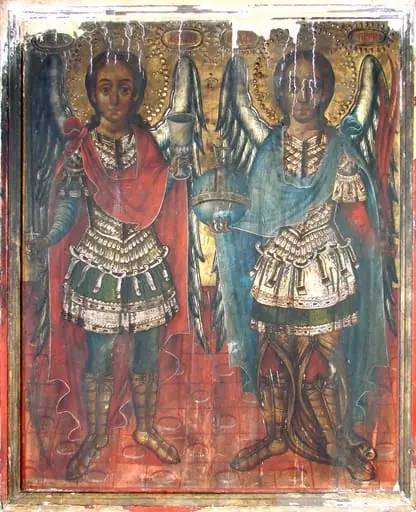
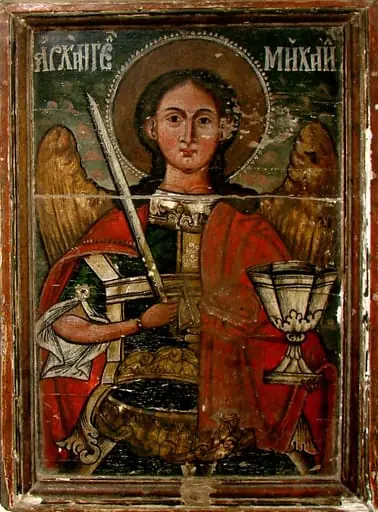
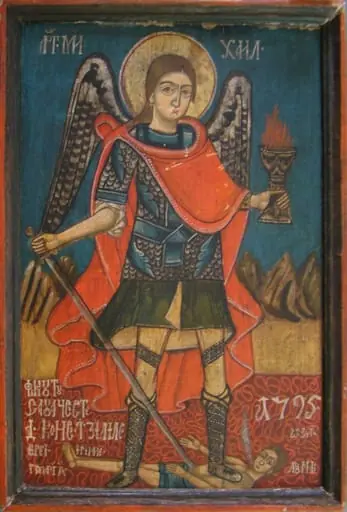
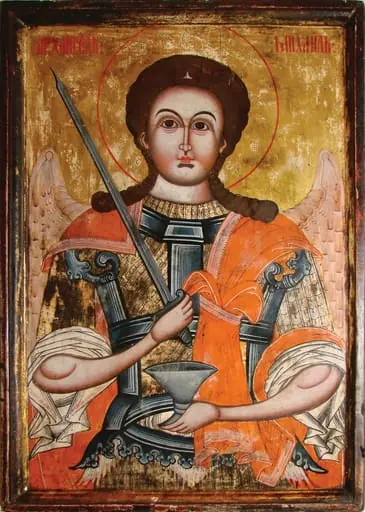
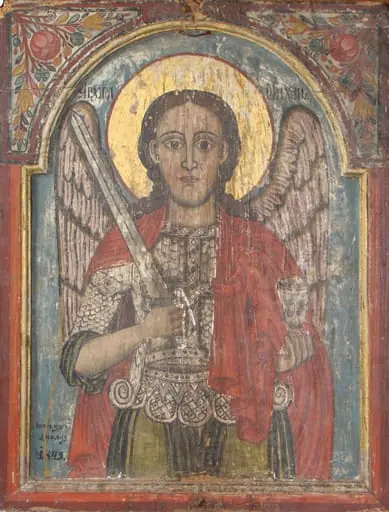
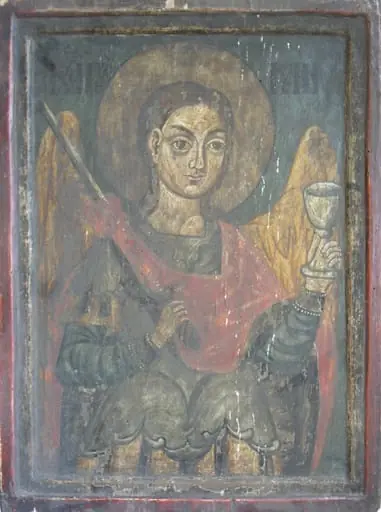
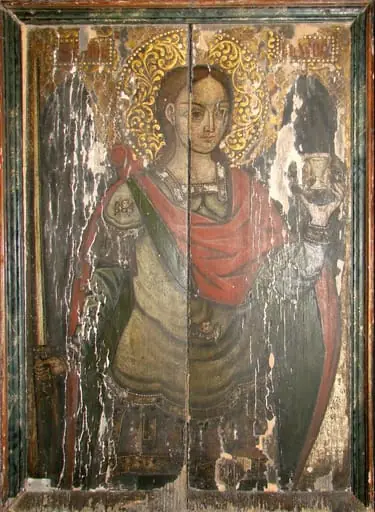
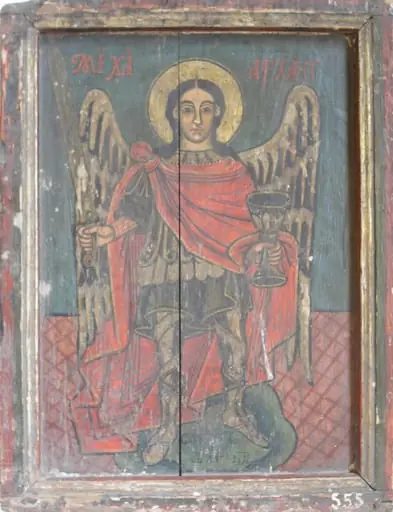
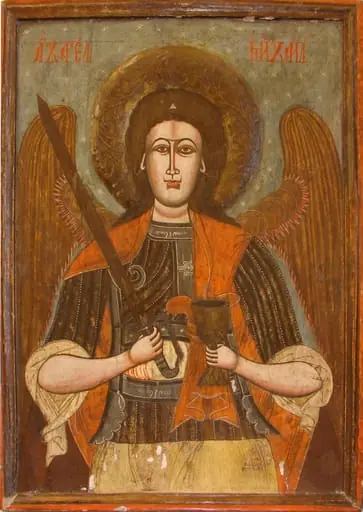
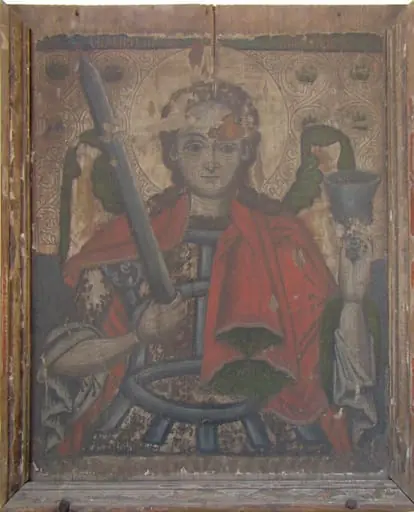
Arhanghelul Mihail is an unspecified painting by the Byzantine icon painting artist Gheorghe fiul lui Iacov. It dates from 1797 and is held in the collection of the Alba Iulia Orthodox Archdiocese.
About this work
Overview
Painted in 1797 by Gheorghe fiul lui Iacov, this devotional image depicts the Archangel Michael, a figure central to Christian angelology. Executed in oil on panel, the work is part of the collection at the Museum of Ethnography. Its composition follows traditional iconographic models but reflects regional artistic practices of late 18th-century Romanian religious painting.
Subject & Meaning
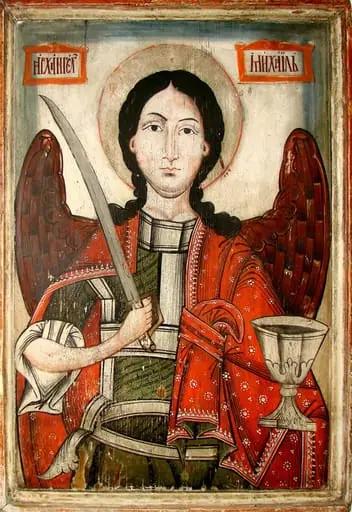
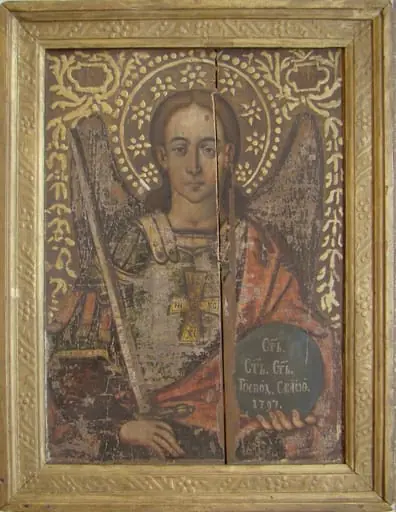
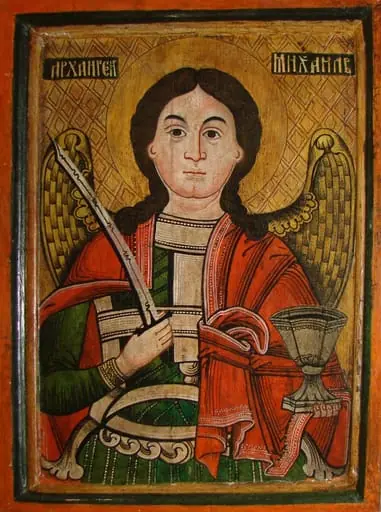
The archangel Michael is shown as a warrior-saint, wielding a sword and holding a celestial orb, symbols of divine authority and cosmic order. His presence evokes themes of spiritual protection and judgment. The red robe and blue orb align with symbolic conventions in Eastern Christian iconography, where red signifies martyrdom and divine power, and blue represents heaven and eternity.
Technique & Style
The artist employs strong contrasts of light and shadow to model the figure, enhancing the three-dimensionality of the form.
The artist employs strong contrasts of light and shadow to model the figure, enhancing the three-dimensionality of the form. Bold, saturated colors—particularly the crimson robe against the deep blue background—create visual intensity. While the brushwork is deliberate and flat in places, the use of chiaroscuro suggests an awareness of Western European pictorial techniques adapted to local devotional needs.
History & Provenance
The painting was created during a period of religious consolidation in the Romanian principalities, when church commissions remained central to artistic production. It entered the Museum of Ethnography’s collection in the 20th century, likely through regional ecclesiastical transfers. Its survival reflects the continuity of Orthodox devotional art despite political and cultural shifts in the region.
Context
In late 18th-century Moldavia and Wallachia, religious imagery served both liturgical and didactic functions. Artists like Gheorghe fiul lui Iacov worked within established iconographic traditions but incorporated emerging stylistic influences from Habsburg and Russian sources. This work exemplifies the hybrid nature of local religious art, blending Byzantine conventions with subtle Western naturalism.
Legacy
The painting remains a representative example of pre-modern Romanian ecclesiastical art, illustrating how regional painters interpreted universal religious themes through localized visual languages. It contributes to scholarly understanding of how Orthodox iconography evolved in the absence of formal academies, relying instead on workshop traditions and oral transmission of motifs.
Artist & collection
Artist
This painter created religious scenes in 18th-century Romanian churches, where gold-leaf halos and deep cobalt blues were common.