Artwork
Parch. Robert Williams, Y Wernddu
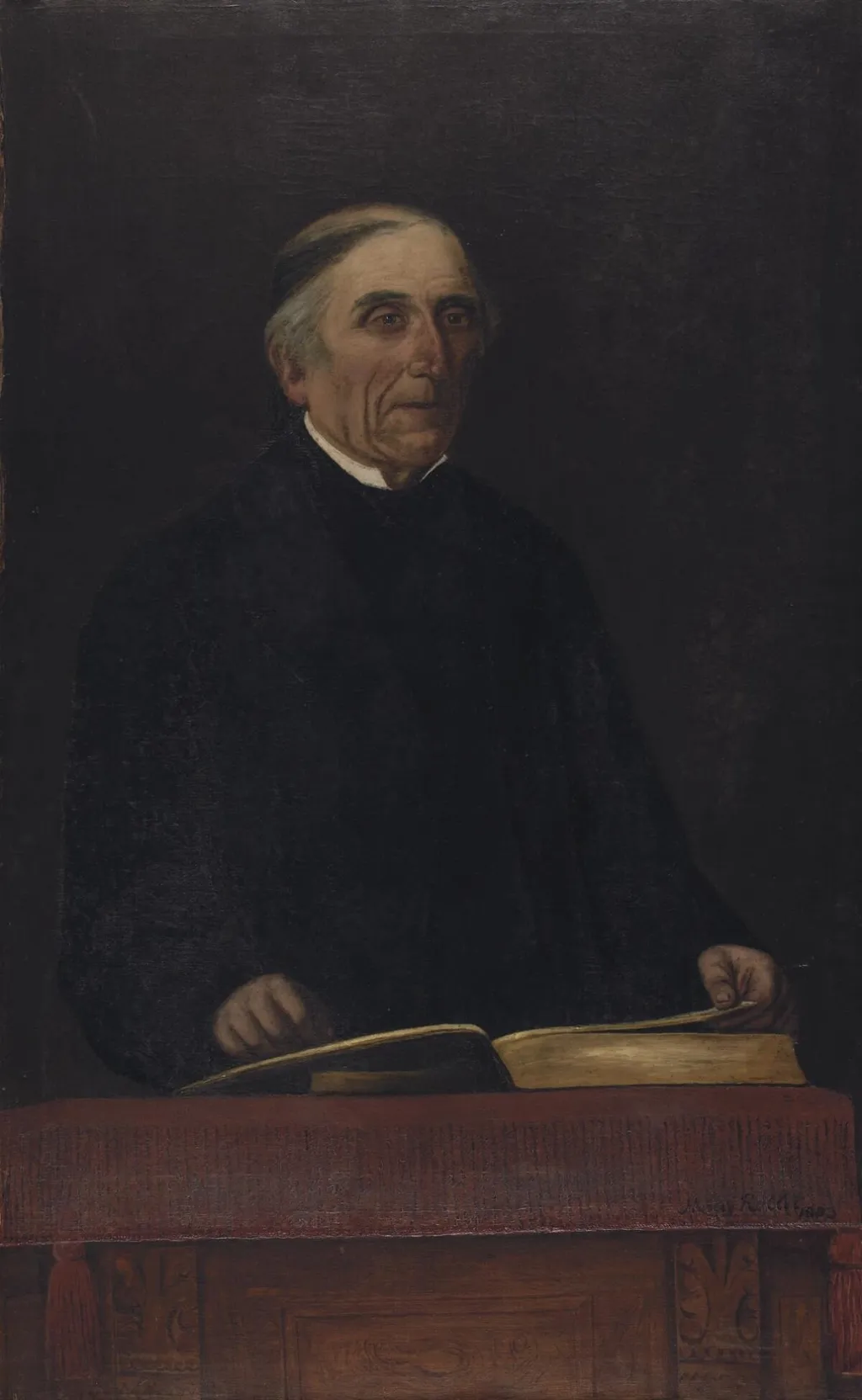
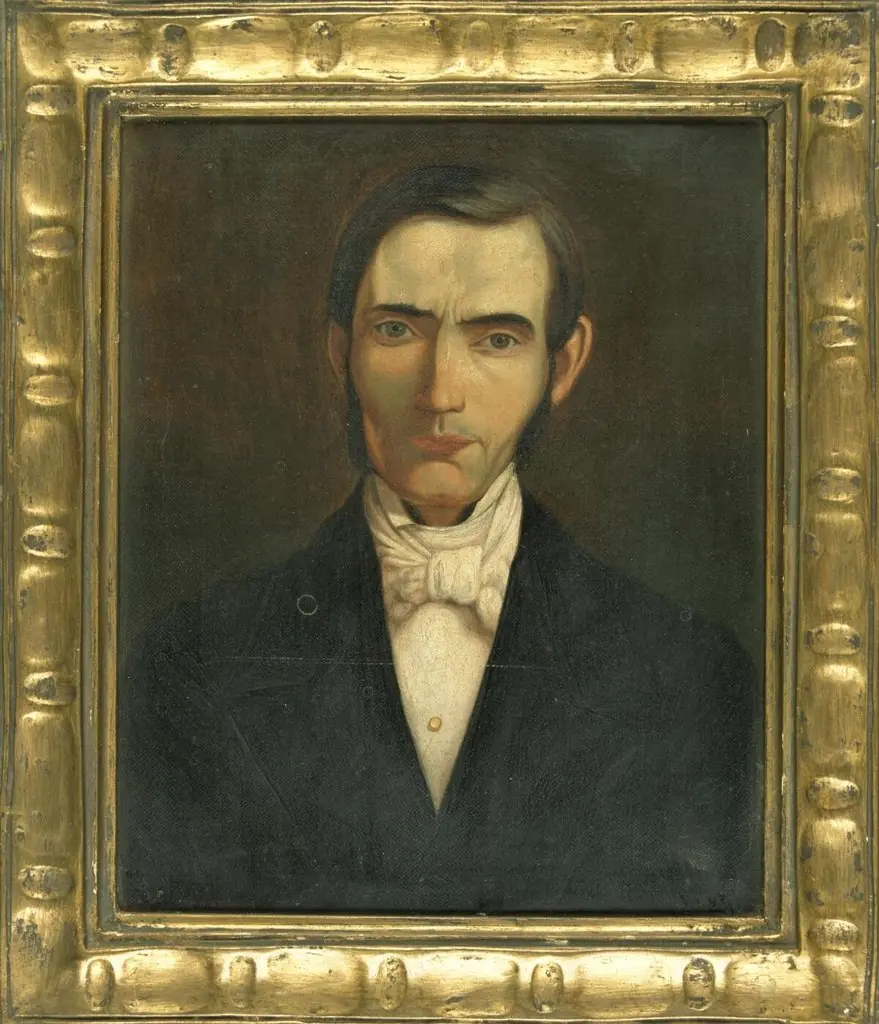
Parch. Robert Williams, Y Wernddu is an oil painting by Unknown. It dates from 1850 and is held in the collection of the National Library of Wales. This oil painting by Robert Williams portrays a solitary male figure standing behind a carved wooden table, holding an aged book.
About this work
Overview
This oil painting by Robert Williams portrays a solitary male figure standing behind a carved wooden table, holding an aged book. The subject is rendered with deliberate stillness, framed against a uniform dark background that isolates him visually. The composition emphasizes quiet intensity, with lighting focused on the figure’s face and the book, suggesting contemplation or authority.
Subject & Meaning
The man, dressed in a dark robe with a white collar and grayed hair, appears as a figure of scholarship or spiritual gravity. His direct gaze and the worn book imply a moment of introspection or transmission of knowledge. The absence of context or additional figures reinforces a sense of solitude, inviting interpretation as a scholar, cleric, or keeper of tradition.
Technique & Style
Williams employs chiaroscuro to model form and direct attention, contrasting the illuminated face and book against the deep background. The intricate carvings on the table are rendered with precise detail, while the fabric of the robe is suggested through subtle tonal shifts. The palette is restrained, dominated by earth tones and shadow, enhancing the painting’s somber mood.
History & Provenance
The painting, titled Parch. Robert Williams, Y Wernddu, was completed in the late 20th century. It remains in private collection, with no public exhibition history documented. The title suggests a Welsh connection, though the subject’s identity and the work’s commission remain unrecorded.
Context
Created during a period when figurative painting experienced renewed interest among contemporary artists, the work aligns with a quiet revival of psychological portraiture. It diverges from prevailing trends of abstraction or conceptual art, instead drawing on classical techniques to evoke introspection and timeless themes of knowledge and solitude.
Legacy
Though not widely exhibited, the painting contributes to a niche body of contemporary figurative work that prioritizes emotional resonance over narrative. Its restrained aesthetic and technical precision have influenced a small cohort of artists exploring the dignity of solitary intellectual figures in modern painting.
Artist & collection

 Domestic Scene
 Giacomo and Cardinal Marco, investing Andrea, Abbot of San Zeno, with his Benefice
 The Nymph of Fontainebleau
 Portrait of a Woman
 Madonna and Child with Saints in the Enclosed Garden
 Venus and Minerva
 Family Group of Four on Sofa
 Wall painting from Room H of the Villa of P. Fannius Synistor at Boscoreale
 Portrait of Joseph Antoine Monticelli
 Thos Williams, JP, Gwaelodygarth 1823-03
 Portrait of Wiktor Grajewski, the last border judge in Samogitia
 Reverend John Thomas DD, 1821-1892
 Reverend John Jones, Talysarn, Carnarvon
 Francisco Antonio González
 Rev. Morgan Howells
 Ebenezer Cooper, Llangollen
 Portrait of a bearded minister
 Portret (bărbat)
 Προσωπογραφία του Ανδρέα Λουριώτη
 W. M. Williams