Artwork
Maximilian I. (1459-1519), Brustbild
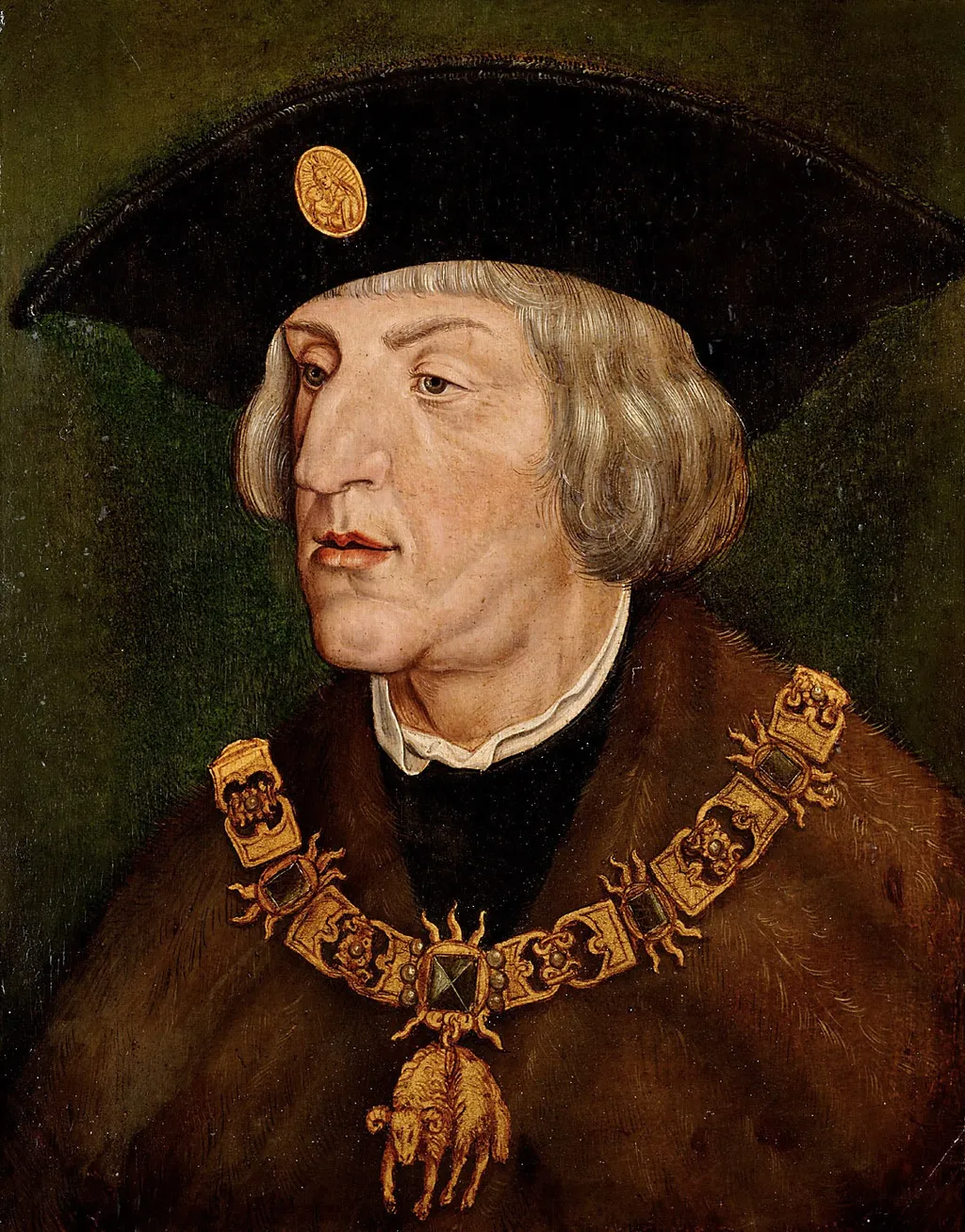
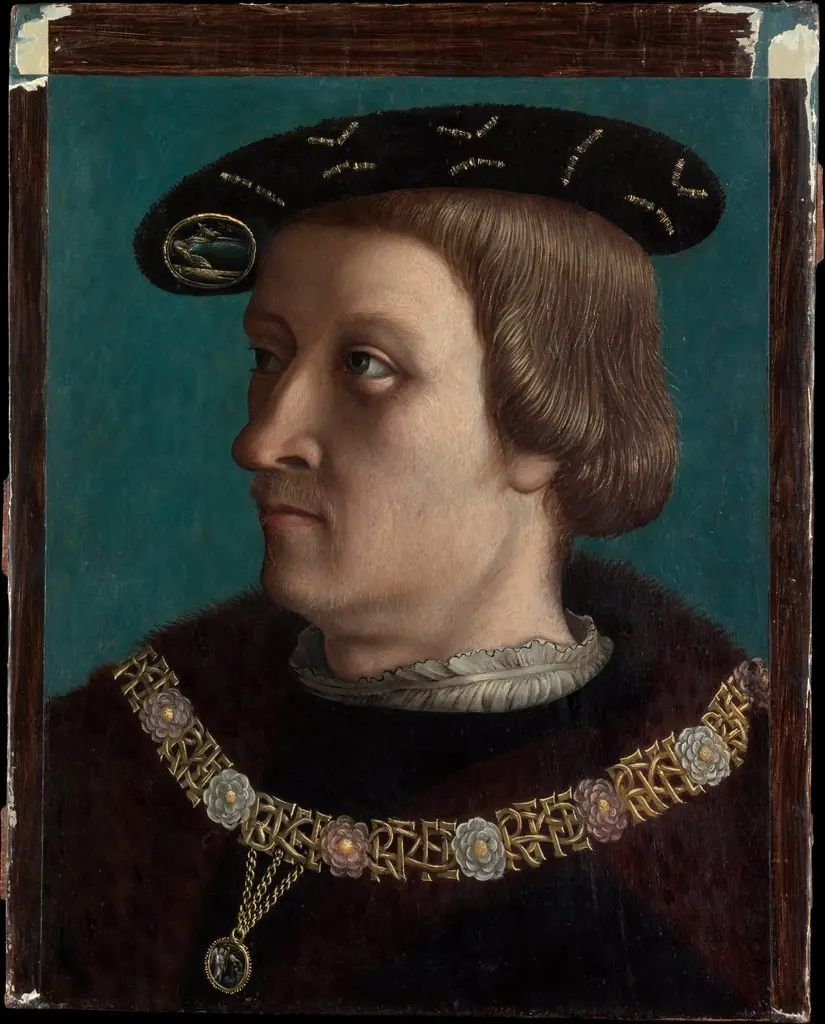
Maximilian I. (1459-1519), Brustbild is an unspecified painting by the Mannerist artist Unknown. It dates from 1530 and is held in the collection of the Kunsthistorisches Museum. The work is a portrait bust of Maximilian I, Holy Roman Emperor (1459‑1519).
About this work
Overview
The work is a portrait bust of Maximilian I, Holy Roman Emperor (1459‑1519). Executed as a painted panel, it presents the ruler in half‑length, his face turned slightly toward the viewer. The composition emphasizes his dignified bearing, highlighted by a dark hat with a gold emblem and an elaborate gold necklace bearing symbolic pendants.
Subject & Meaning
The sitter is identified as Maximilian I, whose reign marked the transition from medieval to early modern Europe. The gold hand and animal charms on his chain allude to chivalric virtues and imperial authority, reinforcing his self‑presentation as a warrior‑king and patron of the arts.
Technique & Style
Rendered in tempera or oil on wood, the portrait employs fine brushwork to delineate the texture of the hat’s fabric and the gleam of metallic ornaments. A restrained palette of dark blues and blacks contrasts with the luminous gold, creating a sense of depth while maintaining the formal, courtly aesthetic typical of late‑15th‑century Northern portraiture.
History & Provenance
The bust likely originated in the imperial workshop of Augsburg or Innsbruck, where Maximilian commissioned numerous portrait series. It entered private collections in the 17th century before being acquired by a museum in the early 20th century, where it has remained in the European paintings department.
Context
Created during the reign of Maximilian I, the portrait reflects the emperor’s use of visual propaganda to assert his legitimacy across a fragmented Holy Roman Empire. The inclusion of heraldic and allegorical elements aligns with contemporary humanist ideals that linked personal virtue to imperial governance.
Artist & collection

 Domestic Scene
 Giacomo and Cardinal Marco, investing Andrea, Abbot of San Zeno, with his Benefice
 The Nymph of Fontainebleau
 Portrait of a Woman
 Madonna and Child with Saints in the Enclosed Garden
 Venus and Minerva
 Family Group of Four on Sofa
 Wall painting from Room H of the Villa of P. Fannius Synistor at Boscoreale
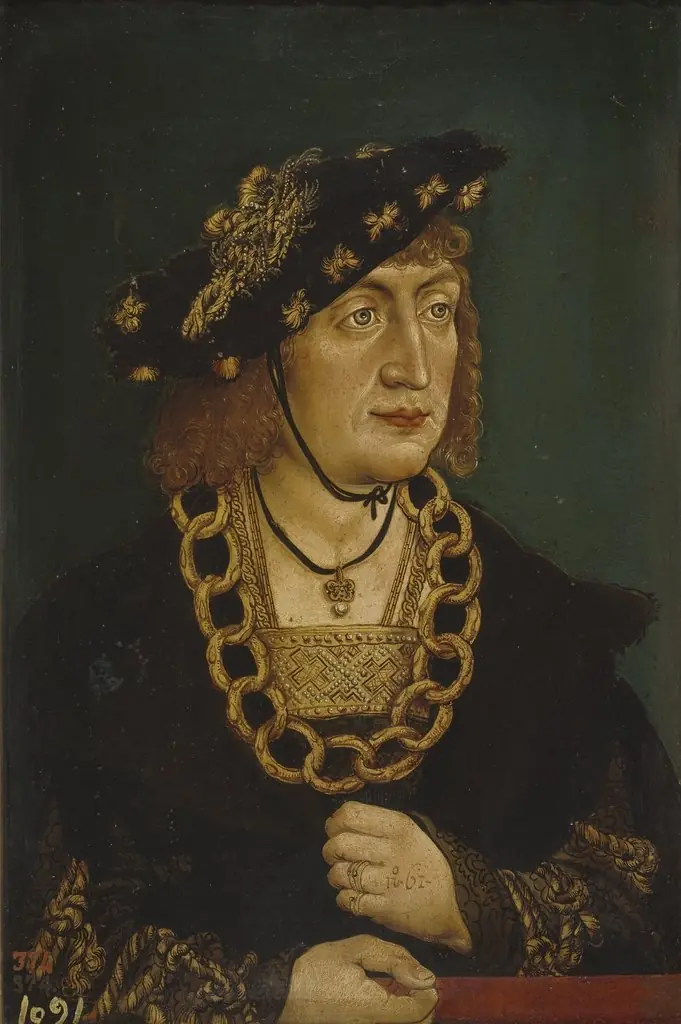 Frederick III
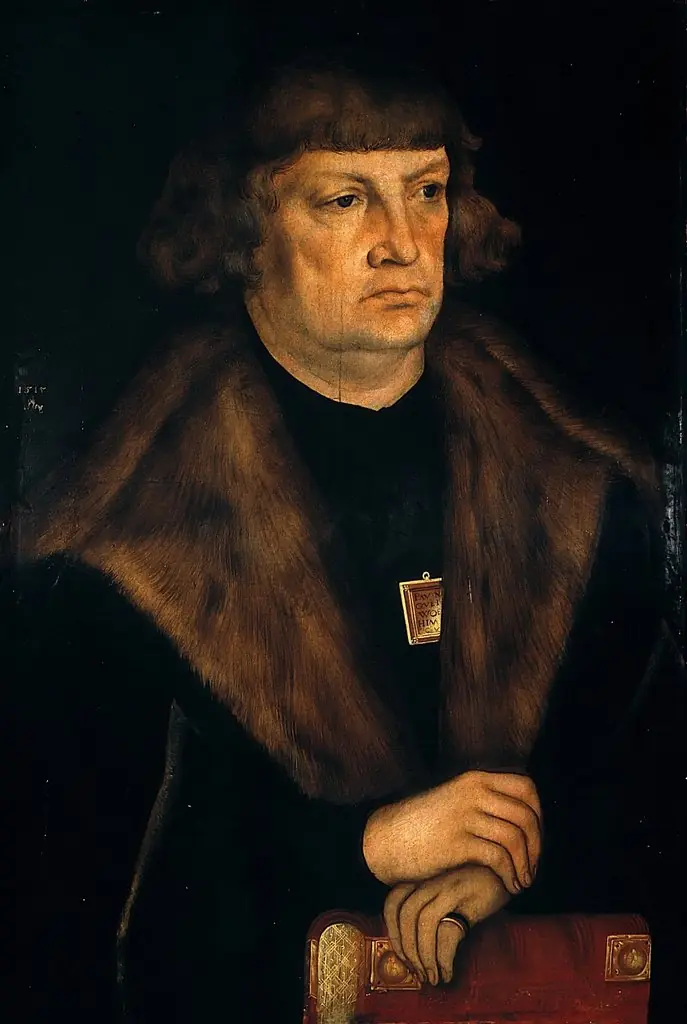 Portrait of the Mayor of Weißenfels
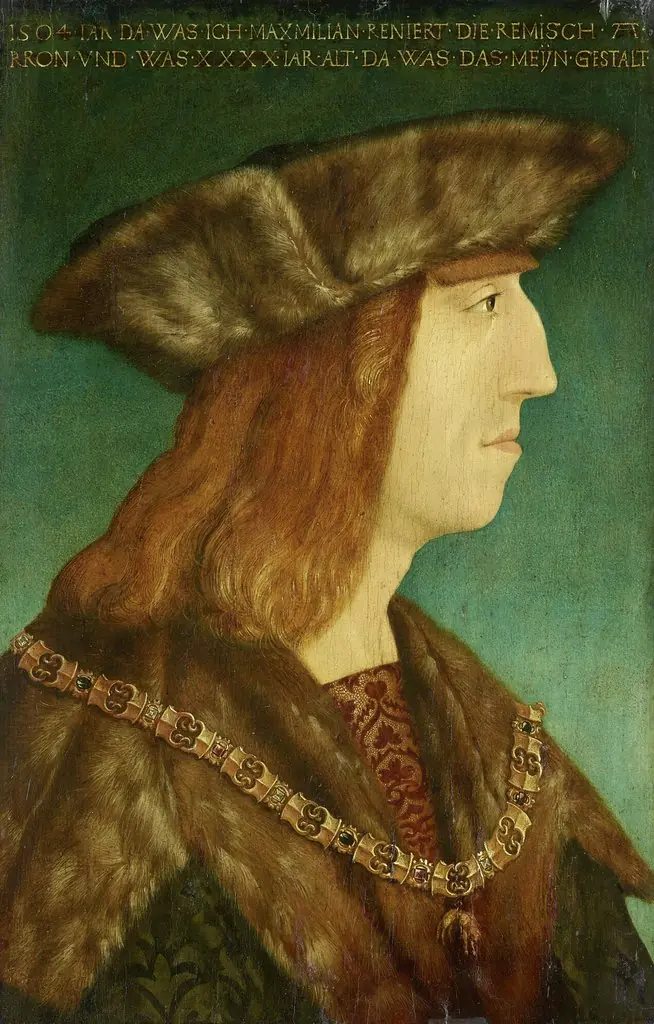 Emperor Maximilan I. (1459-1519)
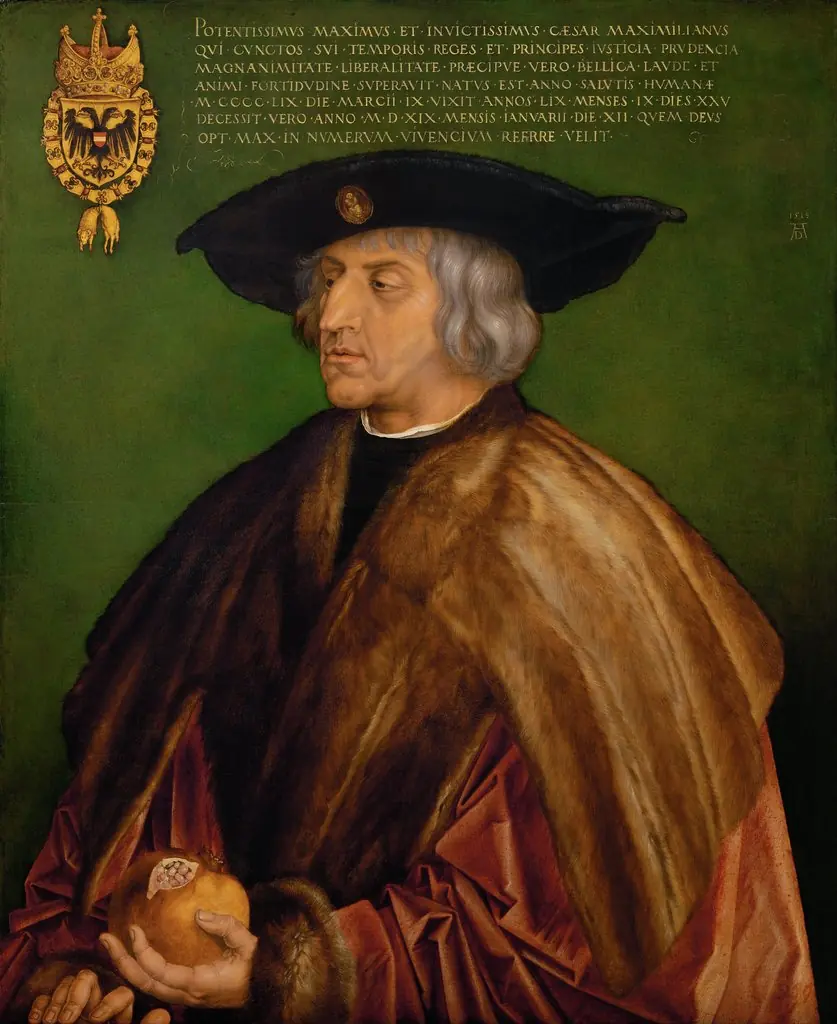 Emperor Maximilian I
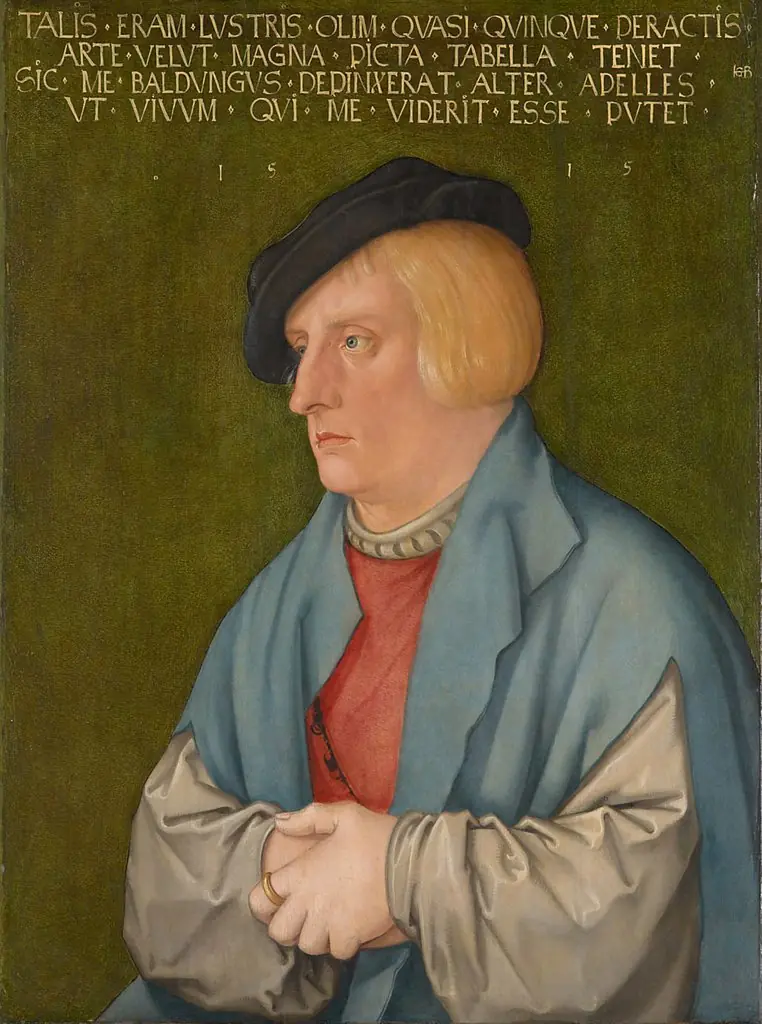 Portrait of a young man
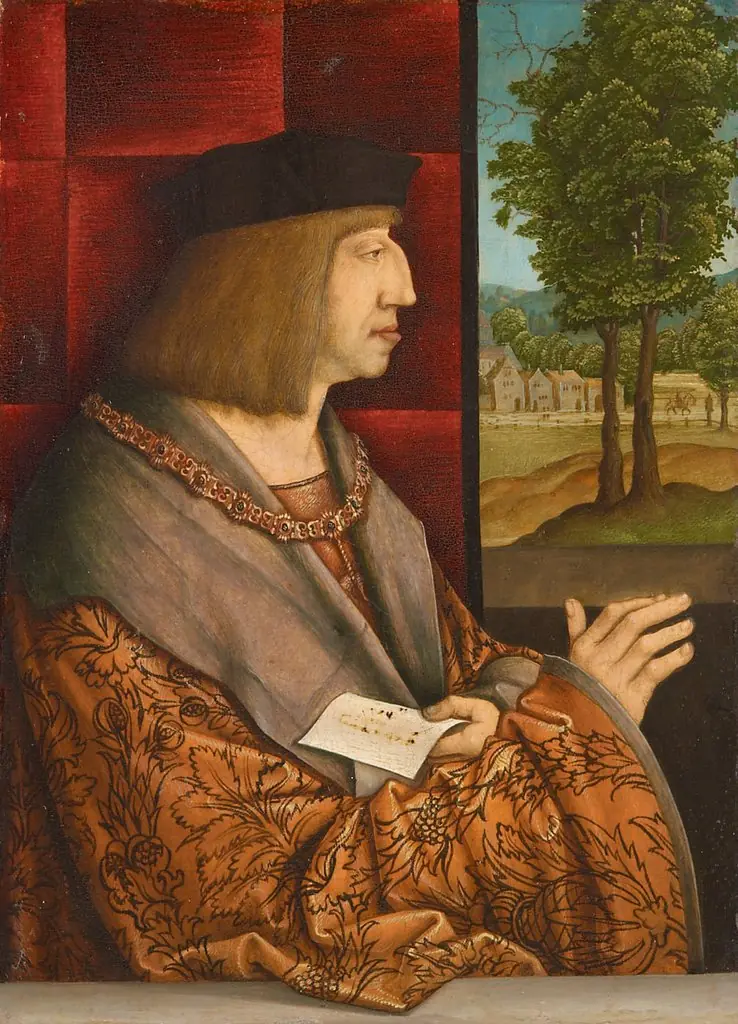 Portrait of Maximilian I (1459-1519)
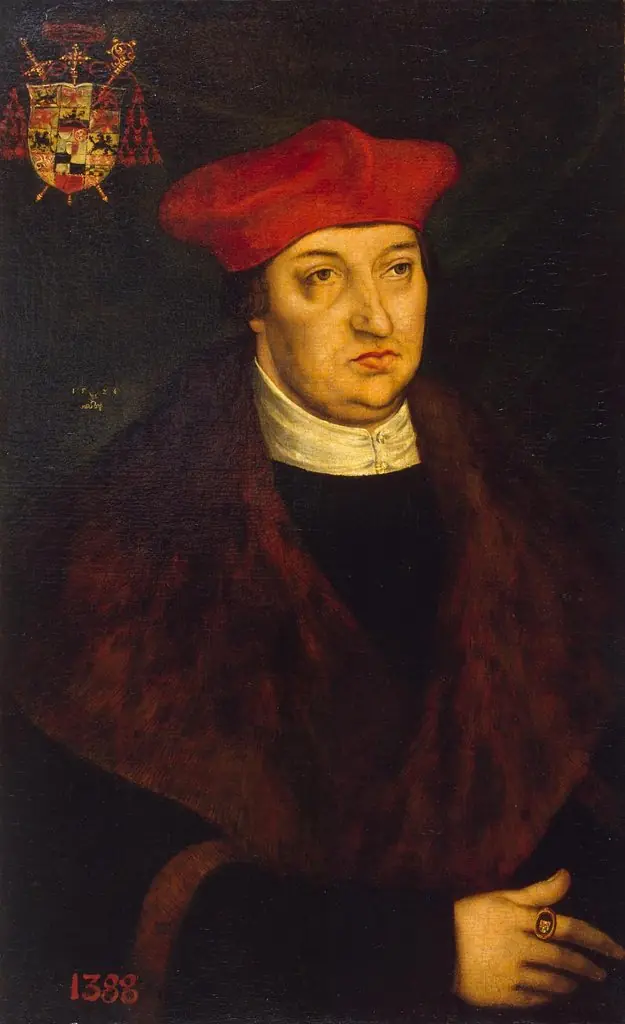 Portrait of Cardinal Albert of Brandenburg
 Emperor Charles V
 A Knight of the Golden Fleece
 Emperor Maximilian I
 Albrecht the Bold, son of Friedrich II., died 1500
 Portrait of a Man Wearing the Order of the Annunziata of Savoy