Artwork
Emperor Charles V
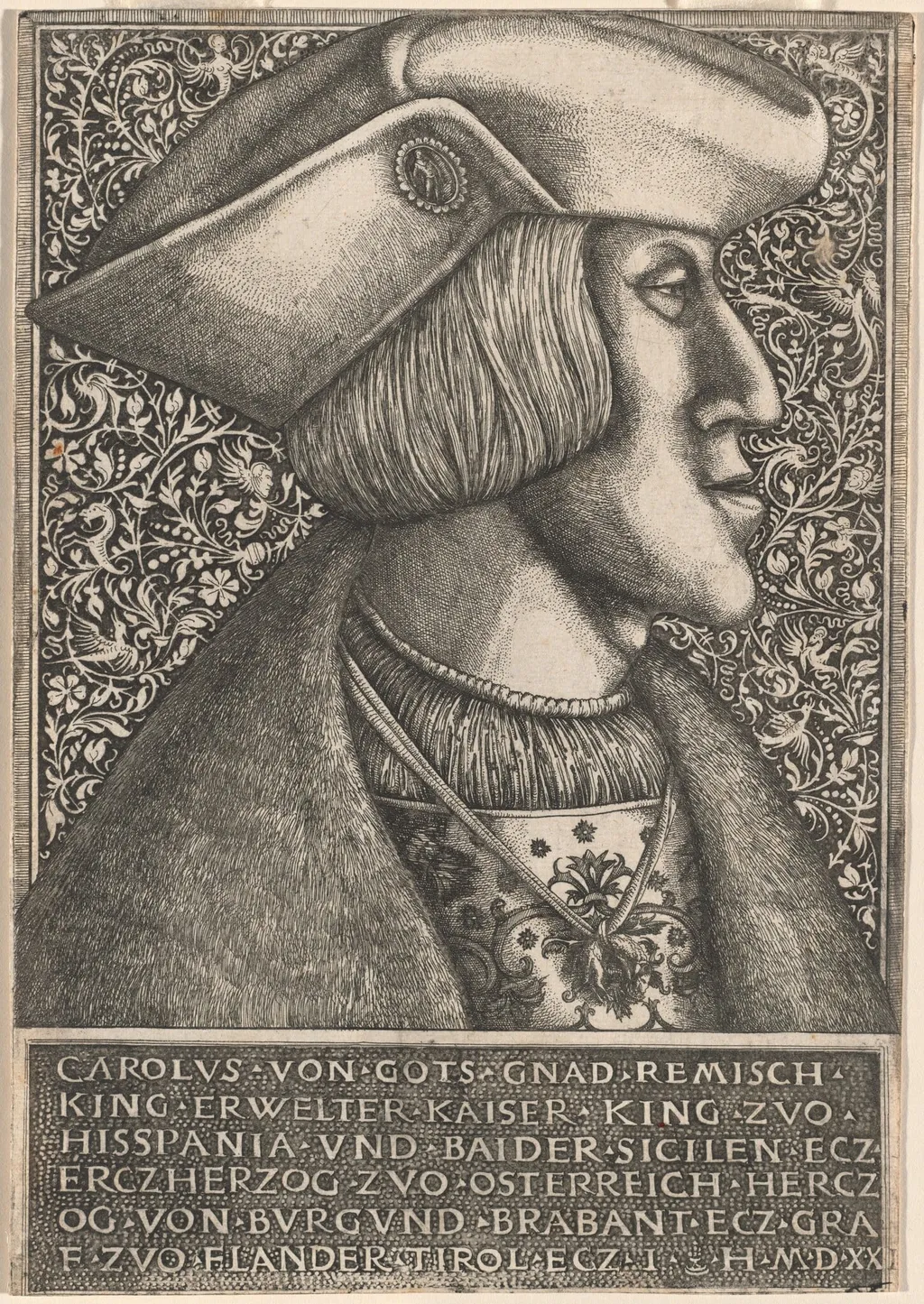
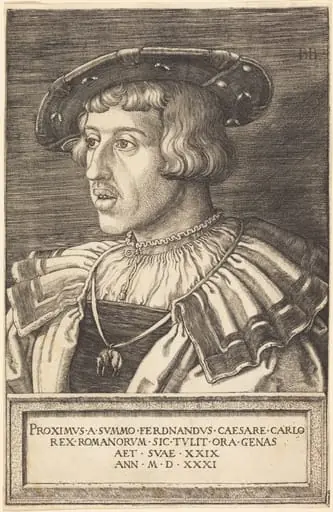
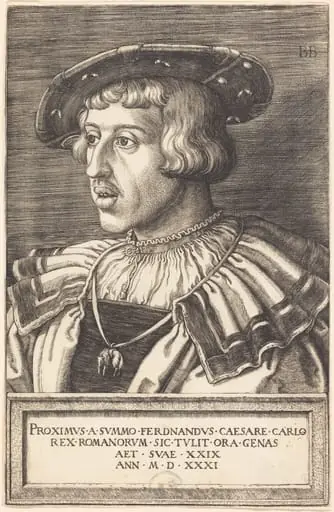
Emperor Charles V is an ink print by the Renaissance artist Daniel Hopfer. It dates from 1520 and is held in the collection of the National Gallery of Art.
About this work
Overview
Created in 1520, this iron etching by Daniel Hopfer portrays Emperor Charles V using a technique he helped pioneer in printmaking.
Created in 1520, this iron etching by Daniel Hopfer portrays Emperor Charles V using a technique he helped pioneer in printmaking. Unlike copper, iron was less common for etching, and Hopfer’s background in armor-making informed his handling of the metal plate. The print’s sharp lines and textured background reflect his technical innovation, positioning him as a key figure in the early commercialization of etched imagery.
Subject & Meaning
The portrait presents Charles V, Holy Roman Emperor, in formal regalia, his identity reinforced by inscribed titles listing his vast domains. His stern expression and detailed attire convey authority, aligning with the era’s use of portraiture to assert political power. The ornate, swirling background may symbolize imperial complexity or serve as a decorative frame, reinforcing the subject’s elevated status without overt allegory.
Technique & Style
Hopfer employed open biting—a method allowing acid to eat broadly into the iron plate—to create rich tonal contrasts and intricate textures. His lines are precise, capturing the folds of fabric and the contours of the face with sharp clarity. The background’s dense, lace-like patterns contrast with the figure’s solidity, demonstrating his ability to manipulate etching for both detail and atmospheric depth.
History & Provenance
As one of the earliest known iron etchings, this work reflects Hopfer’s role in transitioning printmaking from craft to reproducible art. Though his prints were once considered utilitarian, later scholarship recognized their influence on print distribution. The survival of this impression suggests it was valued early on, possibly circulated among elites or collected by patrons interested in imperial imagery.
Context
In early 16th-century Europe, printed portraits served as tools of political communication. Charles V’s image, widely disseminated, helped unify his diverse territories under a recognizable symbol of rule. Hopfer’s etchings emerged alongside the Reformation and rising literacy, making visual propaganda more accessible. His use of iron, a material familiar from armor workshops, linked artistic production to contemporary craft traditions.
Legacy
Hopfer’s innovations laid groundwork for the etching’s rise as a distinct print medium. His technical approach influenced later artists who adopted etching for its expressive potential. Though overshadowed by later masters, his role in establishing print publishing as a commercial enterprise and his adaptation of industrial techniques remain significant milestones in the history of graphic arts.
Artist & collection

Artist
Daniel Hopfer (c. 1470 – 1536) was a German artist who is widely believed to have been the first to use etching in printmaking, at the end of the 15th century. He also worked in woodcut. Although his etchings were…

 Interior of the Church of Saint Maria Magdalena with the Parable of the Offering of the Widow
 Emperor Charles V
 Emperor Charles V
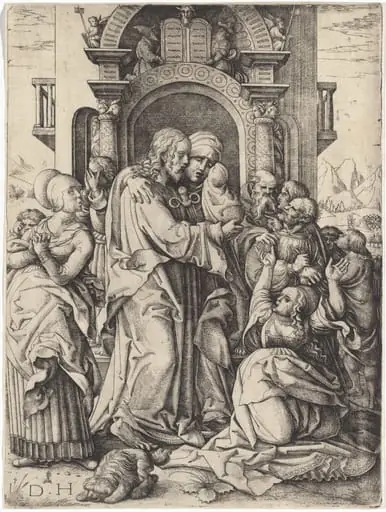 The Virgin Mary Taking Leave of Christ
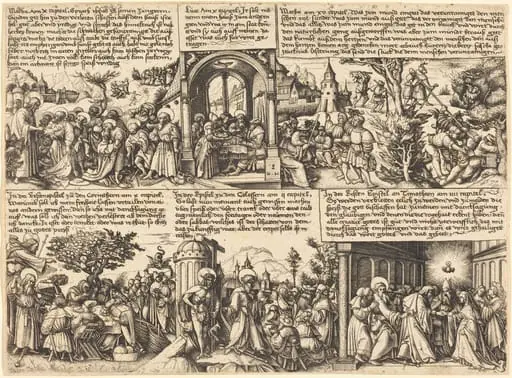 Jesus Christ Giving the Mission to the Apostles and Other New Testament Scenes
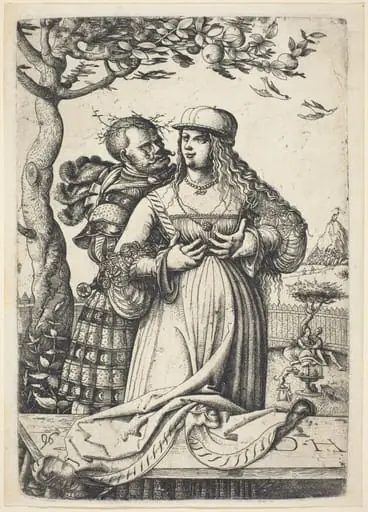 Soldier Embracing a Woman
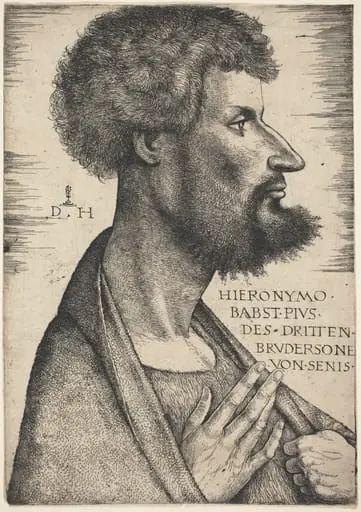 Girolamo da Siena
 The Virgin and Child with Saint Anne by a Portal