Artwork
Emperor Maximilian I
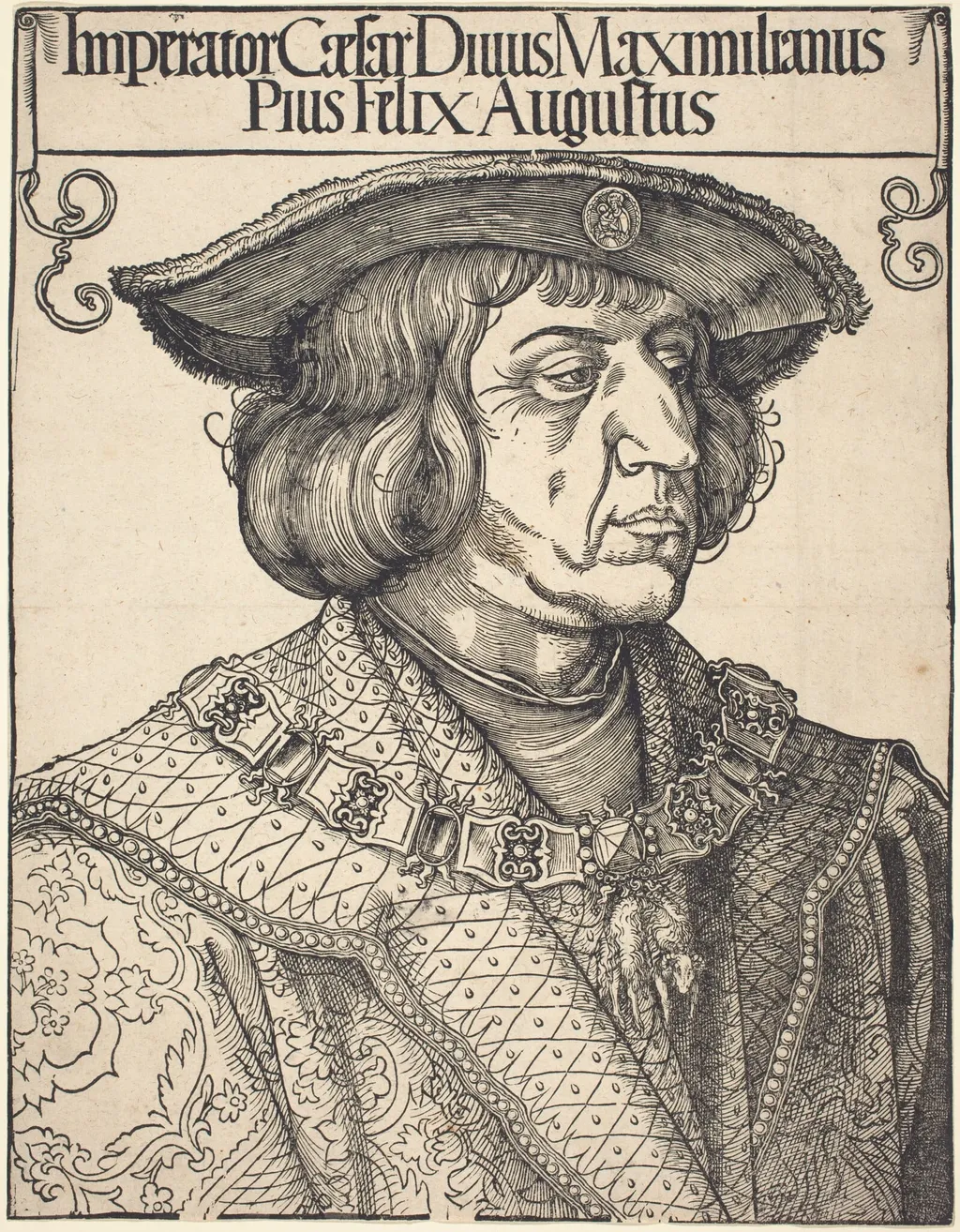
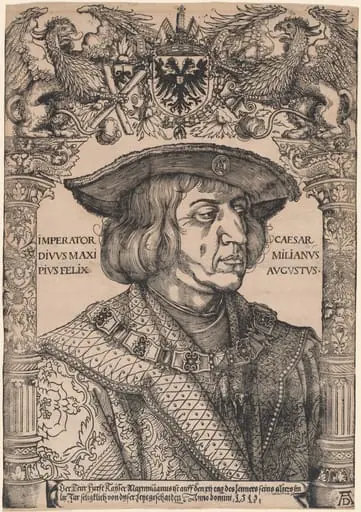
Emperor Maximilian I is an ink print by the Northern Renaissance artist Albrecht Dürer. It dates from 1518 and is held in the collection of the National Gallery of Art.
About this work
Overview
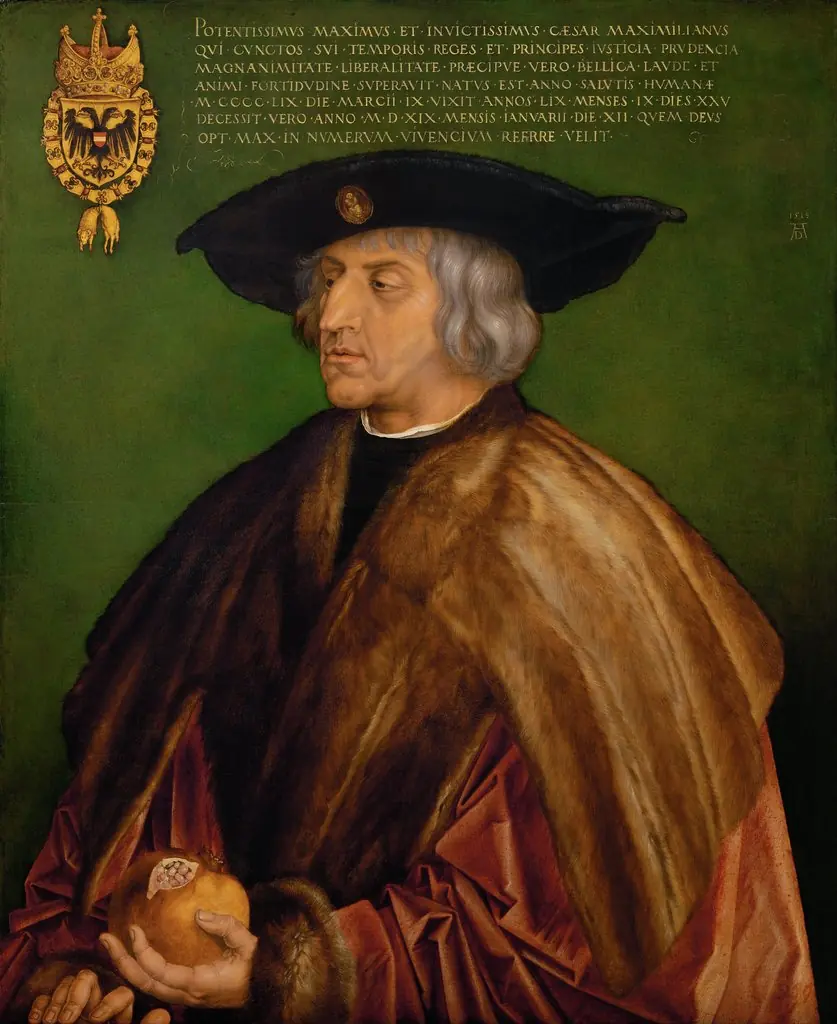
Albrecht Dürer’s woodcut portrait of Emperor Maximilian I, dated around 1518, presents the ruler in a formal, dignified pose. Executed as a single‑plate print, the image captures the emperor’s facial features and attire with meticulous detail, reflecting the precision characteristic of Dürer’s graphic work.
Subject & Meaning
The work portrays Maximilian I, Holy Roman Emperor, emphasizing his authority through a composed expression and regal dress. The inclusion of a fur‑lined coat and a prominent hat underscores his status, while the sober demeanor conveys the political gravitas associated with his reign.
Technique & Style
Created using the woodcut process, Dürer incised the image onto a wooden block, inked the raised surfaces, and transferred the design onto paper. This method allowed for fine line work and tonal variation, enabling the artist to render textures such as fabric and fur with a high degree of realism uncommon in early 16th‑century prints.
History & Provenance
The portrait was produced in the later years of Dürer’s career, a period when he frequently engaged with imperial patronage. While the original block has not survived, copies of the print circulated among courtly circles, contributing to the visual propaganda of Maximilian’s image across the Holy Roman Empire.
Context
The early 1500s saw a surge in portraiture that combined humanist ideals with emerging print technologies. Dürer’s depiction aligns with contemporary efforts to disseminate the likeness of rulers beyond painted portraits, making the emperor’s image accessible to a broader audience through reproducible media.
Legacy
Dürer’s woodcut of Maximilian I stands as an early example of political portraiture in print, influencing subsequent generations of artists who employed engraving and woodcut to convey authority. Its technical mastery continues to be studied as a benchmark of Northern Renaissance graphic art.
Artist & collection
Artist
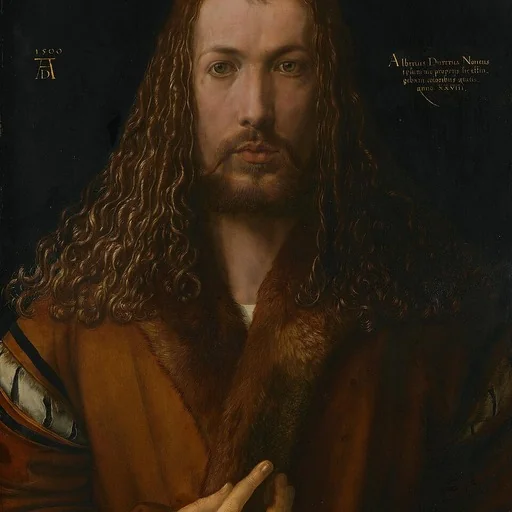
Albrecht Dürer spent his life in Nuremberg, a busy German city where artists traded prints like currency.

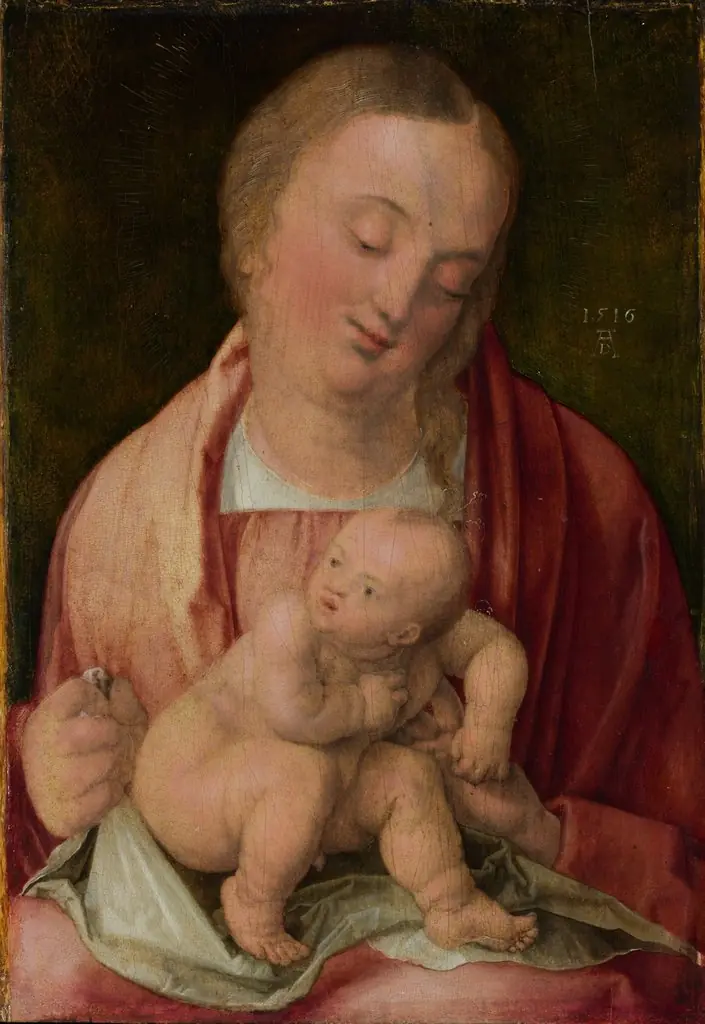
![Madonna and Child [obverse], by Albrecht Dürer](https://artifactworldgallery.com/img/albrecht-durer--madonna-and-child-obverse--d7b8ebf05d22ebe5-w320.webp)
![Lot and His Daughters [reverse], by Albrecht Dürer](https://artifactworldgallery.com/img/albrecht-durer--lot-and-his-daughters-reverse--b4ebf9b282faa17a-w320.webp)