Artwork
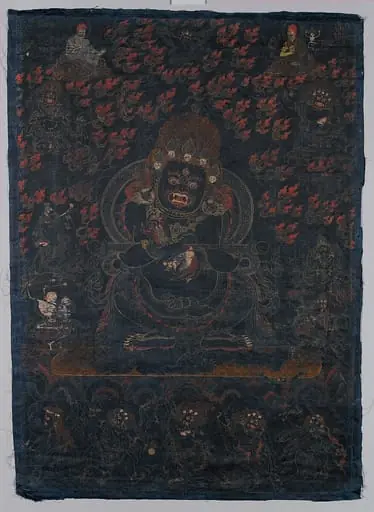
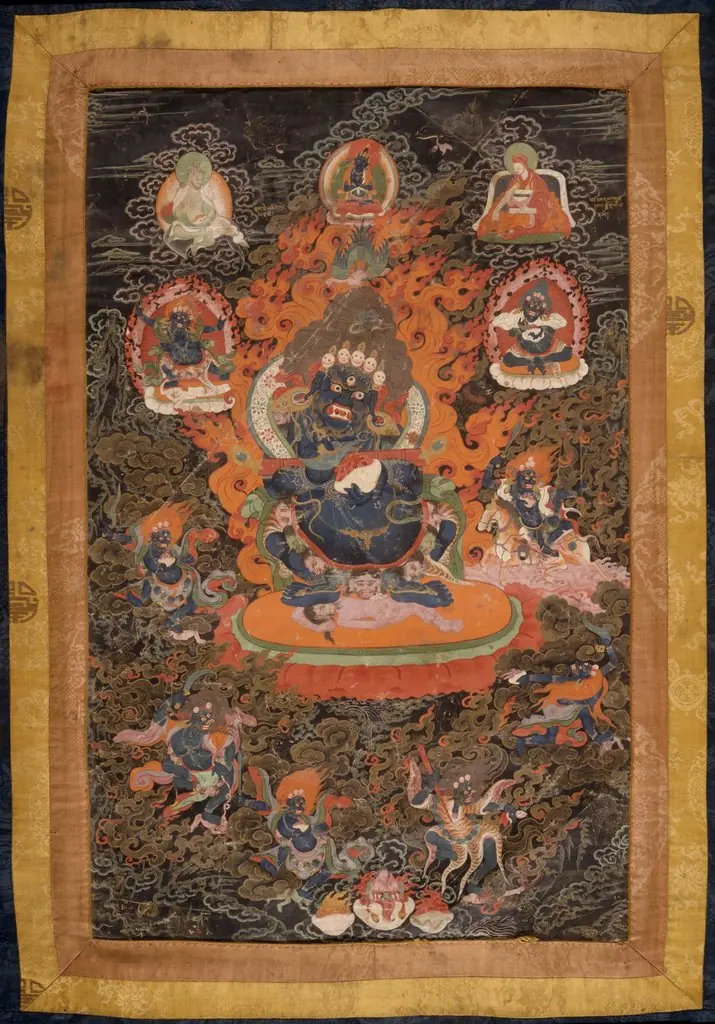
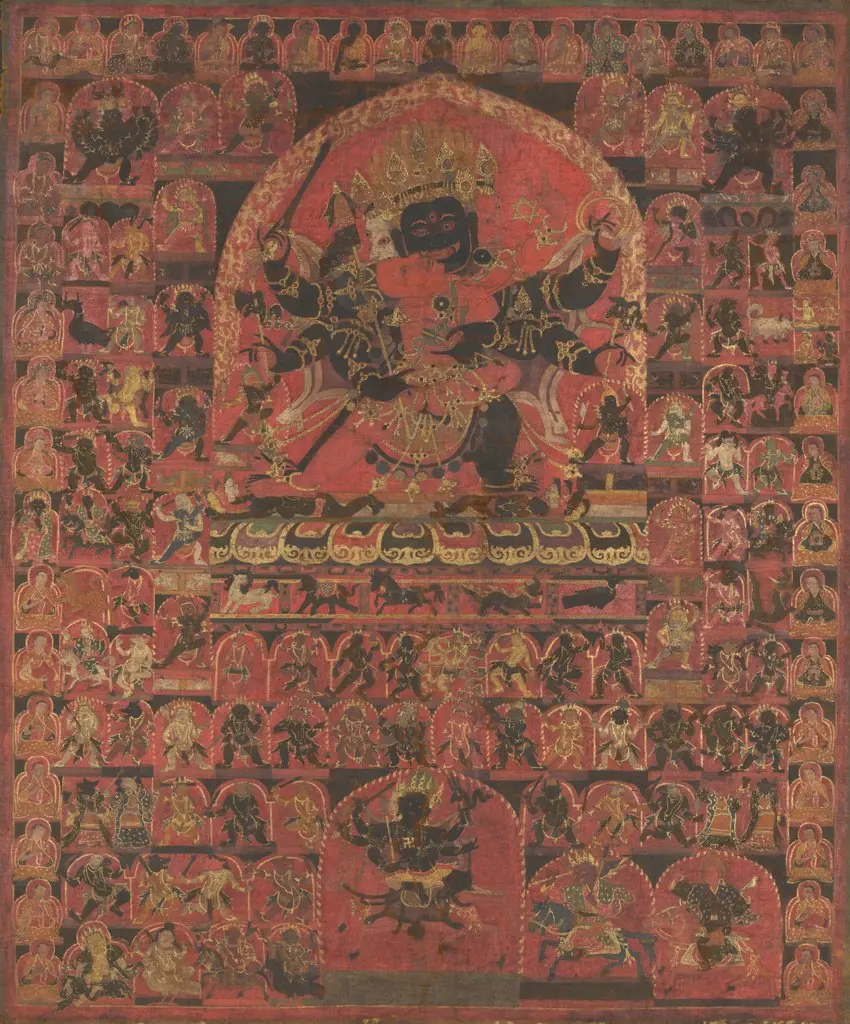
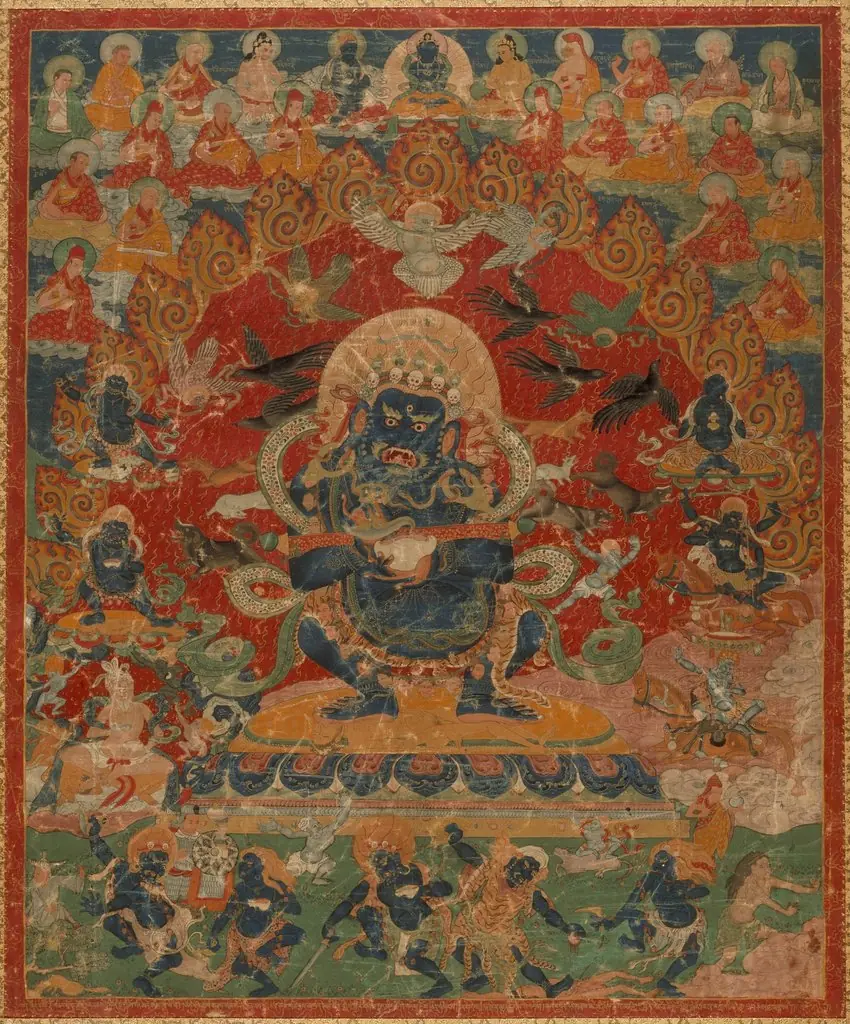
Painted Banner (Thangka) with Guru Dragpur or Vajrakila, a Wrathful Form of Guru Padmasambhava
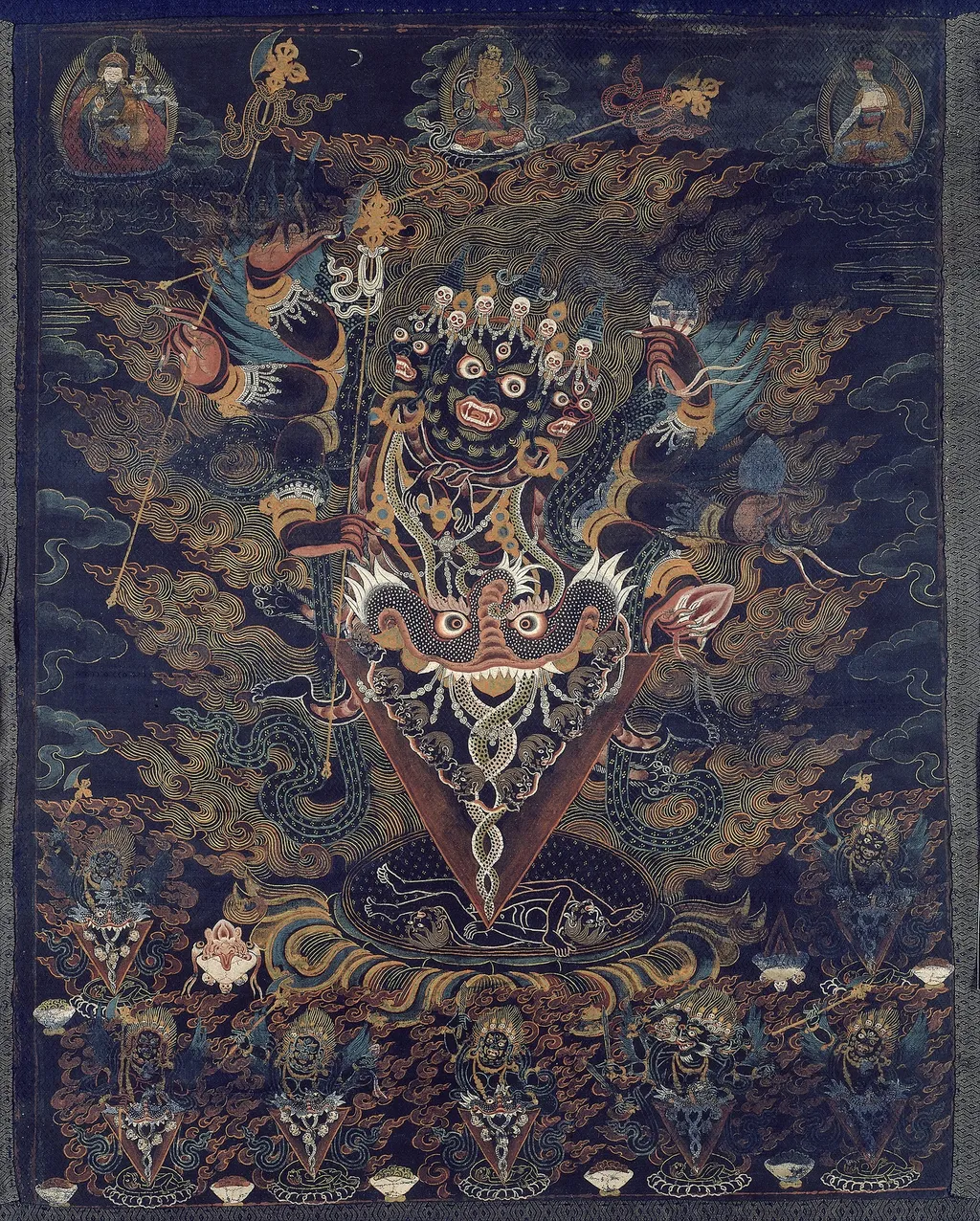
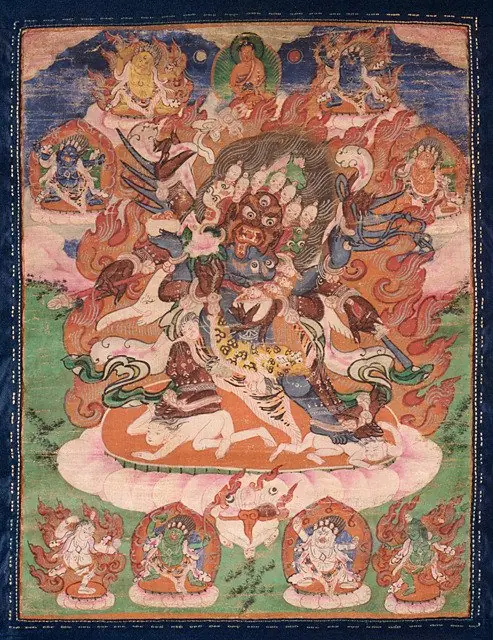
Painted Banner (Thangka) with Guru Dragpur or Vajrakila, a Wrathful Form of Guru Padmasambhava is an unspecified painting by Unknown. It dates from 1800 and is held in the collection of the Art Institute of Chicago.
About this work
Overview
Created as a devotional object, it was likely used in ritual contexts to invoke protective energies and subdue obstacles.
This painted banner, known as a thangka, depicts Guru Dragpur, a fierce manifestation of Guru Padmasambhava, the 8th-century Indian master who introduced Vajrayana Buddhism to Tibet. Created as a devotional object, it was likely used in ritual contexts to invoke protective energies and subdue obstacles. The banner’s vertical format and rich pigments reflect traditional Tibetan Buddhist artistic conventions, designed for portability and ceremonial display in monastic or household settings.
Subject & Meaning
Guru Dragpur, also called Vajrakila, is portrayed with a wrathful expression, multiple arms, and surrounded by flames, symbolizing the transformative power of wisdom over ignorance. He holds a vajra-tipped ritual dagger, representing the piercing of delusion. His fierce appearance is not an expression of anger but a compassionate force aimed at destroying spiritual hindrances. The iconography aligns with tantric practices emphasizing the transmutation of negative energies into enlightened action.
Technique & Style
The thangka is executed in mineral pigments on cotton, with fine brushwork defining intricate details of the deity’s ornaments, armor, and surrounding deities. Gold leaf accents highlight sacred elements, enhancing luminosity. The composition follows strict iconometric guidelines, with the central figure framed by geometric mandala-like patterns and symbolic clouds. The color palette—deep reds, blues, and golds—follows traditional Tibetan palettes meant to evoke spiritual presence rather than naturalism.
History & Provenance
Though exact origins are undocumented, the style and iconography suggest production in central Tibet during the 17th to 18th centuries, a period of flourishing tantric art under the influence of the Gelug and Nyingma traditions. Likely commissioned by a monastery or high-ranking lama, the banner may have been used in protective rites or stored in temple treasuries. Its survival indicates careful preservation, possibly through generations of ritual use and storage in dry, elevated conditions.
Context
Thangkas like this served as visual aids in meditation and ritual, particularly within tantric lineages that emphasize deity yoga. Guru Dragpur’s imagery emerged from esoteric texts describing his role in subduing harmful forces and purifying negative karma. Such banners were often displayed during festivals or private ceremonies, where their presence was believed to activate the deity’s power. The art form bridges textual doctrine and embodied practice, making abstract teachings tangible for practitioners.
Legacy
This thangka continues to represent the enduring influence of Tibetan tantric iconography beyond its original religious context. It contributes to scholarly understanding of how Buddhist symbolism was visually codified and transmitted across centuries. In contemporary settings, similar images are studied as cultural artifacts and displayed in museums, where their spiritual function is acknowledged even as their ritual use has diminished outside monastic communities.
Artist & collection

 Domestic Scene
 Giacomo and Cardinal Marco, investing Andrea, Abbot of San Zeno, with his Benefice
 The Nymph of Fontainebleau
 Portrait of a Woman
 Madonna and Child with Saints in the Enclosed Garden
 Venus and Minerva
 Family Group of Four on Sofa
 Wall painting from Room H of the Villa of P. Fannius Synistor at Boscoreale