Artwork
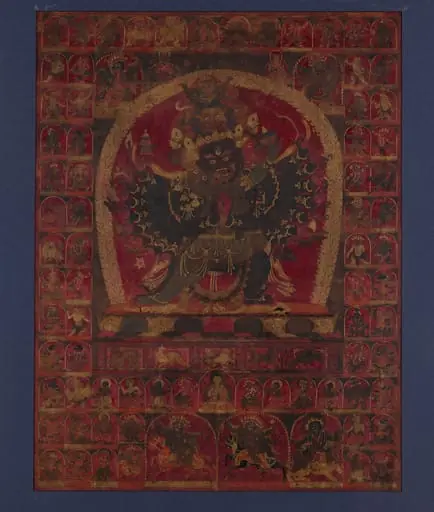
Bon Deity Trowo Tsochog Khagying
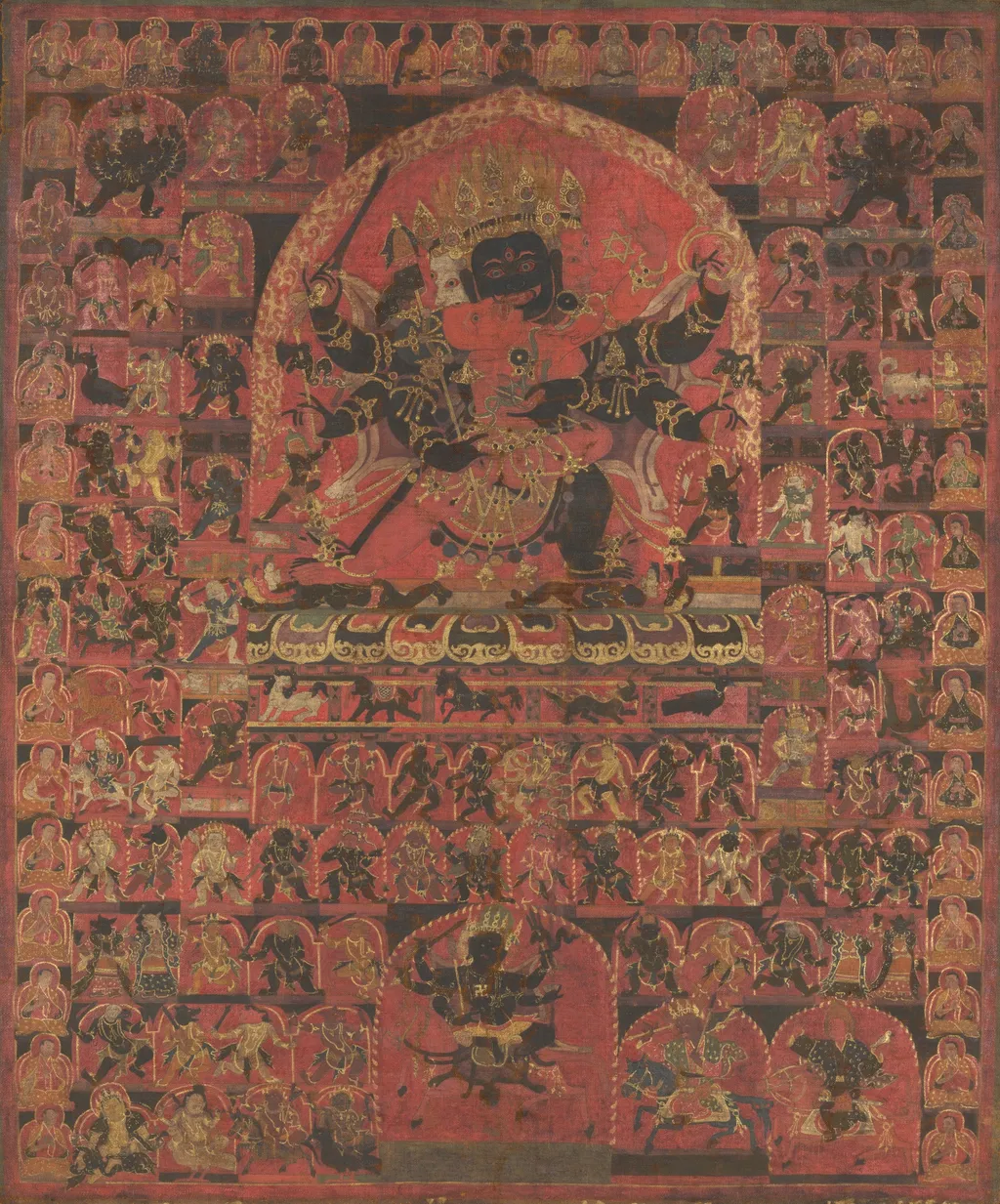
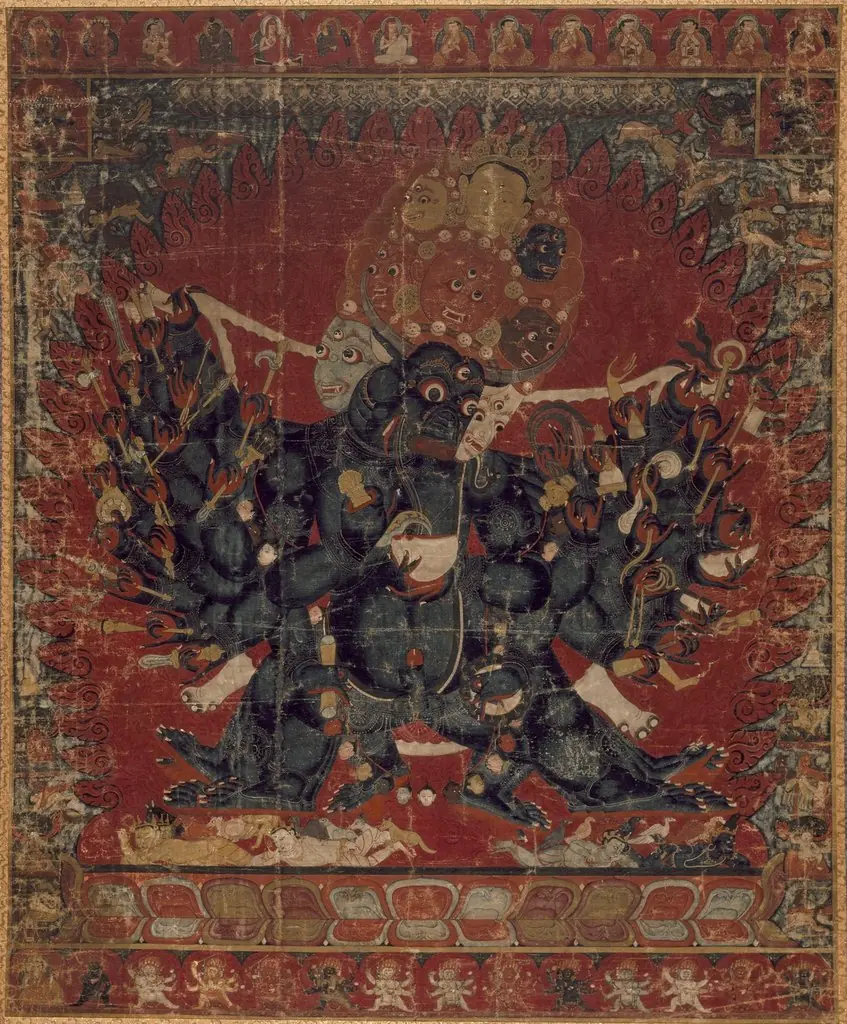
Bon Deity Trowo Tsochog Khagying is an unspecified painting by Unknown. It dates from 1449 and is held in the collection of the Metropolitan Museum of Art. This Tibetan thangka depicts a wrathful deity associated with protective rituals and esoteric Buddhist practice.
About this work
Overview
This Tibetan thangka depicts a wrathful deity associated with protective rituals and esoteric Buddhist practice.
This Tibetan thangka depicts a wrathful deity associated with protective rituals and esoteric Buddhist practice. Rendered in mineral pigments on cotton, the painting follows traditional iconographic conventions of the Kagyu school, emphasizing symbolic attributes over naturalistic representation. Its compact composition centers the deity in a dynamic pose, surrounded by flames and celestial elements.
Subject & Meaning
The deity, identified as Trowo Tsochog Khagying, embodies the transformative power of wrathful compassion in Vajrayana Buddhism. Its fierce appearance—multiple arms, flaming halo, and trampling figures—symbolizes the destruction of ignorance and ego. The object held in its hand, often a trowel or ritual implement, signifies the clearing of spiritual obstacles, aligning with its name’s reference to excavation or removal.
Technique & Style
Executed in precise, fine-line brushwork using natural pigments, the painting adheres to strict iconometric guidelines. Gold leaf outlines enhance the deity’s form, while layered washes create depth in the background flames and mandalic patterns. The flat perspective and lack of shadow reflect devotional rather than representational aims, prioritizing symbolic clarity over spatial realism.
History & Provenance
The painting likely originated in a monastic workshop in eastern Tibet during the 18th or early 19th century. It was probably commissioned for use in ritual ceremonies or as an object of meditation within a specific lineage. Its survival suggests careful preservation, possibly within a family or temple collection, though its exact early provenance remains undocumented.
Context
This work belongs to a broader tradition of Tibetan protector deity imagery developed during the consolidation of Vajrayana practices in the Himalayan region. Similar deities appear in ritual texts and mandalas, often invoked to defend the Dharma and purify negative forces. Its style reflects regional Kagyu influences, distinct from Gelug or Nyingma iconographic norms.
Legacy
Though not widely exhibited outside monastic settings, this painting contributes to the continuity of Tibetan Buddhist visual language. It remains a functional object in some lineages, used in retreats and rites. Contemporary scholars value it as an example of devotional art that preserves doctrinal precision through disciplined artistic practice.
Artist & collection

 Domestic Scene
 Giacomo and Cardinal Marco, investing Andrea, Abbot of San Zeno, with his Benefice
 The Nymph of Fontainebleau
 Portrait of a Woman
 Madonna and Child with Saints in the Enclosed Garden
 Venus and Minerva
 Family Group of Four on Sofa
 Wall painting from Room H of the Villa of P. Fannius Synistor at Boscoreale
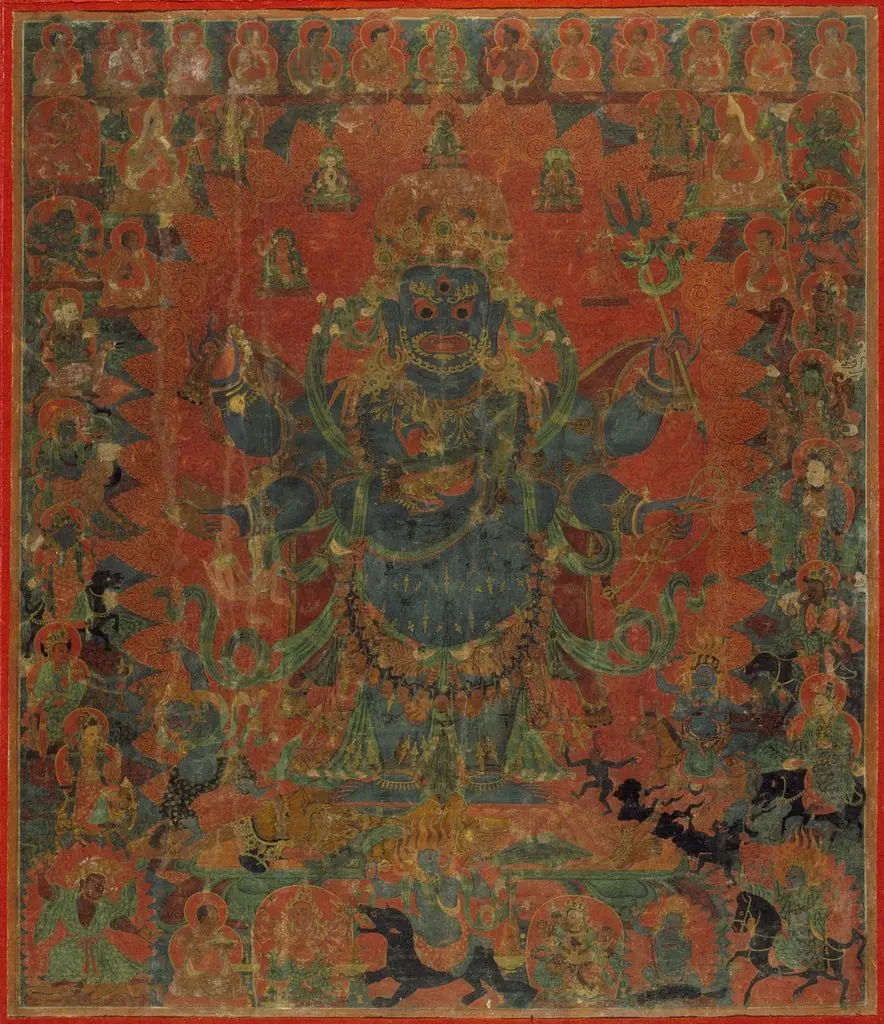 Mahakala and his Entourage
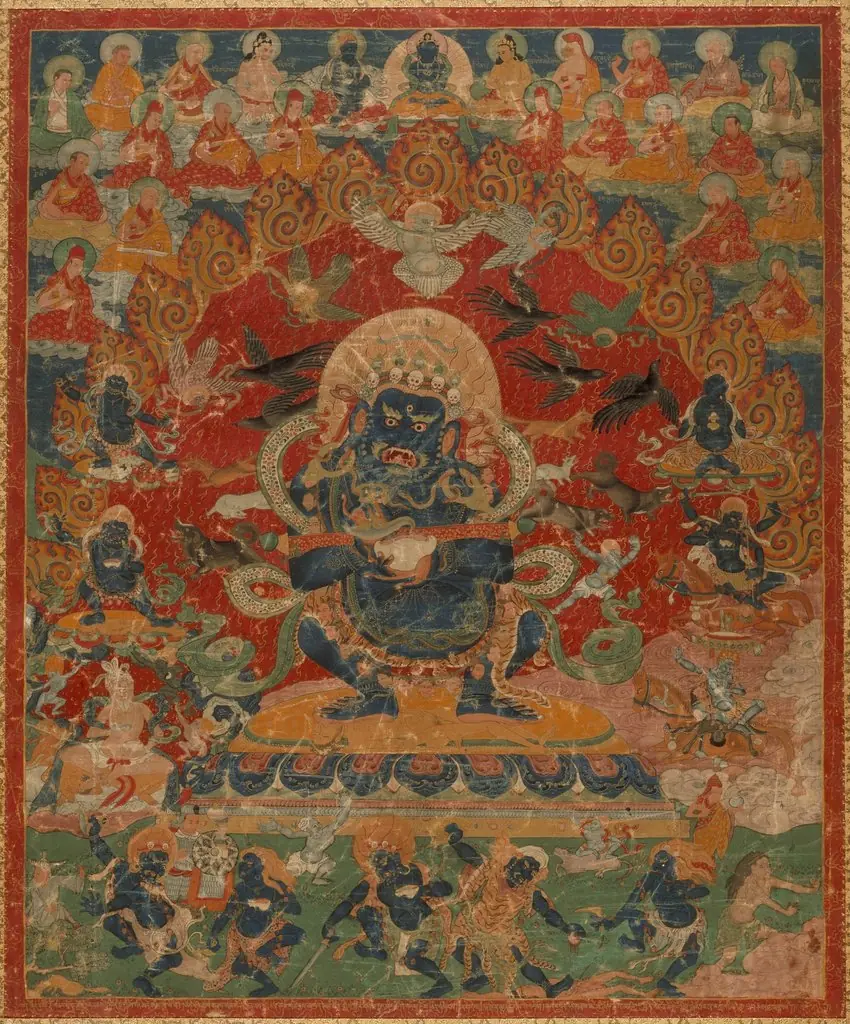 Mahakala Panjarnata (Lord of the Pavilion)
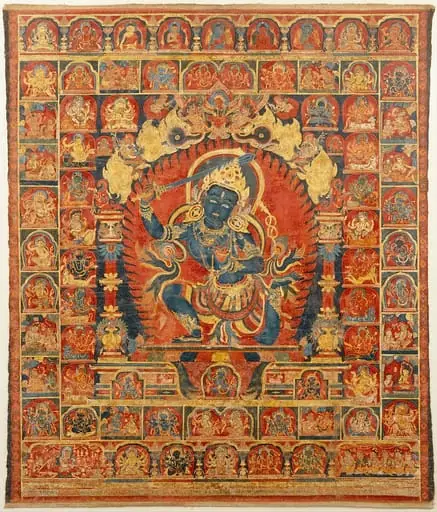 Untitled
 Untitled
 Painted Banner (Thangka) with Guru Dragpur or Vajrakila, a Wrathful Form of Guru Padmasambhava
 Kunga Tashi and Incidents from His Life (Abbot of Sakya Monastery, 1688-1711)
 Mahakala and Companions
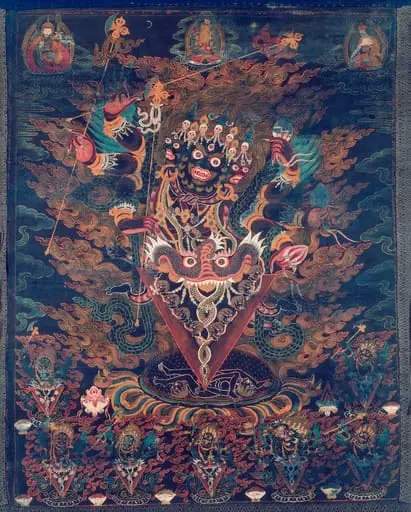 Painted Banner (Thangka) with Guru Dragpur, a Wrathful Form of Padmasambhava
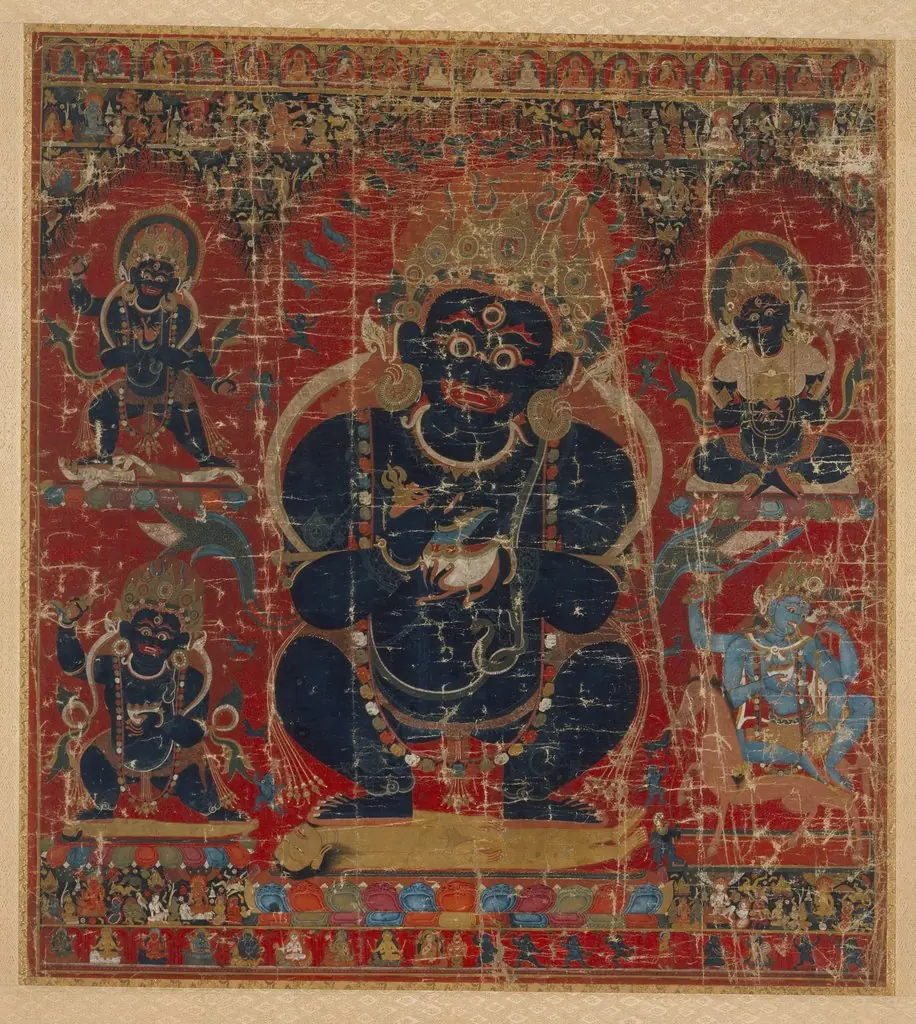 Mahakala Panjarnata (Lord of the Pavilion)
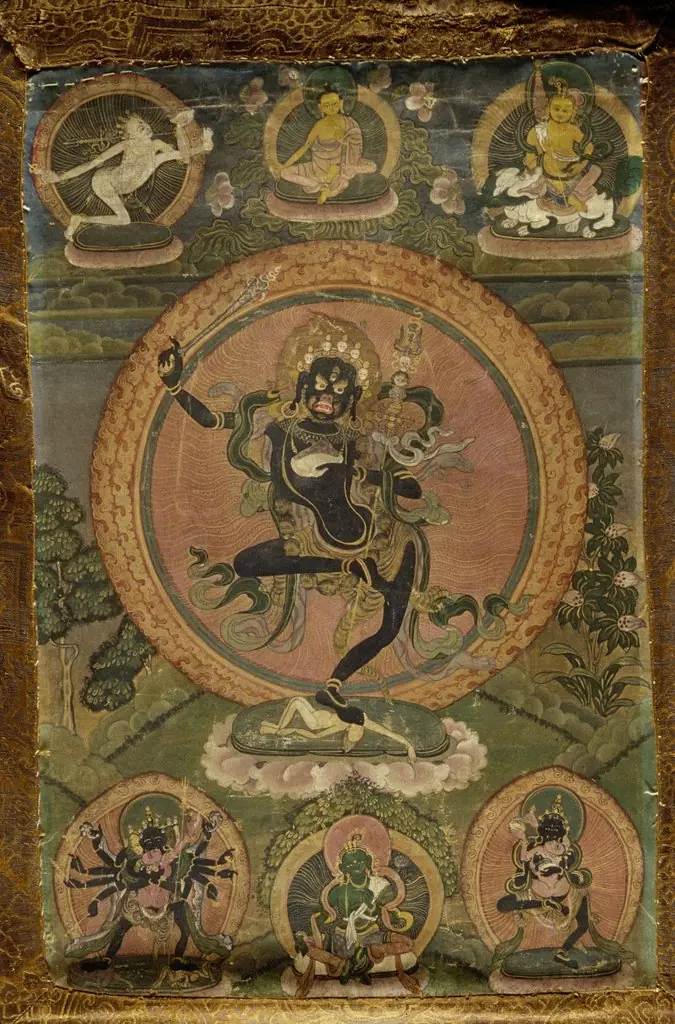 Khadgayogini
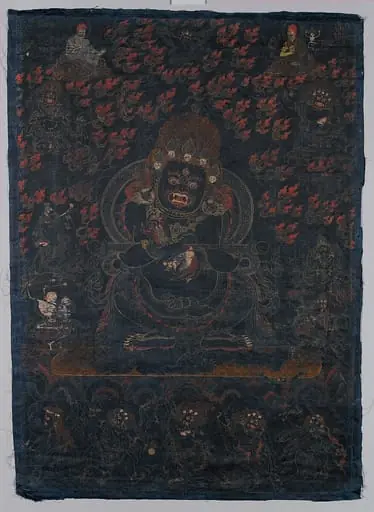 Untitled
 Yamantaka Vajrabhairava