Artwork
Khadgayogini
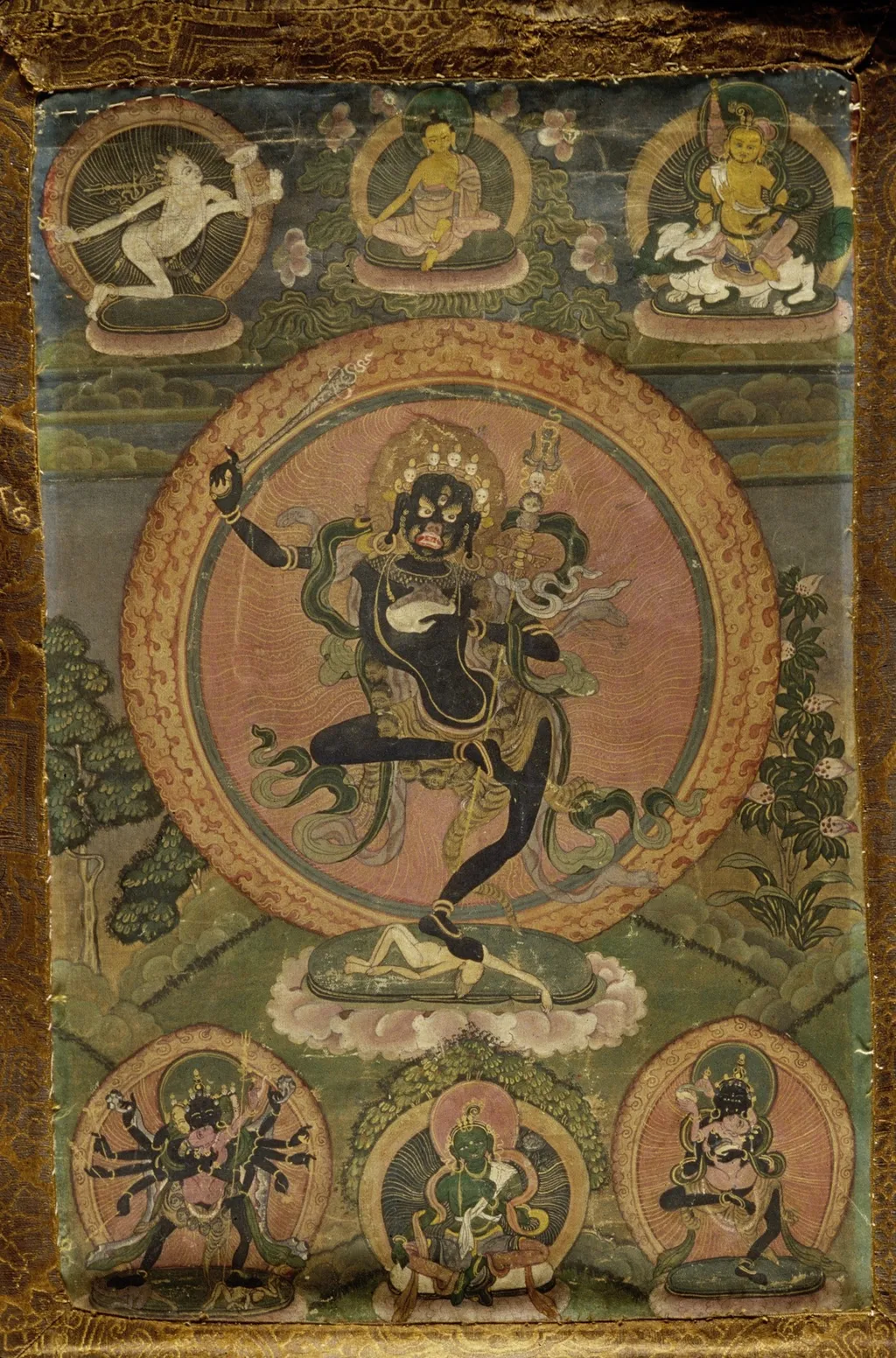
Khadgayogini is an unspecified painting by Unknown. It dates from 1850 and is held in the collection of the Los Angeles County Museum of Art.
About this work
Overview
The muted green background and bold outlines enhance the sense of vitality, while the vivid color contrasts draw focus to the central figure’s intensity.
This painting depicts a dynamic female figure, identified as Khadgayogini, within a circular frame adorned with red and gold ornamentation. Surrounded by seated attendants, she is rendered in motion with one leg extended and the other bent, sword held aloft. The muted green background and bold outlines enhance the sense of vitality, while the vivid color contrasts draw focus to the central figure’s intensity.
Subject & Meaning
Khadgayogini, a tantric deity associated with power and transformation, is portrayed as a fierce, active force. Her weapon and dynamic posture suggest ritual action or spiritual combat. The surrounding figures, seated in contemplative poses, may represent disciples or cosmic entities observing her energy. The composition reflects a tantric cosmology where divine power manifests through movement and focused intent.
Technique & Style
The artist employs strong, clean lines to define form and motion, characteristic of regional Himalayan painting traditions. Vivid pigments—especially the red and gold circle—contrast against the subdued green background, creating visual rhythm. The figures are stylized rather than naturalistic, emphasizing symbolic presence over anatomical detail, reinforcing the sacred nature of the scene.
History & Provenance
This work originates from the Himalayan region, likely created in the 18th or 19th century within a tantric Buddhist or Hindu devotional context. It was probably used in ritual settings or private meditation, serving as a visual aid for spiritual practice. Its survival suggests it was carefully preserved, possibly within a monastery or royal collection.
Context
Khadgayogini imagery emerged in tantric traditions that emphasized direct experience of divine energy through ritual and visualization. Paintings like this were not merely decorative but functional, aiding practitioners in invoking specific deities. The circular format echoes mandalas, symbolizing cosmic order, while the surrounding figures reflect hierarchical spiritual presence.
Legacy
This painting contributes to a broader corpus of Himalayan devotional art that preserves esoteric religious practices through visual language. Its stylistic choices influenced later regional works, and it remains a reference for understanding how tantric concepts were materialized in portable art. Today, it is studied as both religious artifact and aesthetic object.
Artist & collection

 Domestic Scene
 Giacomo and Cardinal Marco, investing Andrea, Abbot of San Zeno, with his Benefice
 The Nymph of Fontainebleau
 Portrait of a Woman
 Madonna and Child with Saints in the Enclosed Garden
 Venus and Minerva
 Family Group of Four on Sofa
 Wall painting from Room H of the Villa of P. Fannius Synistor at Boscoreale
 White Mahakala
 Painted Banner (Thangka) with Guru Dragpur or Vajrakila, a Wrathful Form of Guru Padmasambhava
 Untitled
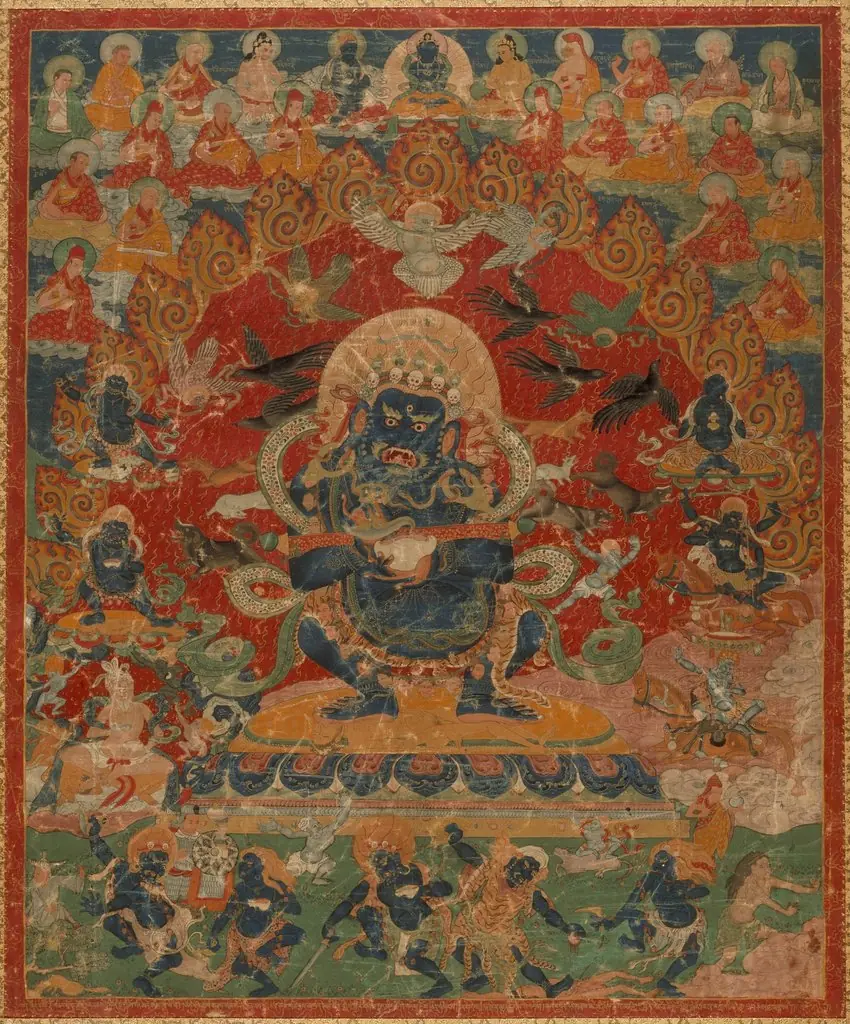 Mahakala Panjarnata (Lord of the Pavilion)
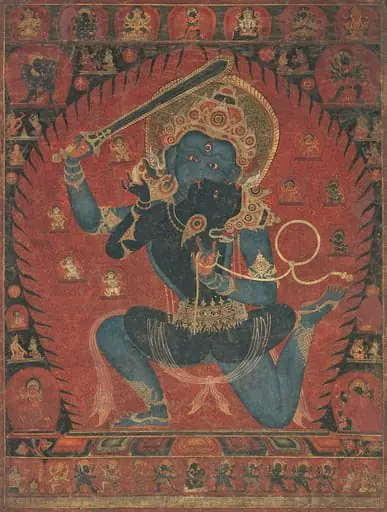 Untitled
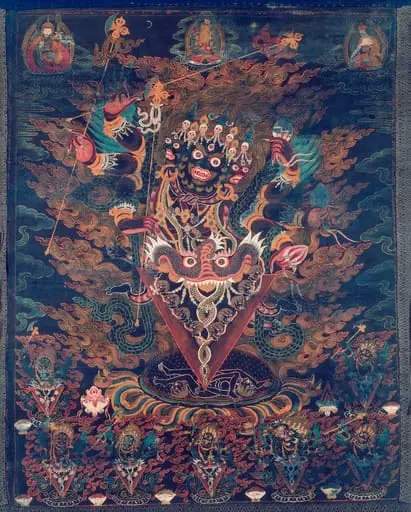 Painted Banner (Thangka) with Guru Dragpur, a Wrathful Form of Padmasambhava
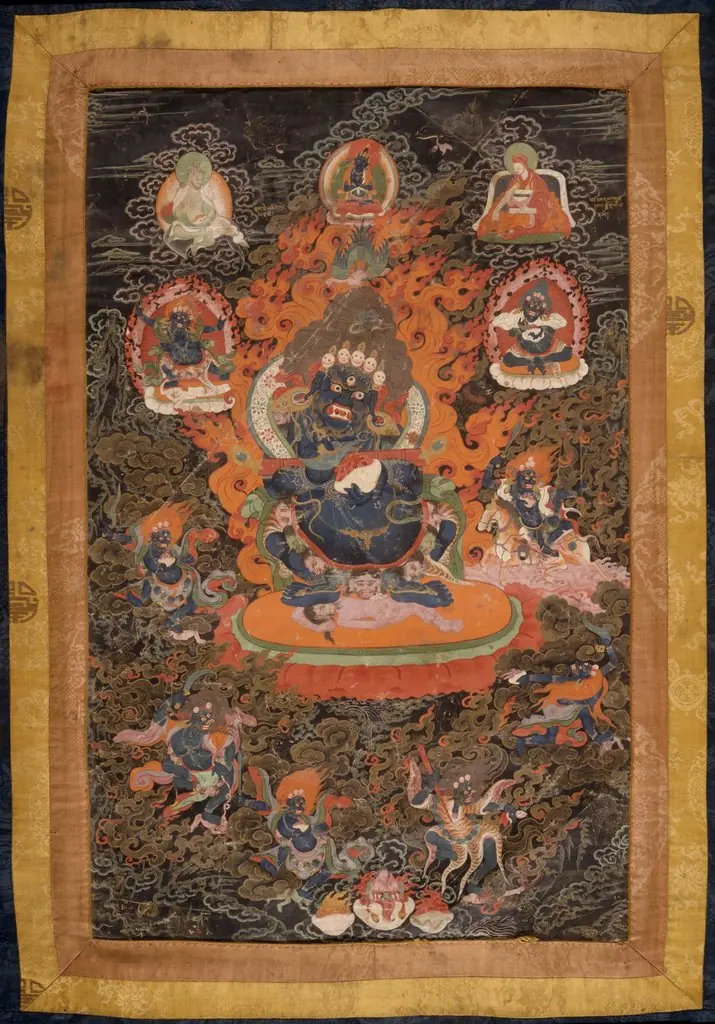 Mahakala and Companions
 Achala with His Consort Vishvavajri
 Garuda-Feathered Hayagriva and Consort
 Bon Deity Trowo Tsochog Khagying
 Untitled
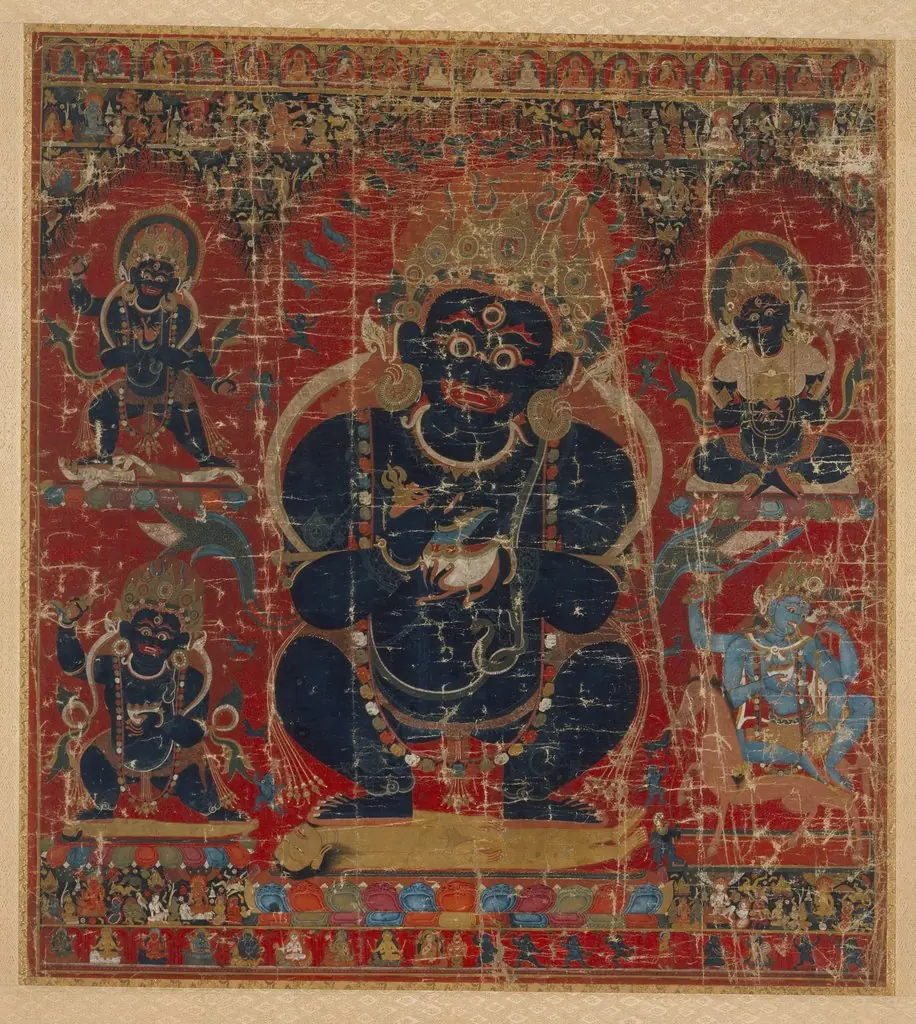 Mahakala Panjarnata (Lord of the Pavilion)