Artwork
Charles-Marie Bonaparte (1746-1785)
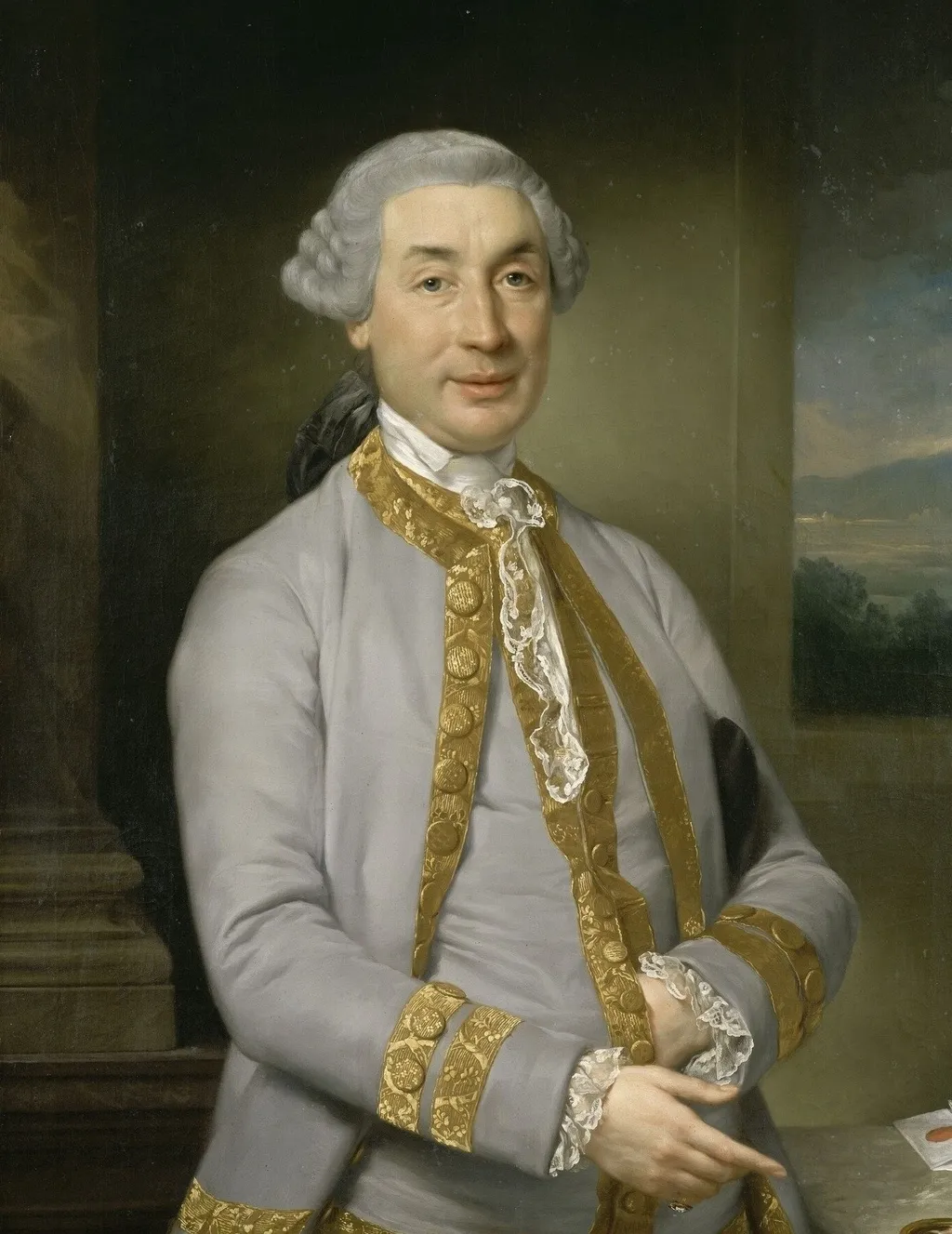
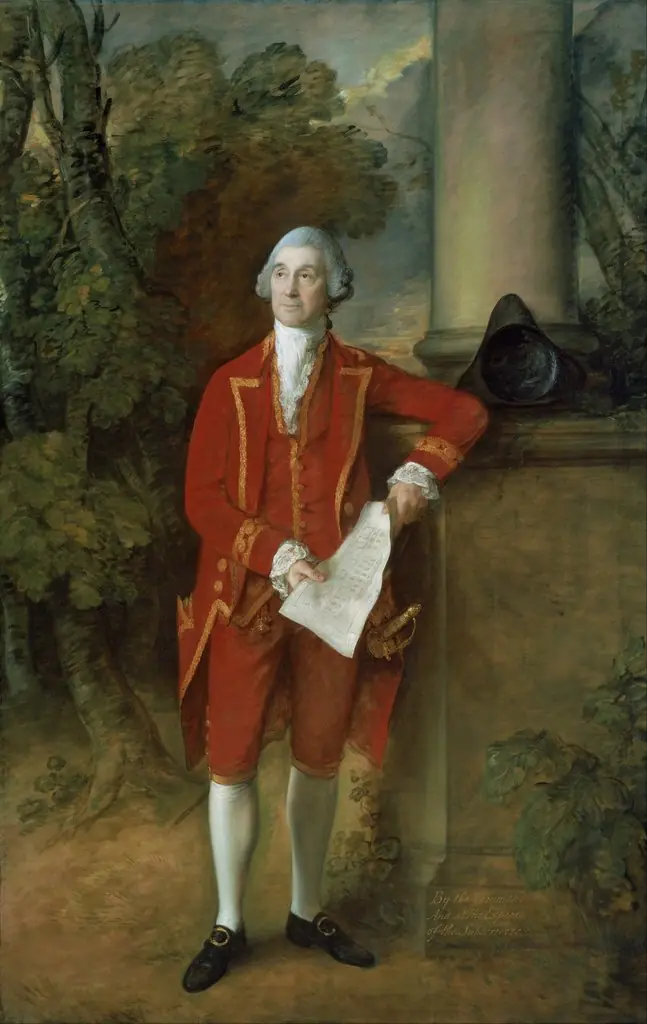
Charles-Marie Bonaparte (1746-1785) is an oil painting by Unknown. It is held in the collection of the Palace of Versailles.
About this work
This portrait depicts a man in an ornate gray jacket with gold trim, standing in front of a column and a landscape painting.
This portrait depicts a man in an ornate gray jacket with gold trim, standing in front of a column and a landscape painting. He has white hair styled in a low ponytail and wears a white shirt with lace cuffs and a lace cravat. His right hand is folded over his left, and he wears a ring on his left hand.
The man's attire and the setting suggest a formal portrait, possibly from the 18th century. The artist's use of chiaroscuro creates a sense of depth and dimensionality in the painting.
To learn more about the artist's techniques, look up "chiaroscuro".
Overview
This 18th-century oil painting portrays Charles-Marie Bonaparte (1746-1785) in formal attire, set against a backdrop featuring a column and a landscape painting. The subject is depicted with white hair in a low ponytail, wearing an ornate gray jacket with gold trim, white shirt, lace cuffs, and a lace cravat, with a ring visible on his left hand.
Subject & Meaning
The painting captures Charles-Marie Bonaparte, a figure of historical significance as the father of Napoleon Bonaparte. The formal setting and attire signify his social status, while the composed posture (right hand over left) conveys dignity.
Technique & Style
The artist employed chiaroscuro, a strong contrast between light and dark, to achieve depth and dimensionality in the portrait, drawing attention to the subject's facial expression and hands.
History & Provenance
Unfortunately, specific details about the painting's history, artist, and ownership timeline are not provided in the available information.
Context
Created in the 18th century, this portrait reflects the era's formal portraiture conventions, emphasizing the subject's stature through symbolic backdrops and attire.
Legacy
As a portrait of Napoleon's father, the painting holds historical value, offering insight into the family's pre-imperial status and the artistic traditions of the time.
Artist & collection

 Domestic Scene
 Giacomo and Cardinal Marco, investing Andrea, Abbot of San Zeno, with his Benefice
 The Nymph of Fontainebleau
 Portrait of a Woman
 Madonna and Child with Saints in the Enclosed Garden
 Venus and Minerva
 Family Group of Four on Sofa
 Wall painting from Room H of the Villa of P. Fannius Synistor at Boscoreale
 Baronul Samuel von Brukenthal (în registrul inventar: Baron Samuel von Brukenthal, guvernatorul Ardealului). Pandant: Baroana Sophia Katharina von Brukenthal născută von Klocknern.
 Sir John Dick
 William Denison
 Nahkuri Jakob Westin vanhempi
 Bildnis eines Herrn im roten Kleid
 D Pedro López de Lerena, I Count of Lerena
 William Wragg
 Portrait og an Elderly Gentleman
 Portrait of Johan Arnold Zoutman
 Jean-Jacques Caffieri
 The Marquis d'Ossun
 John Eld of Seighford Hall, Stafford