Artwork
The Thames Looking Eastwards, with Somerset House
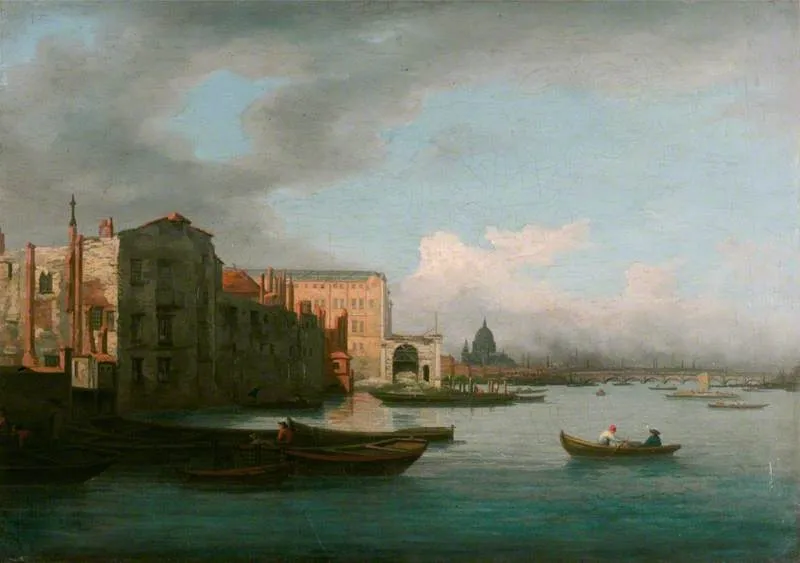
The Thames Looking Eastwards, with Somerset House is an oil painting by the Rococo painting artist Unknown. It dates from 1793 and is held in the collection of the Victoria and Albert Museum. This oil painting depicts a quiet stretch of the River Thames viewed from the east, with Somerset House rising along the far bank.
About this work
Overview
This oil painting depicts a quiet stretch of the River Thames viewed from the east, with Somerset House rising along the far bank.
This oil painting depicts a quiet stretch of the River Thames viewed from the east, with Somerset House rising along the far bank. The composition centers on a small rowboat carrying two figures, its motion subtle and unhurried. The sky is softly overcast, with faint breaks of blue, and the water reflects muted tones that enhance the scene’s stillness. Buildings along the shore are rendered with quiet detail, their aged surfaces suggesting long use.
Subject & Meaning
The scene presents everyday life on the river without grandeur or drama. The figures in the boat are anonymous, their actions unremarkable, emphasizing routine over spectacle. The architecture of Somerset House and surrounding structures anchors the view in a specific time and place, while the absence of crowds or activity conveys solitude. The painting invites contemplation rather than narrative.
Technique & Style
Brushwork is restrained and blended, creating a hazy, atmospheric effect. Colors are subdued—soft grays, pale blues, and earthy browns—avoiding strong contrasts. Light filters diffusely through the clouds, casting no sharp shadows. The water’s surface is rendered with delicate strokes that suggest gentle ripples, reinforcing the calm mood without artificial polish.
History & Provenance
The painting is attributed to an artist active in the late 18th or early 19th century, likely working within the English topographical tradition. It was probably commissioned or created for private collection, reflecting contemporary interest in tranquil urban landscapes. No documented exhibition history or notable ownership changes are recorded, suggesting it remained in modest circulation.
Context
During this period, the Thames was a working waterway, lined with warehouses, government buildings, and docks. Somerset House, recently repurposed as a public institution, symbolized civic order. Paintings like this captured the river not as a site of commerce but as a place of quiet reflection, aligning with emerging Romantic sensibilities toward everyday serenity.
Legacy
The work contributes to a body of British landscape painting that valued quiet observation over dramatic spectacle. Though not widely known today, it reflects a shift in artistic focus toward intimate, unidealized views of urban life. Its restrained aesthetic anticipates later developments in British tonal painting, emphasizing mood over narrative.
Artist & collection

 Domestic Scene
 Giacomo and Cardinal Marco, investing Andrea, Abbot of San Zeno, with his Benefice
 The Nymph of Fontainebleau
 Portrait of a Woman
 Madonna and Child with Saints in the Enclosed Garden
 Venus and Minerva
 Family Group of Four on Sofa
 Wall painting from Room H of the Villa of P. Fannius Synistor at Boscoreale
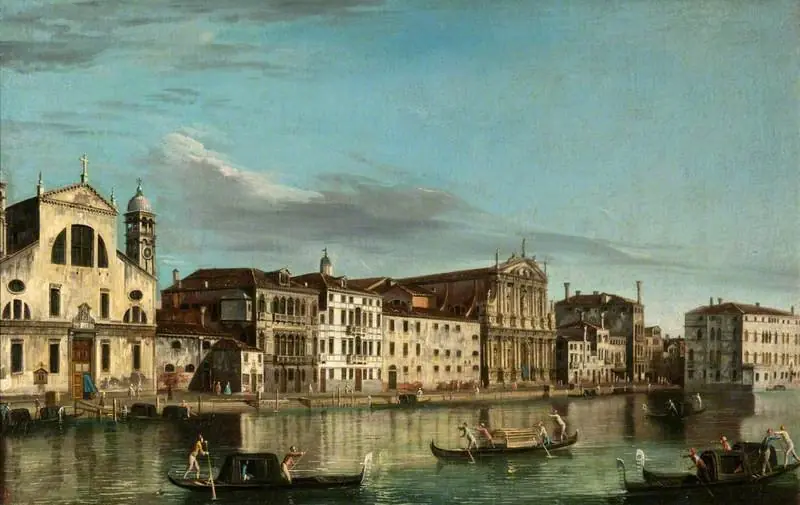 The Grand Canal: Santa Lucia and the Church of the Scalzi, Venice
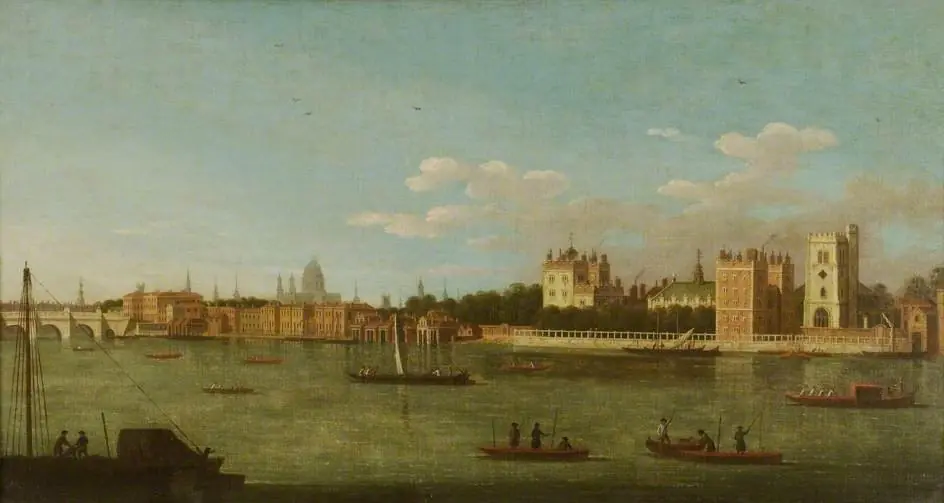 The Thames at Lambeth
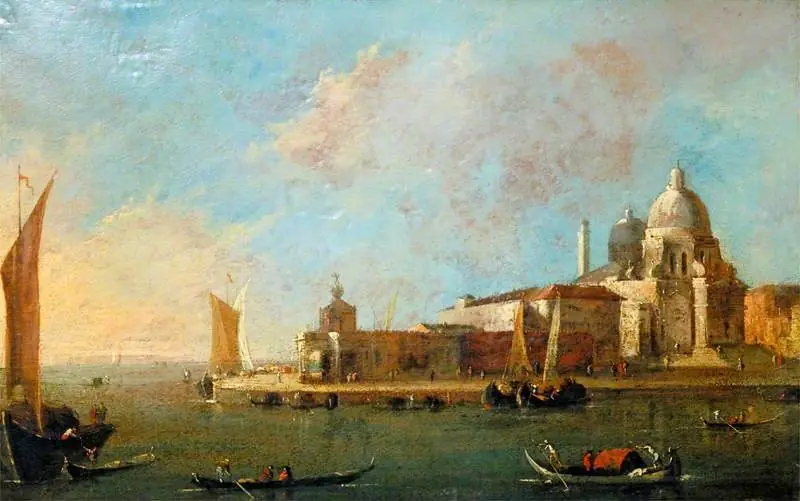 Venice: View of Santa Maria della Salute and the Dogana
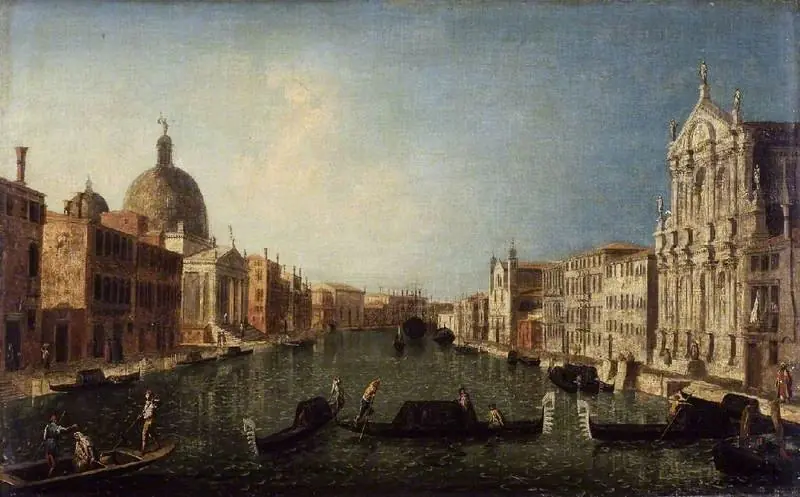 The Grand Canal, Venice, with S. Simeone
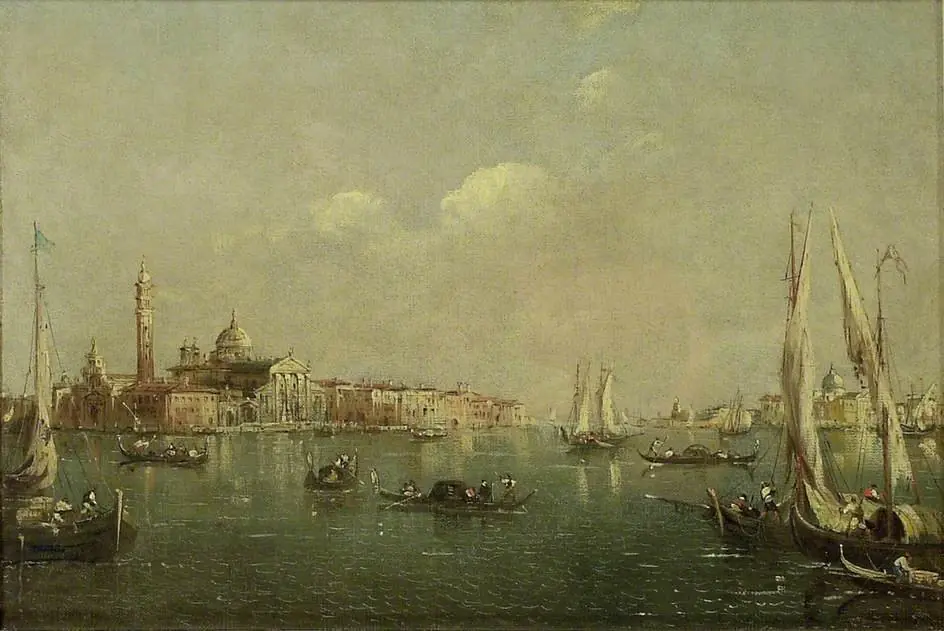 The Lagoon and Island of San Giorgio seen from the Molo
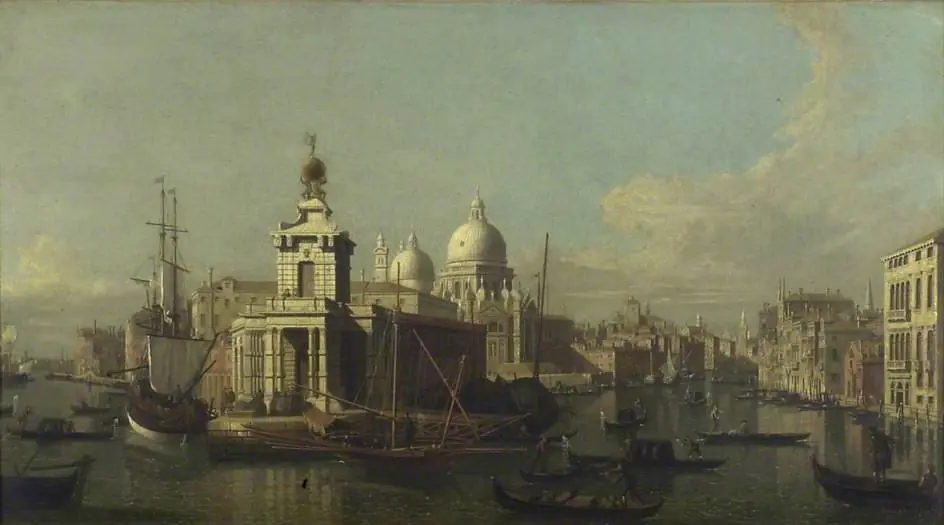 Entrance to the Grand Canal, looking West
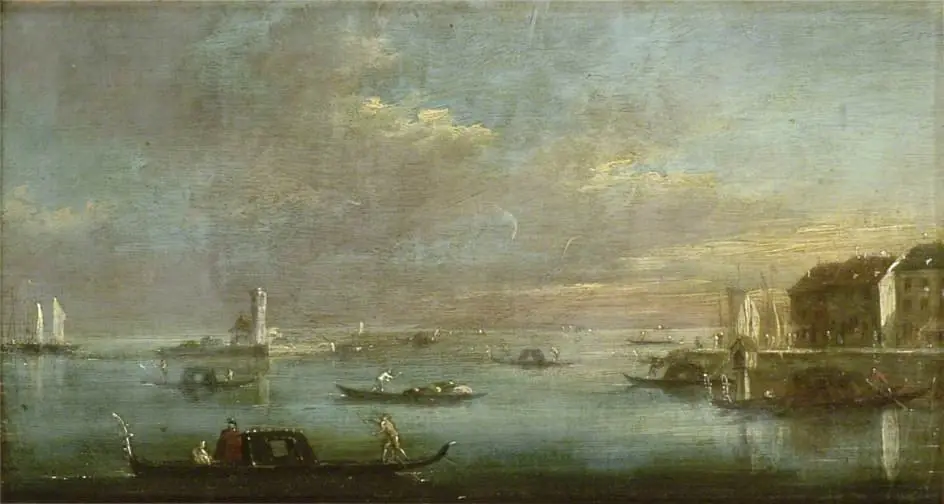 The Venetian Lagoon at Sunset
 The Grand Canal, Venice, above the Rialto bridge
 View of the Grand Canal: Santa Maria della Salute and the Dogana from Campo Santa Maria Zobenigo