Artwork
Kaiser Friedrich III. (1415-1493), Profilbildnis
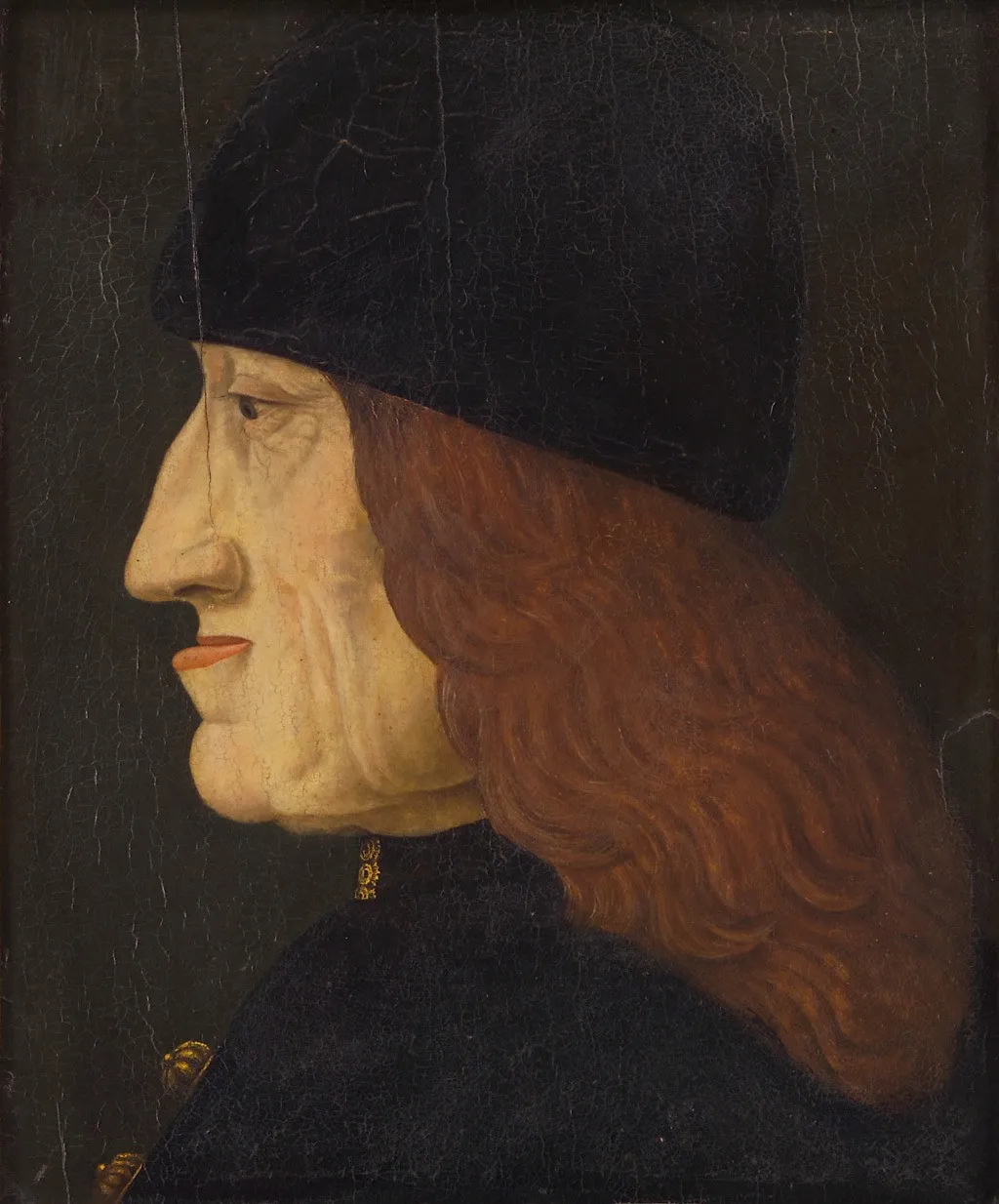
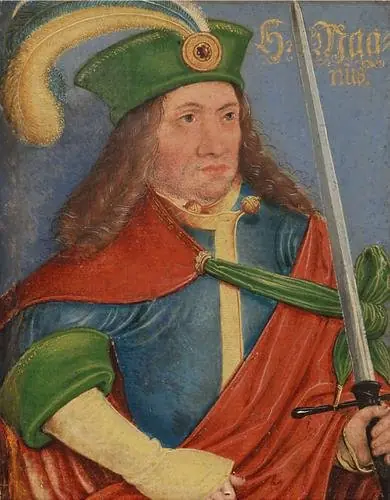
Kaiser Friedrich III. (1415-1493), Profilbildnis is an unspecified painting by the Northern Renaissance artist Unknown. It dates from 1500 and is held in the collection of the Kunsthistorisches Museum. This portrait depicts Kaiser Friedrich III, Holy Roman Emperor, in a tightly framed profile view.
About this work
Overview
The composition emphasizes his facial features against a deep, unbroken background, isolating him in a moment of stillness.
This portrait depicts Kaiser Friedrich III, Holy Roman Emperor, in a tightly framed profile view. Executed with quiet precision, the painting captures him in mid-turn, his gaze directed away from the viewer. The composition emphasizes his facial features against a deep, unbroken background, isolating him in a moment of stillness. The absence of ornamentation or context focuses attention entirely on his presence.
Subject & Meaning
Friedrich III, ruler of the Holy Roman Empire from 1440 to 1493, is portrayed not as a monarch in regalia but as a private individual. His calm demeanor and unadorned attire suggest introspection rather than power. The subtle rendering of his features conveys dignity without grandeur, reflecting a shift toward human-centered representation in late medieval portraiture, where inner character began to outweigh external status.
Technique & Style
The artist employed soft gradations of tone to model the emperor’s face, creating a seamless transition between light and shadow. This technique, later termed sfumato, eliminates harsh outlines, lending the skin a lifelike, rounded quality. The warm glow on his pale complexion contrasts with the cool darkness behind him, enhancing depth. Fine brushwork renders the texture of his hair and the delicate chain on his hat with restrained detail.
History & Provenance
The painting likely originated in the mid-to-late 15th century within a German or Austrian court workshop. Its intimate scale and focus suggest it was intended for private contemplation rather than public display. While its early ownership is undocumented, it entered institutional collections in the 19th century, where its attribution to Friedrich III was established through stylistic comparison with contemporary coinage and other portraits.
Context
Created during a period when portraiture was evolving from symbolic representation to psychological realism, this work reflects the growing interest in individual identity among European elites. Unlike earlier imperial images emphasizing divine authority, this portrait prioritizes the physical presence of the ruler, aligning with broader humanist trends that valued personal observation and naturalism over idealized forms.
Legacy
The portrait stands as an early example of the transition toward psychological portraiture in Northern Renaissance art. Its quiet intensity and technical subtlety influenced later artists seeking to convey character through nuanced lighting and restrained composition. Though not widely known, it remains a significant reference in studies of how rulers were visually reimagined during the late Middle Ages.
Artist & collection

 Domestic Scene
 Giacomo and Cardinal Marco, investing Andrea, Abbot of San Zeno, with his Benefice
 The Nymph of Fontainebleau
 Portrait of a Woman
 Madonna and Child with Saints in the Enclosed Garden
 Venus and Minerva
 Family Group of Four on Sofa
 Wall painting from Room H of the Villa of P. Fannius Synistor at Boscoreale
 Bildnis eines Mannes mit Rosenkranz
 Emperor Maximilan I. (1459-1519)
 A Knight of the Golden Fleece
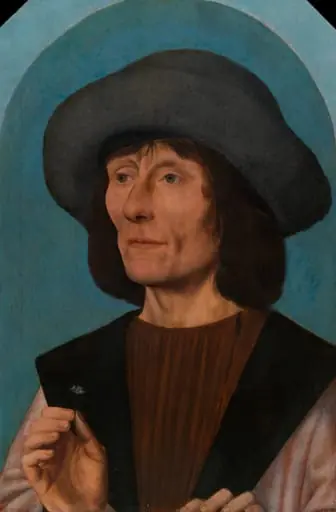 Portrait of a Man with a Pink
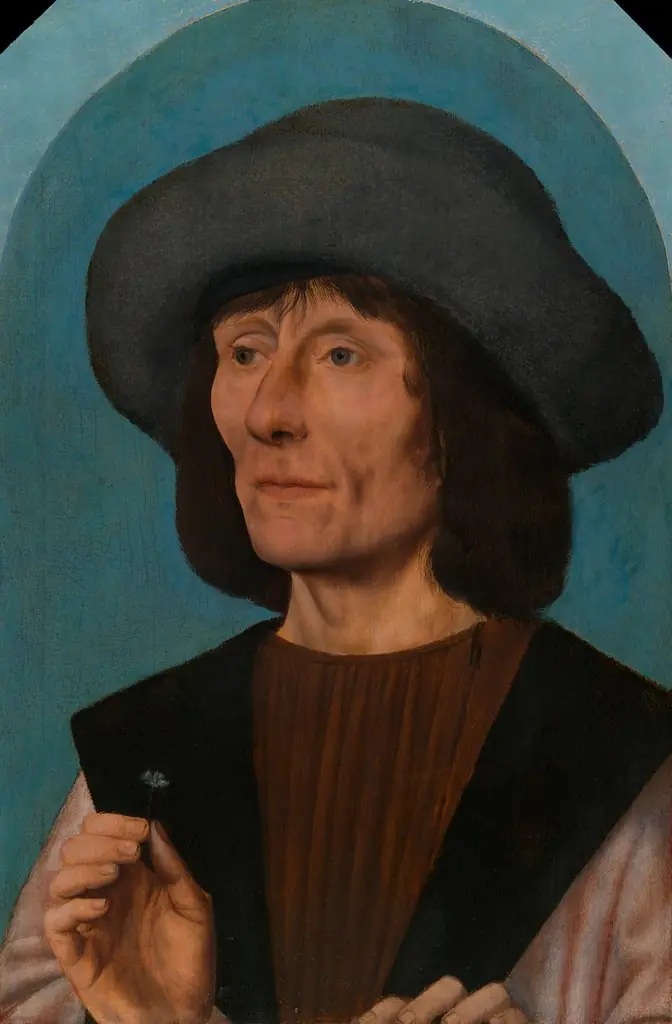 Portrait of a Man with a Pink Carnation
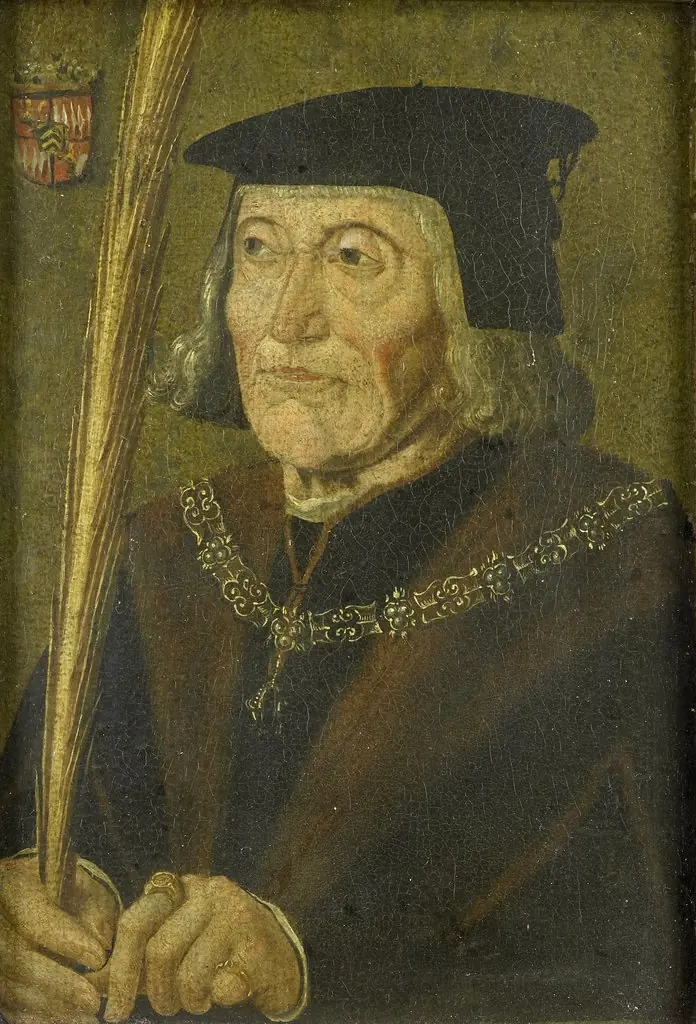 Portrait of Jan van Egmond (1438-1516), Count of Egmond
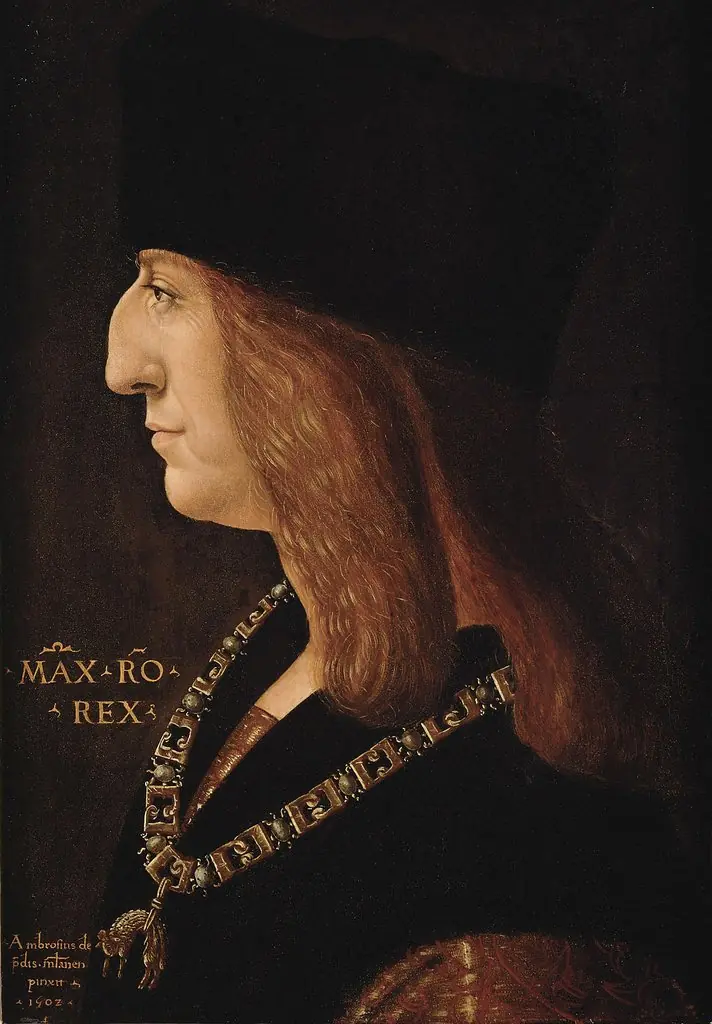 Emperor Maximilian I
 Portrait of Hendrik IV of Naaldwijk, Knight and Hereditary Marshall of Holland
 König Karl VIII. (1470-1498) von Frankreich, im Profil, Brustbild
 Portrait of Alessandro de Richao
 Portrait of Hendrik IV van Naaldwijk (c. 1430-96)
 Magnus, Duke, son of Ordulf, died 1106