Artwork
Bildnis eines Mannes mit Rosenkranz
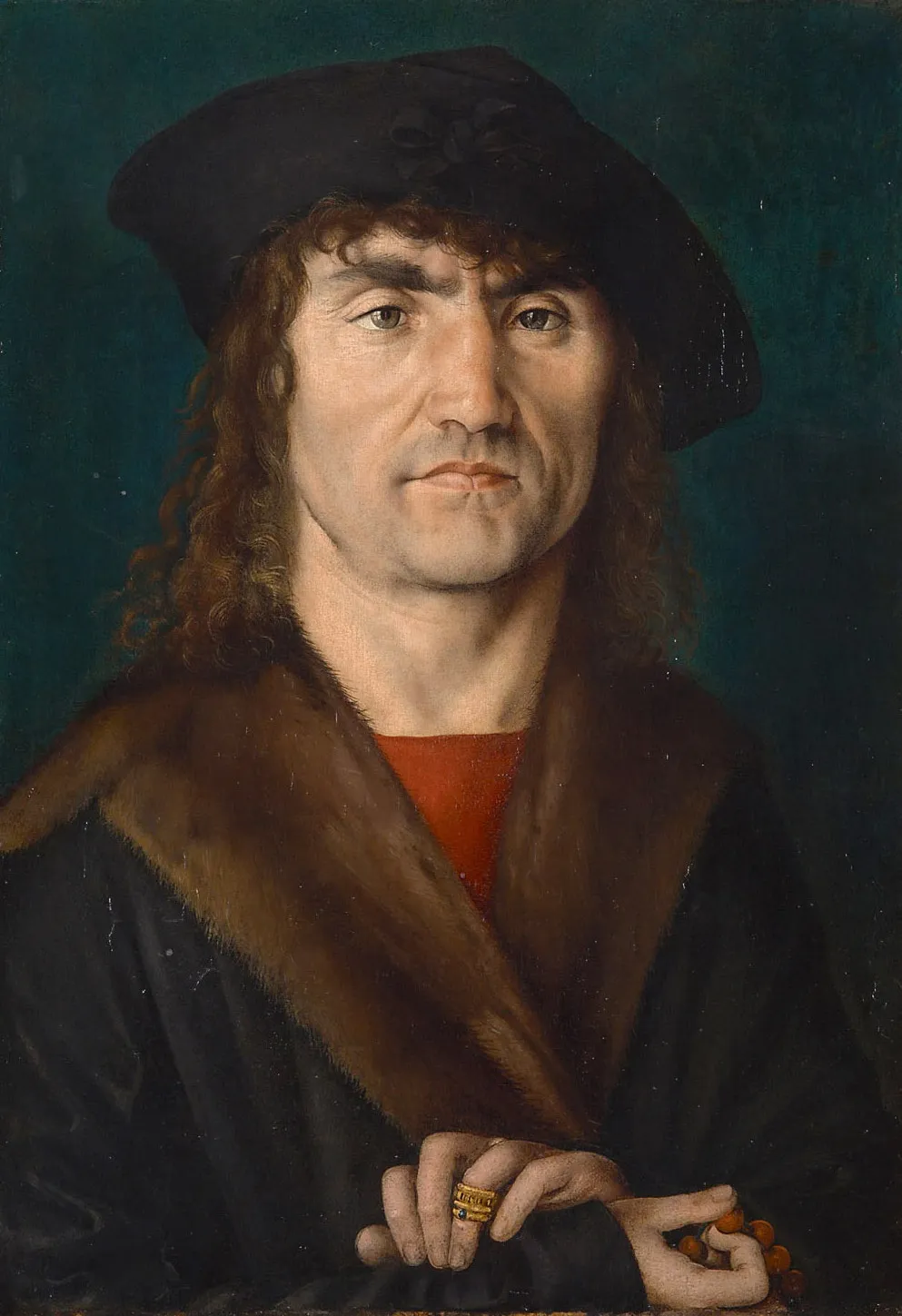
Bildnis eines Mannes mit Rosenkranz is an unspecified painting by the Northern Renaissance artist Unknown. It dates from 1507 and is held in the collection of the Kunsthistorisches Museum. The work is a portrait of a man rendered in a formal early‑sixteenth‑century style.
About this work
His right hand is visible, adorned with a gold ring on his index finger, and he holds a small object, possibly a coin, in his hand.
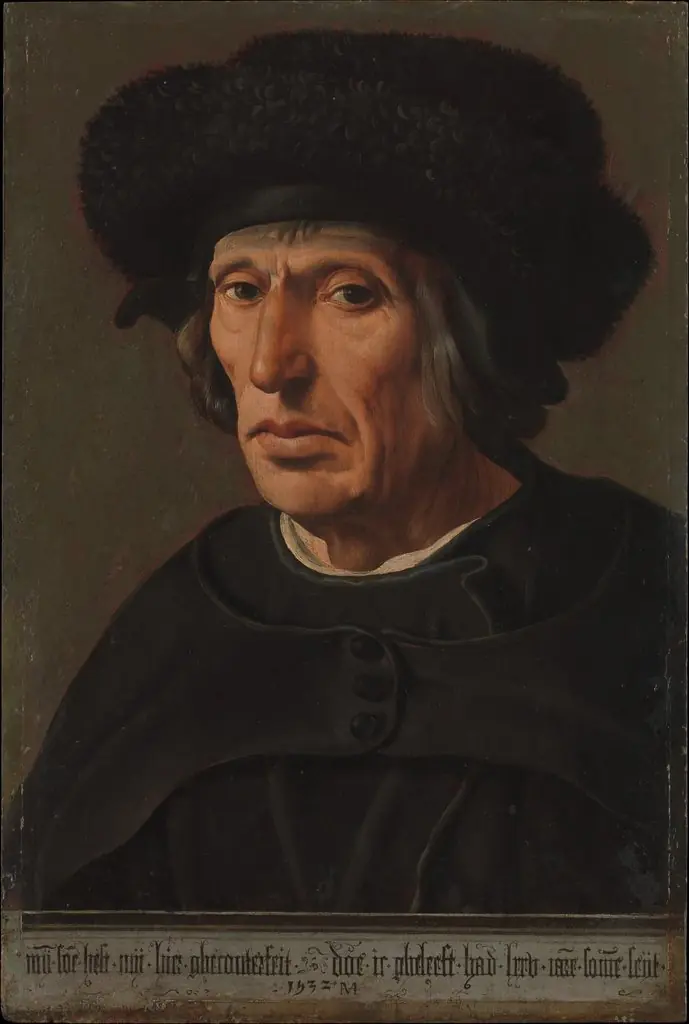
The painting depicts a man with long, curly brown hair and a serious expression. He wears a black hat, a dark-colored coat with a fur collar, and a red shirt underneath. His right hand is visible, adorned with a gold ring on his index finger, and he holds a small object, possibly a coin, in his hand.
The man's attire and the style of the painting suggest a formal portrait from the early 16th century. The use of chiaroscuro, a technique that emphasizes contrasts between light and dark, adds depth to the image.
This painting is reminiscent of the works of Albrecht Dürer, a prominent artist of the Northern Renaissance.
Overview
The work is a portrait of a man rendered in a formal early‑sixteenth‑century style. He is shown with long, curled brown hair, a serious expression, and dressed in a black hat, a dark coat with a fur‑lined collar, and a red shirt beneath. His right hand, bearing a gold ring on the index finger, holds a small object that appears to be a coin.
Subject & Meaning
The sitter’s solemn demeanor and the inclusion of a rosary‑like object suggest a devotional or status‑related intent, typical of portraiture that sought to convey both personal piety and social standing. The gold ring may indicate wealth or a familial emblem, while the possible coin could allude to financial responsibility or patronage.
Technique & Style
The painting employs chiaroscuro, creating a pronounced contrast between illuminated facial features and the darker background, thereby modelling the figure in three dimensions. The handling of light and texture reflects the Northern Renaissance emphasis on detailed surface rendering and realistic portrayal of fabrics and accessories.
Context
Stylistically the portrait aligns with the oeuvre of Albrecht Dürer and his contemporaries, whose works often combined meticulous detail with expressive lighting. The attire and compositional conventions place the piece within the early 1500s German portrait tradition, where individual identity and moral virtue were frequently highlighted.
Artist & collection

 Domestic Scene
 Giacomo and Cardinal Marco, investing Andrea, Abbot of San Zeno, with his Benefice
 The Nymph of Fontainebleau
 Portrait of a Woman
 Madonna and Child with Saints in the Enclosed Garden
 Venus and Minerva
 Family Group of Four on Sofa
 Wall painting from Room H of the Villa of P. Fannius Synistor at Boscoreale
 Portrait of a Man with a Pink
 Portrait of a Man with a Pink Carnation
 Portrait of a man with ring
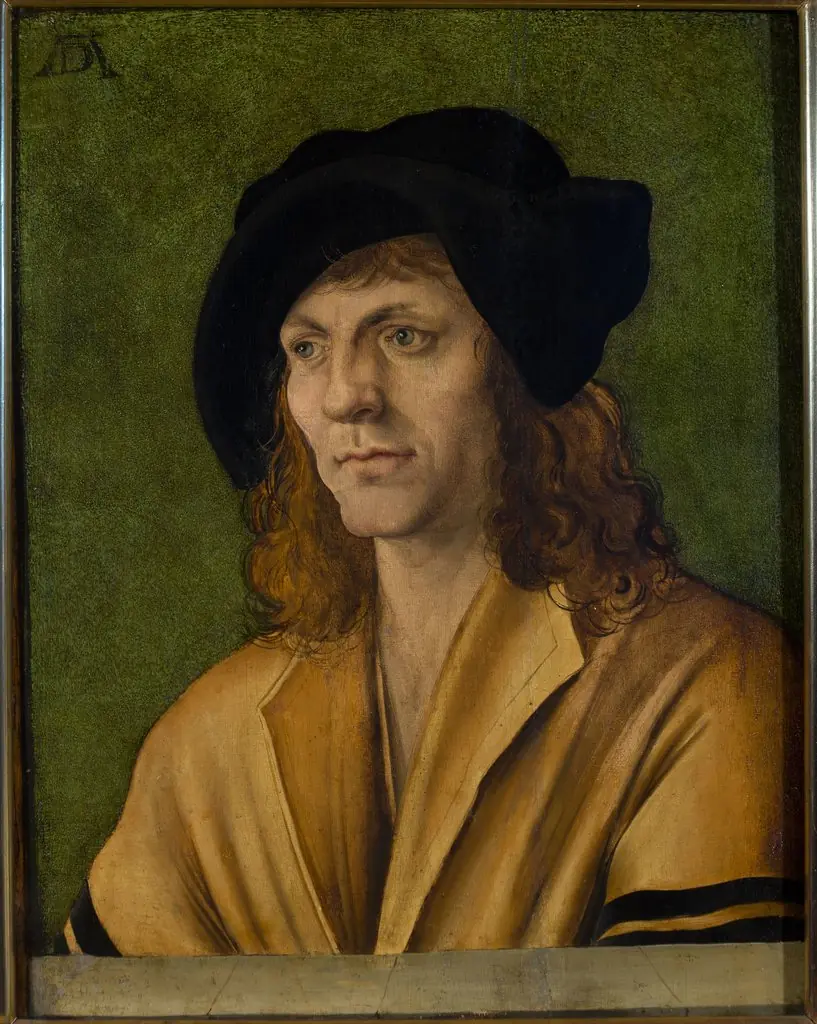 Portrait of a man in a yellow jacket
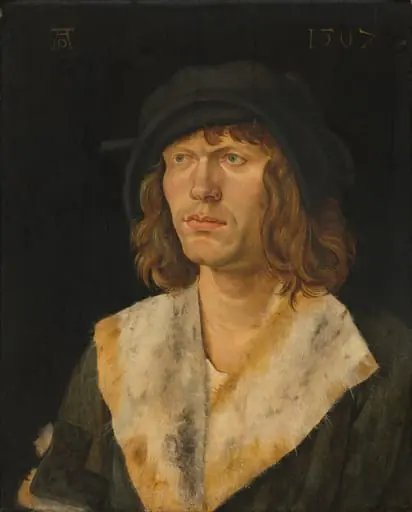 Portrait of a Man
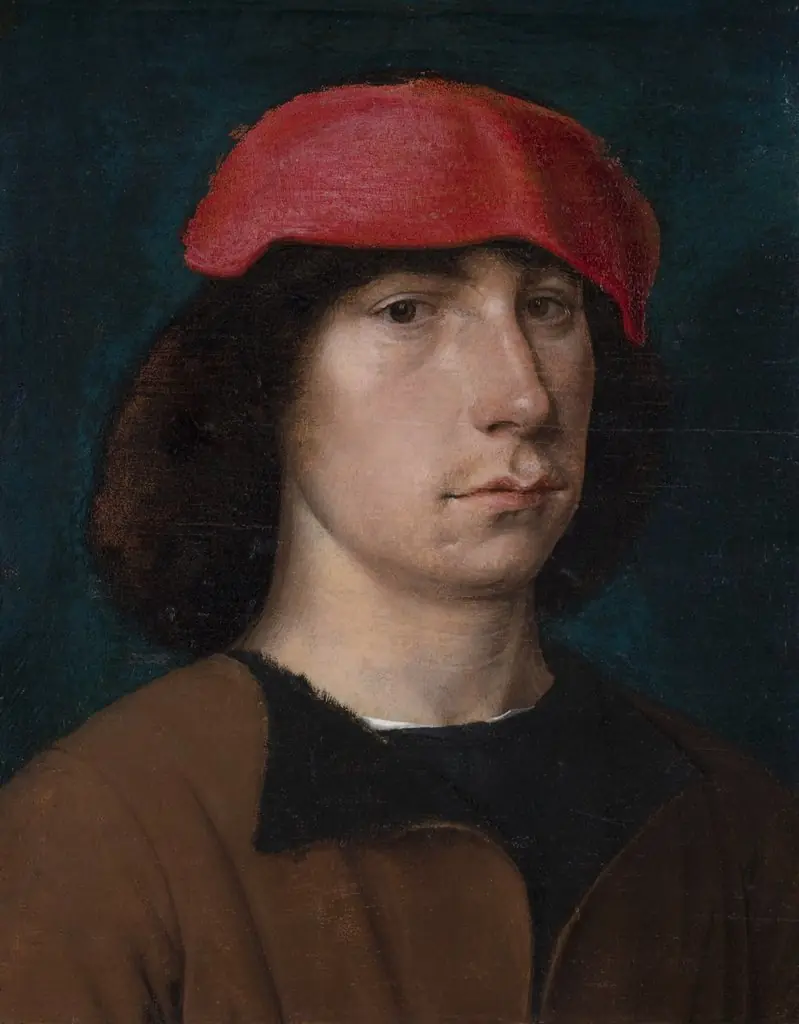 A Young Man in a Red Cap
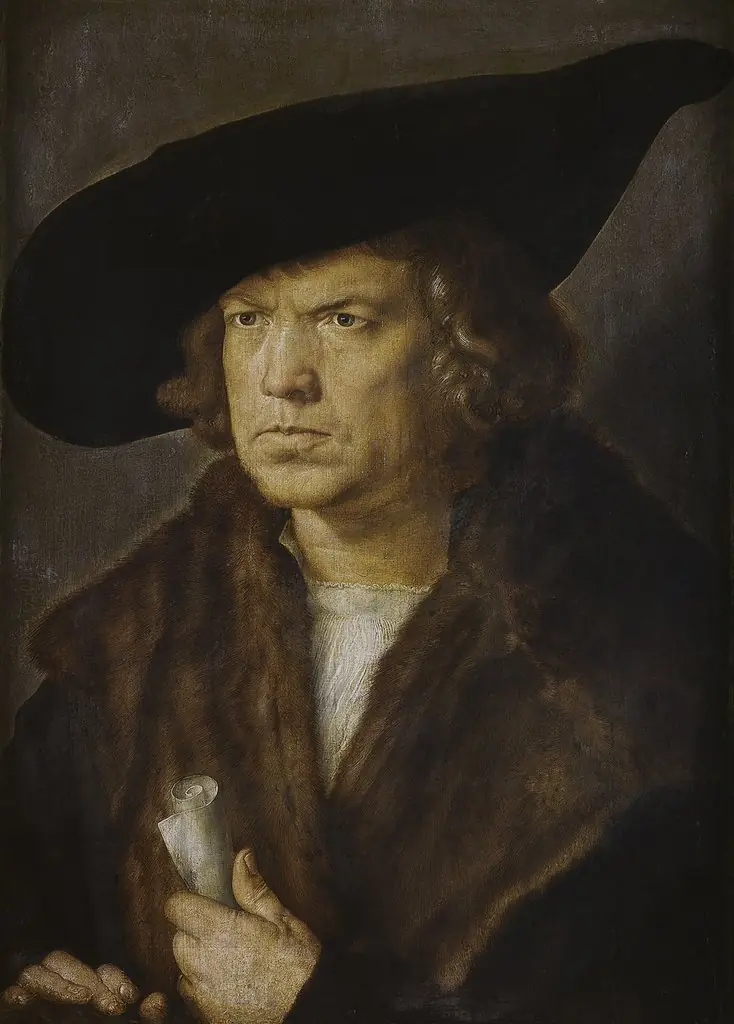 Portrait of a Man
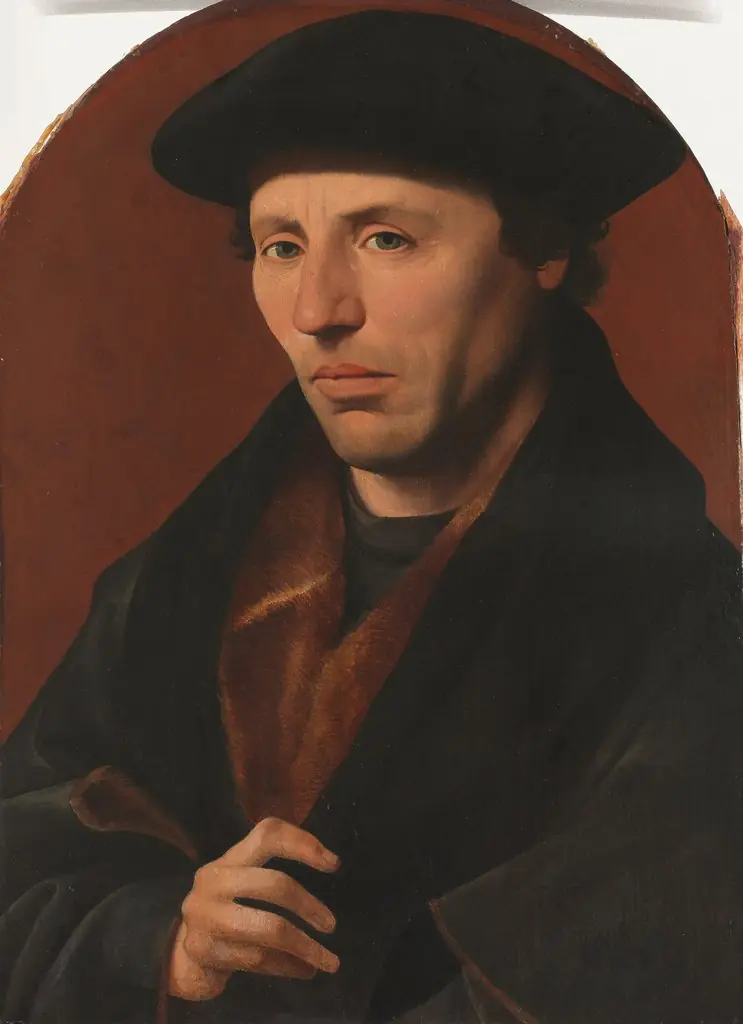 Portrait of a Haarlem Citizen
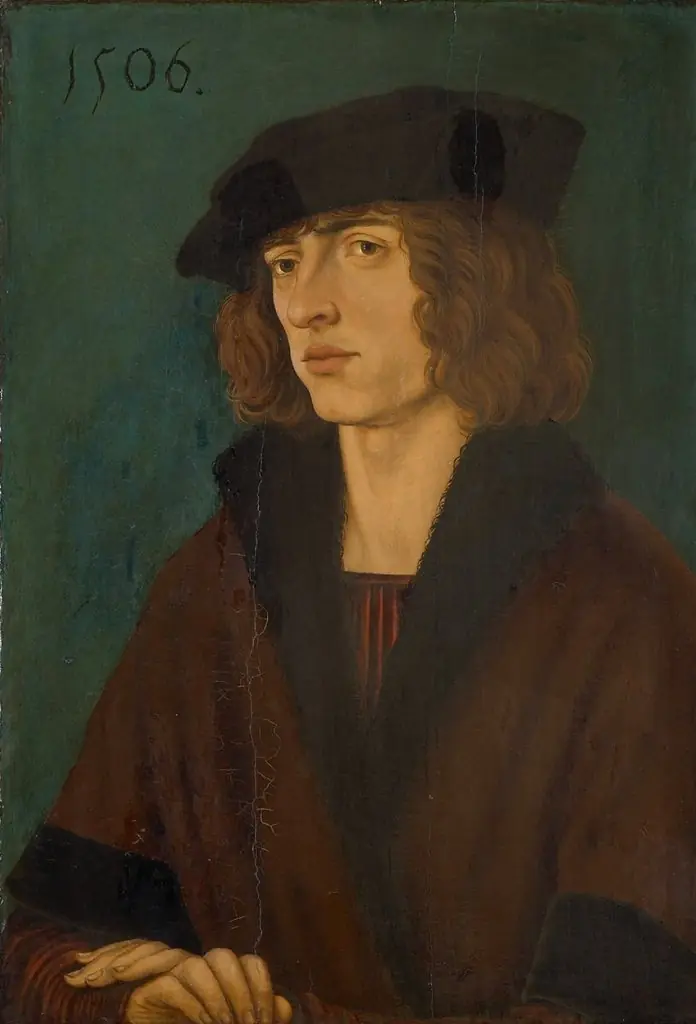 Portrait of a young Man
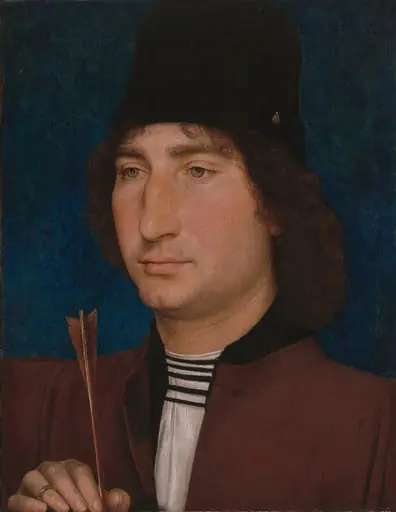 Portrait of a Man with an Arrow
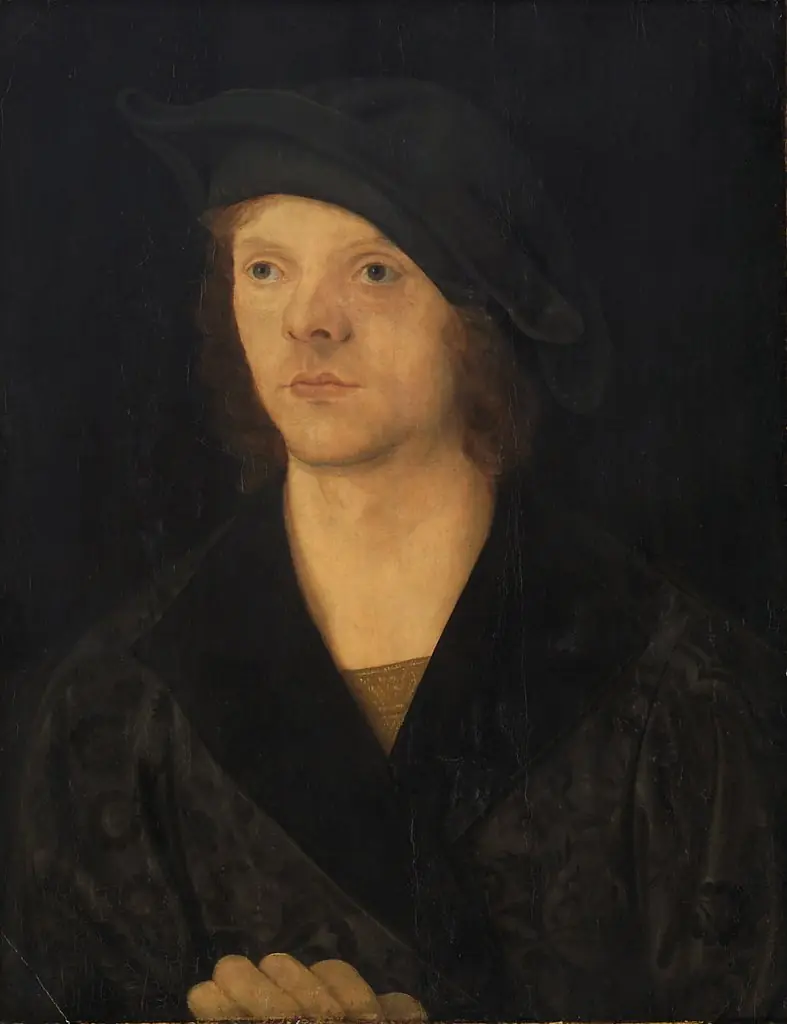 Bildnis eines jungen Mannes
 Jacob Willemsz. van Veen (1456–1535), the Artist's Father