Artwork
Page from Tales of a Parrot (Tuti-nama): text page
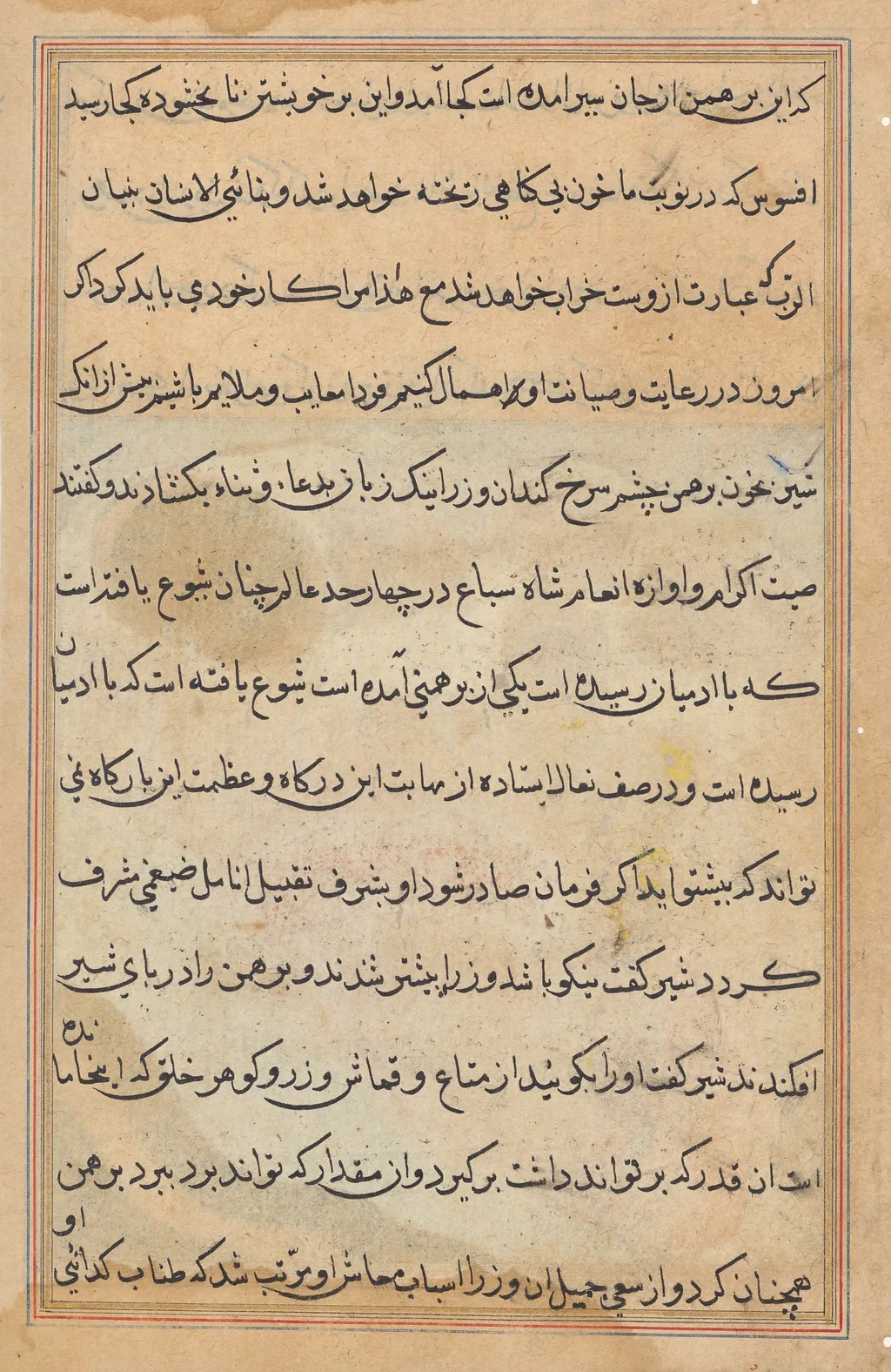
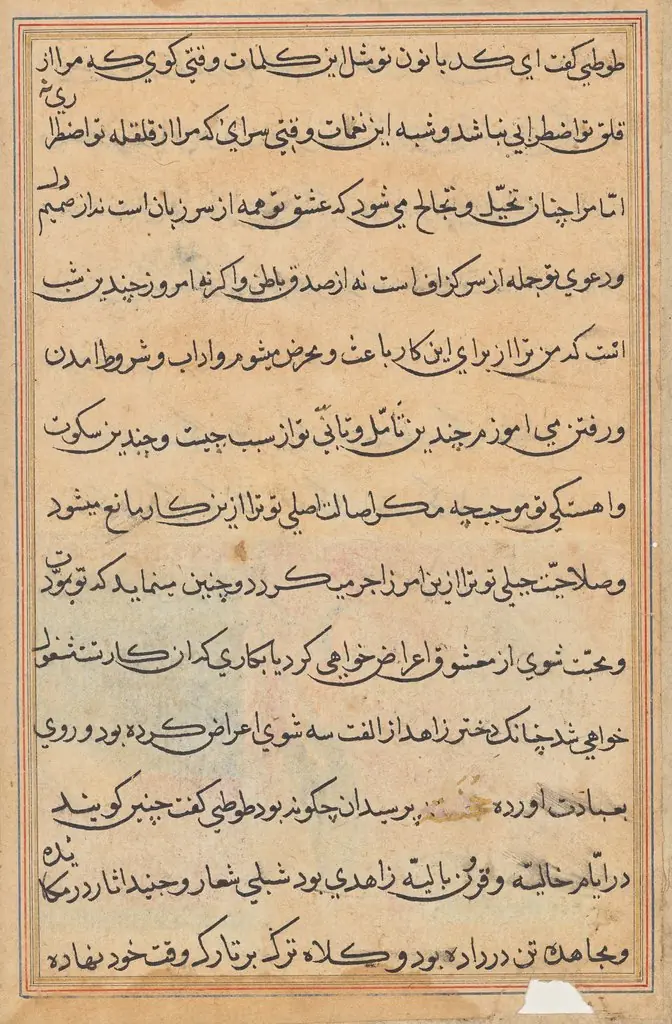
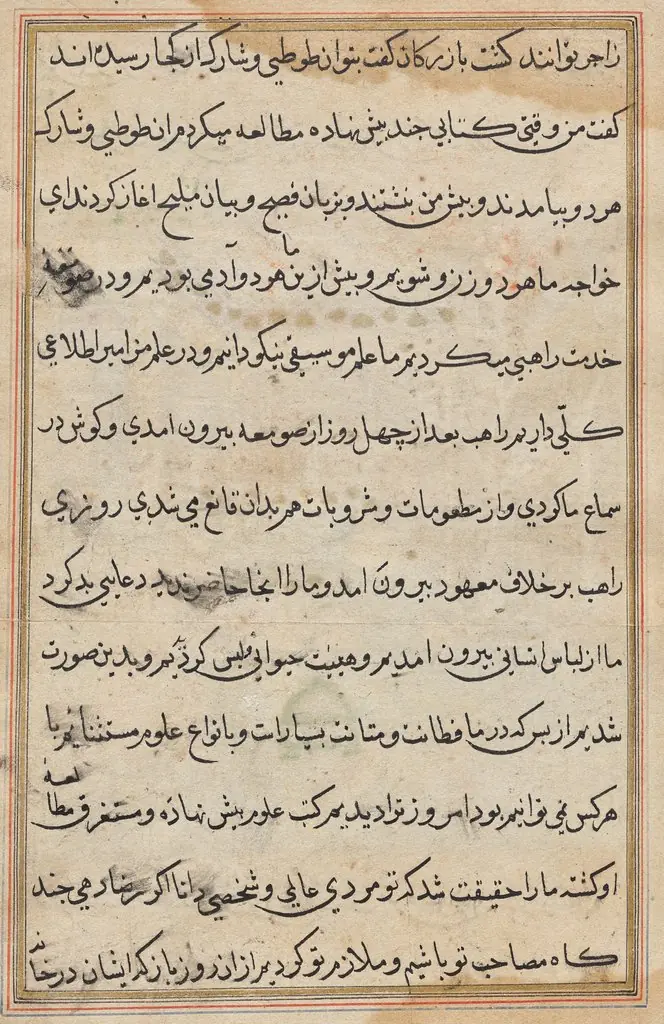
Page from Tales of a Parrot (Tuti-nama): text page is an unspecified painting. It dates from 1560 and is held in the collection of the Cleveland Museum of Art. This illuminated page originates from a manuscript of *Tales of a Parrot* (Tuti‑nama), a narrative composed for Prince Salim.
About this work
Overview
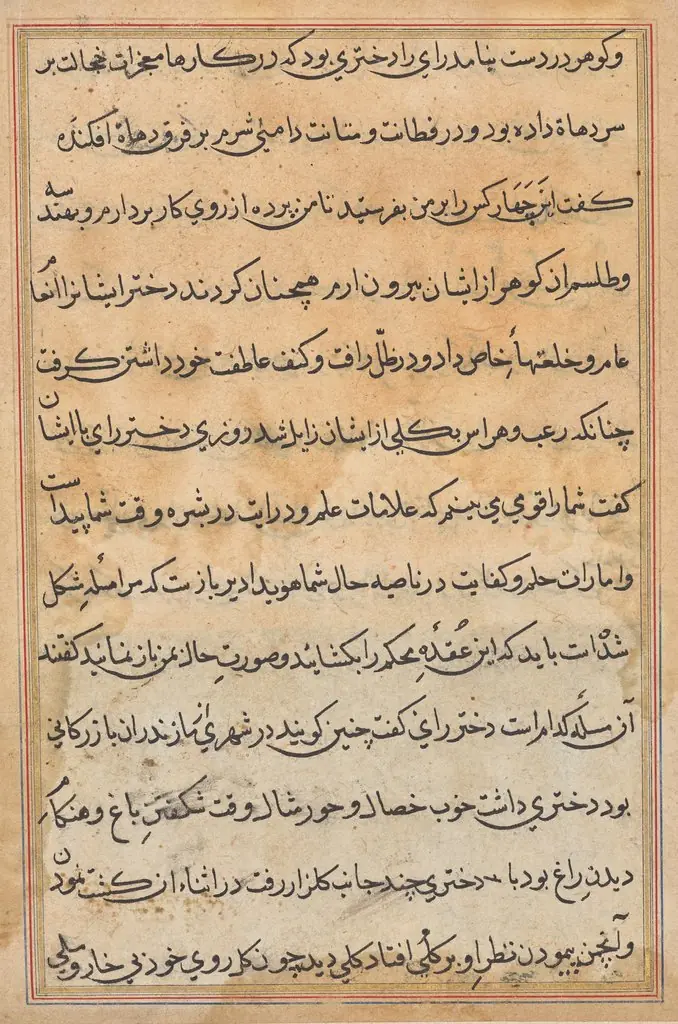
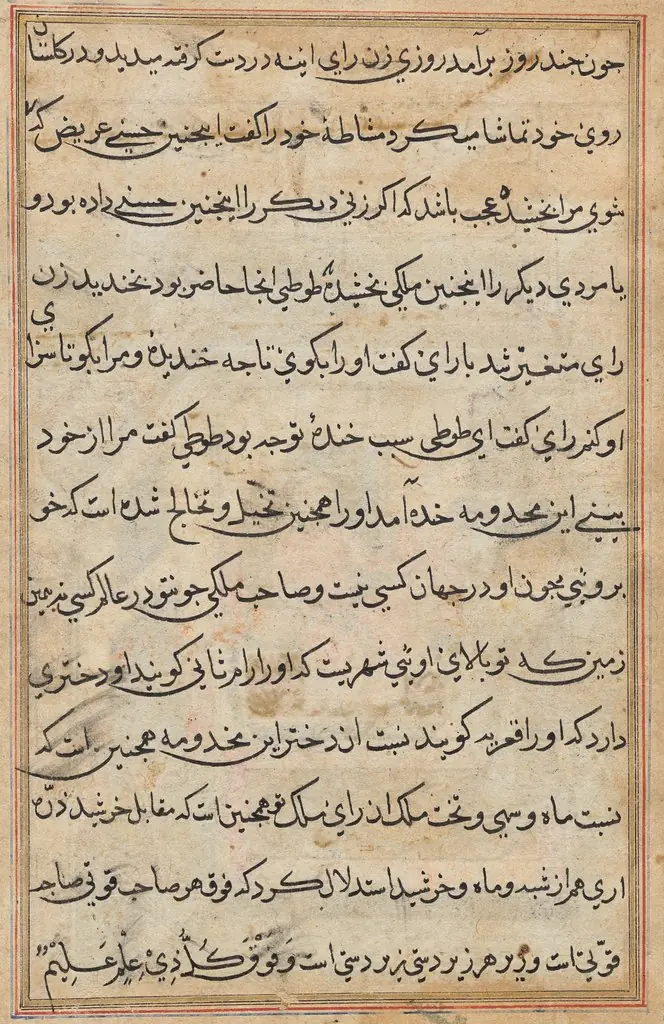
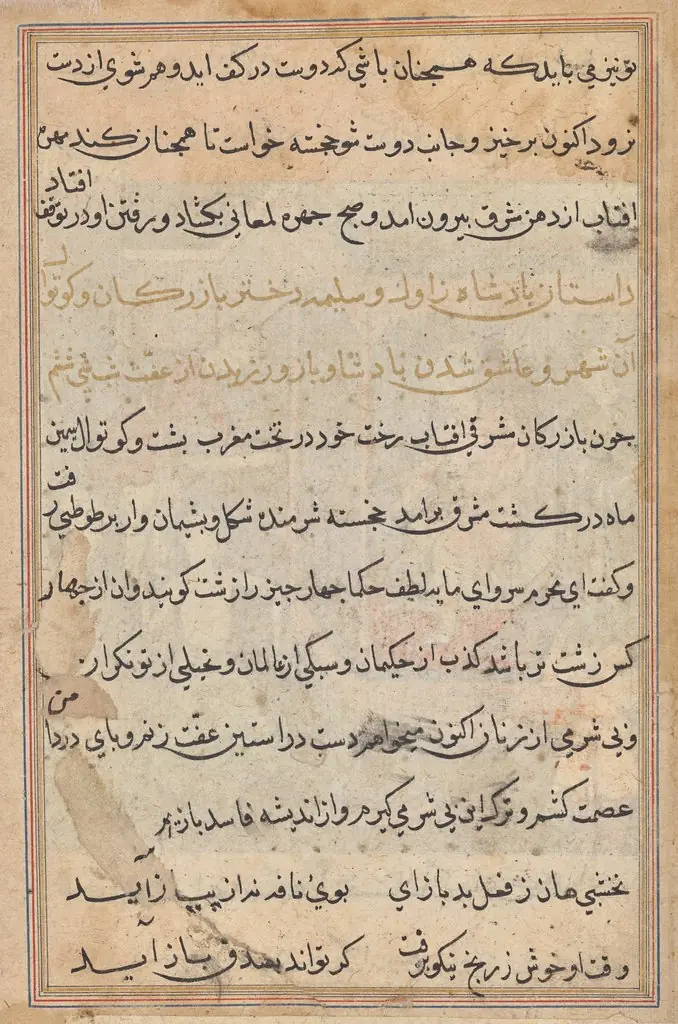
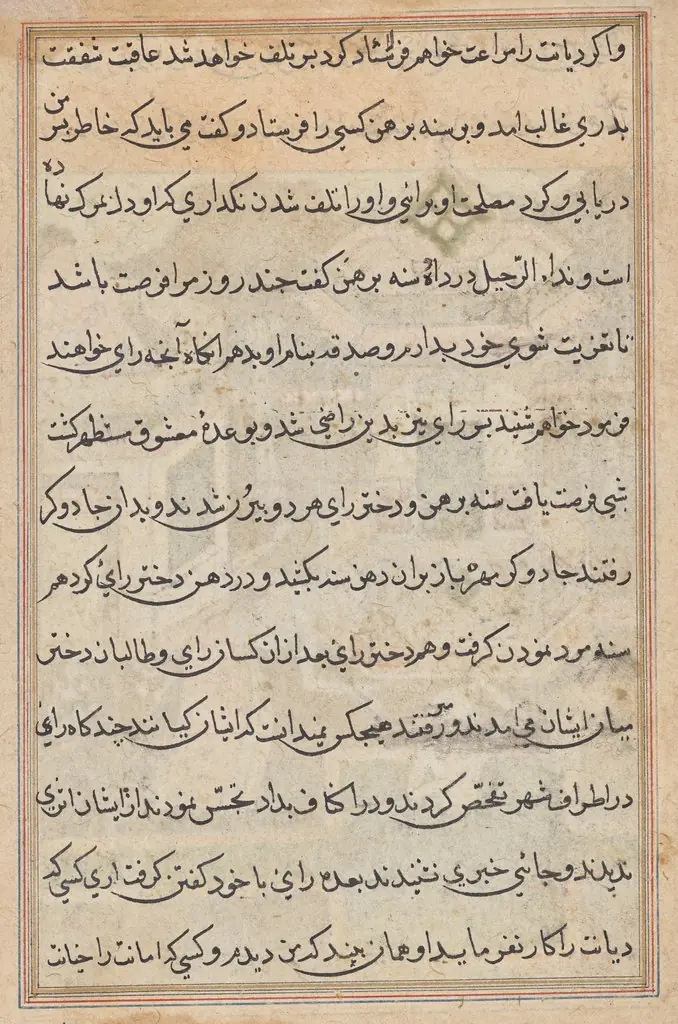
This illuminated page originates from a manuscript of *Tales of a Parrot* (Tuti‑nama), a narrative composed for Prince Salim. Executed on paper that has acquired a warm, yellowed patina, the sheet is entirely covered with black inked Arabic calligraphy, densely arranged from margin to margin.
Subject & Meaning
The text recounts episodes from the *Tuti‑nama*, a collection of moral and romantic stories traditionally conveyed through a talking parrot. Its dedication to a royal patron underscores the work’s role as both entertainment and a vehicle for courtly instruction.
Technique & Style
The calligrapher employed a flowing, curved script, each letter rendered with meticulous precision despite the cramped layout. Small red dots punctuate the line ends, functioning as decorative punctuation, while a thin red border frames the page, adding a subtle chromatic accent to the otherwise monochrome surface.
History & Provenance
The manuscript was produced in the early modern Persianate world for Prince Salim, likely in the 16th‑century Safavid or Mughal courts. The page entered the Cleveland Museum of Art’s collection through acquisition in the 20th century, where it is displayed as part of the museum’s Islamic art holdings.
Context
Manuscript production for elite patrons during this period combined literary content with high‑quality calligraphy and illumination. The elaborate hand and decorative red elements reflect the courtly standards of visual elegance expected in books destined for royalty.
Legacy
Pages such as this illustrate the intersection of literary culture and visual art in Persianate societies, offering scholars insight into the aesthetics of manuscript production and the transmission of narrative traditions to princely audiences.
Artist & collection

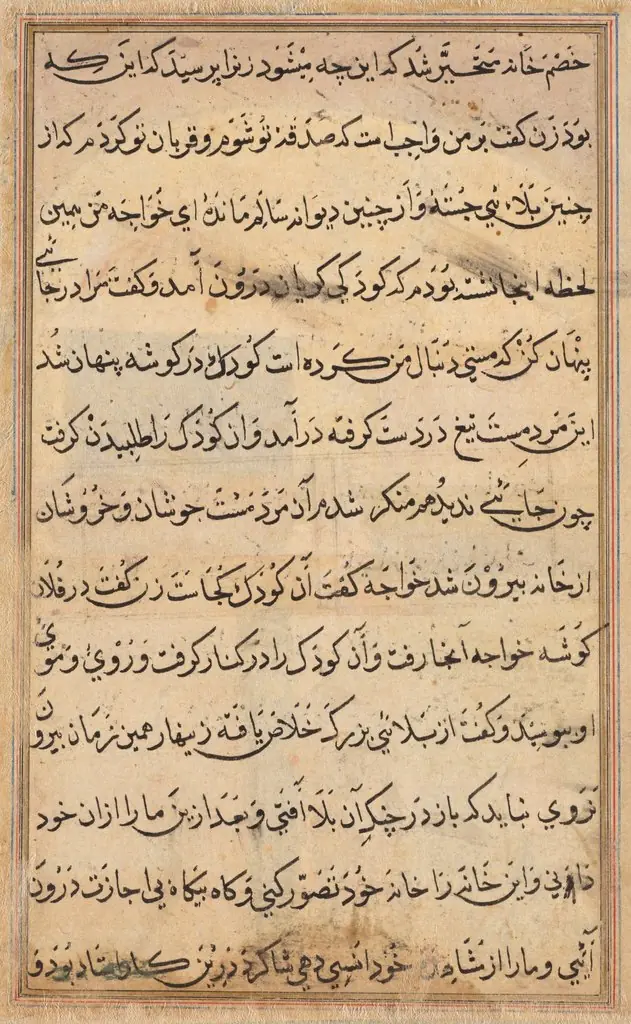 Page from Tales of a Parrot (Tuti-nama): text page
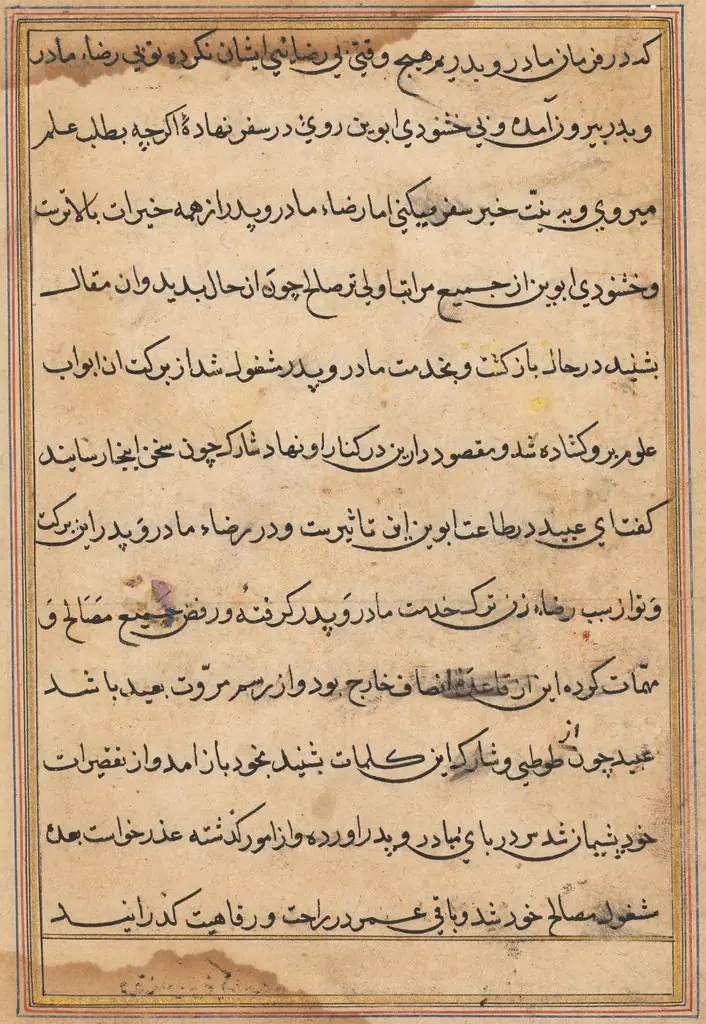 Page from Tales of a Parrot (Tuti-nama): text page
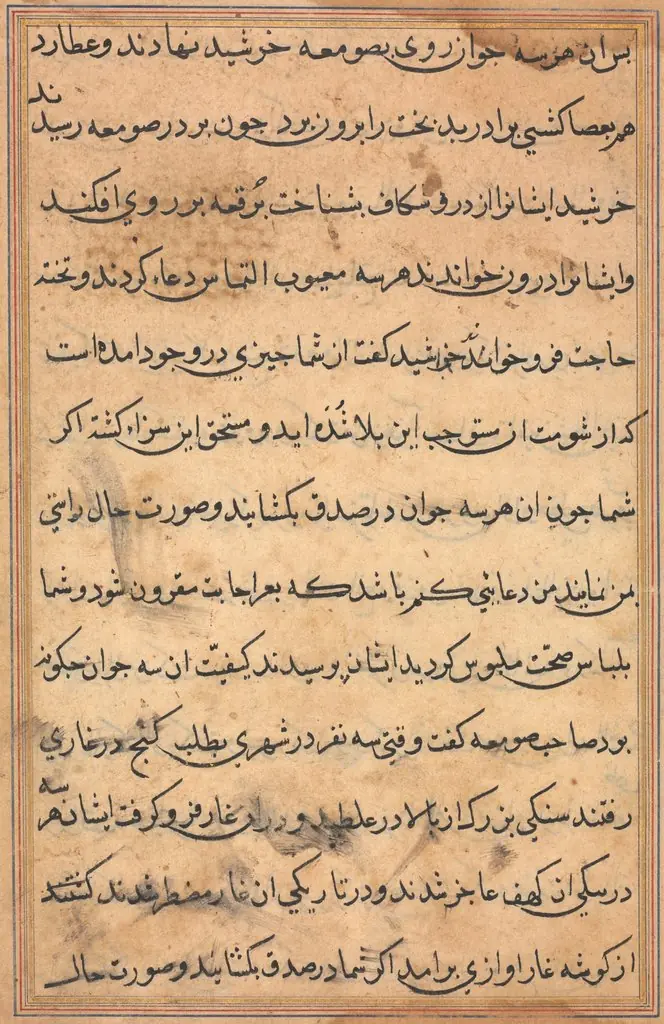 Page from Tales of a Parrot (Tuti-nama): text page
 Page from Tales of a Parrot (Tuti-nama): text page
 Page from Tales of a Parrot (Tuti-nama): text page
 Page from Tales of a Parrot (Tuti-nama): text page
 Page from Tales of a Parrot (Tuti-nama): text page
 Page from Tales of a Parrot (Tuti-nama): text page
 Page from Tales of a Parrot (Tuti-nama): text page