Artwork
A Princess and Demons before a Nobleman: A Leaf from a Poetical Romance Relating to Shah Alam I (recto)
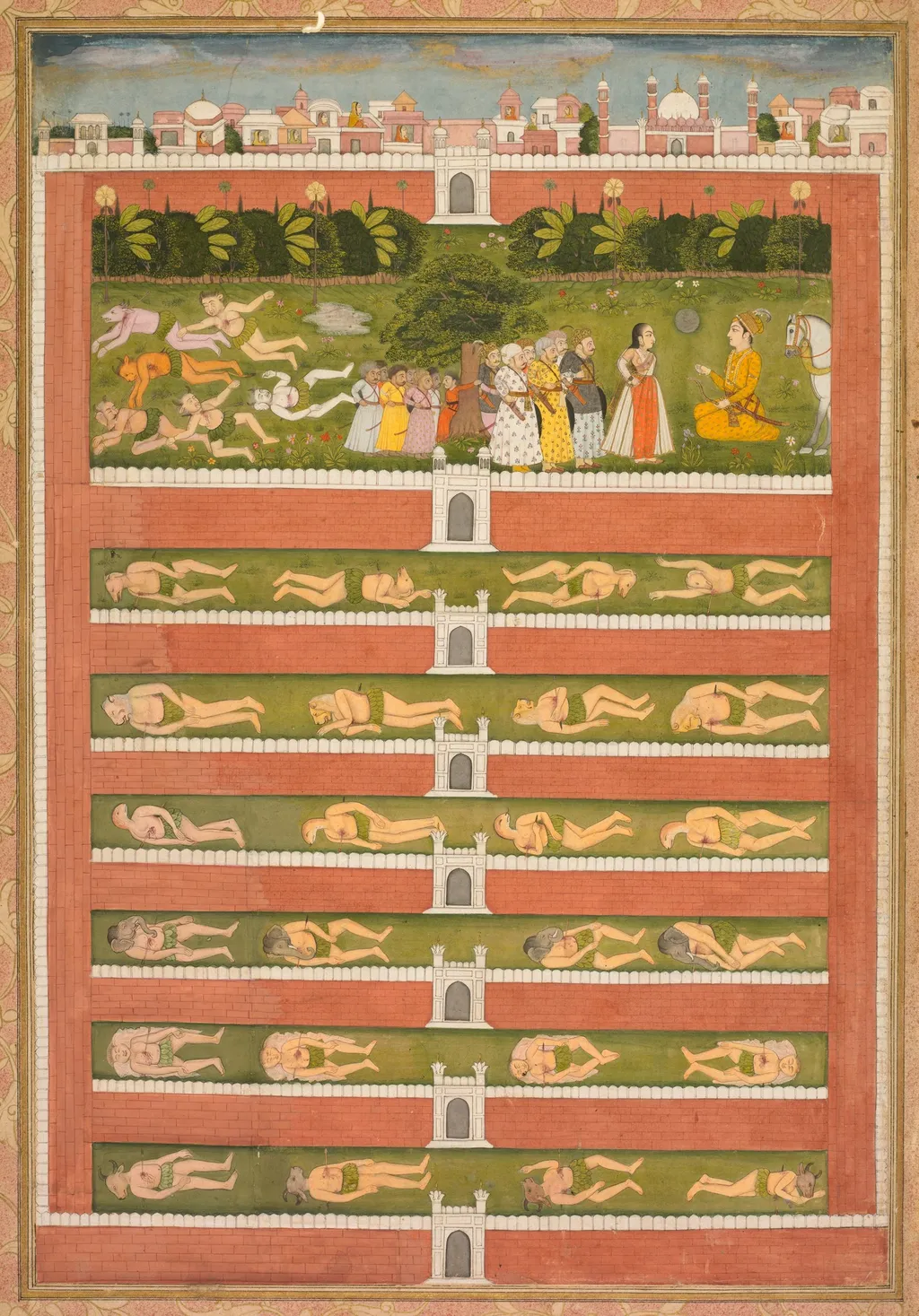
A Princess and Demons before a Nobleman: A Leaf from a Poetical Romance Relating to Shah Alam I (recto) is an unspecified painting. It dates from 1710 and is held in the collection of the Cleveland Museum of Art.
About this work
Overview
A walled garden forms the setting, its red brick enclosure framing a lush green lawn that stretches toward a distant urban skyline.
The work, titled *A Princess and Demons before a Nobleman: A Leaf from a Poetical Romance Relating to Shah Alam I (recto)*, is a painted panel that presents a complex, multi‑layered scene. A walled garden forms the setting, its red brick enclosure framing a lush green lawn that stretches toward a distant urban skyline. The composition is divided vertically, with a gathering of costumed figures above and a line of nude bodies below.
Subject & Meaning
The upper register depicts a group of men and women in vibrant attire surrounding a seated nobleman, suggesting a courtly audience or a ceremonial encounter. Beneath them, a procession of naked men lies stretched on the grass, all oriented in the same direction; their anonymity and exposure have been interpreted as representations of demons, spirits, or allegorical figures within the narrative of the romance.
Technique & Style
Executed in paint on a flat surface, the image employs a clear delineation of space through the garden’s wall and the receding cityscape. The artist uses contrasting color palettes—bright, patterned garments against the muted tones of the grass and sky—to separate the human and supernatural realms. Linear arrangement of the figures creates a rhythmic visual flow across the panel.
History & Provenance
The painting is a fragment taken from a larger illustrated manuscript that recounts a poetical romance associated with Shah Alam I, the Mughal emperor who ruled in the early 17th century. The fragment’s provenance traces through private collections before entering a museum context, where it is displayed as an example of narrative illustration from the period.
Context
Illustrated romances were a popular literary form in Mughal India, blending courtly love, heroic exploits, and mythic elements. This panel reflects that tradition by juxtaposing a regal audience with otherworldly beings, illustrating how visual art served to elaborate the text’s fantastical episodes. The garden setting also echoes the idealized paradisiacal spaces often described in contemporary poetry.
Artist & collection

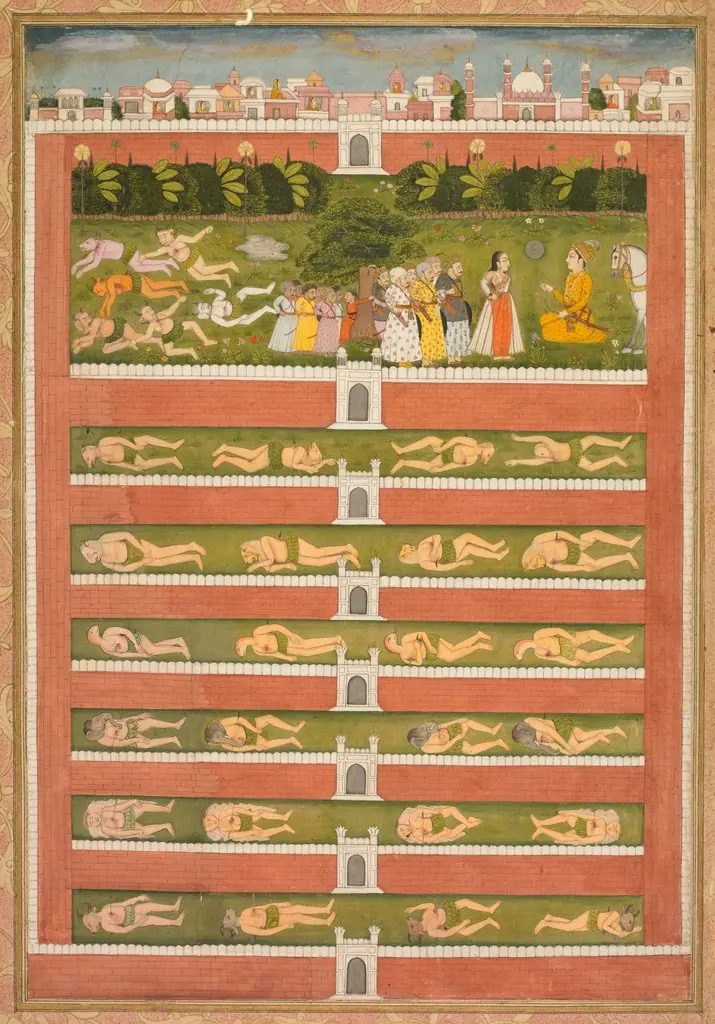 A Princess and Demons before a Nobleman: A Leaf from a Poetical Romance Relating to Shah Alam I (recto); Stenciled Scenes of Lion and Gazelle (verso)
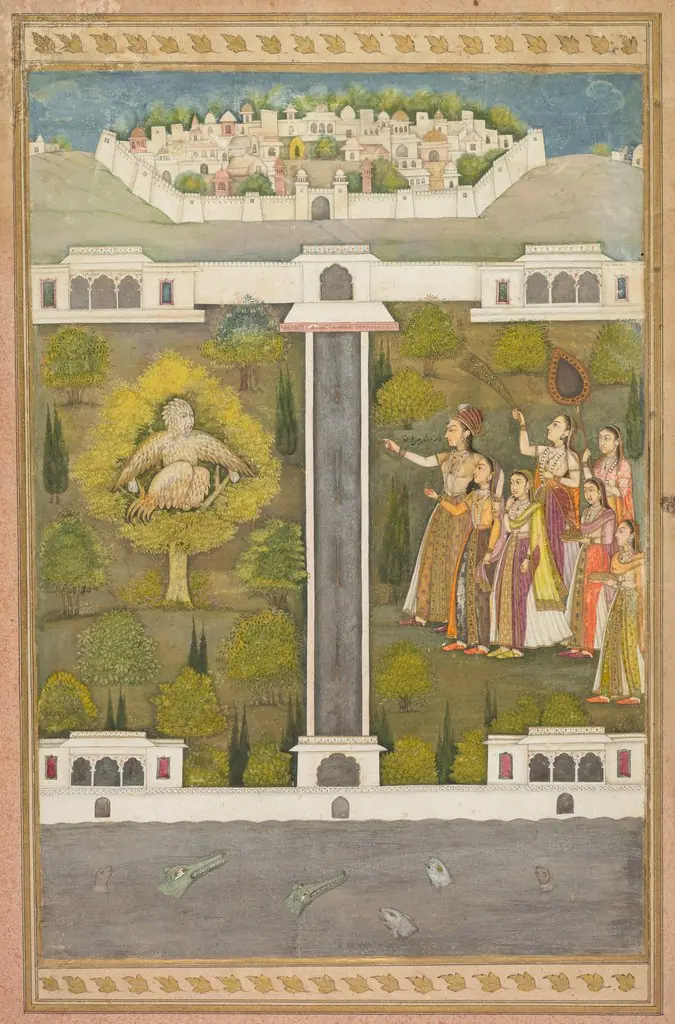 Mahliqa, Daughter of the Emperor of China, Pointing at the Bird-Man Khwaja Mubarak: A Leaf from a Poetical Romance Relating to Shah Alam I (recto)
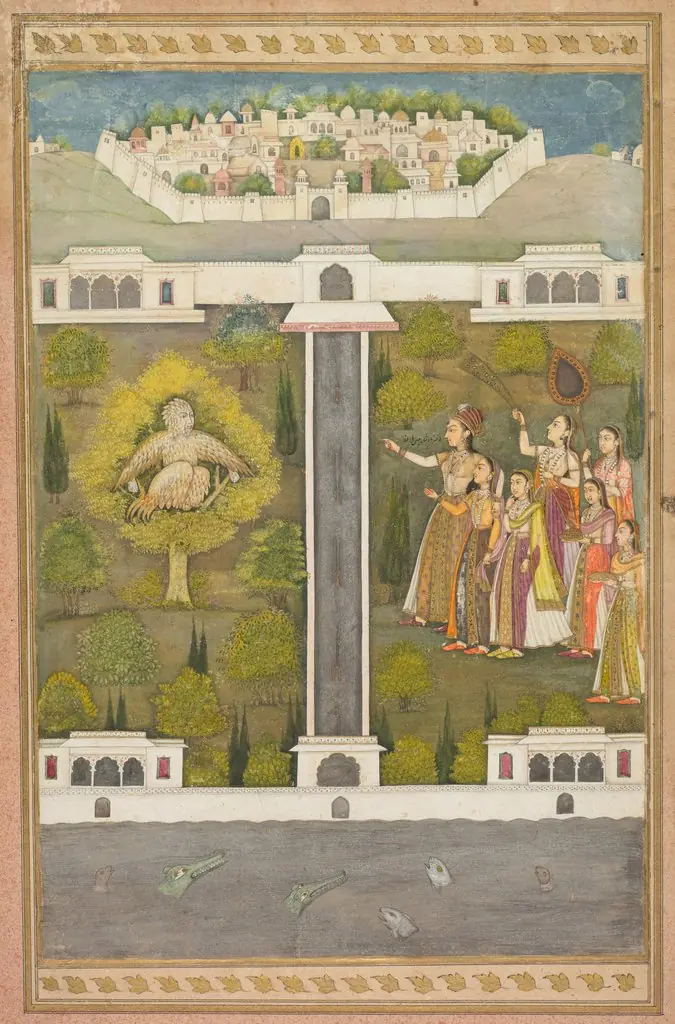 Mahliqa, Daughter of the Emperor of China, Pointing at the Bird-Man Khwaja Mubarak: A Leaf from a Poetical Romance Relating to Shah Alam I (verso); Stenciled Scenes of Lion and Gazelle (verso)
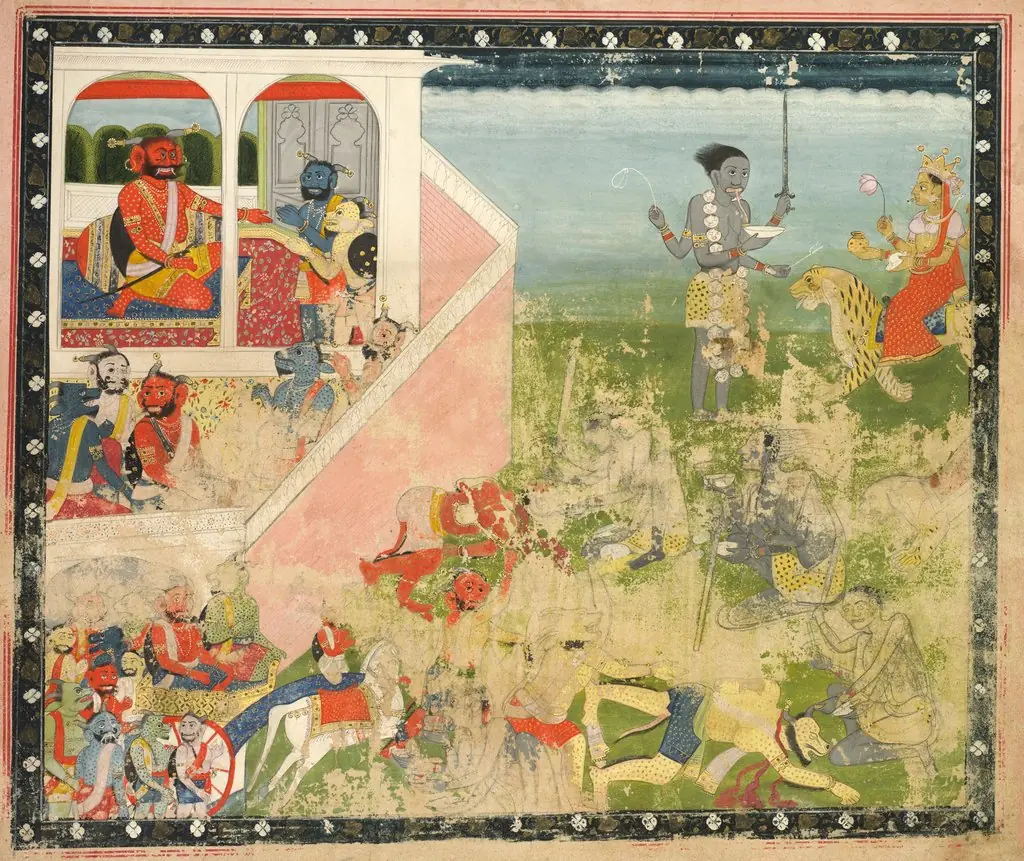 Kali and Devi Attack: Leaf from a Devi Mahatmya
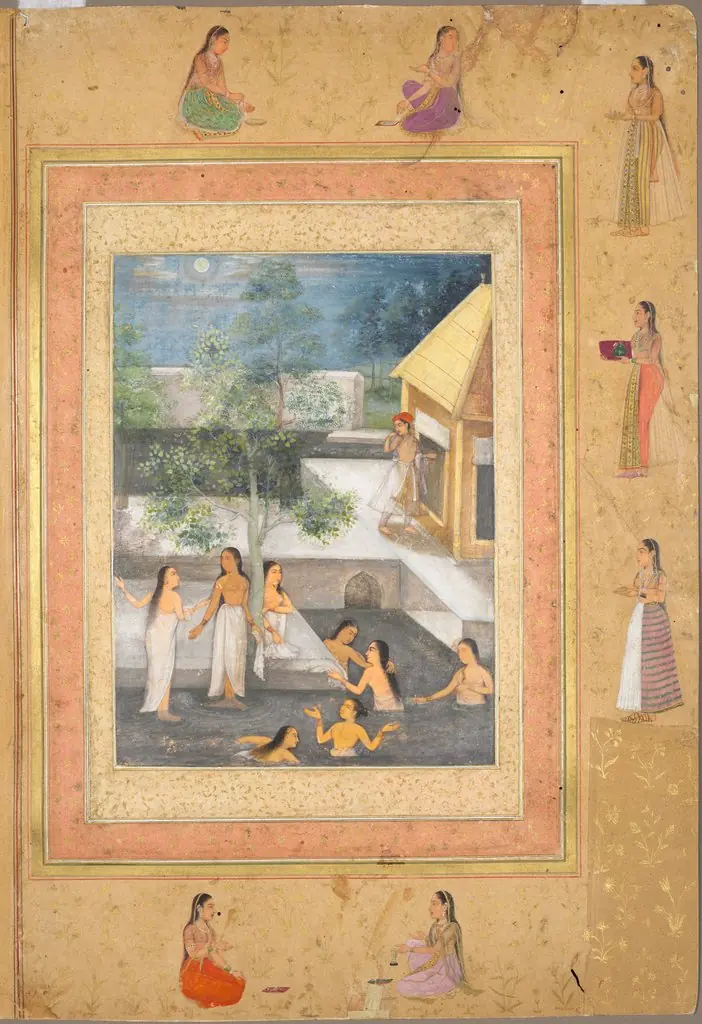 Leaf from the Late Shah Jahan Album: Harem Night-Bathing Scene (recto); Calligraphy Framed by an Ornamental Border of Flowers and Birds (verso)
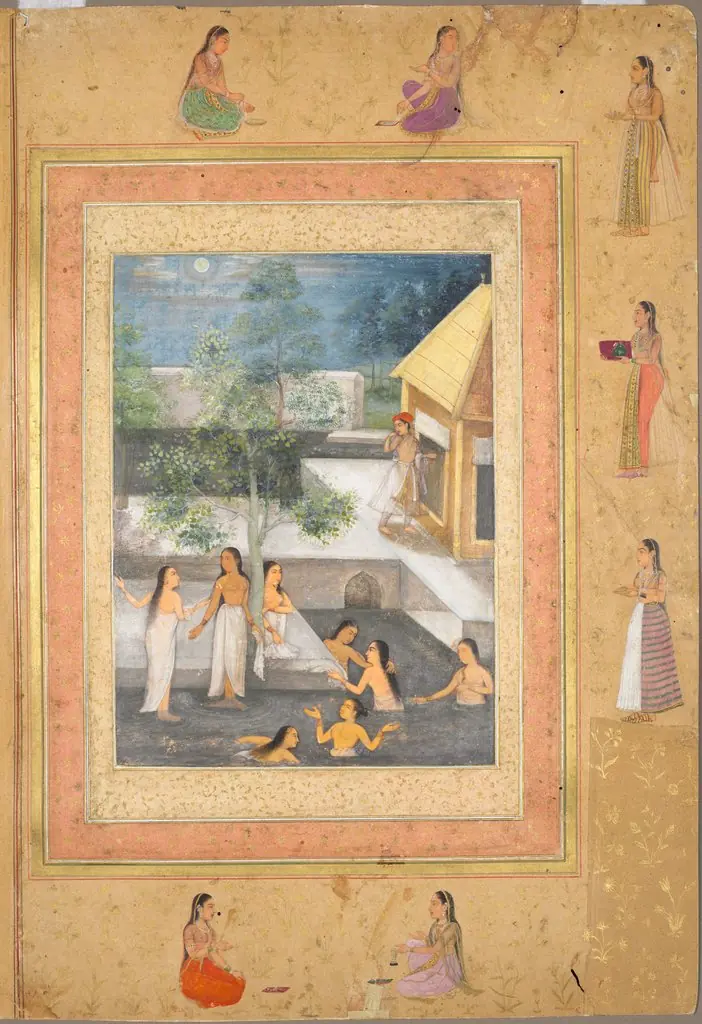 Page from the Late Shah Jahan Album: Harem Night-Bathing Scene (recto)