Artwork
Mahliqa, Daughter of the Emperor of China, Pointing at the Bird-Man Khwaja Mubarak: A Leaf from a Poetical Romance Relating to Shah Alam I (verso); Stenciled Scenes of Lion and Gazelle (verso)
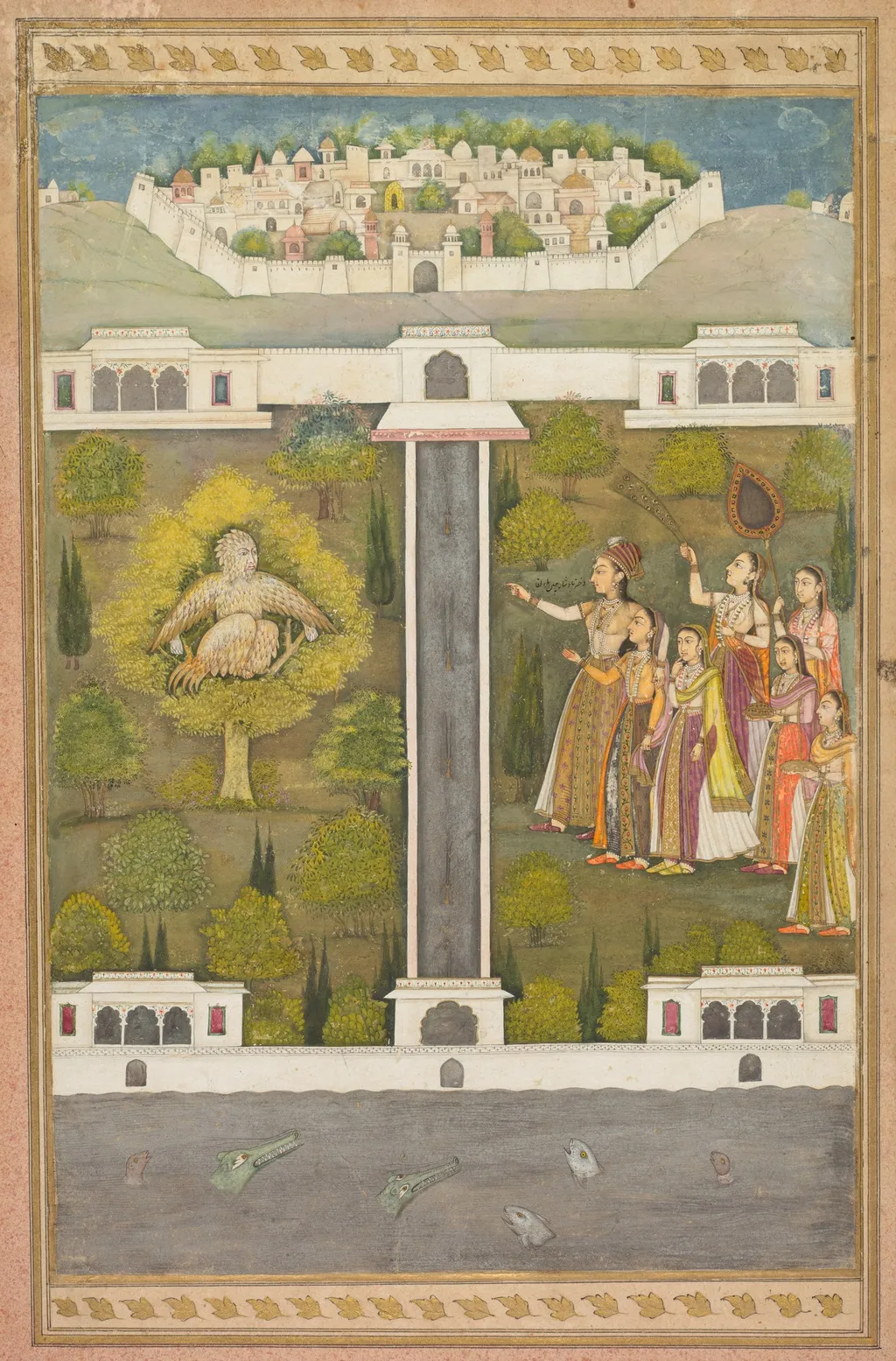
Mahliqa, Daughter of the Emperor of China, Pointing at the Bird-Man Khwaja Mubarak: A Leaf from a Poetical Romance Relating to Shah Alam I (verso); Stenciled Scenes of Lion and Gazelle (verso) is an unspecified painting. It dates from 1710 and is held in the collection of the Cleveland Museum of Art.
About this work
Overview
The work presents a bifurcated composition: on the left a hybrid bird‑man figure, perched beneath a tree and gazing downward, while on the right a group of women in vivid, patterned garments stand beside an imposing pillar, their attention directed toward the creature. A walled city with domed structures rises in the distance, framed by garden foliage and a low fence.
Subject & Meaning
The scene juxtaposes a mythic avian being—identified in the title as the bird‑man Khwaja Mubarak—with courtly figures, including Mahliqa, daughter of the Chinese emperor, who gestures toward him. The contrast between the fantastical and the regal suggests a narrative drawn from a poetic romance, emphasizing themes of curiosity, exotic encounter, and the interplay of imperial authority with legendary beings.
Technique & Style
The palette combines gold and jewel tones for the women's attire, while the bird‑man's plumage is rendered in muted earth tones, creating visual hierarchy.
Executed in delicate brushwork on paper, the painting employs fine stenciled motifs of lions and gazelles on the verso, indicating a layered decorative approach. The palette combines gold and jewel tones for the women's attire, while the bird‑man's plumage is rendered in muted earth tones, creating visual hierarchy. Linear perspective is modest, with architectural elements suggesting a stylized, rather than realistic, spatial arrangement.
History & Provenance
The piece originates from a poetical romance associated with Shah Alam I, the Mughal emperor of the early 18th century, and was later catalogued by the Cleveland Museum of Art. Its survival as a leaf from a larger illustrated manuscript reflects the practice of separating individual folios for collection and study during the 19th‑century antiquarian market.
Context
Illustrated romances were a popular medium for courtly entertainment in Mughal India, blending Persian literary traditions with local artistic conventions. The inclusion of a Chinese imperial daughter highlights the period’s fascination with distant dynasties, while the bird‑man figure draws on Central Asian folklore, illustrating the cultural syncretism that characterized Mughal visual narratives.
Artist & collection

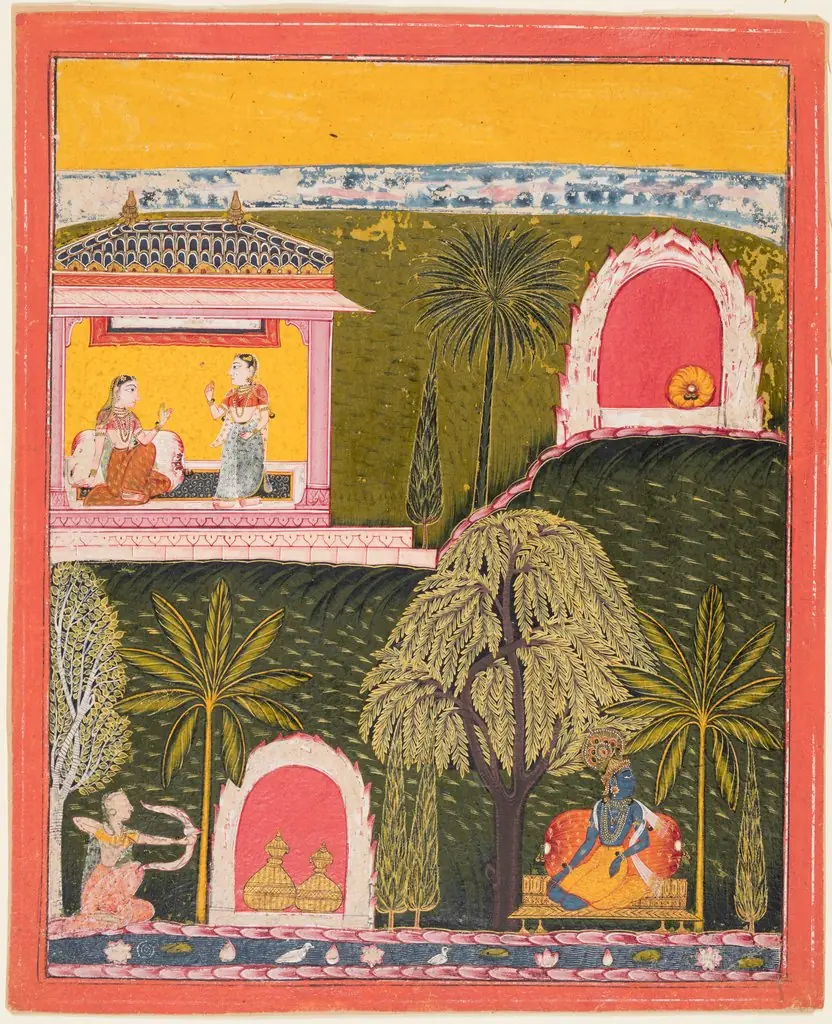 Rati, the Goddess of Erotic Love, Takes Aim at Krishna, from a Rasikapriya
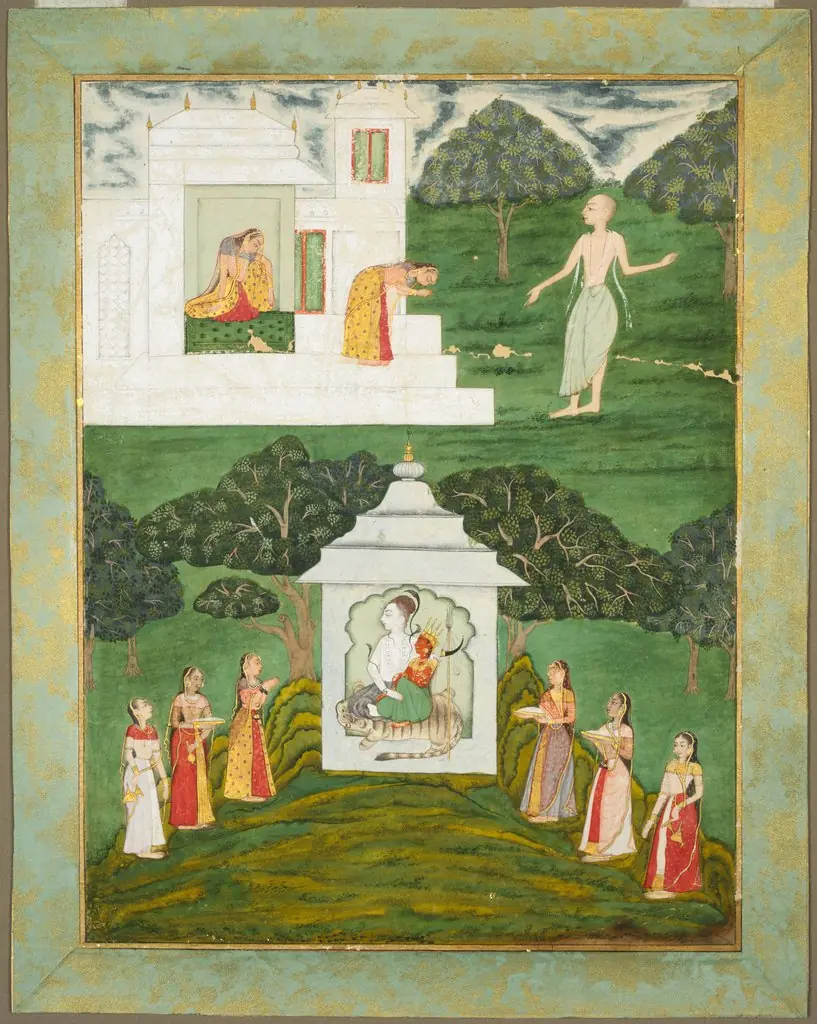 Worship of Shiva and Devi
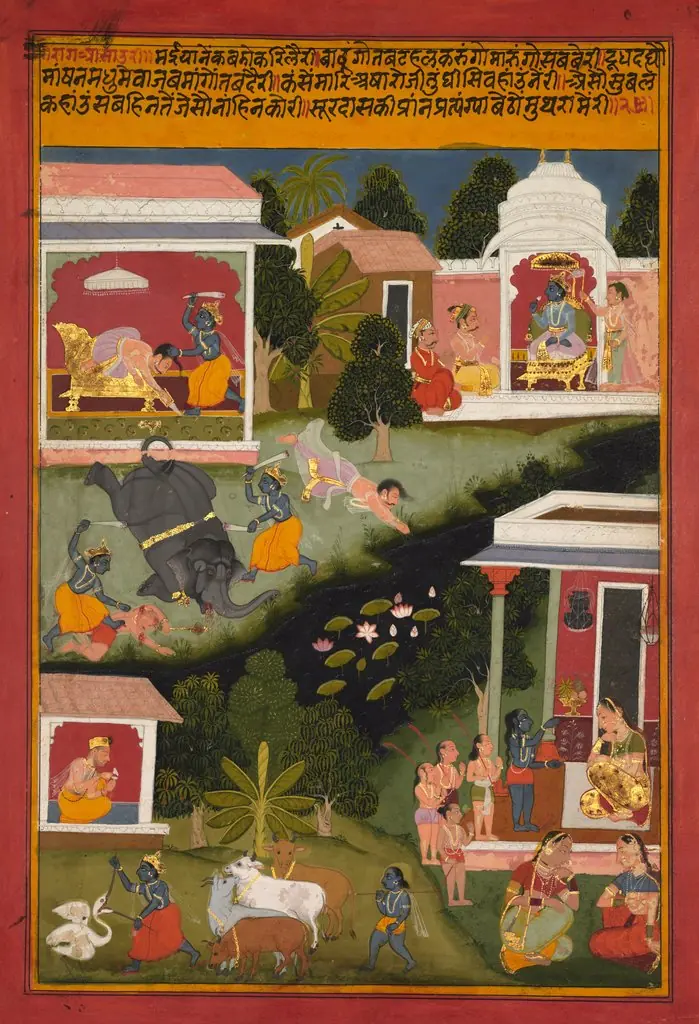 Krishna asks for sweets, from a Sursagar of Surdas (Indian, c. 1480–1580)
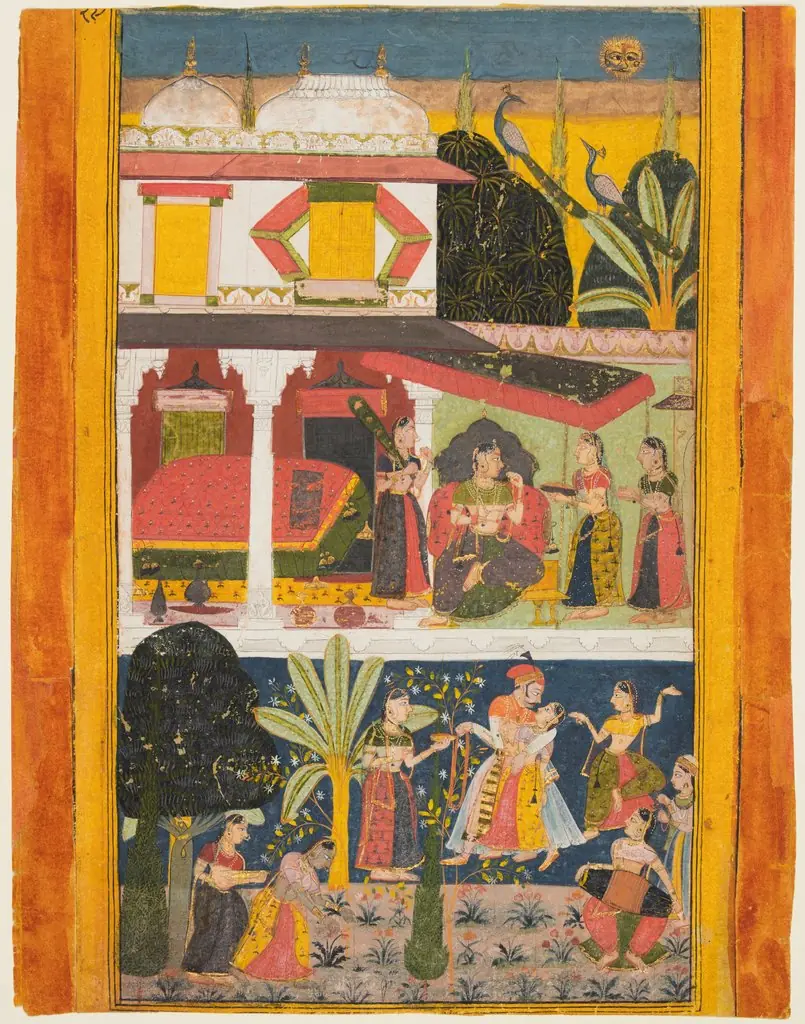 A Heroine and Her Paramour: Malavi Ragini, from a Ragamala
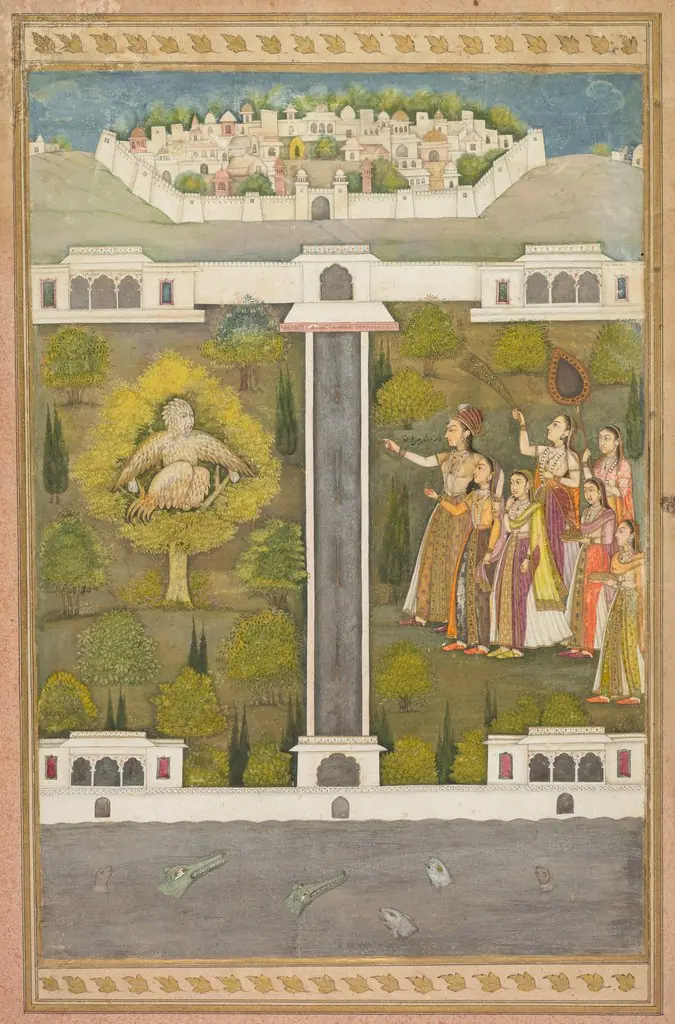 Mahliqa, Daughter of the Emperor of China, Pointing at the Bird-Man Khwaja Mubarak: A Leaf from a Poetical Romance Relating to Shah Alam I (recto)