Artwork
De H. Anna-te-Drieën
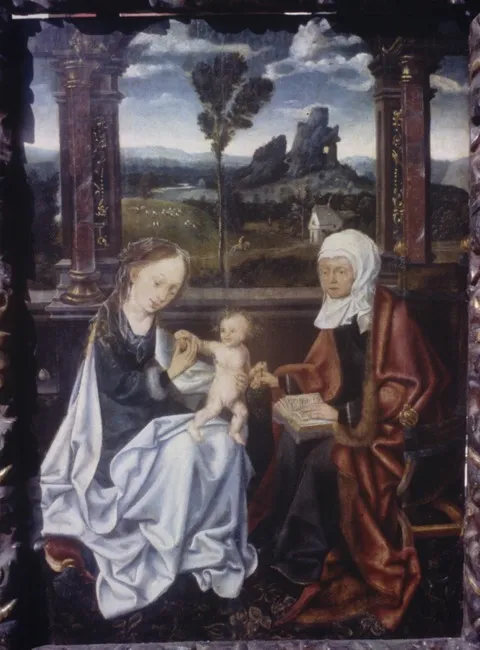
De H. Anna-te-Drieën is an oil painting by the Early Baroque Italian artist Unknown. It dates from 1524 and is held in the collection of the South African National Gallery. This oil painting portrays the Virgin Mary with the infant Jesus and an older woman, traditionally identified as Saint Anne, Mary’s mother.
About this work
Overview
This oil painting portrays the Virgin Mary with the infant Jesus and an older woman, traditionally identified as Saint Anne, Mary’s mother.
This oil painting portrays the Virgin Mary with the infant Jesus and an older woman, traditionally identified as Saint Anne, Mary’s mother. The scene is intimate and quiet, emphasizing familial connection rather than grandeur. The figures are arranged in a stable, triangular composition, anchored by the central pair. Soft lighting and rich textures from the oil medium enhance the tactile quality of the fabrics and the calm atmosphere of the setting.
Subject & Meaning
The painting illustrates the Holy Family in a moment of domestic tenderness, with Saint Anne present as a maternal figure overseeing the bond between mother and child. This triad reflects theological themes of lineage and divine continuity, grounding the sacred in human warmth. The inclusion of Saint Anne underscores the importance of Mary’s own upbringing, reinforcing her role as both earthly daughter and heavenly mother.
Technique & Style
Oil paint is used with careful layering to render the folds of fabric, the softness of skin, and the atmospheric depth of the landscape. The robes of Mary and Saint Anne are distinguished by contrasting hues—dark and white for Mary, red over black for Anne—creating visual harmony without distraction. The background, rendered with subtle gradations, recedes gently, directing focus to the figures while suggesting a tranquil, idealized world beyond.
History & Provenance
The painting’s origins are tied to late medieval devotional practices in the Low Countries, where depictions of Saint Anne with the Virgin and Child were common. While the artist remains unidentified, stylistic elements suggest a regional workshop active in the early 16th century. Its early ownership likely belonged to a private patron or religious community, reflecting personal piety rather than institutional commission.
Context
During the early 1500s, images of Saint Anne gained popularity in Northern Europe as devotion to her grew alongside Marian veneration. Such works served both liturgical and educational purposes, reinforcing familial models of holiness. The inclusion of a distant castle in the landscape may allude to the heavenly Jerusalem or simply reflect contemporary ideals of serene, ordered nature.
Legacy
This painting contributes to a broader tradition of intimate Marian imagery that influenced later Renaissance and Baroque devotional art. Its quiet dignity and attention to emotional nuance set it apart from more theatrical representations. Though not widely known today, it remains a representative example of how private faith shaped visual culture in the northern Low Countries.
Artist & collection

 Domestic Scene
 Giacomo and Cardinal Marco, investing Andrea, Abbot of San Zeno, with his Benefice
 The Nymph of Fontainebleau
 Portrait of a Woman
 Madonna and Child with Saints in the Enclosed Garden
 Venus and Minerva
 Family Group of Four on Sofa
 Wall painting from Room H of the Villa of P. Fannius Synistor at Boscoreale
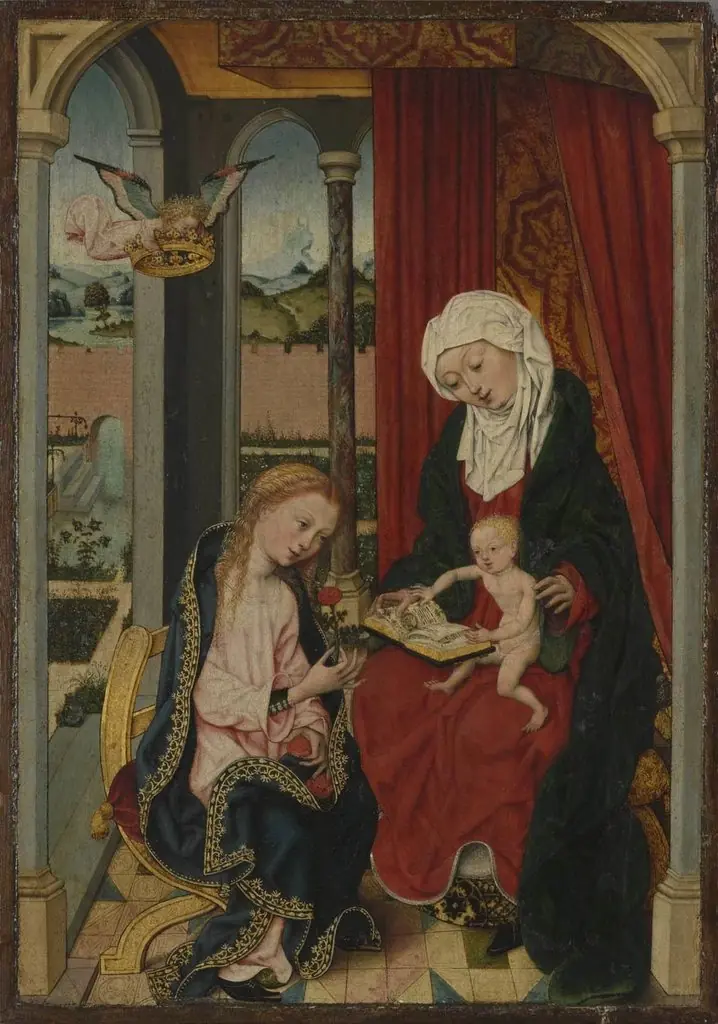 Virgin and Child with Saint Anne
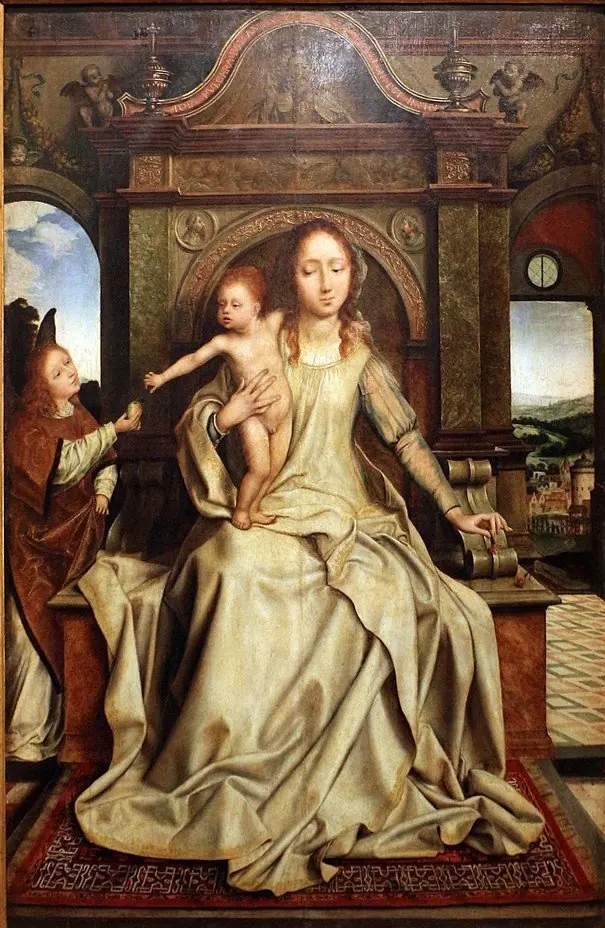 The Virgin Mary, Infant Jesus and an Angel
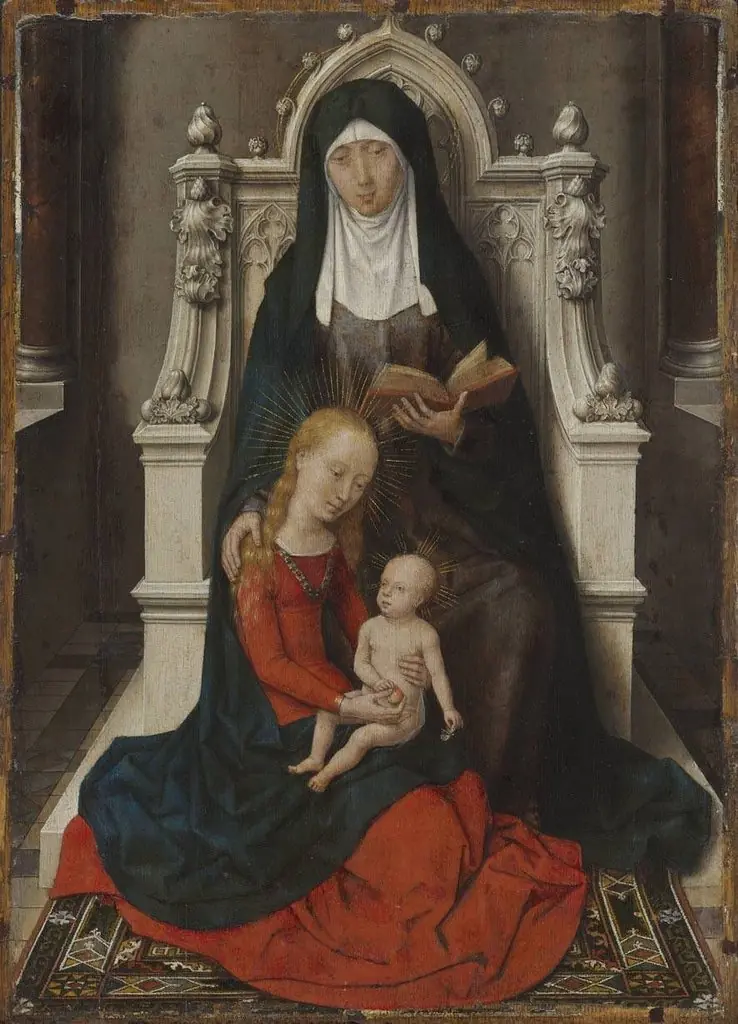 Madonna and Child with St. Anne.
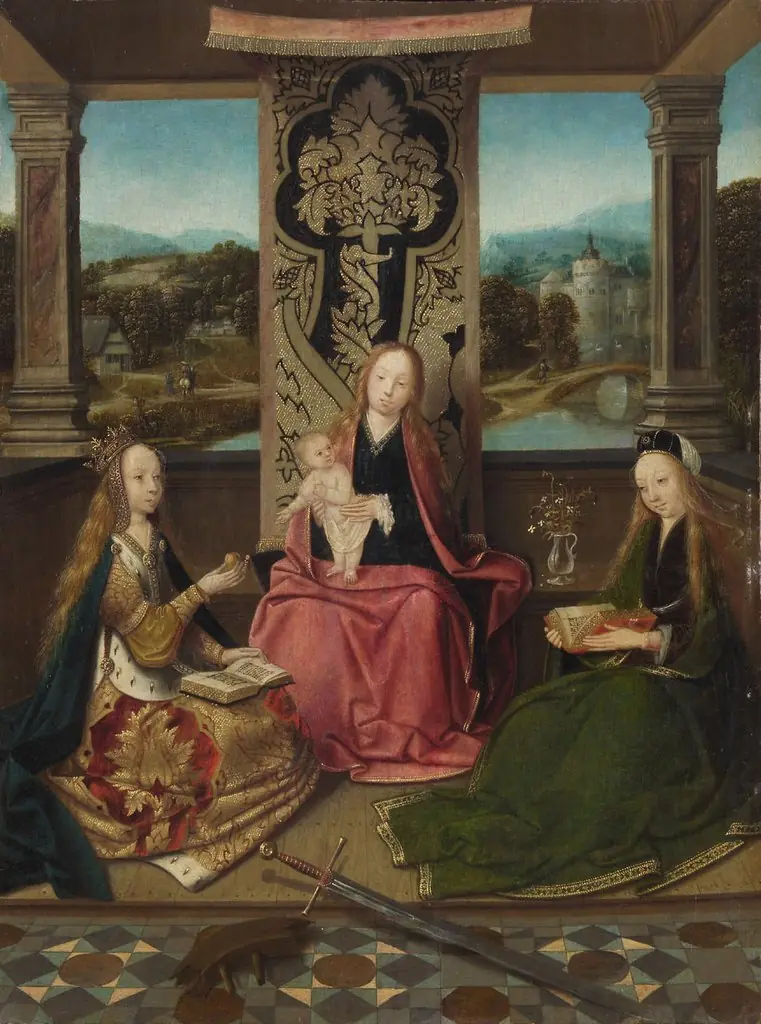 Madonna and Child with Saints Catherine and Barbara
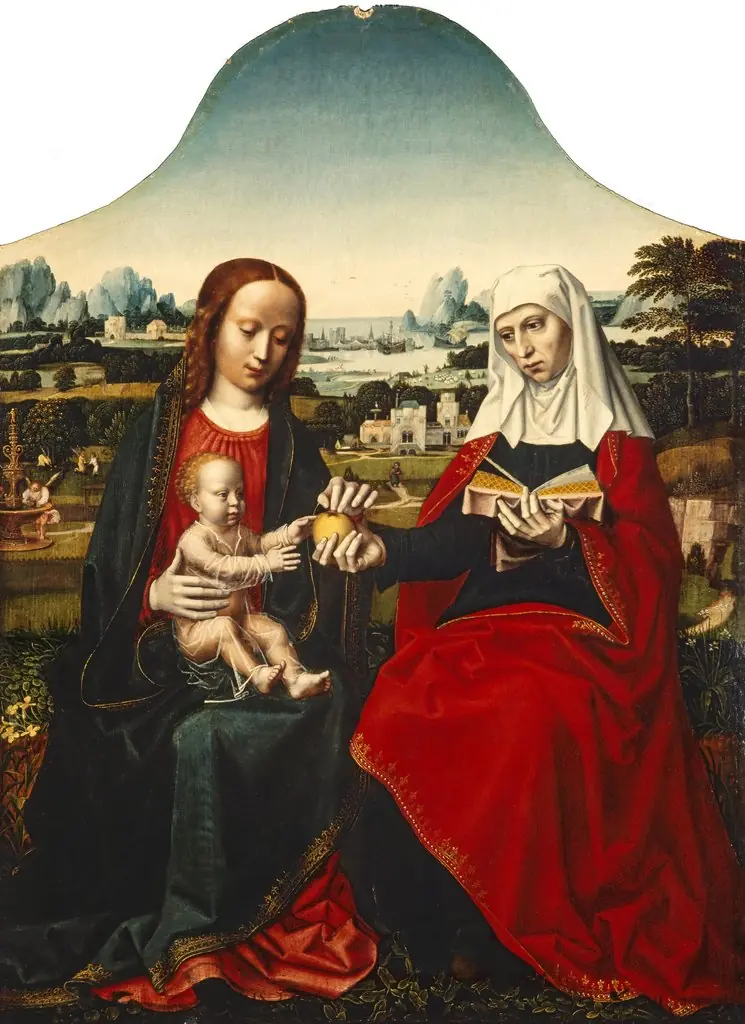 The Virgin and Child with Saint Anne
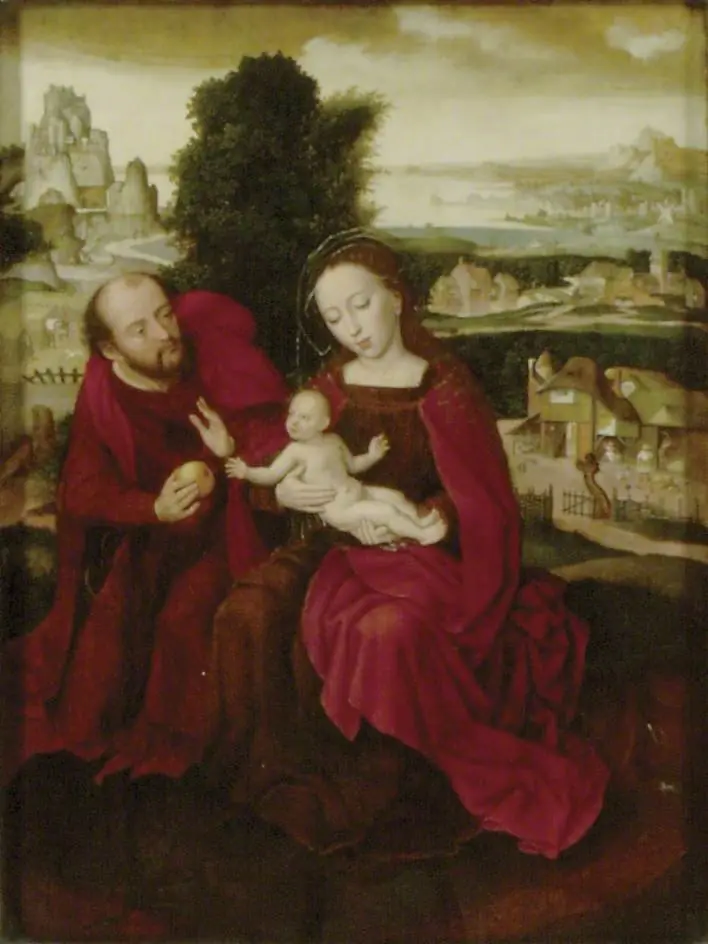 The Holy Family in a Landscape
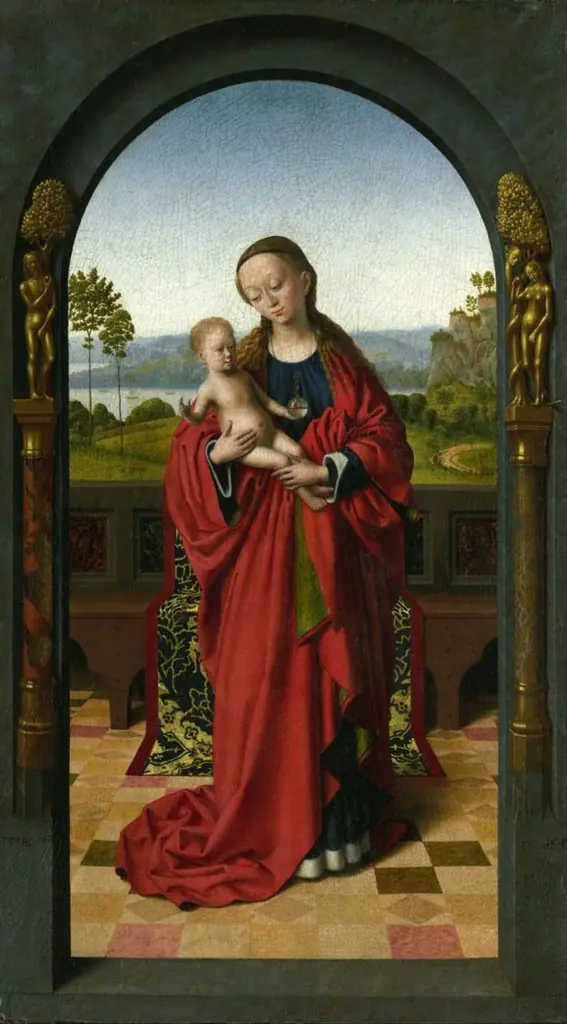 Madonna
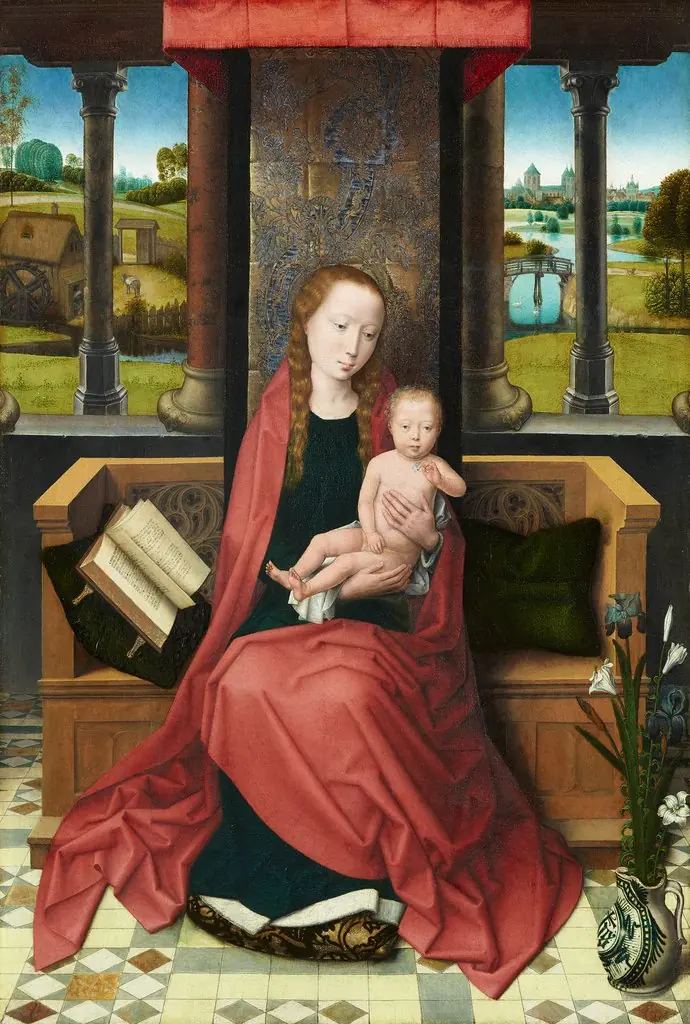 The Virgin and Child Enthroned
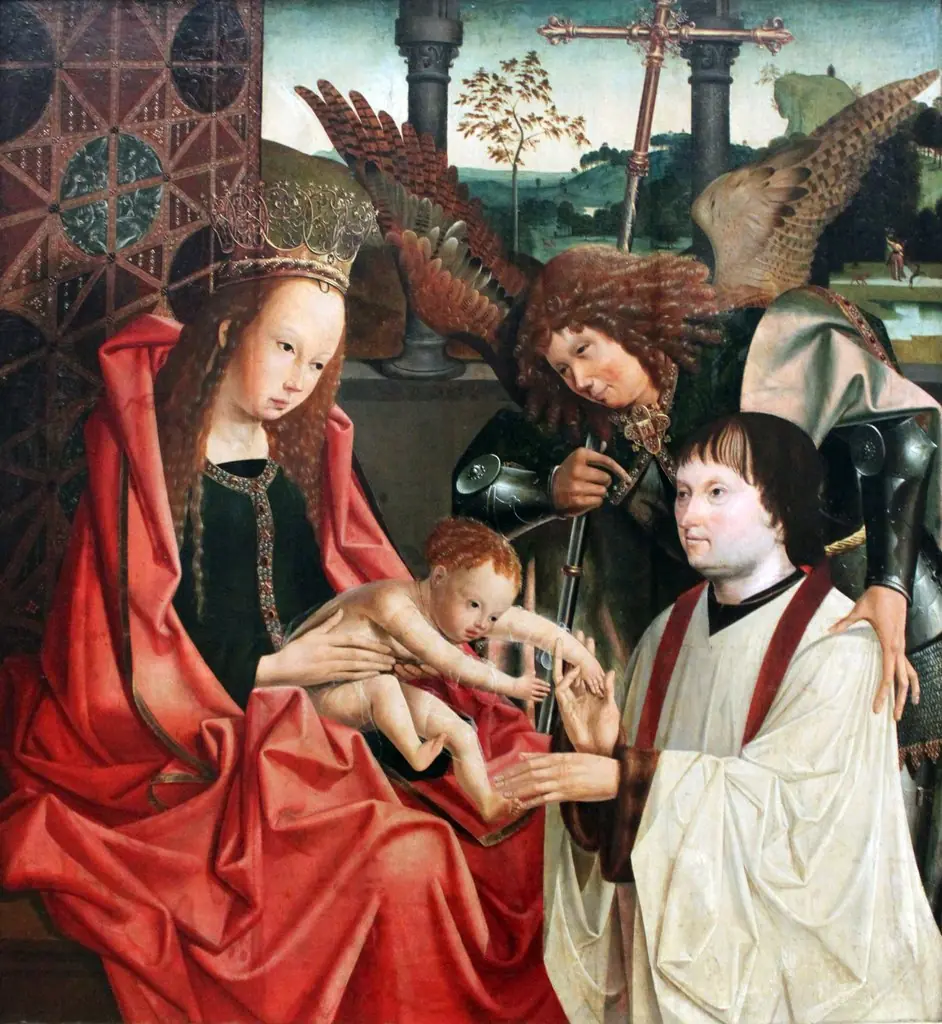 Maria with the child, the Archangel Michael and a donor
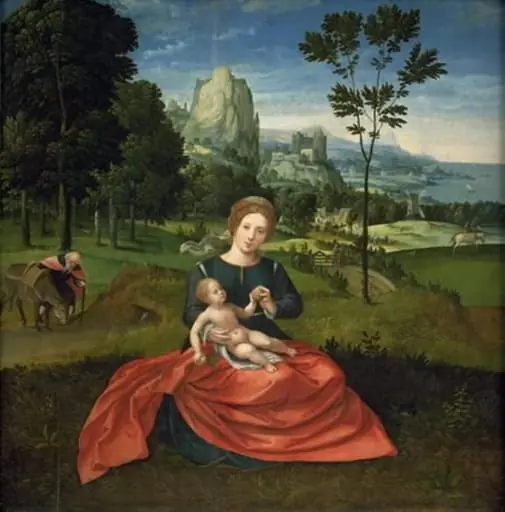 The Rest on the Flight into Egypt
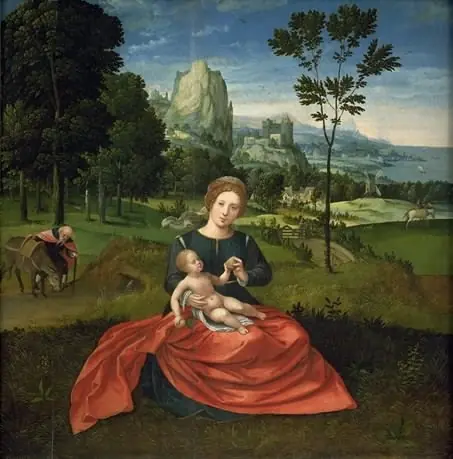 The Rest on the Flight into Egypt
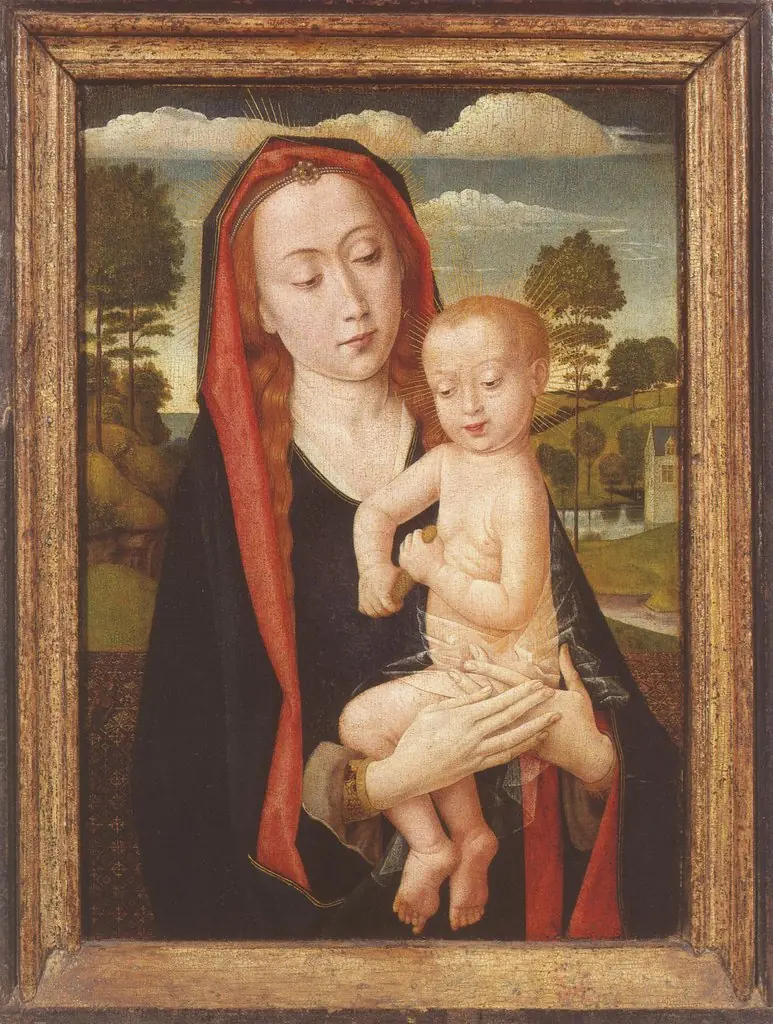 Maria met kind voor een borstwering met doorzicht naar een heuvellandschap