Artwork
Portrait of an Officer
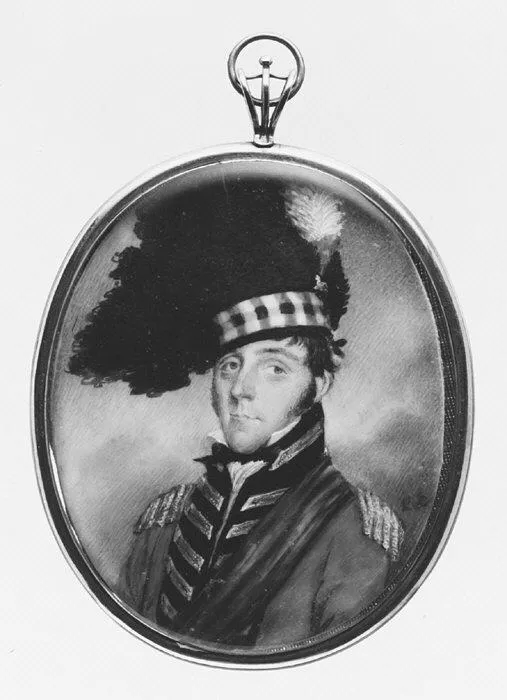
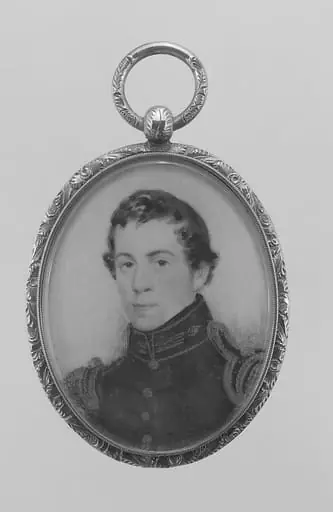
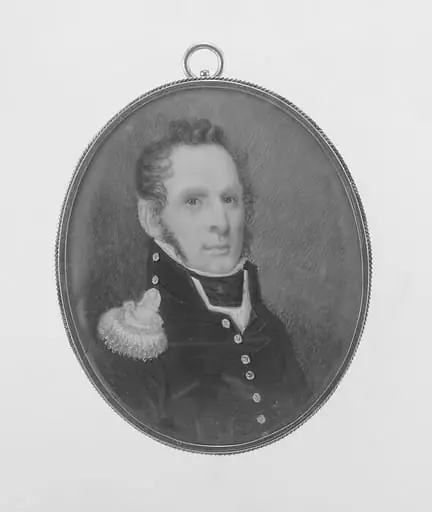
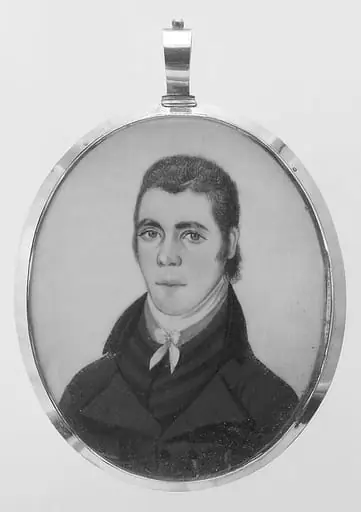
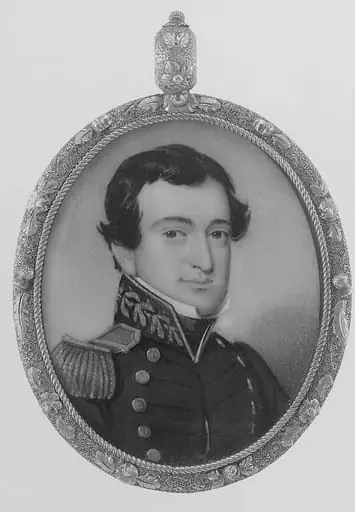
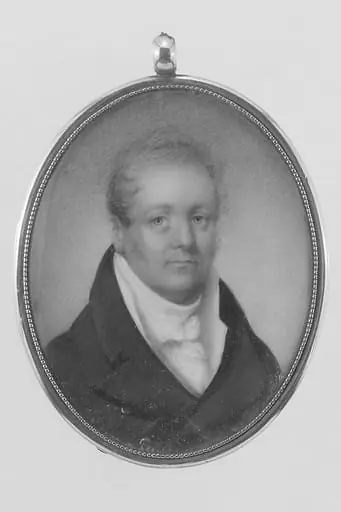
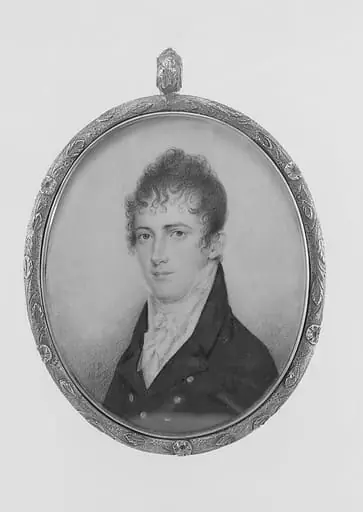
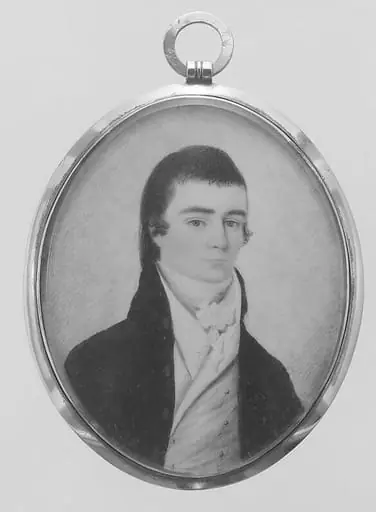
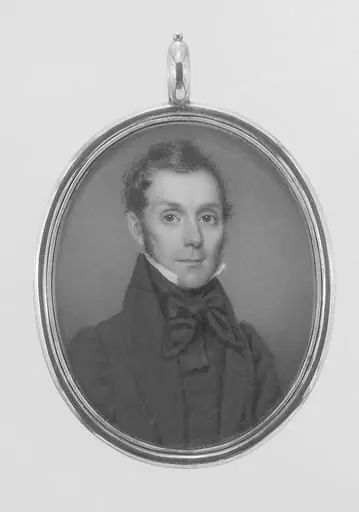
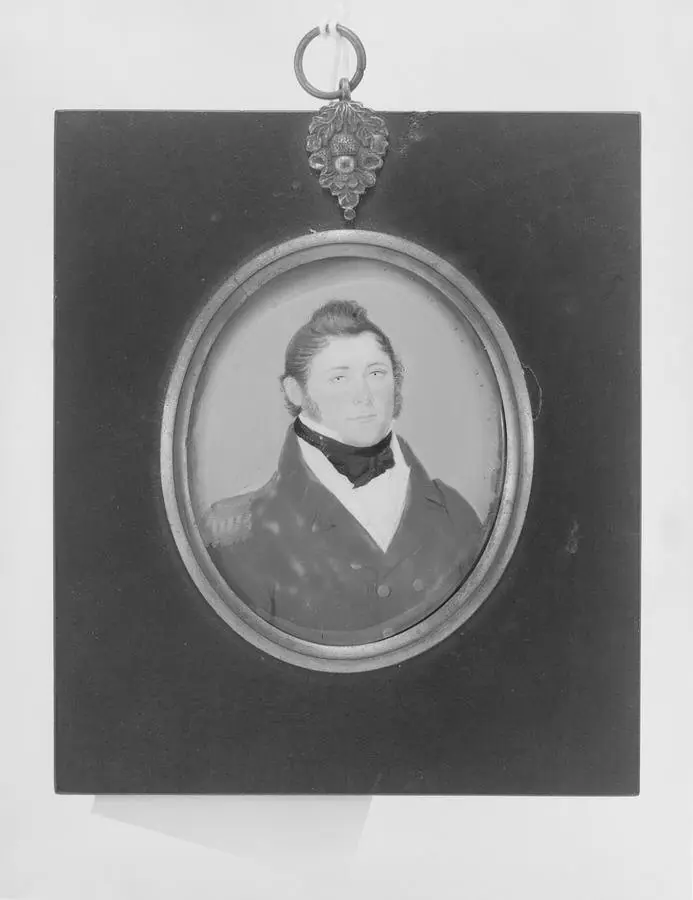
Portrait of an Officer is an unspecified painting. It dates from 1820 and is held in the collection of the Metropolitan Museum of Art. This small, oval painting depicts an unidentified military officer.
About this work
Overview
This small, oval painting depicts an unidentified military officer.
This small, oval painting depicts an unidentified military officer. Rendered with a focus on the subject's face, the artwork presents a man in a distinctive uniform, characterized by a dark jacket with prominent stripes and a tall, plumed hat. Its compact size and refined finish suggest it was designed for personal adornment, possibly as a pendant or a locket insert, rather than a wall-mounted display.
Subject & Meaning
The portrait centers on a male figure dressed in formal military attire. His uniform features a dark coat adorned with broad stripes, complemented by a tall hat topped with a feather, signifying his rank or affiliation. The direct gaze and prominent presentation of the uniform elements convey a sense of authority and identity, typical of portraiture intended to commemorate an individual's status or profession.
Technique & Style
The artist employed a technique that emphasizes the subject's features against a subdued backdrop. The dark, unadorned background allows the officer's face and the details of his uniform to emerge with clarity. This contrast between light and shadow, particularly in illuminating the face, suggests an approach akin to chiaroscuro, a method often used to create dramatic depth and highlight the central figure. The smooth finish and precise rendering contribute to its intimate scale.
Context
The artwork's diminutive, oval format and polished presentation indicate its probable function as a personal, portable object. Such small-scale portraits were frequently commissioned to be worn as jewelry, such as pendants or brooches, or to be set into decorative boxes. This intimate scale allowed the owner to keep an image of a loved one or a significant individual close, reflecting a common practice in historical portraiture for personal remembrance.
Artist & collection