Artwork
Monju as a Child (Chigo Monju)
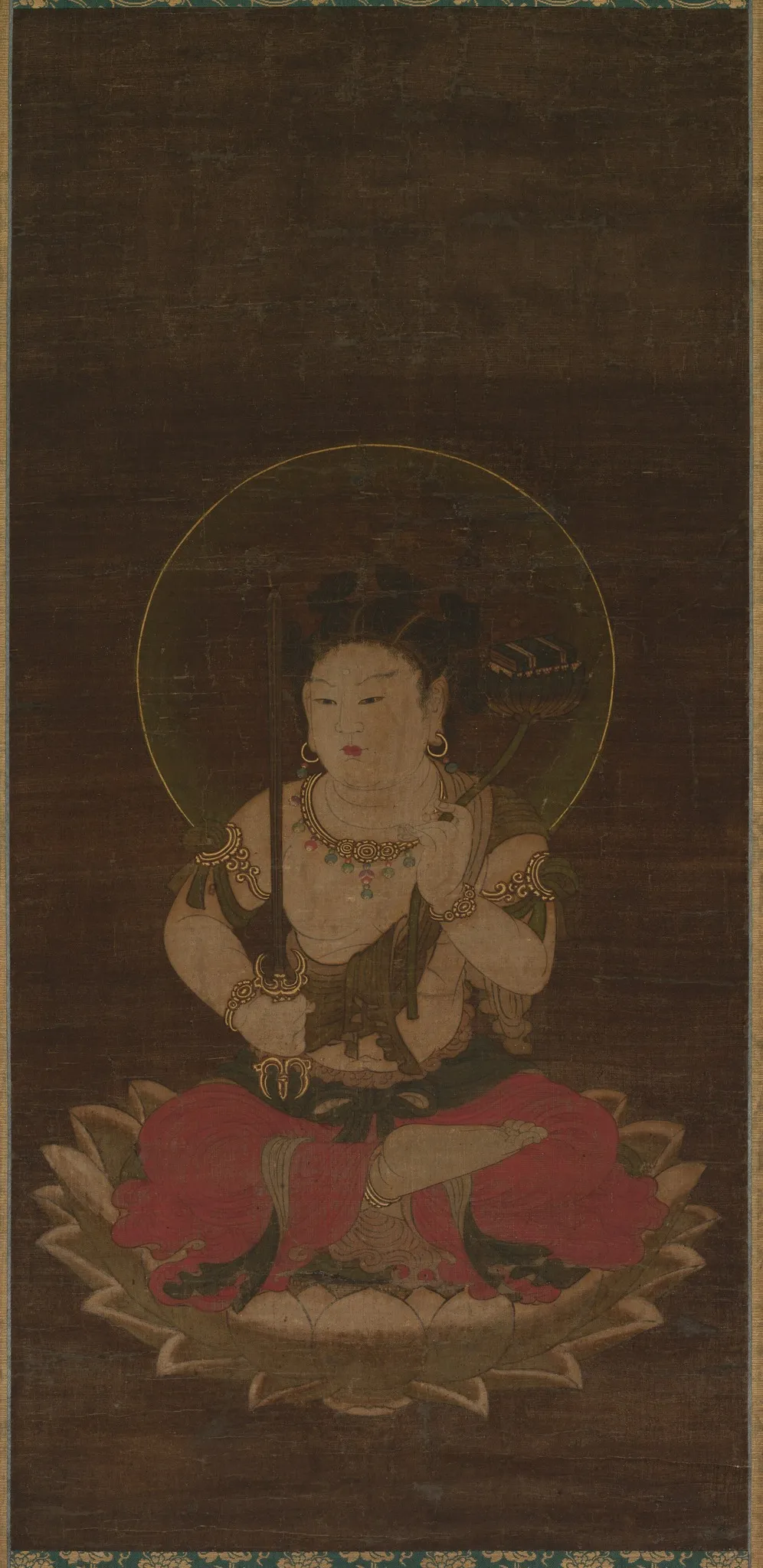
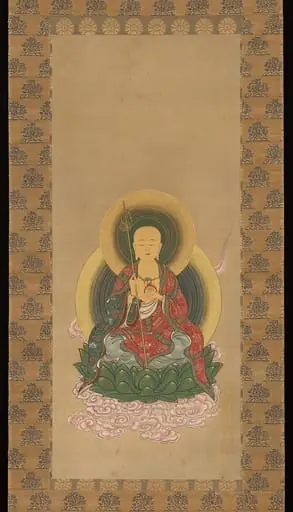
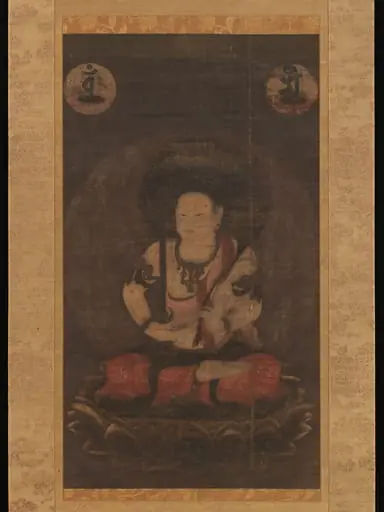
Monju as a Child (Chigo Monju) is an unspecified painting. It dates from 1420 and is held in the collection of the Cleveland Museum of Art. The work depicts a youthful figure seated upon a lotus blossom, rendered against a darkened backdrop.
About this work
Overview
The work depicts a youthful figure seated upon a lotus blossom, rendered against a darkened backdrop. The child‑like subject displays a rounded visage, dark hair, and is attired in a red robe edged with gold. A staff rests in one hand while the other rests lightly on the knee, and the entire outline of the figure is highlighted in gold.
Subject & Meaning
The central figure is identified as Monju, the bodhisattva of wisdom, portrayed in a child form. The lotus, a recurring symbol in Buddhist iconography, underscores themes of spiritual purity and enlightenment associated with the deity.
Technique & Style
The painting employs a contrast of deep background tones with luminous gold outlines that define the figure’s contours. The use of a richly colored red garment with gilded trim reflects traditional Japanese painting methods that emphasize decorative detail and symbolic coloration.
History & Provenance
The piece belongs to a lineage of Buddhist devotional images that circulated in Japan during the medieval period. Though specific ownership records are limited, works of this type were commonly housed in temple collections before entering museum holdings.
Context
Monju in child form appears in various East Asian artistic traditions, often serving as an approachable representation of wisdom for lay audiences. The lotus setting aligns the image with meditative practice, situating the bodhisattva within a visual framework of purity and transcendence.
Artist & collection