Artwork
The Secret Five Bodhisattvas (Gohimitsu Bosatsu)
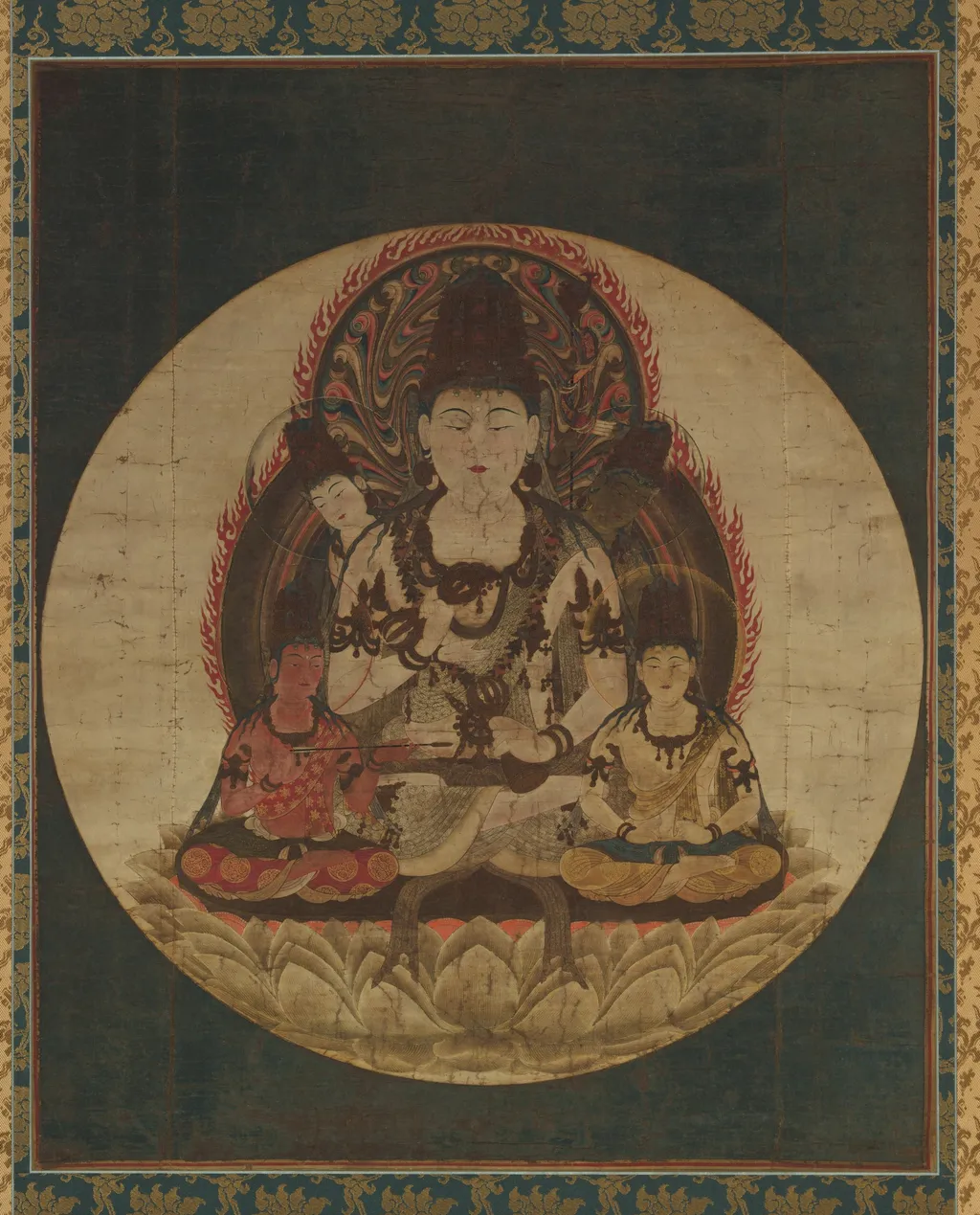
The Secret Five Bodhisattvas (Gohimitsu Bosatsu) is an unspecified painting. It dates from 1249 and is held in the collection of the Cleveland Museum of Art.
About this work
Overview
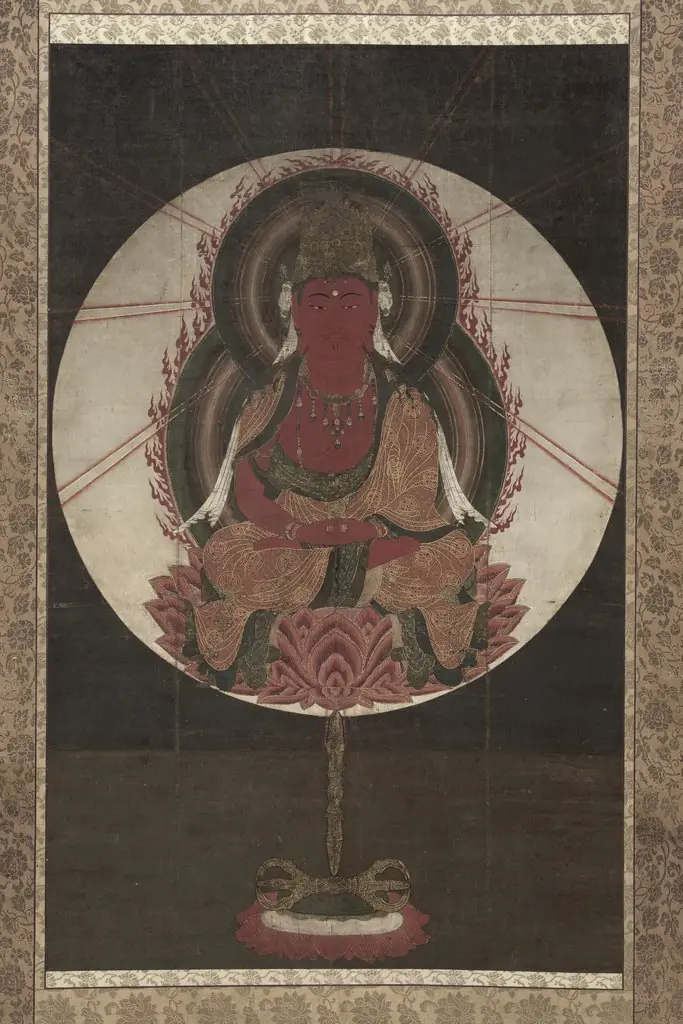
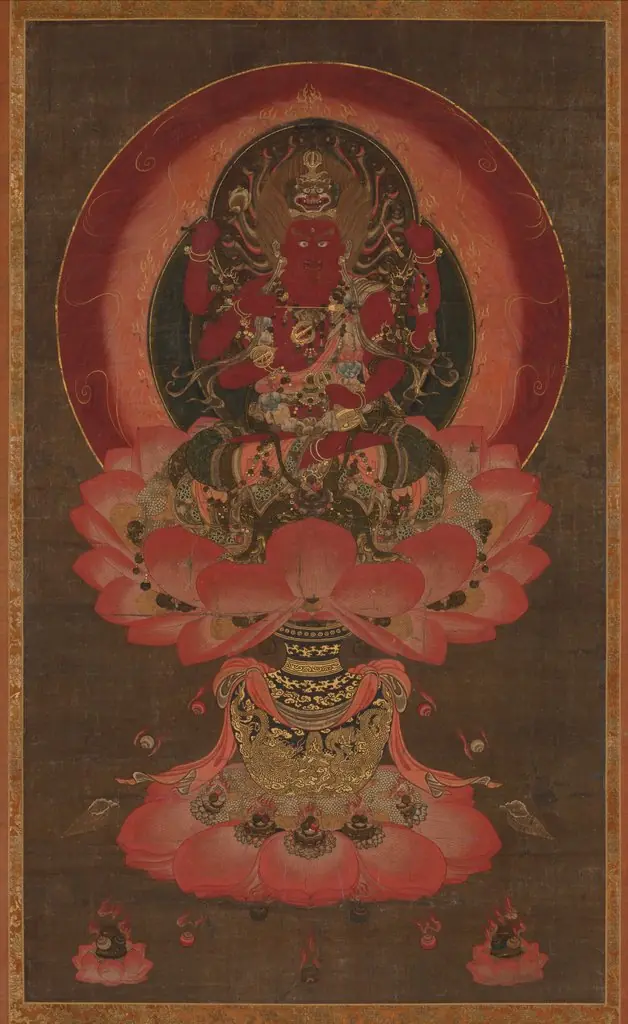
The work, titled *The Secret Five Bodhisattvas (Gohimitsu Bosatsu)*, presents a circular arrangement of five meditative figures.
The work, titled *The Secret Five Bodhisattvas (Gohimitsu Bosatsu)*, presents a circular arrangement of five meditative figures. The central bodhisattva dominates the composition, surrounded by four smaller companions. All five are depicted with closed eyes, suggesting deep contemplation, and are set against a dark background that heightens the luminous tones of their robes and the central halo of flame.
Subject & Meaning
The painting portrays a group of bodhisattvas, enlightened beings in Buddhist tradition who delay nirvana to aid sentient beings. The central figure, identified as Gohimitsu Bosatsu, is encircled by four attendant bodhisattvas, emphasizing a collective focus on compassion and inner tranquility. The closed eyes and serene expressions convey a state of profound meditation and spiritual insight.
Technique & Style
Executed in a traditional East Asian painting technique, the piece employs delicate brushwork to render the figures’ robes and the subtle gradations of the dark backdrop. The central halo of flame is rendered with fine, luminous strokes, creating a contrast that draws the viewer’s eye to the primary bodhisattva. The overall palette of muted darks and light-colored garments underscores a contemplative atmosphere.
History & Provenance
The painting is part of the collection at the Cleveland Museum of Art. While specific details of its creation date and original ownership are not provided, its inclusion in a major American museum indicates it was acquired through the institution’s acquisition program, reflecting its recognized cultural and artistic value.
Context
Bodhisattva imagery has long been a central motif in Buddhist visual culture, often used to inspire devotion and meditation. The circular composition of five figures aligns with doctrinal concepts of the five wisdoms or the five directions, situating the work within a broader symbolic framework that links visual form to spiritual teachings.
Artist & collection