Artwork
Red Amida
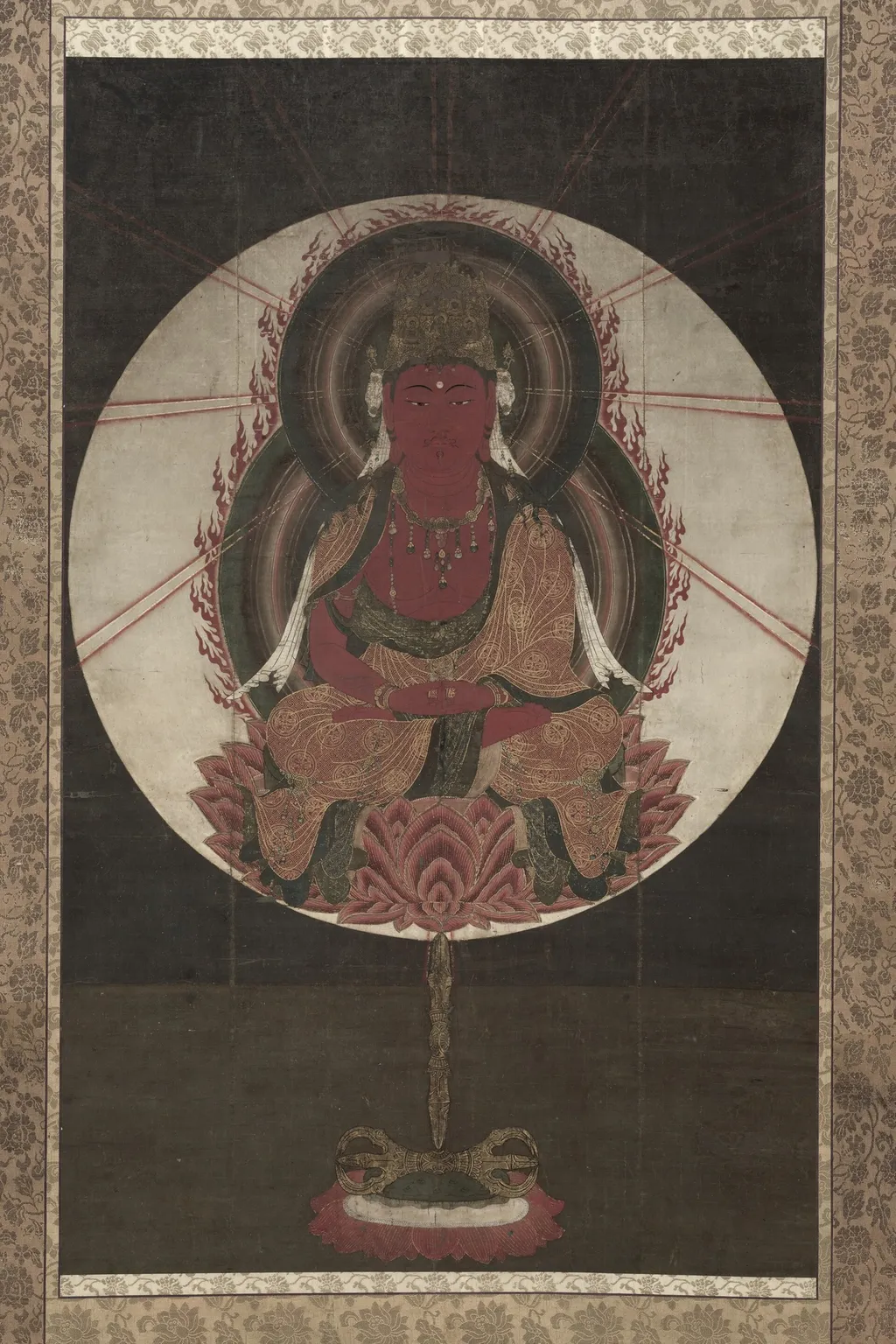
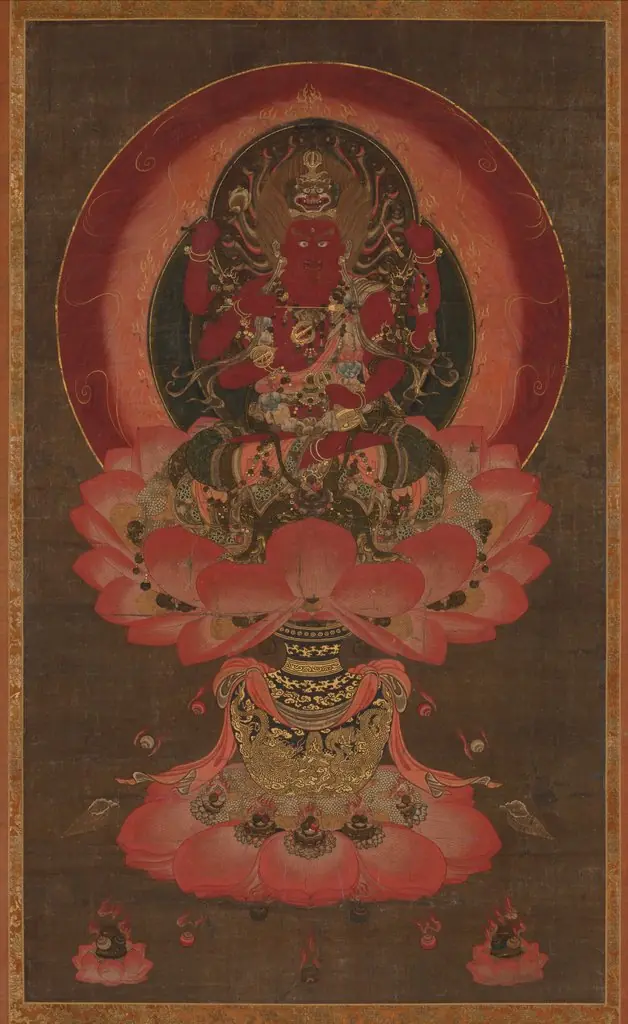
Red Amida is an unspecified painting. It dates from 1316 and is held in the collection of the Cleveland Museum of Art.
About this work
Overview
This work exemplifies a traditional devotional representation, emphasizing the spiritual presence of the deity through color and symbolic elements.
The painting titled Red Amida presents a solitary, crimson-robed figure seated in a meditative posture upon a lotus blossom. This central image is set against a dark, patterned ground, creating a striking visual contrast. The figure's serene expression, adorned with elaborate jewelry, is framed by a radiant halo of light and fire. This work exemplifies a traditional devotional representation, emphasizing the spiritual presence of the deity through color and symbolic elements.
Subject & Meaning
The artwork depicts Amida Buddha, recognizable by the vibrant red hue of his body and robes, a characteristic often associated with this deity in certain Buddhist traditions. His cross-legged posture on a lotus flower signifies purity and spiritual enlightenment, common iconography in Buddhist art. The fiery mandorla encircling Amida symbolizes his divine radiance and transformative power, illuminating the dark space around him.
Technique & Style
The artist employs a strong visual contrast, positioning the intensely red figure and its luminous aura against a deep, somber background, which features a subtle, repetitive pattern. This compositional choice draws immediate attention to the central deity. The intricate details of the figure's jewelry and the delicate rendering of the lotus petals demonstrate careful craftsmanship, while the dynamic flames of the mandorla add a sense of spiritual energy to the otherwise tranquil scene.
Artist & collection