Artwork
Portrait of Martin Luther (1483–1586)
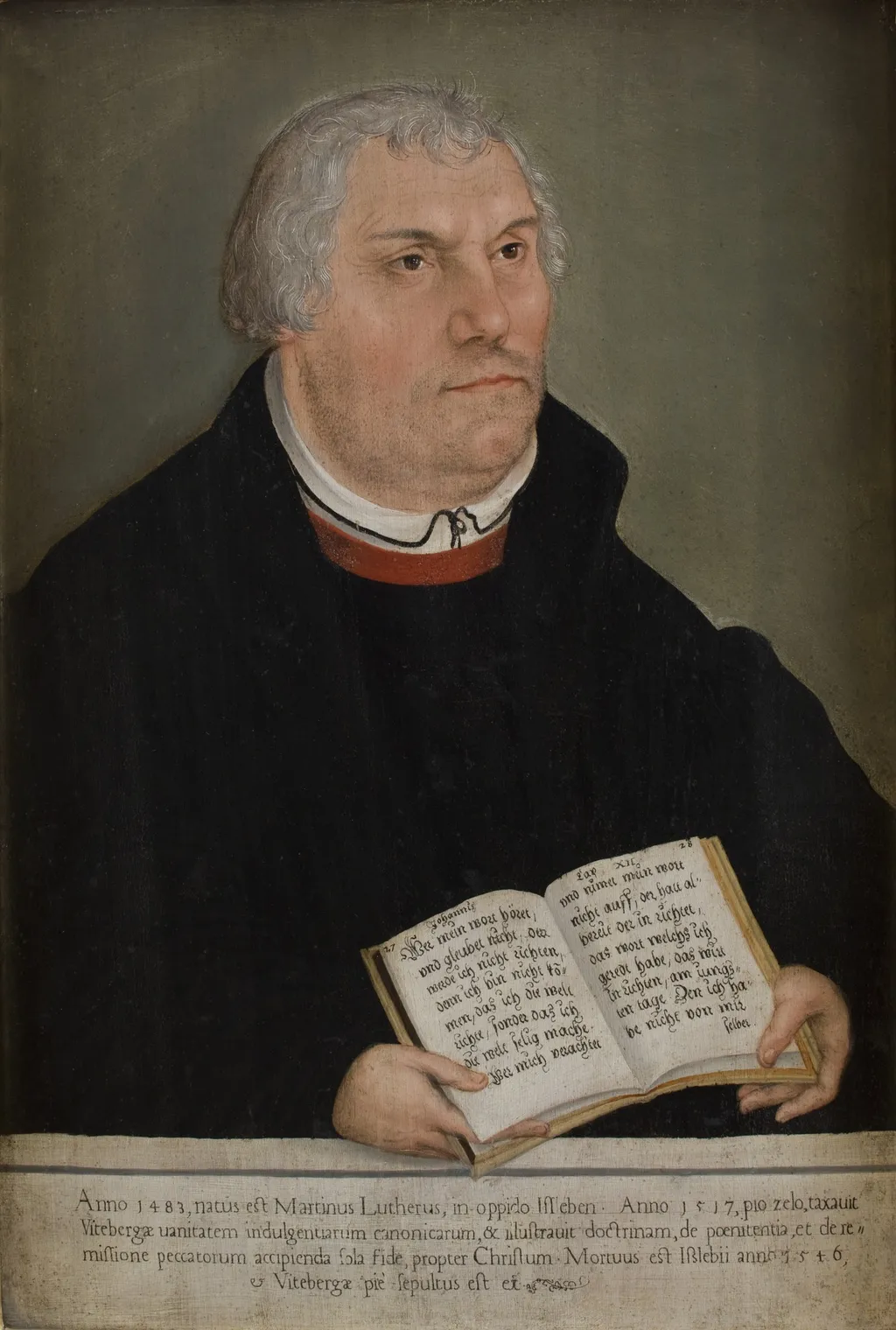
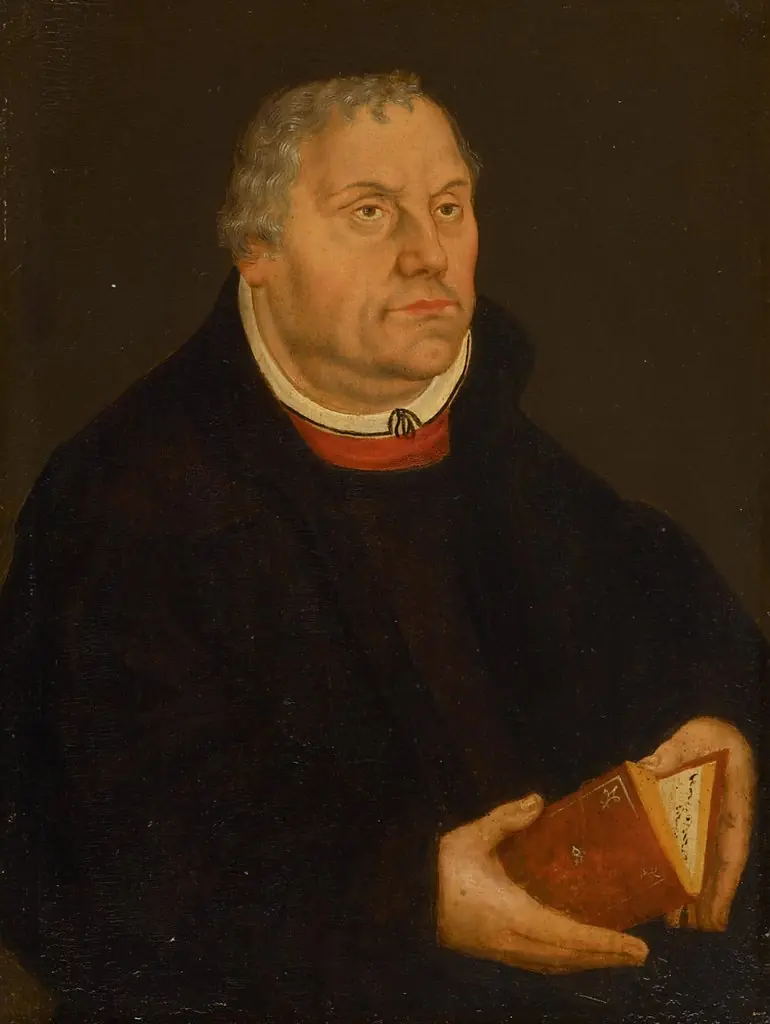
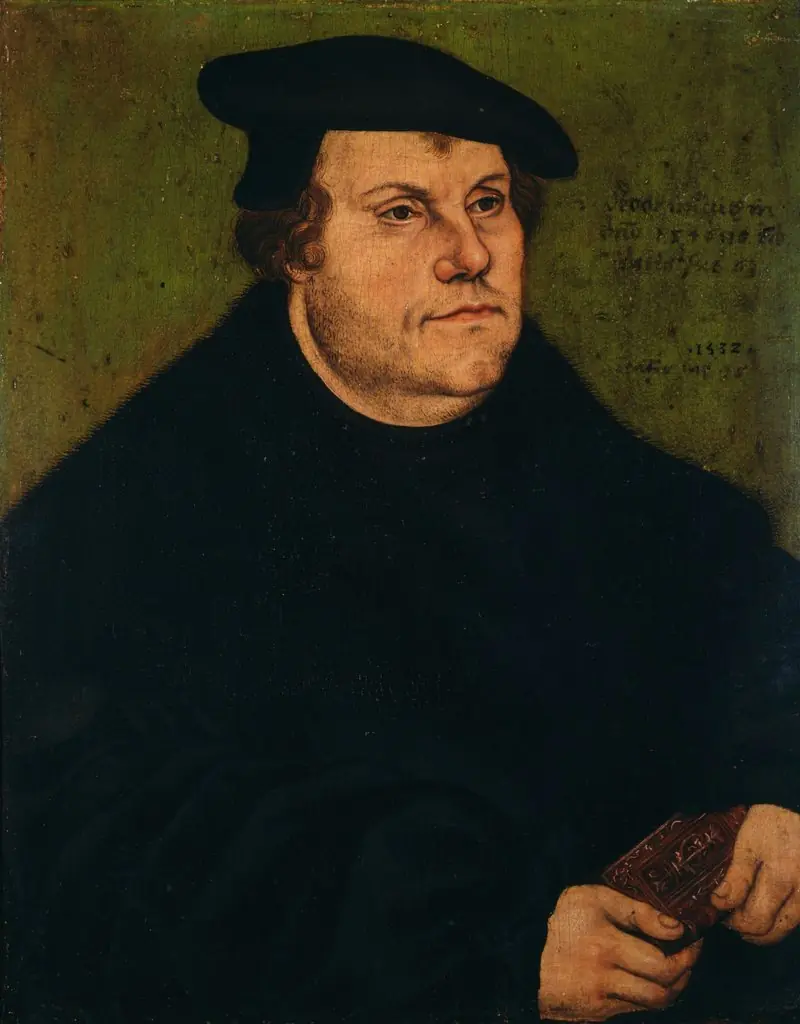
Portrait of Martin Luther (1483–1586) is an oil painting by Lucas Cranach the Elder. It is held in the collection of the National Museum in Kraków.
About this work
The book appears to be written in an old language, possibly German or Latin, and features black text on white pages.
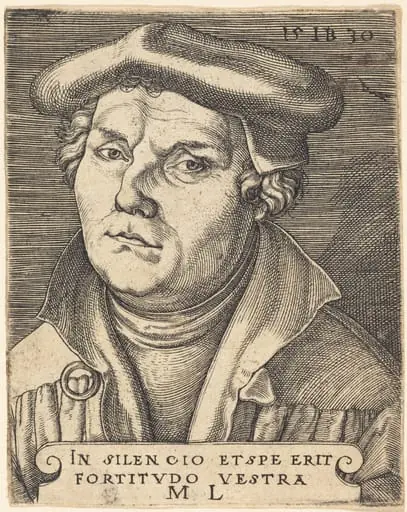
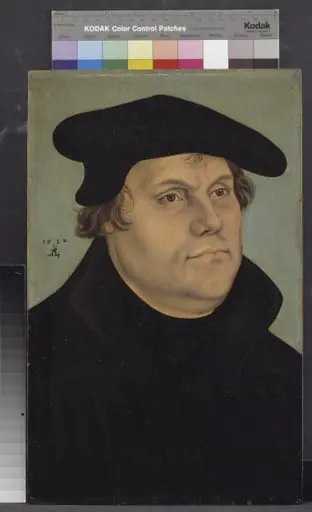
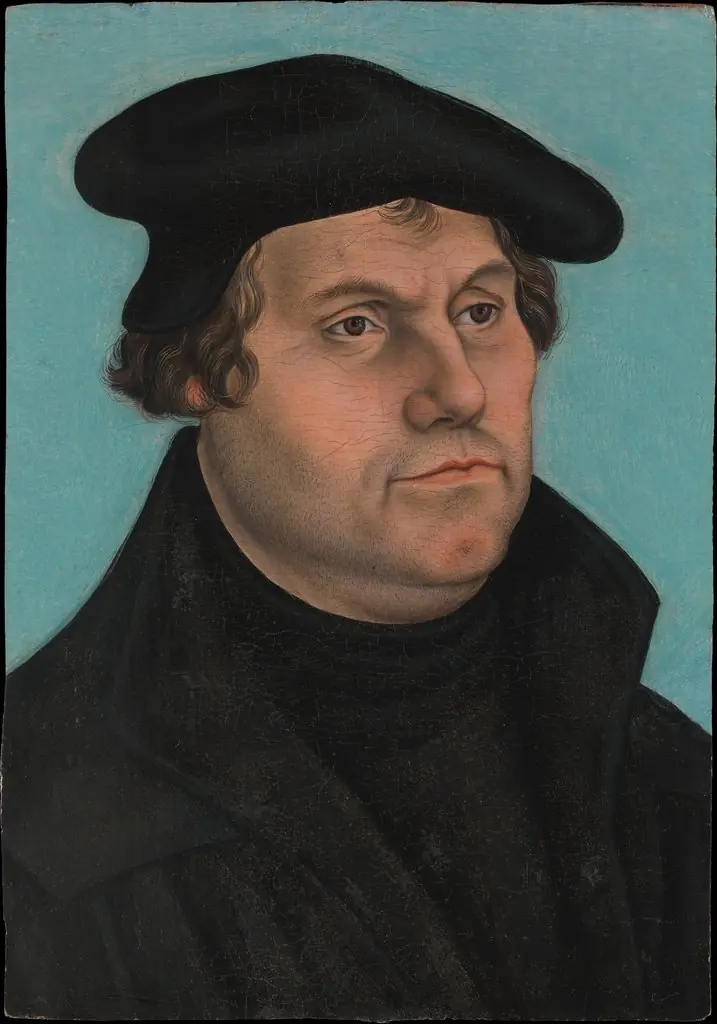
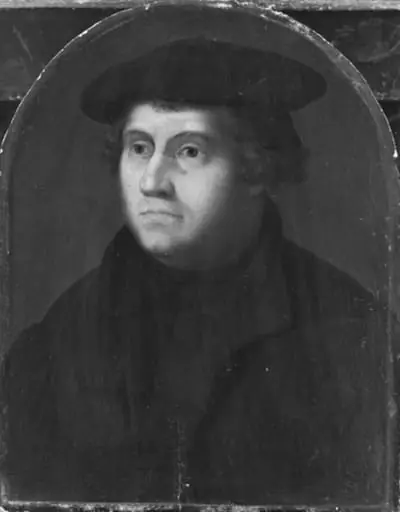
This painting depicts a man with short, curly gray hair, wearing a black robe over a white shirt with a red collar. He holds an open book in his hands.
The book appears to be written in an old language, possibly German or Latin, and features black text on white pages. The man's attire and hairstyle suggest he may be a religious figure or scholar from the 16th century.
If you're interested in learning more about the artist behind this portrait, look up Lucas Cranach the Elder.
Overview
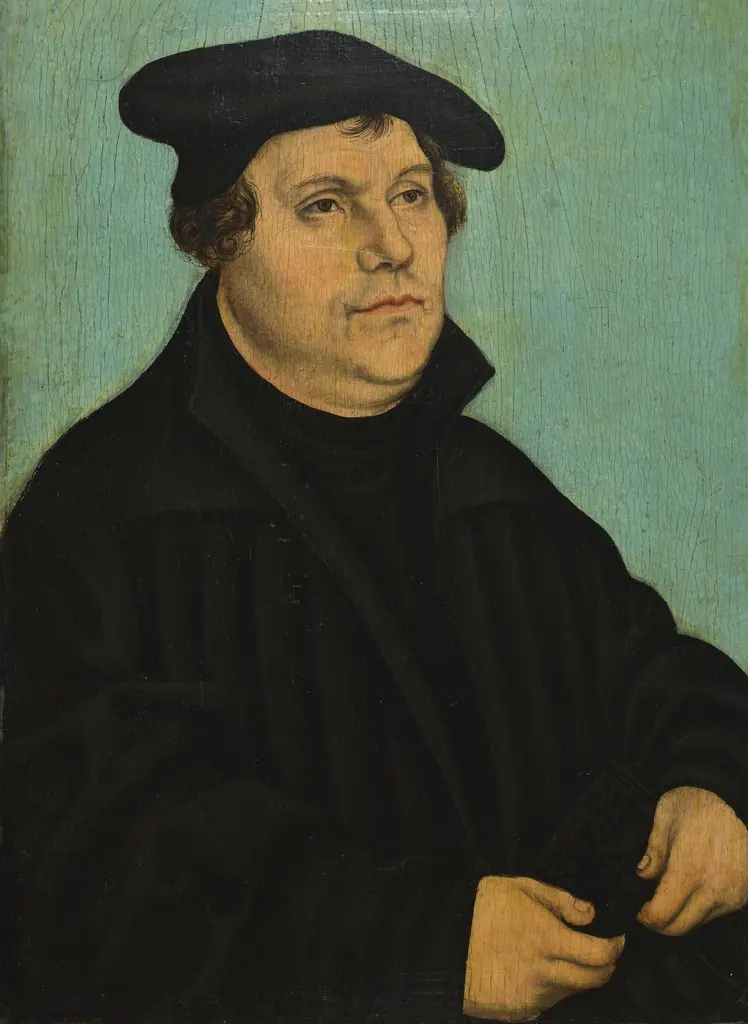
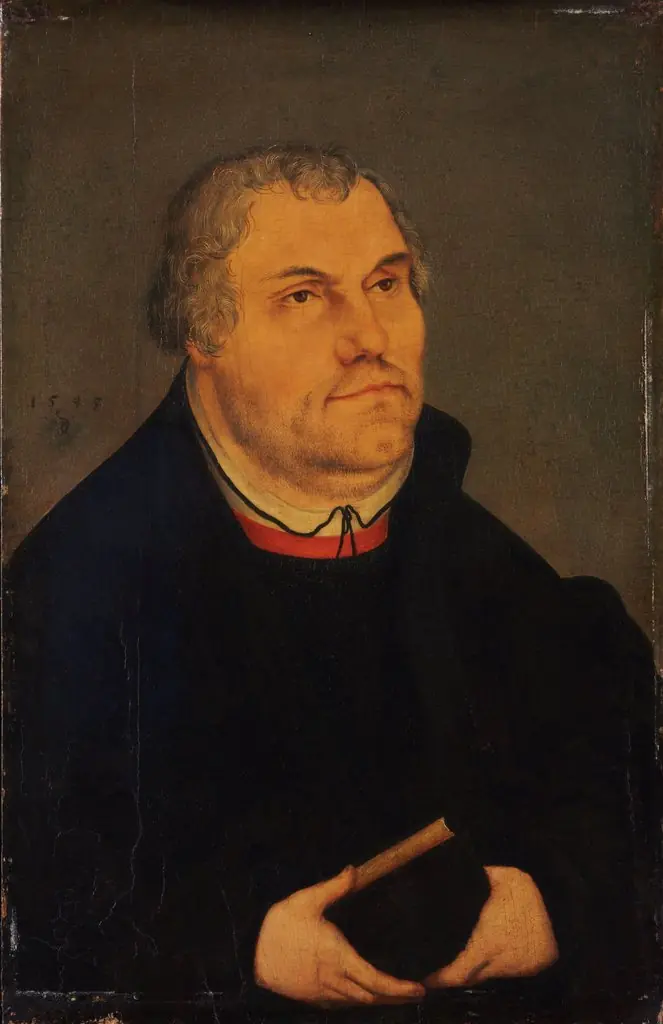
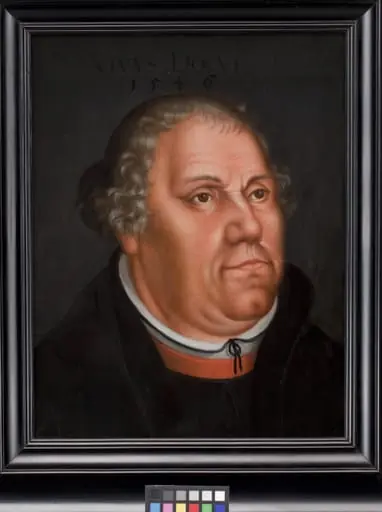
Painted in 1575, this oil-on-panel portrait captures Martin Luther in his later years, created by Lucas Cranach the Elder during his time in Kraków. Cranach, a leading German Renaissance artist and longtime associate of Luther, produced multiple likenesses of the reformer. This work is one of eleven surviving portraits by Cranach, reflecting a sustained artistic and personal relationship that spanned decades of religious upheaval in northern Europe.
Subject & Meaning
The portrait presents Luther as a scholar and spiritual leader, dressed in a dark robe with a white shirt and red collar, symbols of his clerical role. He holds an open book, likely a Bible or theological text, emphasizing his commitment to scriptural authority. The direct gaze and unadorned setting convey intellectual seriousness and moral conviction, aligning with Protestant ideals of personal faith and textual engagement over ceremonial display.
Technique & Style
Cranach renders Luther with precise, restrained brushwork, favoring clarity over dramatic expression. The gray curls, textured fabric, and fine details of the book’s pages reflect his mastery of surface realism. His palette is muted—dominated by blacks, whites, and a single red accent—enhancing the portrait’s solemn tone. The composition is frontal and balanced, typical of Cranach’s approach to portraiture, prioritizing recognition over psychological depth.
History & Provenance
Executed in Kraków in 1575, the painting was made during Cranach’s later years, after he had left Wittenberg. It reflects his continued association with Lutheran circles despite geographic distance. The work’s survival among other Cranach portraits of Luther suggests it was valued within Protestant networks. Its presence in Kraków may indicate patronage by German-speaking communities in Poland or diplomatic ties between Saxony and the Polish court.
Context
By 1575, Luther had been dead for nine years, but his legacy shaped the identity of emerging Protestant states. Cranach, as a trusted visual chronicler of the Reformation, continued to produce images that reinforced Luther’s authority. These portraits functioned as both personal memorials and public symbols, circulating among churches, universities, and homes to affirm doctrinal continuity and the legitimacy of Lutheran leadership.
Legacy
Cranach’s series of Luther portraits established a visual archetype that endured for centuries. This 1575 work, like others in the series, became a reference for later depictions of the reformer in prints, textbooks, and religious art. Its restrained realism and symbolic elements helped define how Luther was remembered—not as a revolutionary, but as a steadfast scholar grounded in scripture and conviction.
Own this work as a print
Artist & collection
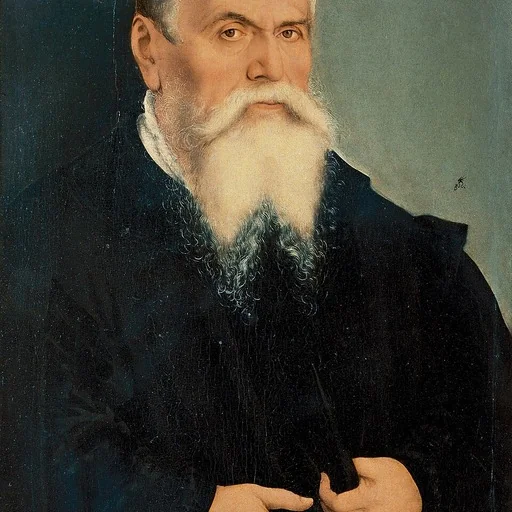
Artist
Lucas Cranach the Elder was a German Renaissance painter and printmaker in woodcut and engraving.