Artwork
Kalpa Sutra
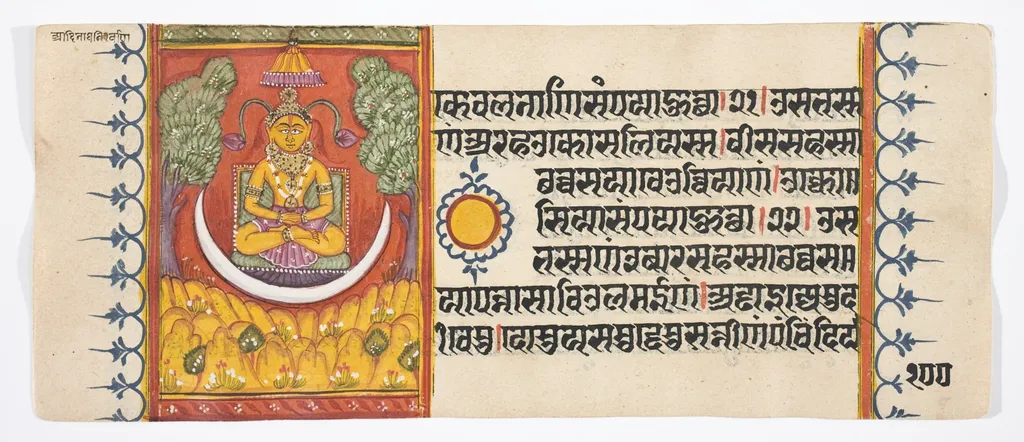
Kalpa Sutra is an unspecified painting by Unknown. It is held in the collection of the Detroit Institute of Arts.
About this work
Overview
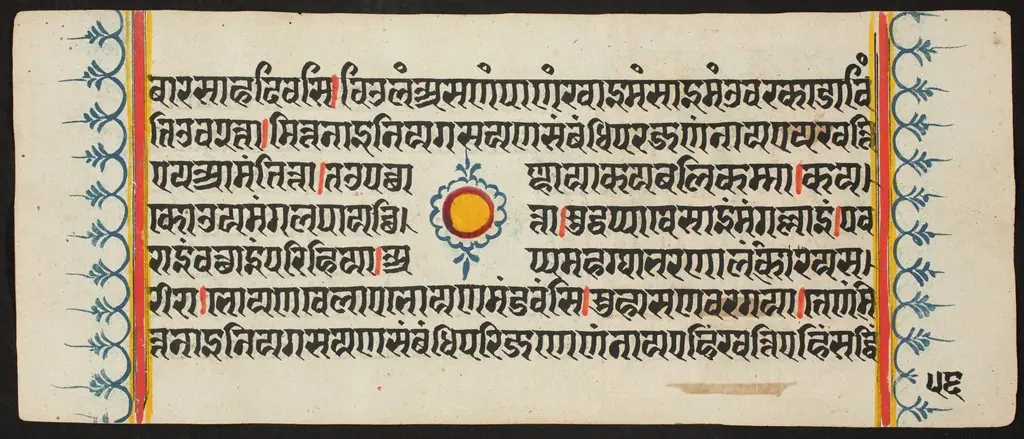
The Kalpa Sutra is a painting that embodies the confluence of religious narrative and artistic expression, originating from the medieval Indian subcontinent. Its creation is attributed to the Pala-Sena period, roughly spanning the 10th to 12th centuries. The work is characterized by its meticulous execution and the use of a palette dominated by earth tones, with accents of deeper, richer colors.
Subject & Meaning
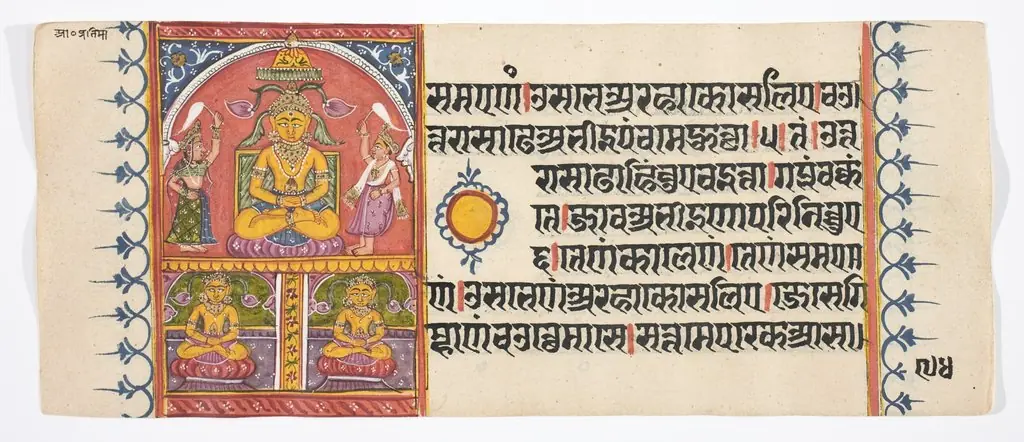
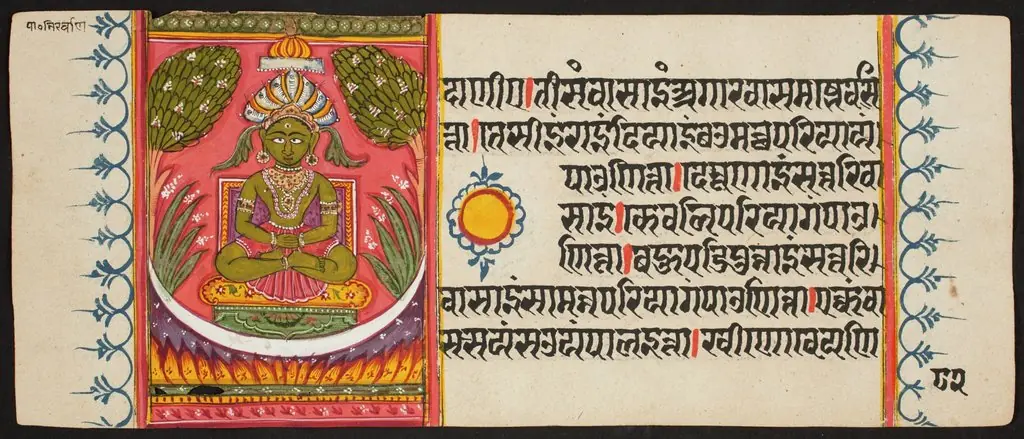
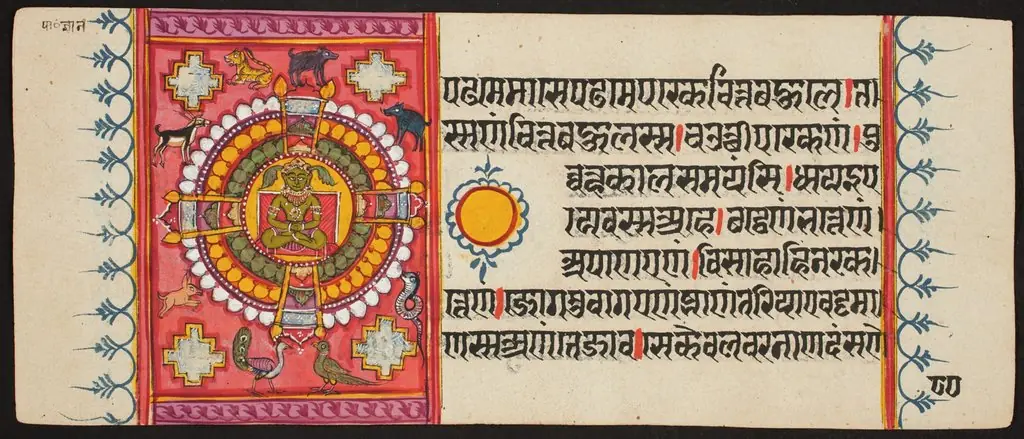
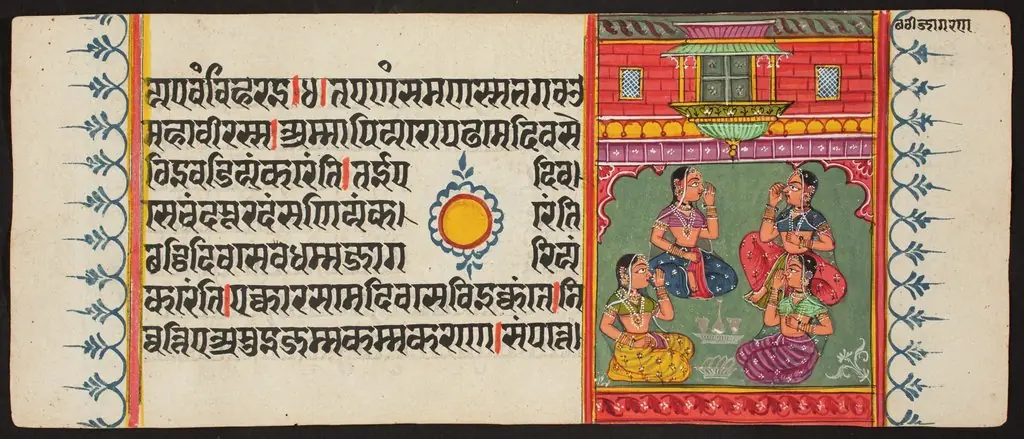
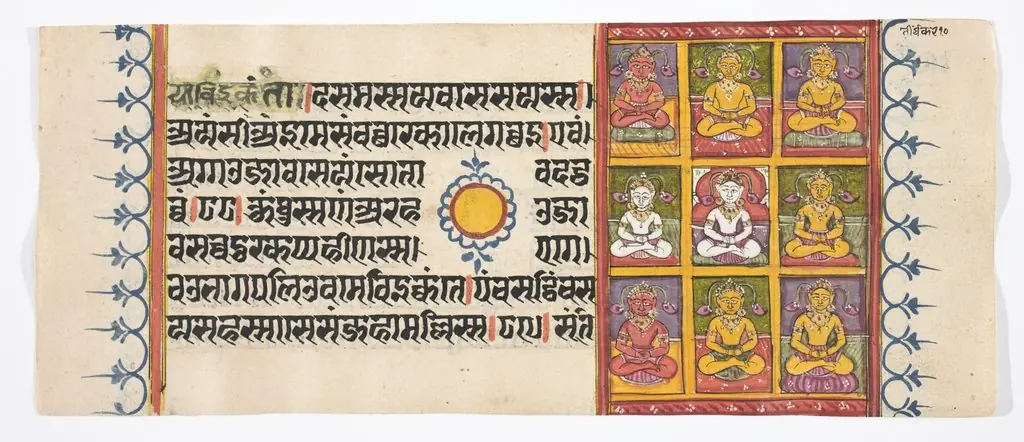
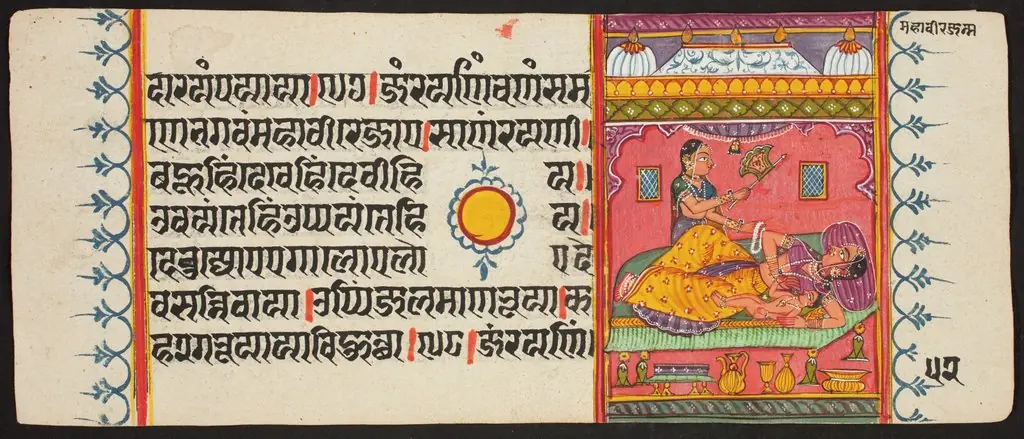
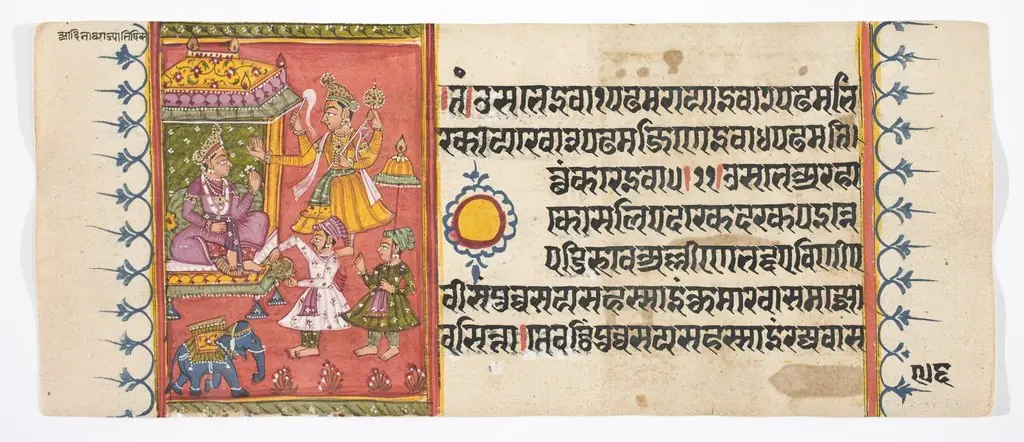
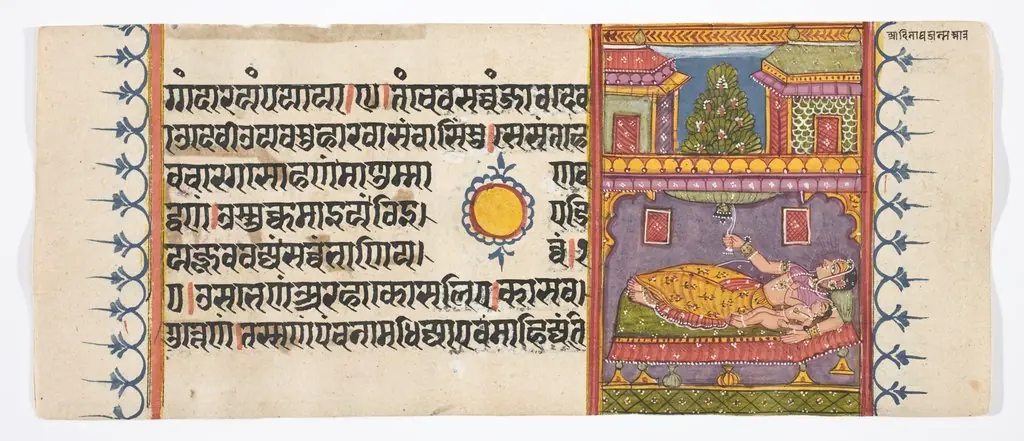
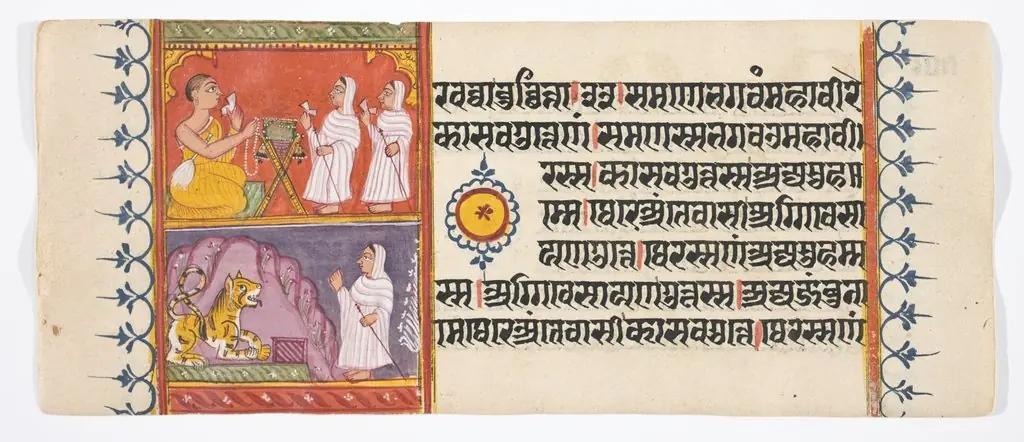
At its core, the Kalpa Sutra painting illustrates key narratives from the Jain religious text of the same name. It depicts various avatars and life stages of the Tirthankaras, particularly focusing on the 24th Tirthankara, Mahavira. The artwork symbolizes the path to enlightenment, emphasizing themes of asceticism, detachment, and the pursuit of moksha.
Technique & Style
The painting showcases the distinctive characteristics of Pala-Sena art, marked by elongated figures, intricate drapery folds, and a blend of naturalism and stylization. The use of gesso or similar medium on a flexible support (possibly cloth or paper) allowed for detailed, high-relief embellishments, enhancing the visual depth of the composition.
History & Provenance
The exact commissioning context of the Kalpa Sutra painting is unknown, though it is speculated to have been created for a Jain monastery or a devout patron. Its discovery and early ownership history are not well-documented, but by the mid-20th century, it had entered the collection of a prominent Indian museum, where it remains a prized exhibit.
Context
This work reflects the flourishing of Jain art and literature during the Pala-Sena dynasty, a period of relative religious tolerance and cultural flourishing in eastern India. The painting's themes and style place it within a broader tradition of illustrating sacred texts for educational and devotional purposes.
Legacy
The Kalpa Sutra painting has influenced later Jain manuscript illustrations, particularly in its composition and the depiction of Tirthankaras. It serves as a valuable resource for understanding medieval Indian religious practices and the evolution of Pala-Sena artistic techniques.
Artist & collection

 Domestic Scene
 Giacomo and Cardinal Marco, investing Andrea, Abbot of San Zeno, with his Benefice
 The Nymph of Fontainebleau
 Portrait of a Woman
 Madonna and Child with Saints in the Enclosed Garden
 Venus and Minerva
 Family Group of Four on Sofa
 Wall painting from Room H of the Villa of P. Fannius Synistor at Boscoreale