Artwork
Kalpa Sutra
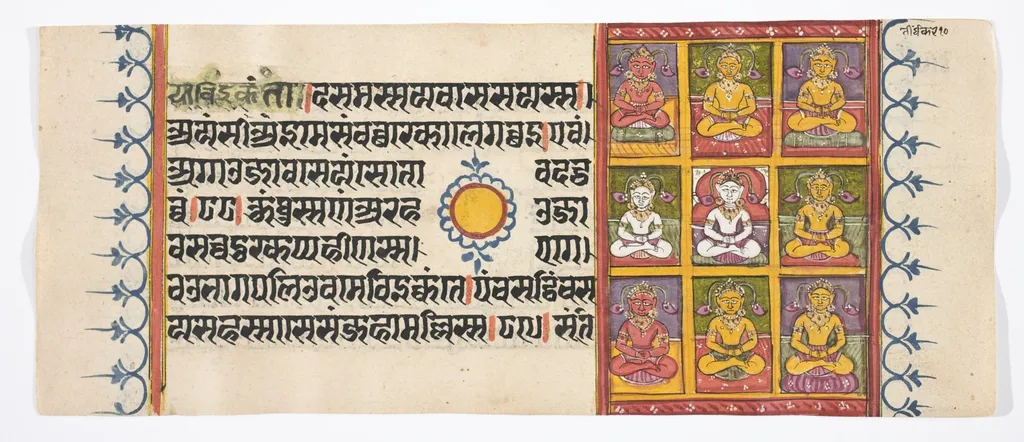
Kalpa Sutra is an unspecified painting by Unknown. It is held in the collection of the Detroit Institute of Arts.
About this work
Overview
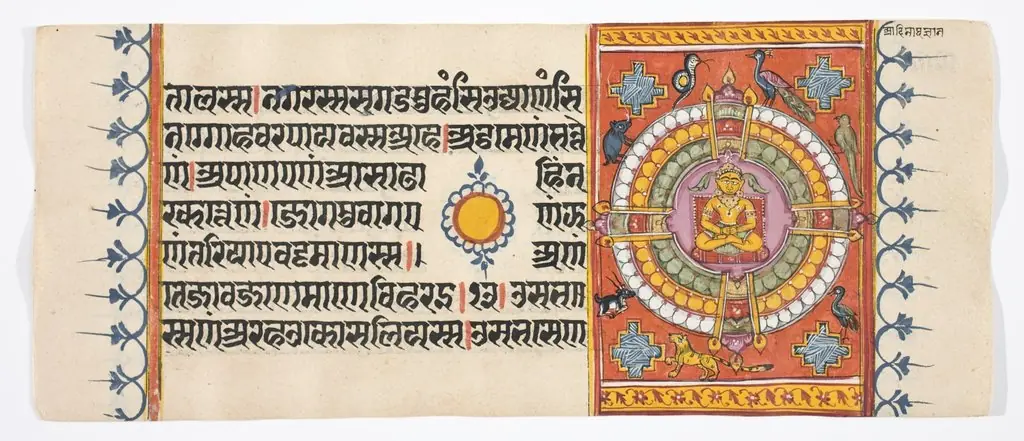
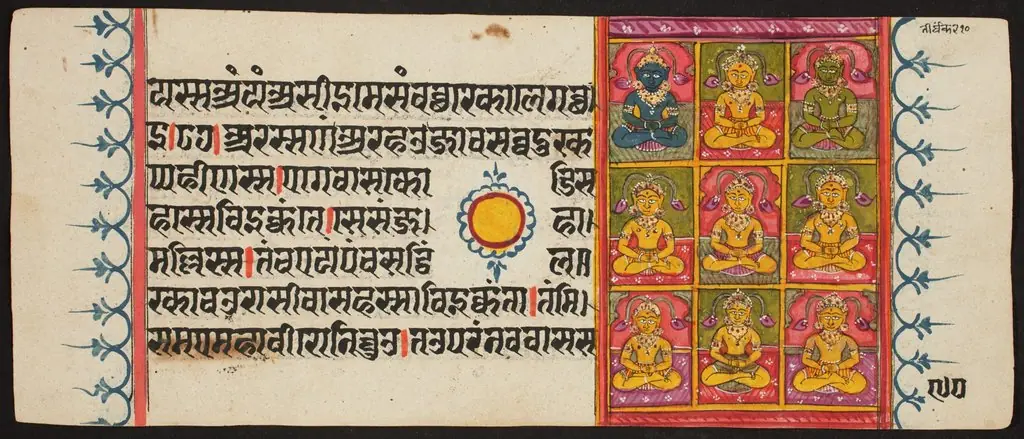
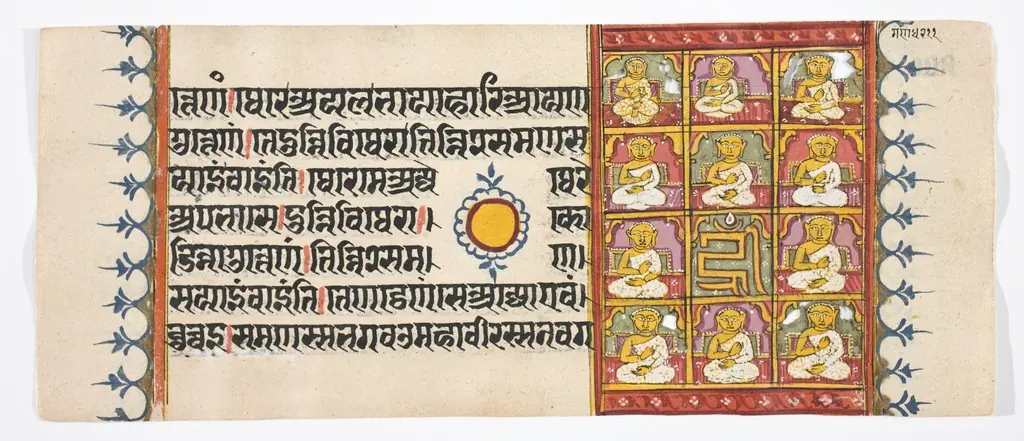
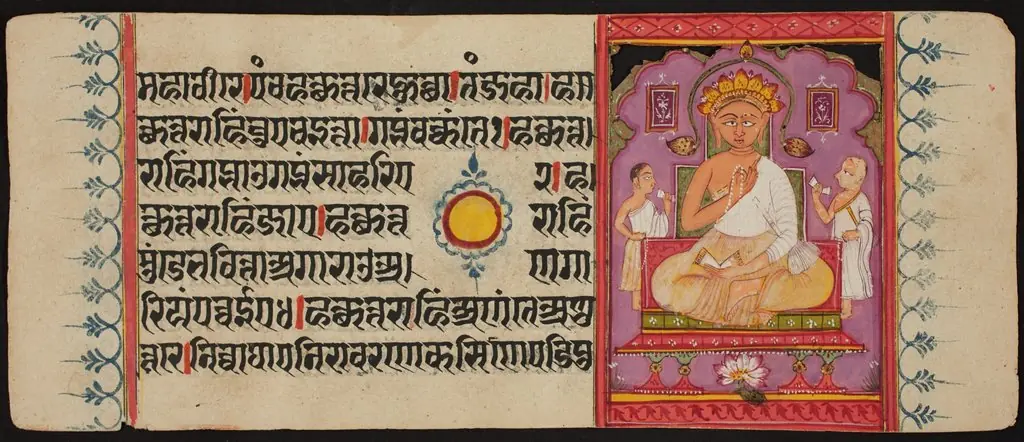
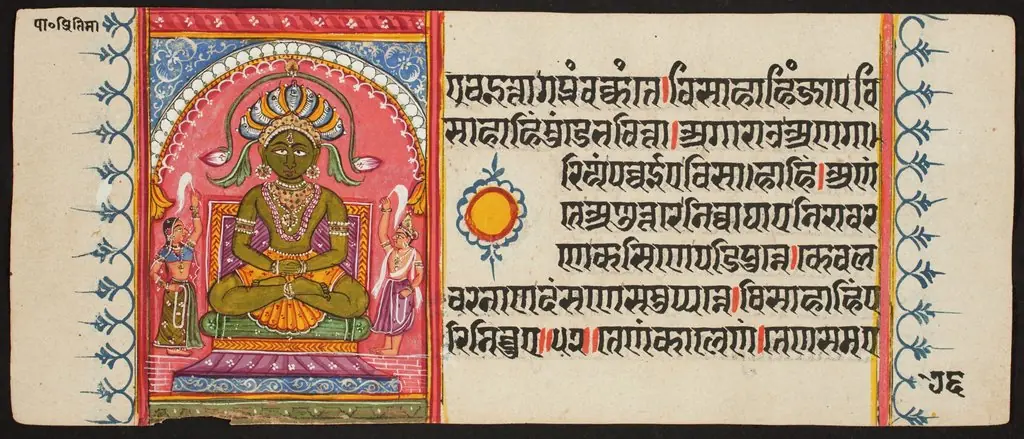
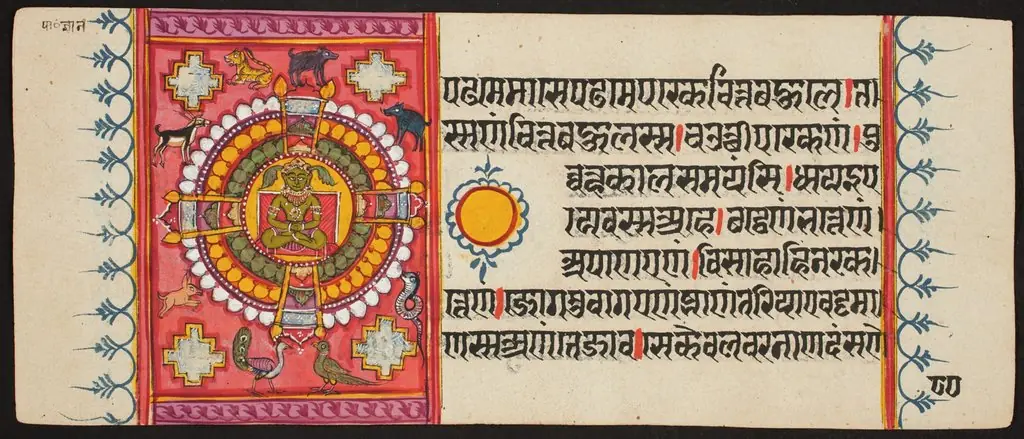
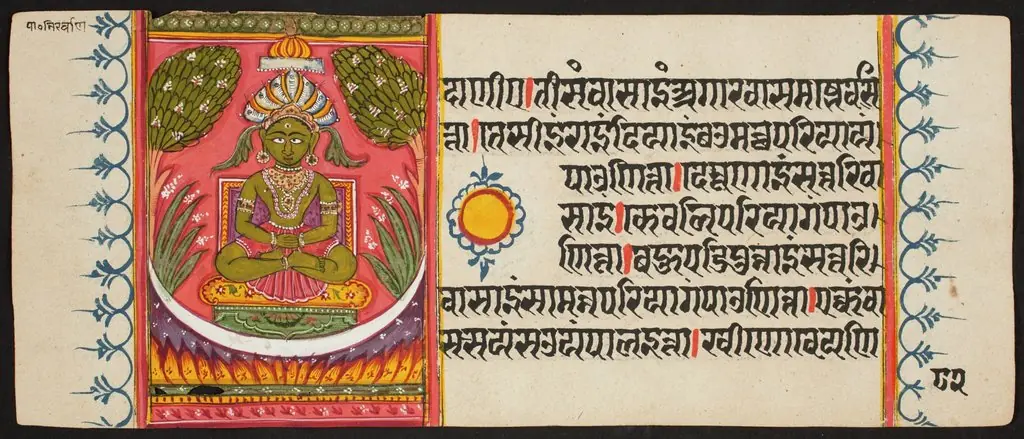
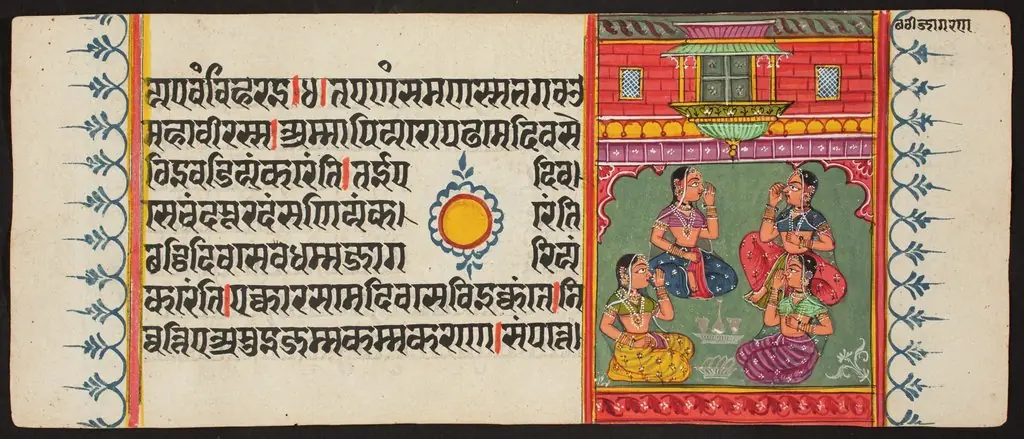
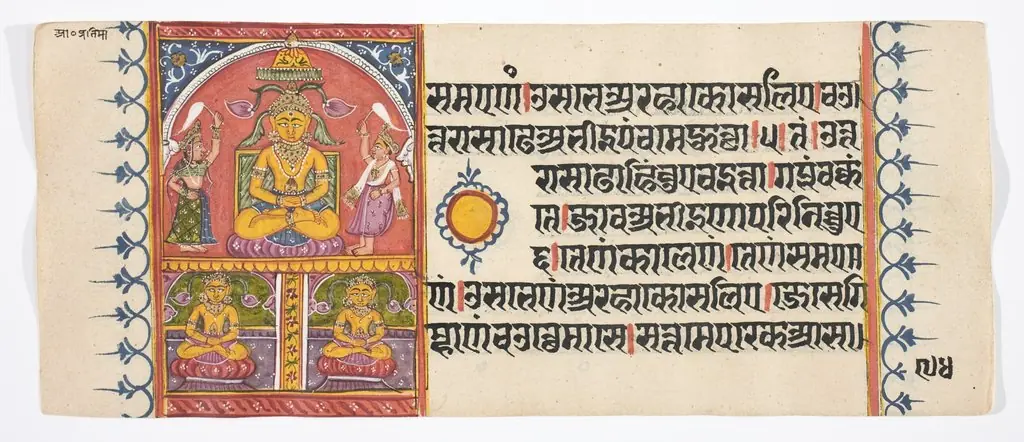
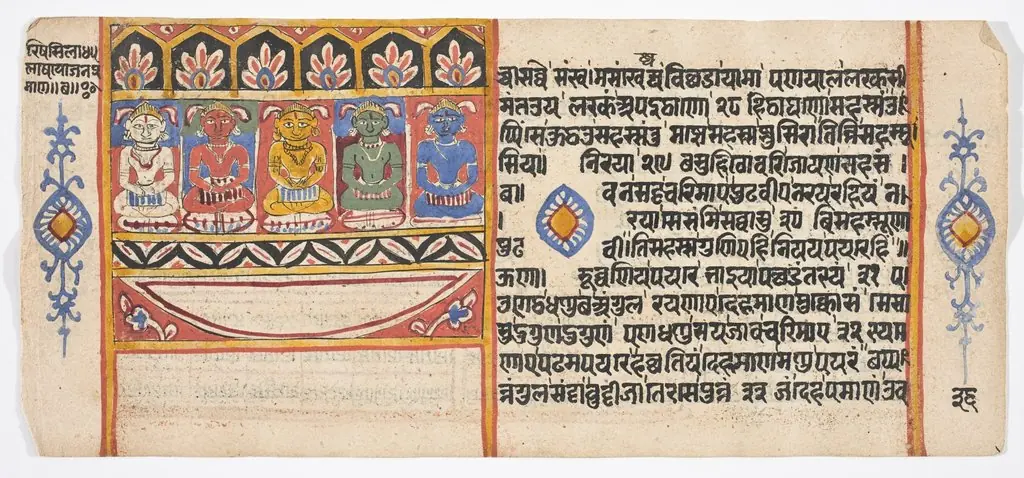
The Kalpa Sutra is a Jain religious text illustrated in a distinctive manuscript painting tradition from western India. These works, produced between the 14th and 16th centuries, combine devotional content with intricate visual narratives. Each folio typically features a central figure surrounded by smaller scenes, reflecting the text’s focus on the lives of Jain spiritual leaders.
Subject & Meaning
The paintings depict key episodes from the lives of the 24 Tirthankaras, especially Mahavira, the 24th and most recent. Scenes include birth, renunciation, enlightenment, and final liberation. The imagery serves as a visual guide for meditation and moral instruction, reinforcing Jain principles of nonviolence, asceticism, and spiritual discipline through symbolic composition and restrained color.
Technique & Style
Artists used mineral pigments on handmade paper, applying fine brushes to achieve precise lines and flat, unmodulated color fields.
Artists used mineral pigments on handmade paper, applying fine brushes to achieve precise lines and flat, unmodulated color fields. Figures are stylized with elongated limbs and almond-shaped eyes, set against minimal backgrounds. The composition emphasizes clarity over depth, with multiple narrative moments arranged in registers, allowing viewers to follow the spiritual journey sequentially across the page.
History & Provenance
These manuscripts were commissioned by wealthy Jain merchants and monks for use in ritual recitation and temple display. Many were produced in centers like Patan and Ahmedabad. Surviving examples are held in museum collections and private archives, often bound in lacquered wooden covers. Their survival reflects the enduring importance of textual and visual devotion in Jain communities over centuries.
Context
The Kalpa Sutra paintings emerged during a period of flourishing Jain patronage in Gujarat and Rajasthan, alongside advances in manuscript production across South Asia. While influenced by broader Indian artistic conventions, the style remained distinct in its austerity and narrative focus, diverging from the more ornate courtly traditions of the time. This reflects Jainism’s emphasis on simplicity and inner contemplation.
Legacy
The Kalpa Sutra tradition preserved a unique visual language that influenced later Jain and regional painting styles. Though production declined after the 16th century, surviving folios continue to inform scholarly study of Jain iconography and medieval Indian book culture. Their enduring presence in collections underscores their role as both religious artifacts and historical documents.
Artist & collection

 Domestic Scene
 Giacomo and Cardinal Marco, investing Andrea, Abbot of San Zeno, with his Benefice
 The Nymph of Fontainebleau
 Portrait of a Woman
 Madonna and Child with Saints in the Enclosed Garden
 Venus and Minerva
 Family Group of Four on Sofa
 Wall painting from Room H of the Villa of P. Fannius Synistor at Boscoreale