Artwork
The Fifth Karmapa, Dezhin Shegpa (1384-1415)
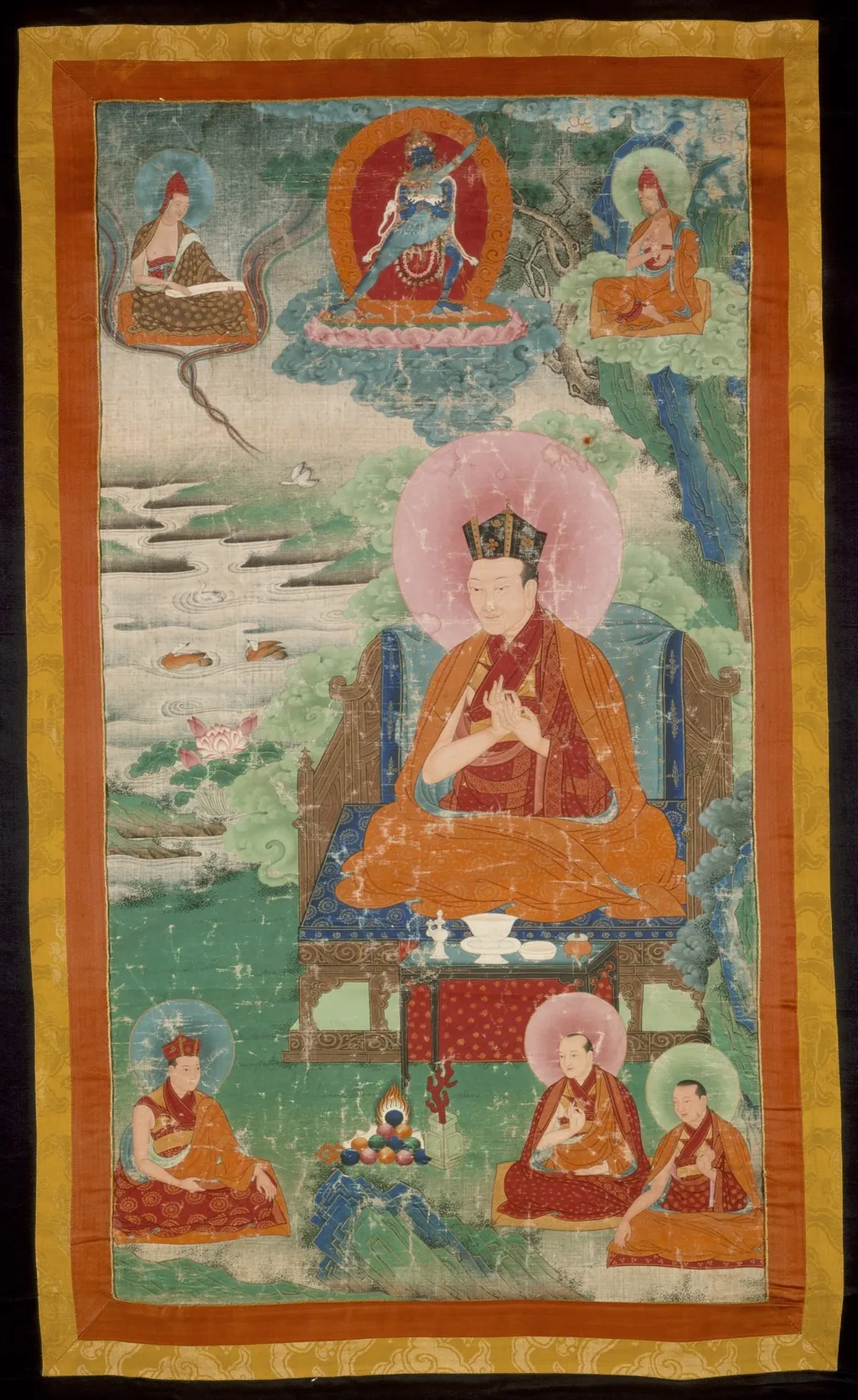
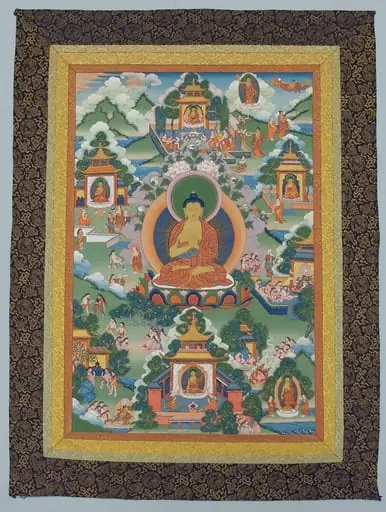
The Fifth Karmapa, Dezhin Shegpa (1384-1415) is an unspecified painting by Unknown. It is held in the collection of the Los Angeles County Museum of Art. This Tibetan Buddhist painting depicts the Fifth Karmapa, Dezhin Shegpa, seated in meditation with a soft pink halo encircling his head.
About this work
Overview
This Tibetan Buddhist painting depicts the Fifth Karmapa, Dezhin Shegpa, seated in meditation with a soft pink halo encircling his head.
This Tibetan Buddhist painting depicts the Fifth Karmapa, Dezhin Shegpa, seated in meditation with a soft pink halo encircling his head. He is dressed in monastic robes of red and orange, seated cross-legged on a blue chair. Four smaller figures, each with their own halos, flank him, likely representing disciples or enlightened beings. The backdrop features a serene landscape of rolling green hills, water, and distant boats, reinforcing a harmony between spiritual presence and the natural world.
Subject & Meaning
Dezhin Shegpa, the Fifth Karmapa, was a leading figure in the Kagyu lineage of Tibetan Buddhism. His central placement and halo signify his spiritual authority. The surrounding figures may symbolize his lineage or attained disciples. The natural setting—hills, water, and boats—reflects Buddhist ideals of impermanence and interconnectedness, suggesting his enlightenment is not separate from the world but deeply attuned to it.
Technique & Style
The painting employs fine brushwork and mineral pigments typical of Tibetan thangka traditions. Halos are rendered in delicate gold and pink, contrasting with the muted earth tones of the landscape. Figures are stylized with elongated proportions and serene expressions, adhering to iconographic conventions. The composition balances symmetry with naturalistic elements, guiding the viewer’s focus to the central figure while integrating the environment as sacred space.
History & Provenance
Created in the early 15th century, likely in central Tibet, this work was produced during Dezhin Shegpa’s lifetime or shortly after his death. It may have been commissioned by a patron or monastery to honor his visit to the Ming court in 1407. Such portraits served both devotional and political purposes, affirming the Karmapa’s spiritual stature and diplomatic ties with imperial China.
Context
During the Ming dynasty, Tibetan Buddhist leaders were invited to the Chinese court to strengthen religious and political alliances. Dezhin Shegpa’s journey to Nanjing was a significant event, symbolizing mutual recognition between Tibetan Buddhism and imperial authority. This painting reflects that era’s cross-cultural exchanges, blending Tibetan iconography with subtle Chinese landscape aesthetics.
Legacy
Portraits of the Karmapas became important objects of veneration within the Kagyu tradition. This painting exemplifies how spiritual authority was visually codified through composition, color, and setting. Its preservation underscores the enduring role of portraiture in transmitting lineage identity and meditative ideals across generations in Tibetan Buddhist communities.
Artist & collection

 Domestic Scene
 Giacomo and Cardinal Marco, investing Andrea, Abbot of San Zeno, with his Benefice
 The Nymph of Fontainebleau
 Portrait of a Woman
 Madonna and Child with Saints in the Enclosed Garden
 Venus and Minerva
 Family Group of Four on Sofa
 Wall painting from Room H of the Villa of P. Fannius Synistor at Boscoreale
 Padma Dorje (1128-88) as a Mahasiddha (Great Adept) and Lamas
 Sonam Tsemo (1142-1182) and His Lineage
 Previous Birth Stories of the Buddha
 Buddha Shakyamuni and Narrative Scenes
 Painted Banner (Thangka) of Milarepa on Mount Kailasha
 Sakyasri and the Lostsawa of Trophu
 Untitled
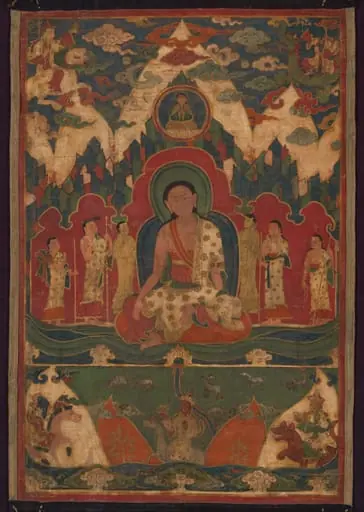 Milarepa on Mount Kailash
 Mandara (pantheon)
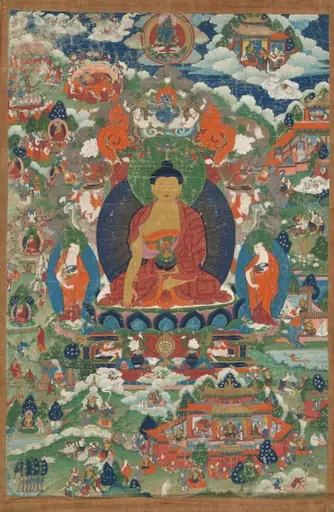 Shakyamuni Buddha with scenes from his life story
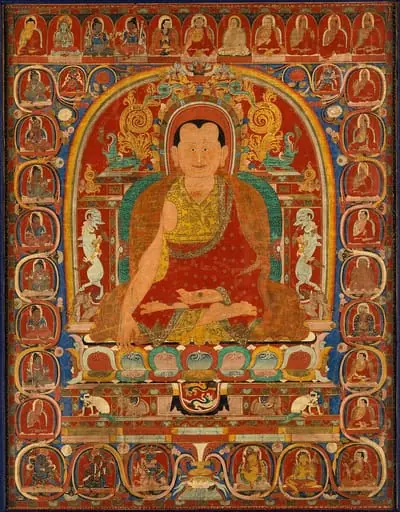 Untitled
 Untitled