Artwork
Mater Dolorosa
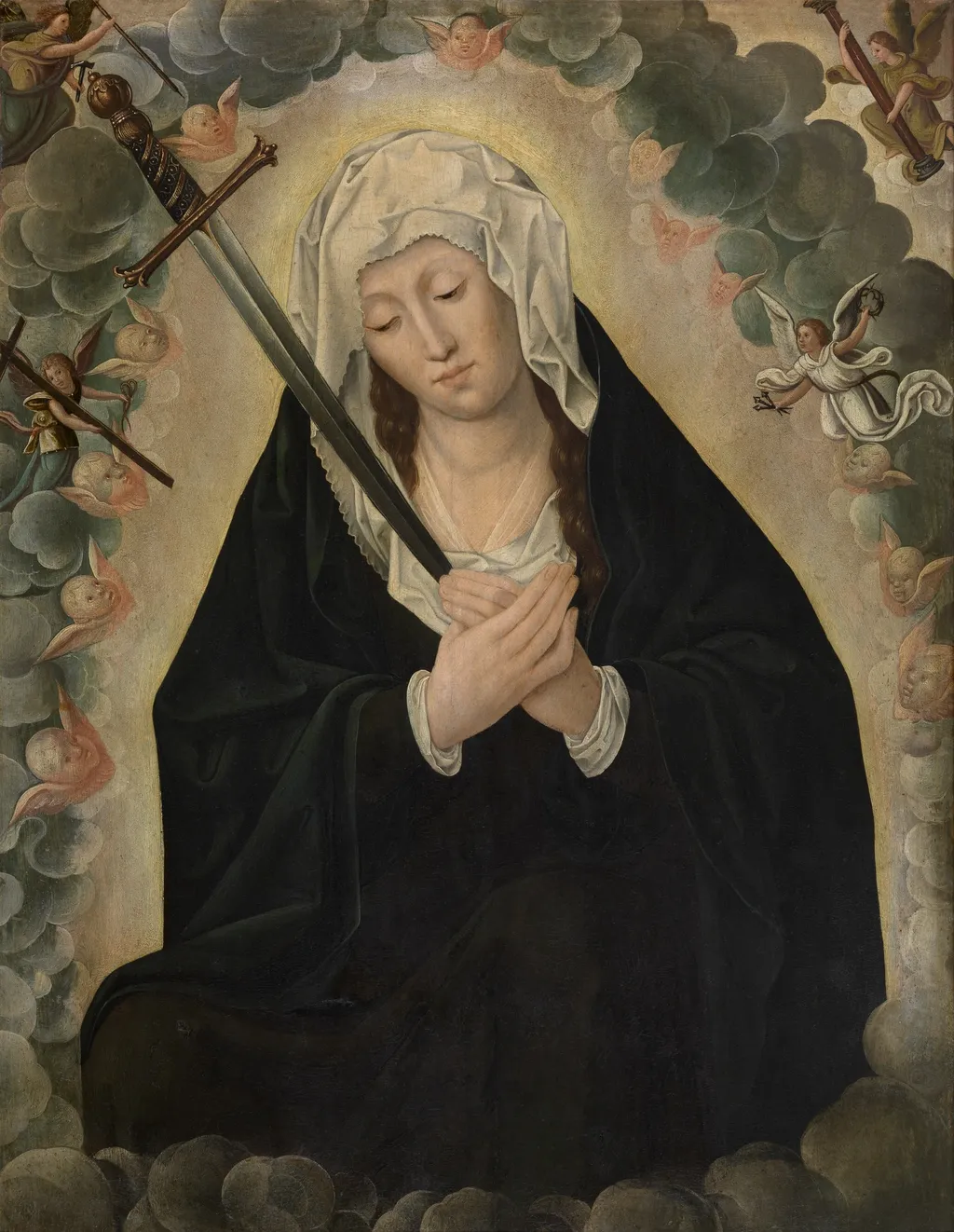
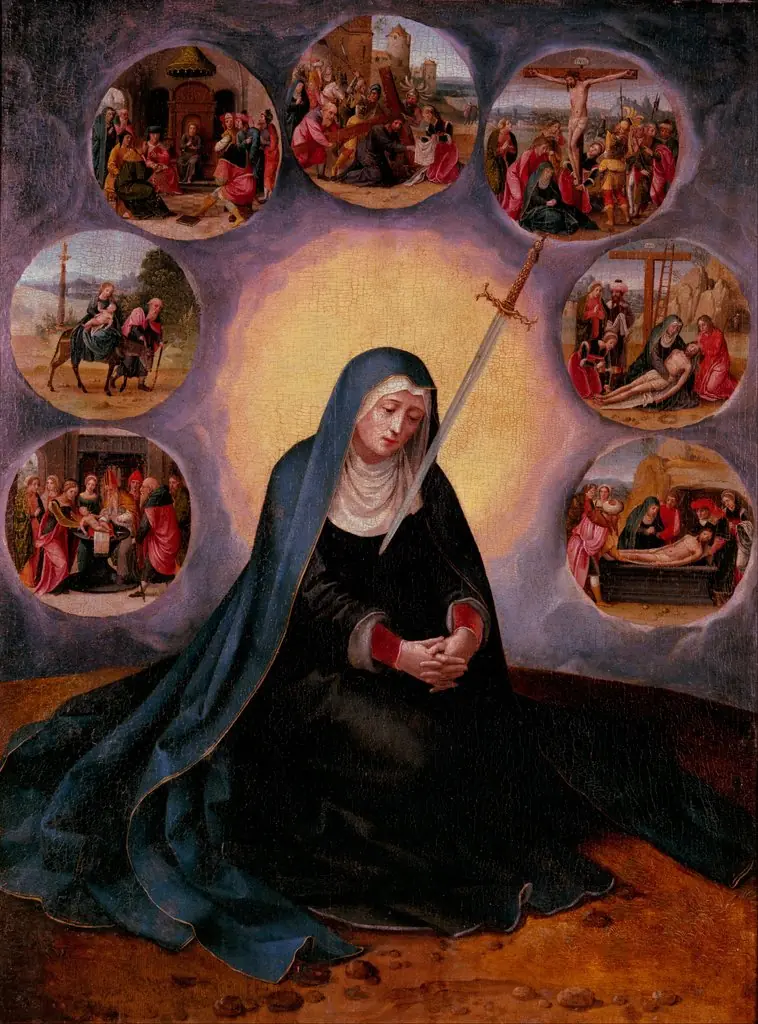
Mater Dolorosa is an oil painting by the Early Baroque Italian artist Unknown. It dates from 1525 and is held in the collection of the Royal Museum of Fine Arts Antwerp.
About this work
Overview
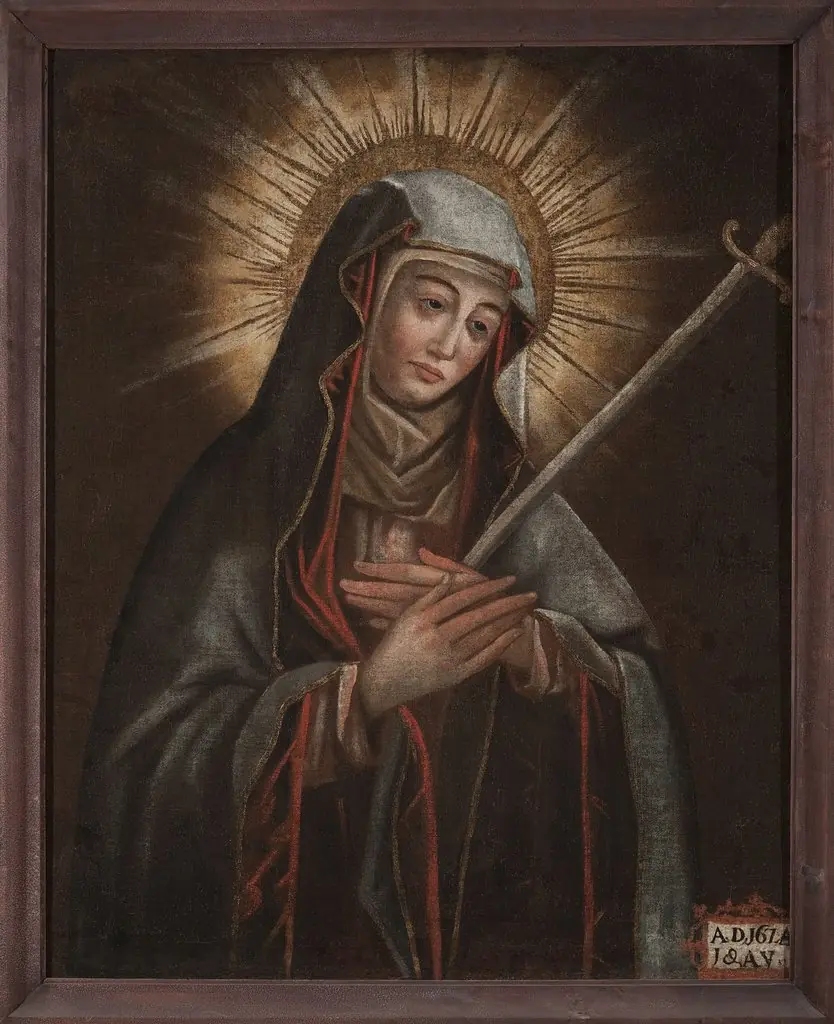
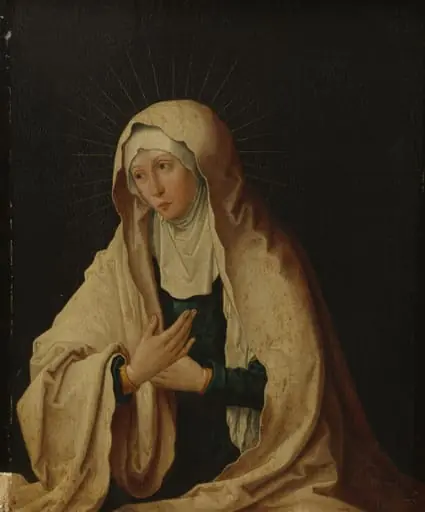
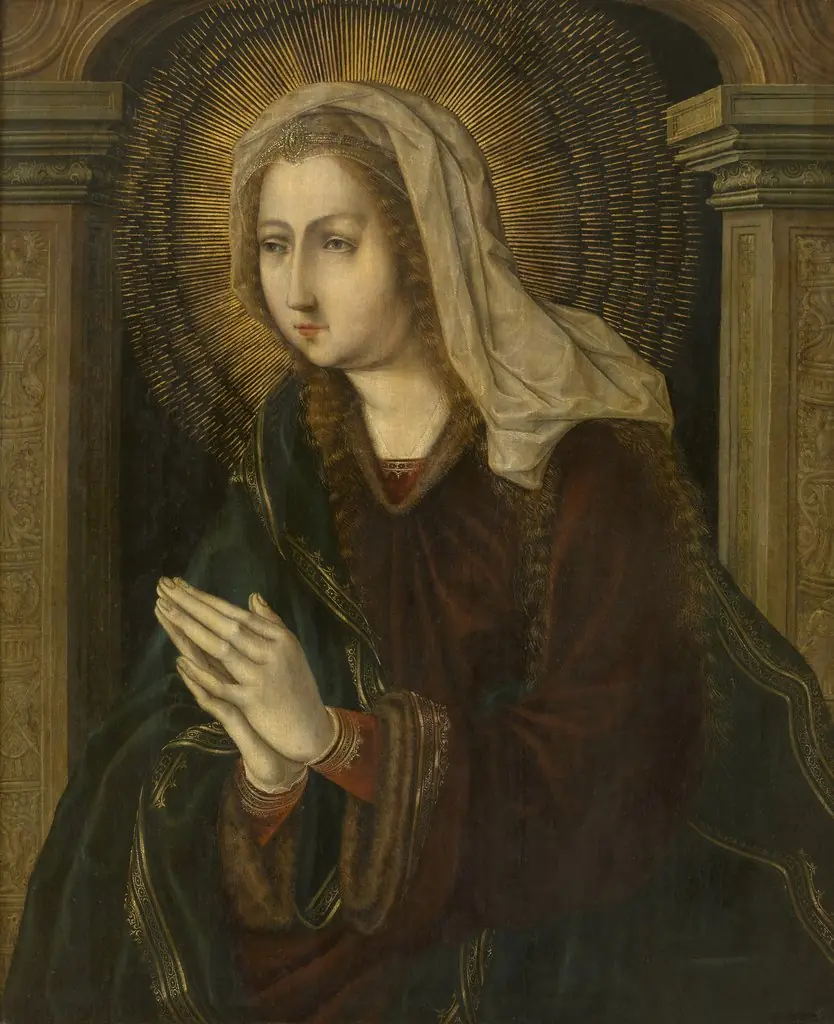
This oil painting portrays a solemn female figure, identified as the Mater Dolorosa, enveloped in a dark robe and white veil.
This oil painting portrays a solemn female figure, identified as the Mater Dolorosa, enveloped in a dark robe and white veil. She stands amid a group of angels and cherubs, set against a soft, cloud-filled background with a subtle halo. The composition emphasizes stillness and introspection, with the figure’s downcast gaze and the gentle arrangement of surrounding figures fostering a meditative atmosphere.
Subject & Meaning
The figure represents the Virgin Mary in her role as the Sorrows of Mary, mourning Christ’s Passion. The slender sword she holds symbolizes the prophecy of Simeon—that a sword would pierce her soul. The surrounding angels and cherubs, some with musical instruments or symbolic objects, reflect heavenly sorrow and devotion, reinforcing her spiritual role as intercessor and witness to divine suffering.
Technique & Style
The artist employs soft transitions between light and shadow to model the figure’s form, enhancing the quiet dignity of her expression. The robe’s folds are rendered with careful precision, contrasting with the delicate, almost ethereal rendering of the angels. The palette is restrained, dominated by deep tones with subtle highlights, contributing to the painting’s contemplative tone without theatricality.
History & Provenance
The painting’s origins are tied to devotional traditions in late medieval or early Renaissance Europe, likely commissioned for private prayer or chapel use. Its iconography aligns with popular Marian imagery of the period, though its specific provenance remains undocumented. No known records link it to a particular artist or patron, suggesting it may have been produced in a regional workshop.
Context
In the religious culture of its time, images of the Mater Dolorosa served as focal points for personal meditation on Christ’s sacrifice and Mary’s compassion. Such depictions were common in both Catholic and some Protestant devotional settings, particularly among lay communities seeking emotional and spiritual connection through visual piety.
Legacy
While not widely attributed to a major master, the painting reflects enduring visual conventions of Marian devotion. Its quiet intensity and symbolic clarity influenced later representations of the sorrowful Virgin in regional ecclesiastical art, preserving a mode of spiritual expression that prioritized introspection over spectacle.
Artist & collection

 Domestic Scene
 Giacomo and Cardinal Marco, investing Andrea, Abbot of San Zeno, with his Benefice
 The Nymph of Fontainebleau
 Portrait of a Woman
 Madonna and Child with Saints in the Enclosed Garden
 Venus and Minerva
 Family Group of Four on Sofa
 Wall painting from Room H of the Villa of P. Fannius Synistor at Boscoreale