Artwork
The Crucifixion with Sts Bernardino of Siena and Lawrence
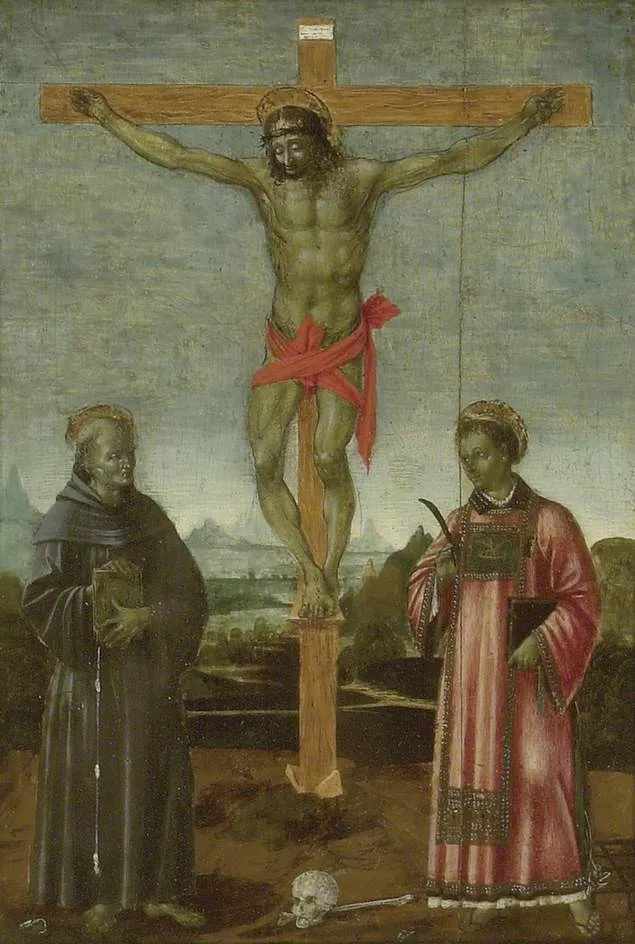
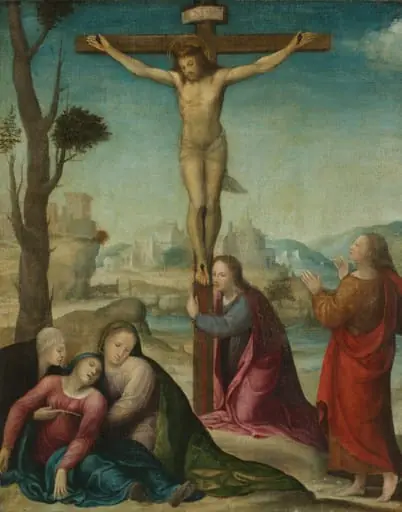
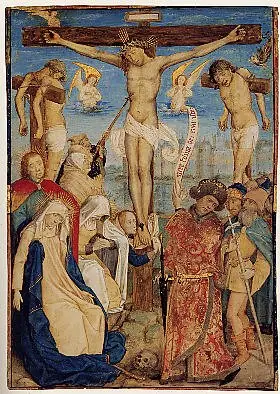
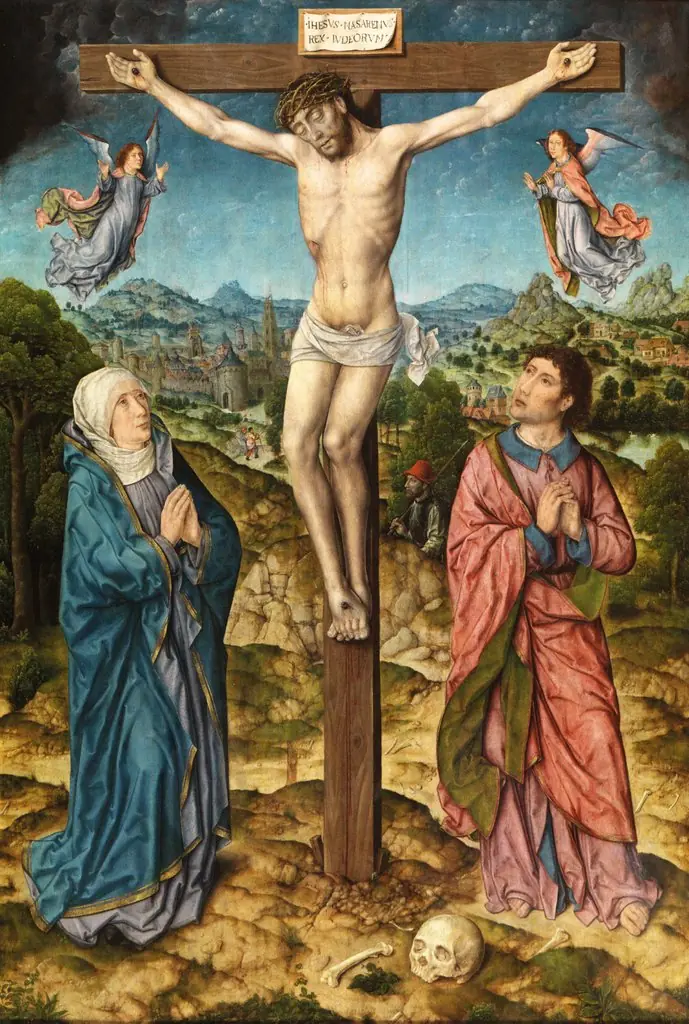
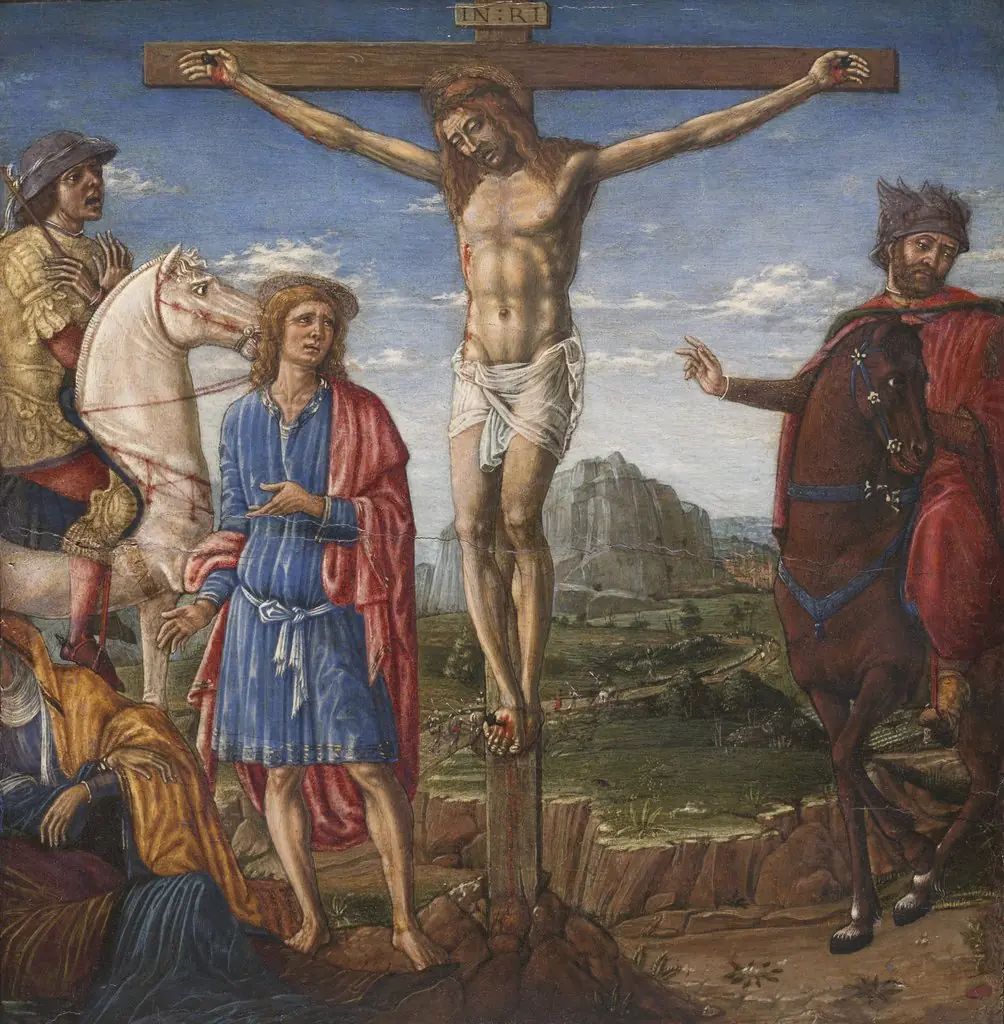
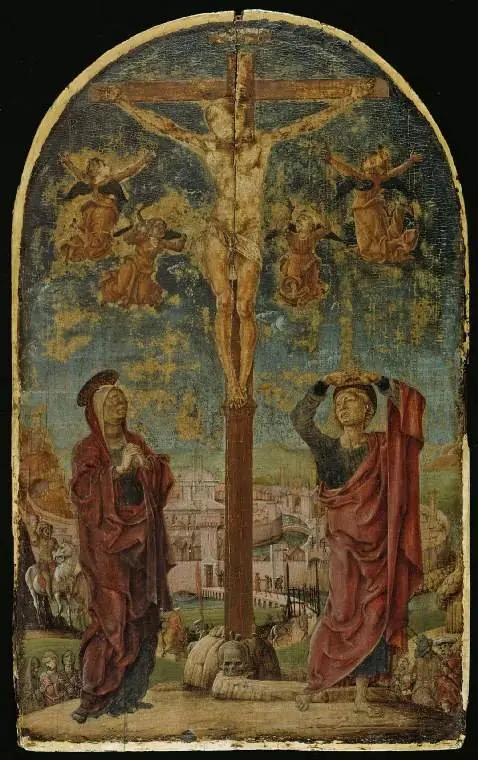
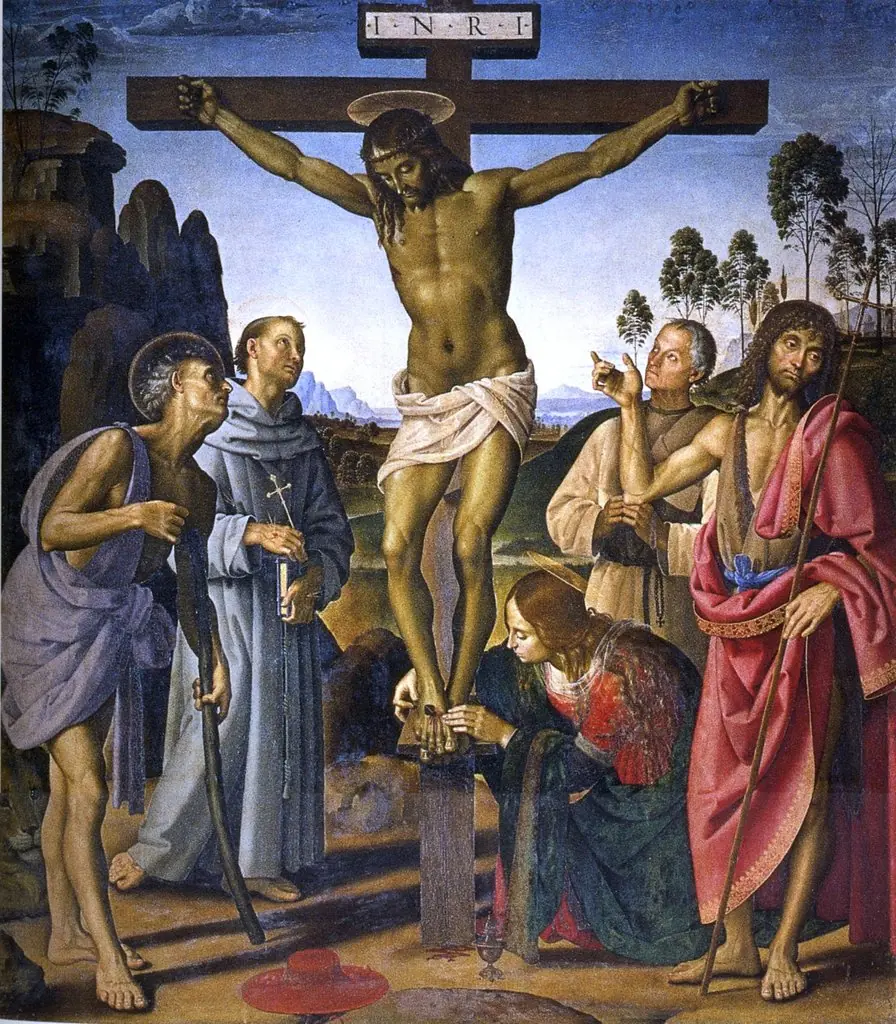
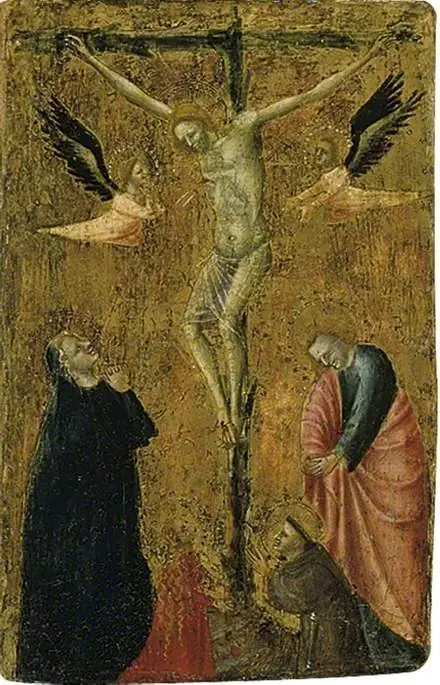
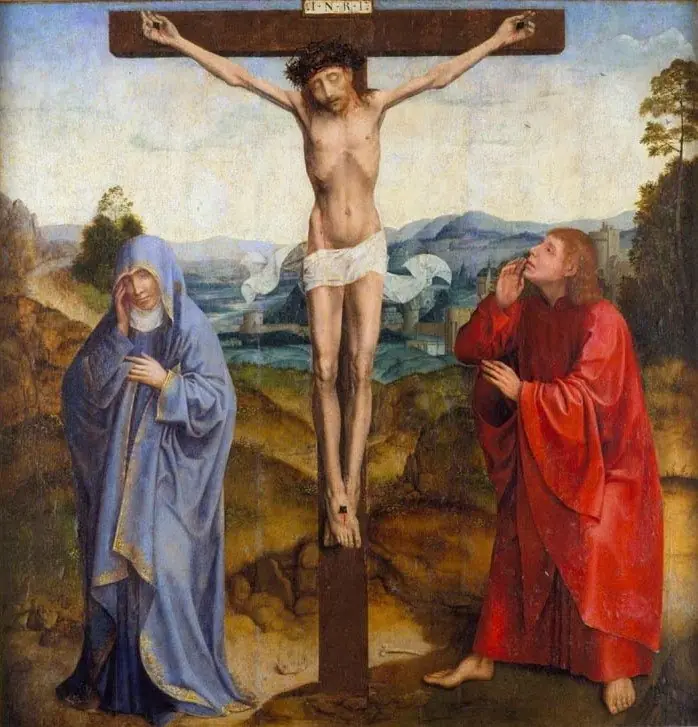
The Crucifixion with Sts Bernardino of Siena and Lawrence is an unspecified painting by the Early Renaissance artist Unknown. It dates from 1490 and is held in the collection of the Ashmolean Museum. This painting depicts the Crucifixion with two saintly figures in attendance.
About this work
Overview
This painting depicts the Crucifixion with two saintly figures in attendance. At its center is a haloed, crucified Christ wearing a crown of thorns and a red loincloth, positioned with outstretched arms and crossed legs on a cross. The composition includes a somber landscape background with trees, water, and a cloudy gray sky, and a foreground detail of a skull and bones.
Subject & Meaning
The central subject is Christ’s Crucifixion, a pivotal event in Christian theology. The two accompanying figures are identified as St. Bernardino of Siena (in black) and St. Lawrence (in red), suggesting the painting may have been commissioned for a context where these saints held specific reverence, potentially highlighting themes of devotion, martyrdom, or spiritual guidance.
Technique & Style
While specific artistic techniques used are not detailed here, the inclusion of symbolic details (halo, crown of thorns, skull and bones) and the choice of attire for the saints indicate a traditional, symbolically rich approach to religious painting, common in European art of the period. The landscape background may suggest an emerging interest in natural settings.
History & Provenance
The painting is currently part of the collection at the Ashmolean Museum, though the date of creation, artist, and original commission context are not specified in the provided details.
Context
Given the absence of specific dating, the painting can be broadly contextualized within the tradition of European religious art, possibly from the Renaissance or later, given the naturalistic background elements. The specific saints depicted might link it to Italian or Catholic devotional practices.
Legacy
Without information on the artist or the painting’s historical impact, its legacy is primarily as part of the Ashmolean’s holdings, contributing to the museum’s collection of religious art and potentially to scholarly studies of saintly iconography in Christian art.
Artist & collection

 Domestic Scene
 Giacomo and Cardinal Marco, investing Andrea, Abbot of San Zeno, with his Benefice
 The Nymph of Fontainebleau
 Portrait of a Woman
 Madonna and Child with Saints in the Enclosed Garden
 Venus and Minerva
 Family Group of Four on Sofa
 Wall painting from Room H of the Villa of P. Fannius Synistor at Boscoreale