Artwork
The Crucifixion
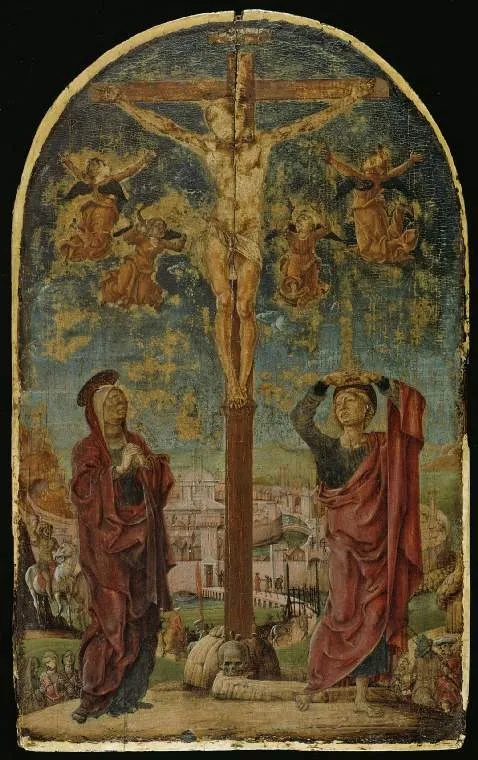
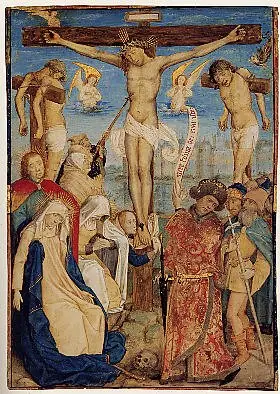
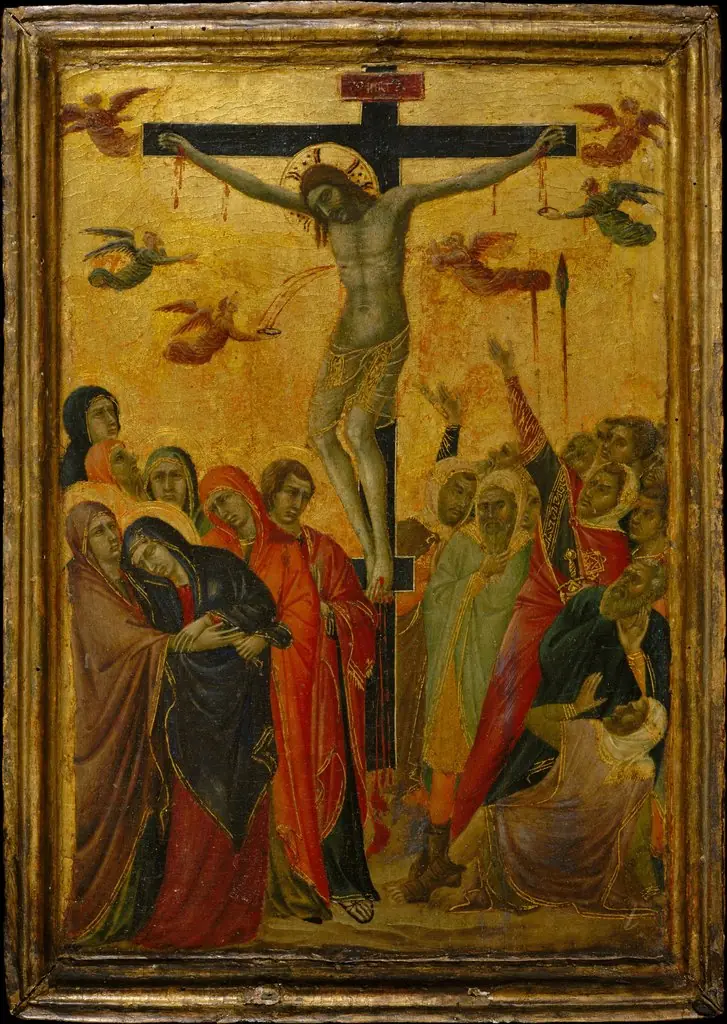
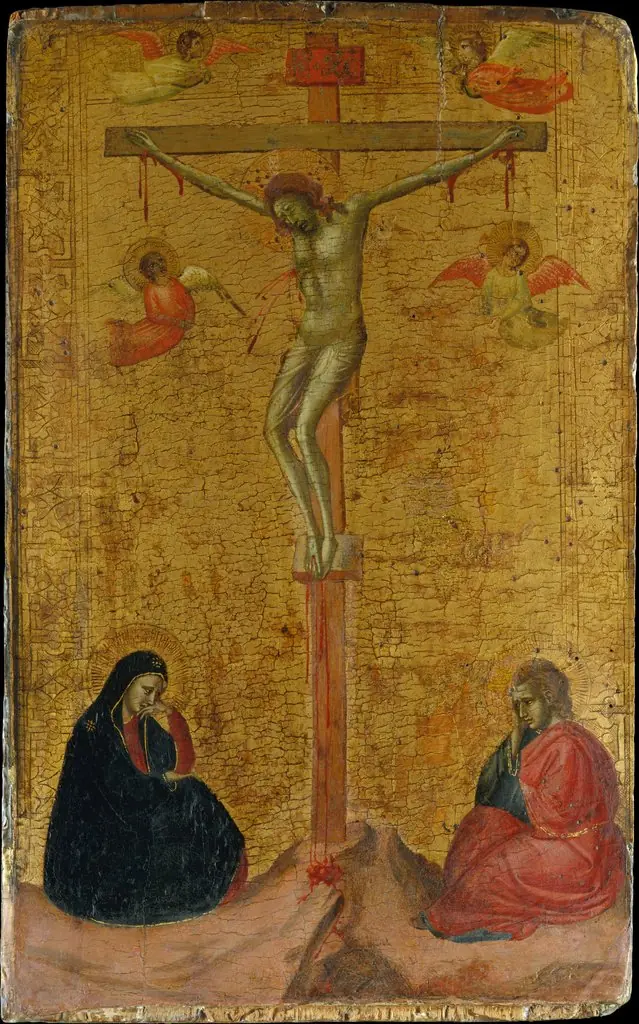
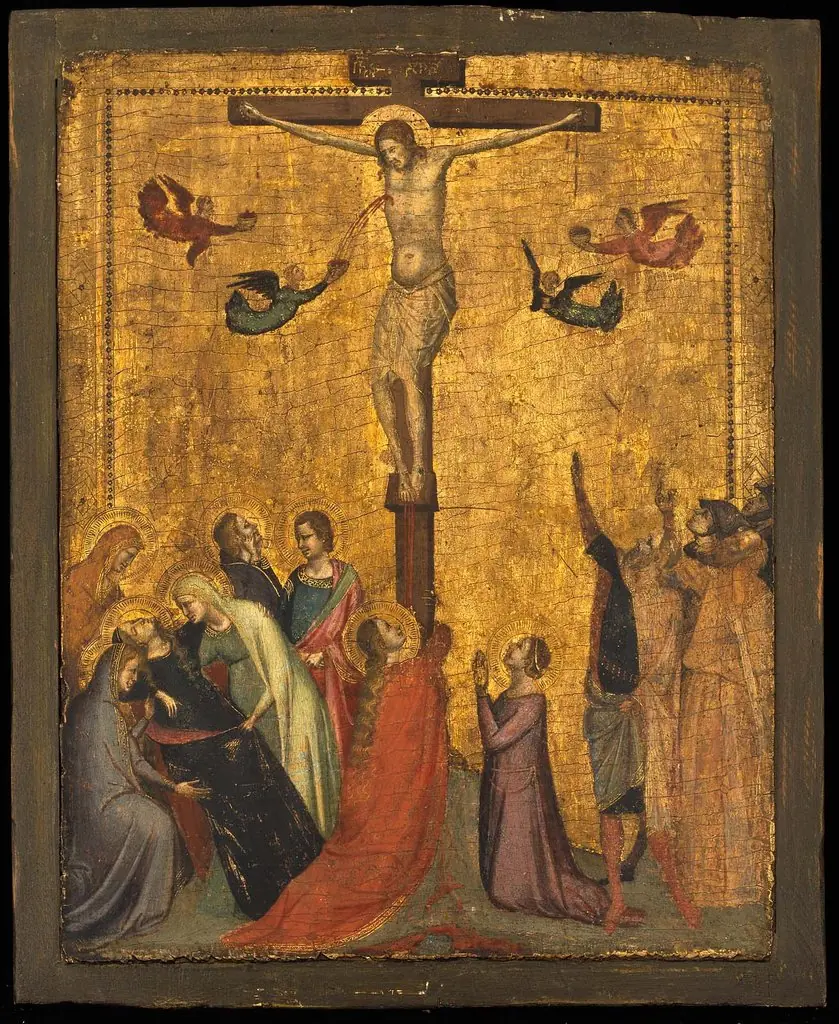
The Crucifixion is an unspecified painting by the Early Renaissance artist Cosimo Tura. It dates from 1450 and is held in the collection of the Fitzwilliam Museum.
About this work
Overview
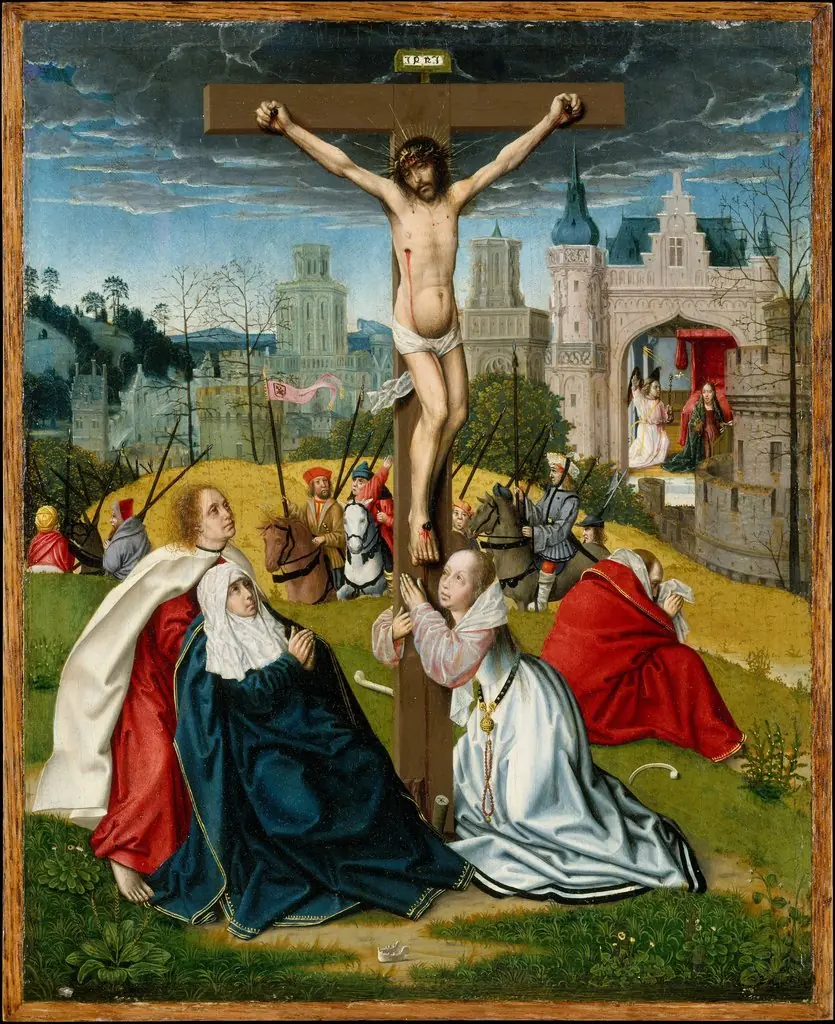
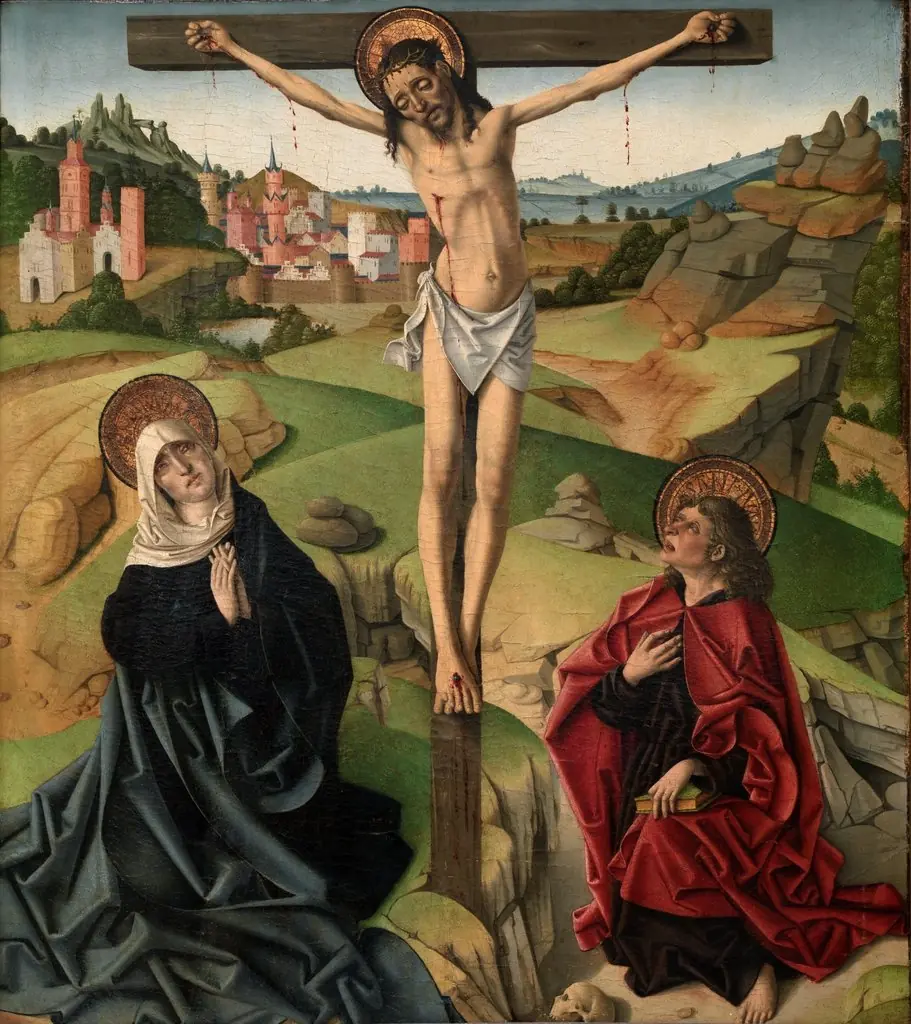
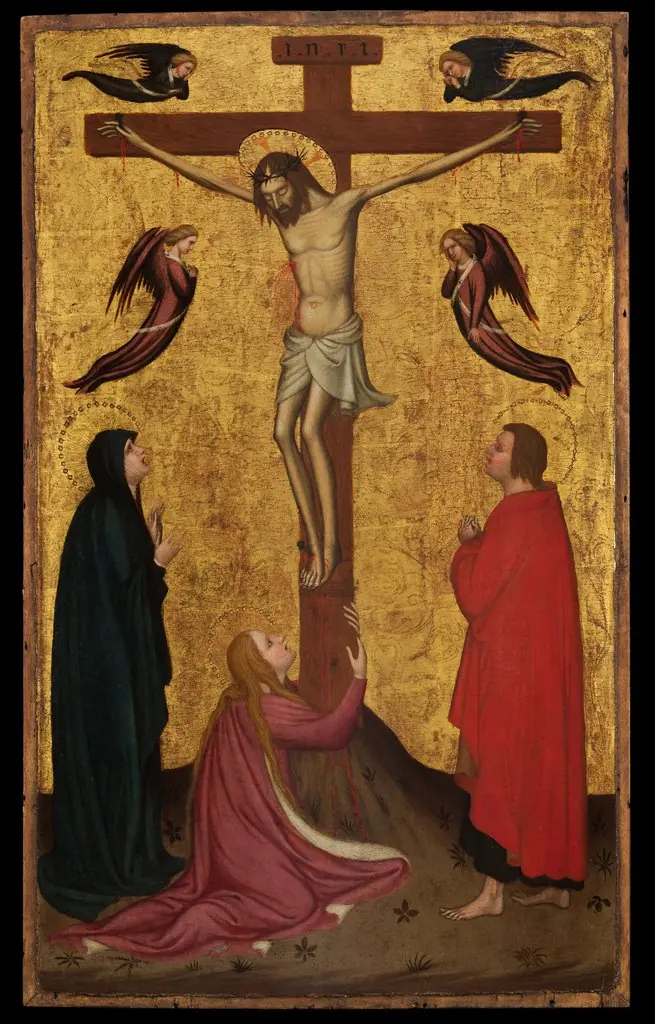
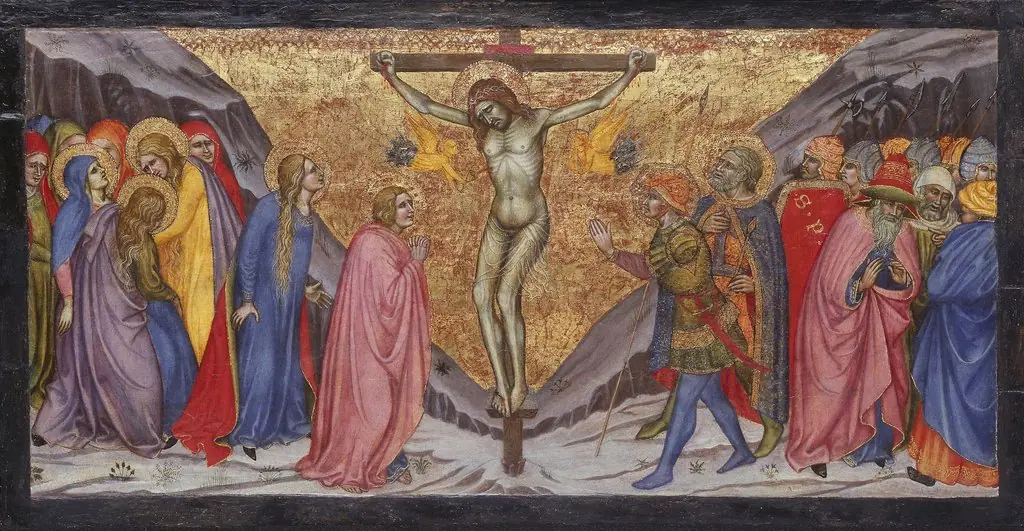
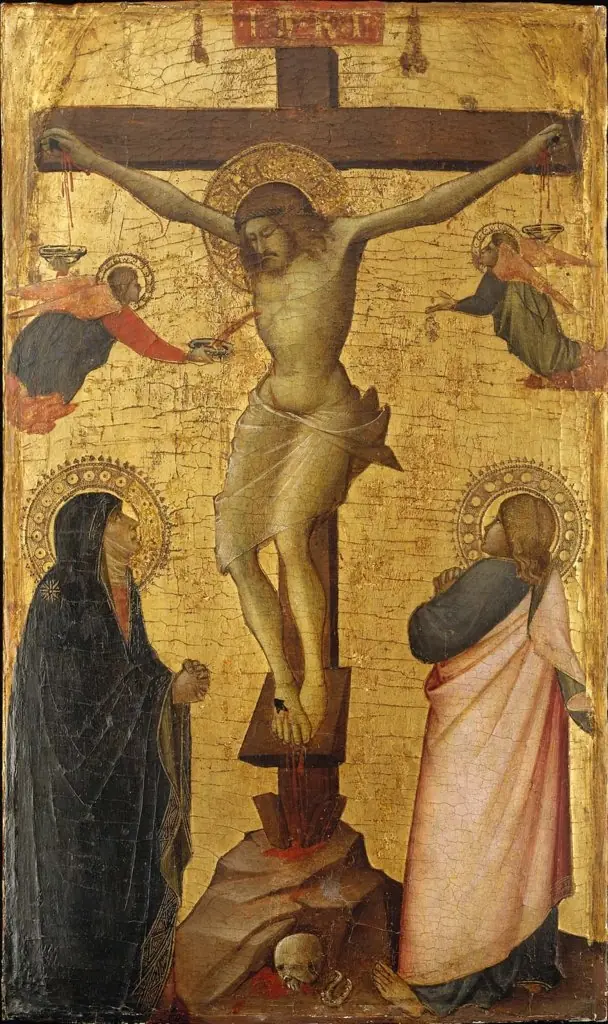
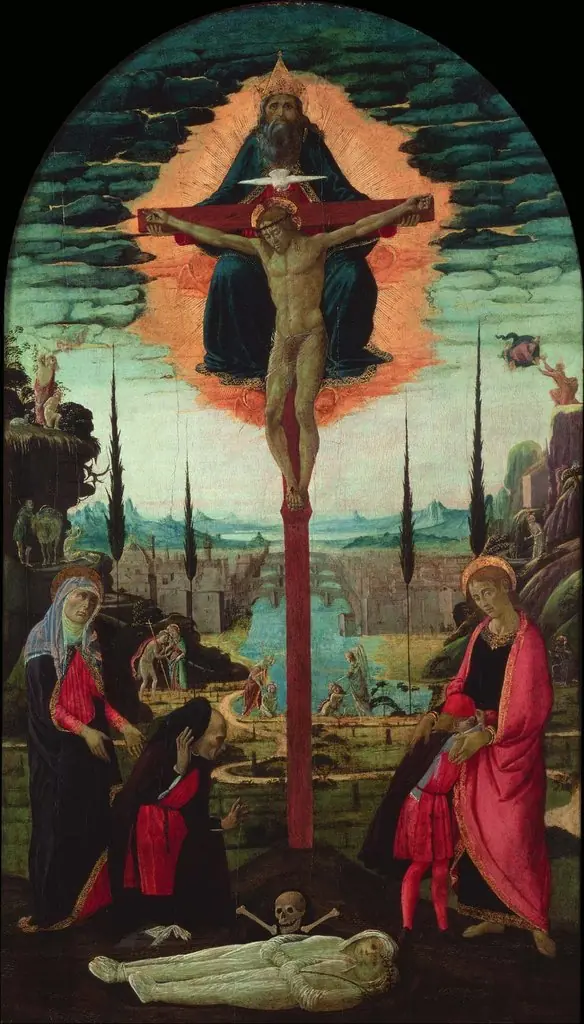
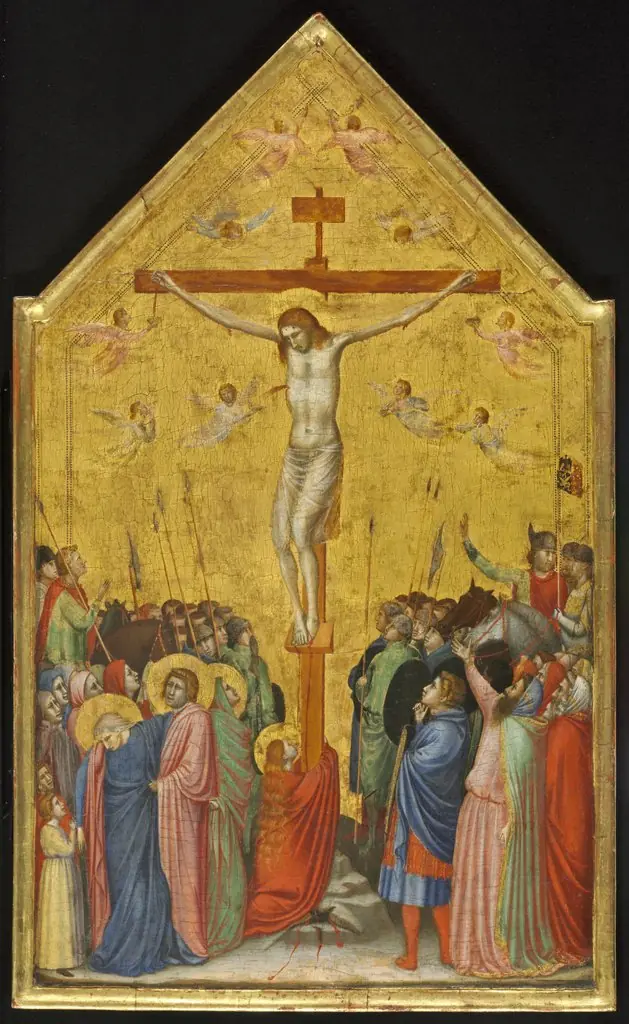
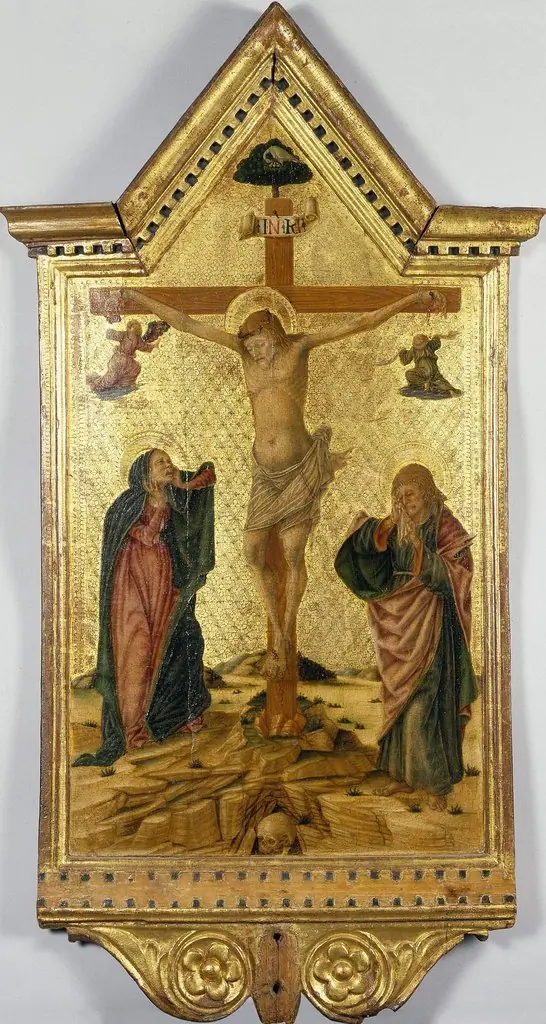
Created circa 1450 by Cosimo Tura, a leading artist of Ferrara’s early Renaissance, this panel portrays the crucifixion of Christ. The work belongs to the Fitzwilliam Museum’s collection and exemplifies the period’s turn toward naturalistic depiction of biblical subjects.
Subject & Meaning
The central figure of Jesus hangs on a tall, brown cross, his arms outstretched. Beneath him, two women in red garments—traditionally identified as the Virgin Mary and Mary Magdalene—stand in a posture of mourning, conveying the solemnity of the event.
Technique & Style
Tura employs a clear, linear composition with a blue sky background highlighted by gold touches, creating a luminous atmosphere. The handling of light and shadow anticipates chiaroscuro, giving the figures a modest three‑dimensionality while retaining the decorative elegance characteristic of Ferrarese painting.
History & Provenance
After its creation, the painting entered private collections before being acquired by the Fitzwilliam Museum in the 20th century. Its documentation traces a continuous appreciation for Tura’s work as a representative of Ferrara’s artistic heritage.
Context
The work reflects the early Renaissance interest in reviving classical ideals and realistic representation. Tura, as a founder of the Ferrarese school, merged Gothic ornamental detail with emerging naturalism, situating the crucifixion within a spatially coherent landscape.
Artist & collection
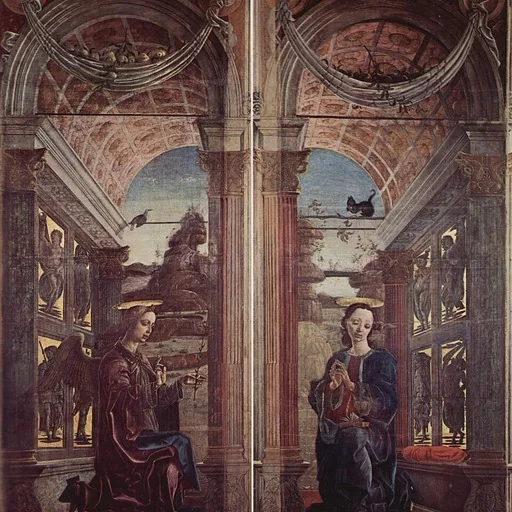
Artist
Cosmè Tura (Italian pronunciation: ; c. 1430 – 1495), also known as Il Cosmè or Cosimo Tura, was an Italian early-Renaissance (or Quattrocento) painter and considered one of the founders of the School of Ferrara. He…