Artwork
Standing Portrait of Emperor Tang Taizong (I)
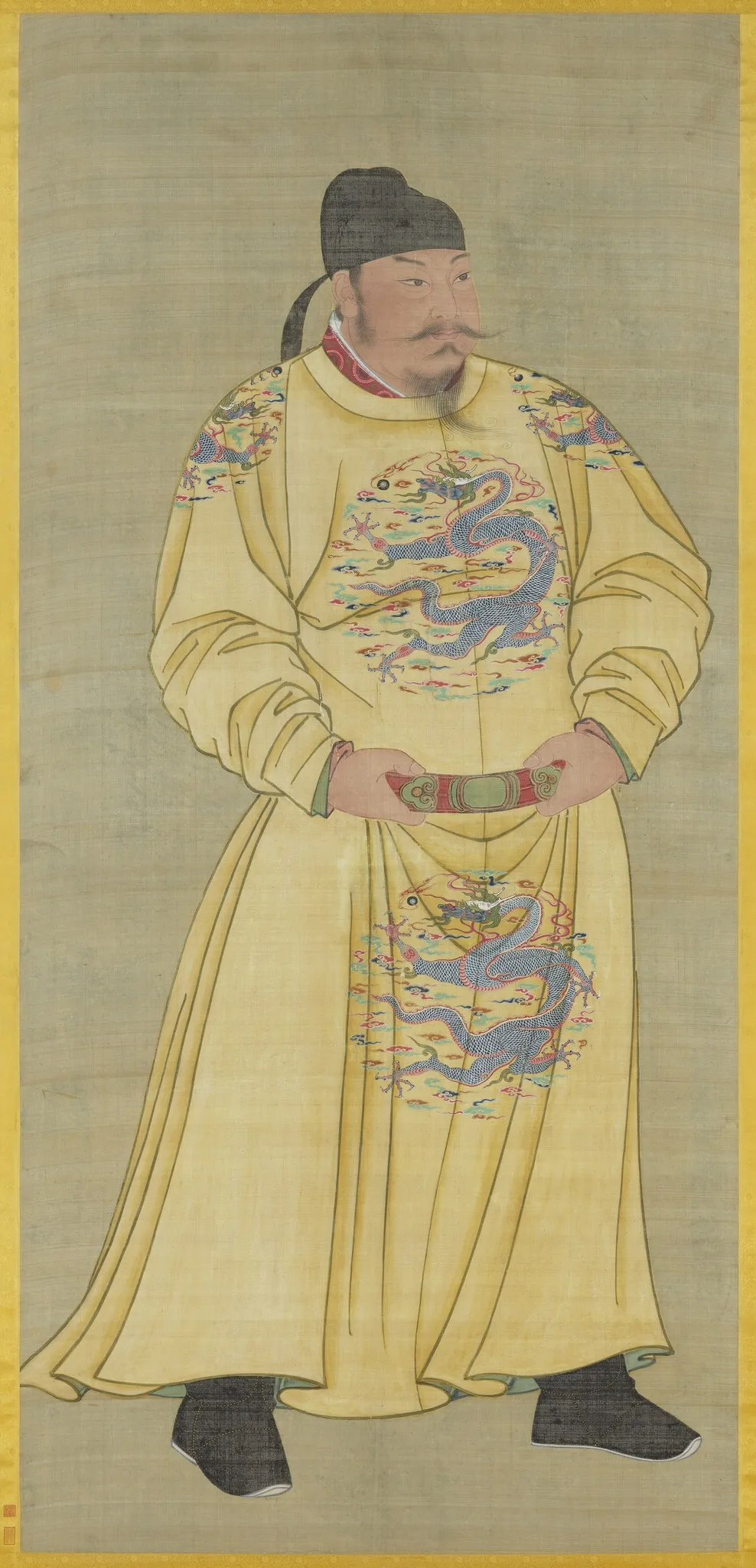
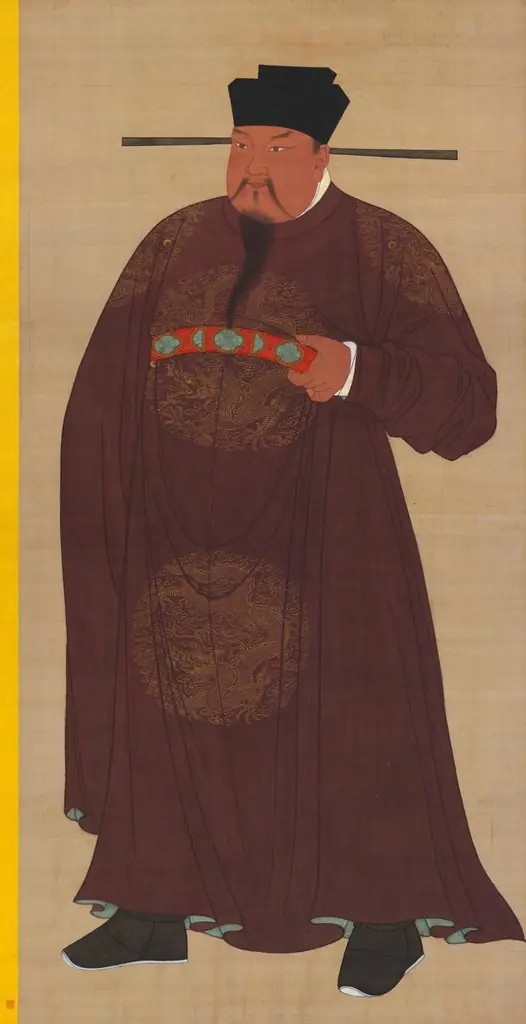
Standing Portrait of Emperor Tang Taizong (I) is an unspecified painting by Unknown. It is held in the collection of the National Palace Museum. The work is a standing portrait of Emperor Tang Taizong (r.
About this work
Overview
The work is a standing portrait of Emperor Tang Taizong (r. 626–649), rendered in a traditional Chinese court painting format. The figure occupies the central space, set against a muted, light‑brown backdrop framed by a thin yellow border. The composition emphasizes the ruler’s authority through formal pose, solemn expression, and elaborate costume, presenting a dignified image of imperial power.
Subject & Meaning
The emperor is depicted in full regalia: a long yellow robe embroidered with a dragon motif across the front and shoulders, a black hat, and a vivid red collar. He holds a red object—likely a ceremonial scepter—signifying his sovereign authority. The serious facial expression, complete with a neatly trimmed mustache, conveys the Confucian ideal of a ruler who is both resolute and morally upright.
Technique & Style
Executed with fine brushwork, the painting highlights the intricate scales of the dragon and the patterned sleeves of the robe, showcasing the artist’s skill in rendering textile texture. The limited palette—dominant yellows, reds, and subdued earth tones—creates a restrained yet regal atmosphere, characteristic of court portraiture that flourished during the Qianlong period, when such formalized visual language was revived.
History & Provenance
Although the portrait portrays a 7th‑century emperor, it was likely produced in the later imperial era, possibly under the Qianlong emperor’s patronage, who encouraged the recreation of historic figures in a classicized style. The painting’s provenance traces through imperial collections, reflecting the continued reverence for Tang dynasty rulers as exemplars of legitimate and cultured governance.
Artist & collection

 Domestic Scene
 Giacomo and Cardinal Marco, investing Andrea, Abbot of San Zeno, with his Benefice
 The Nymph of Fontainebleau
 Portrait of a Woman
 Madonna and Child with Saints in the Enclosed Garden
 Venus and Minerva
 Family Group of Four on Sofa
 Wall painting from Room H of the Villa of P. Fannius Synistor at Boscoreale