Artwork
明太祖坐像(五) 軸
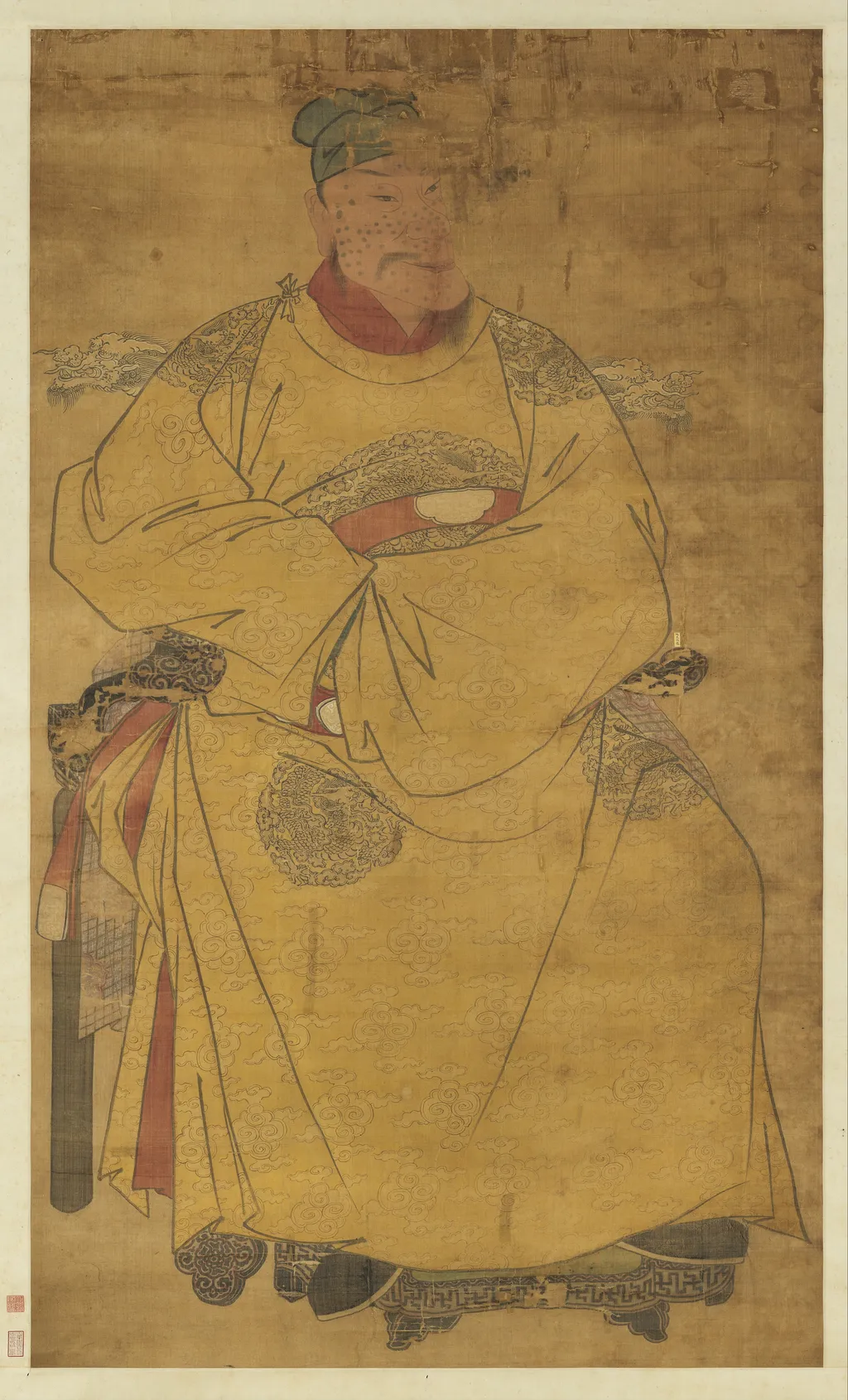
明太祖坐像(五) 軸 is an unspecified painting by Unknown. It is held in the collection of the National Palace Museum. The work is a painted portrait of a seated figure, rendered on a handscroll format.
About this work
Overview
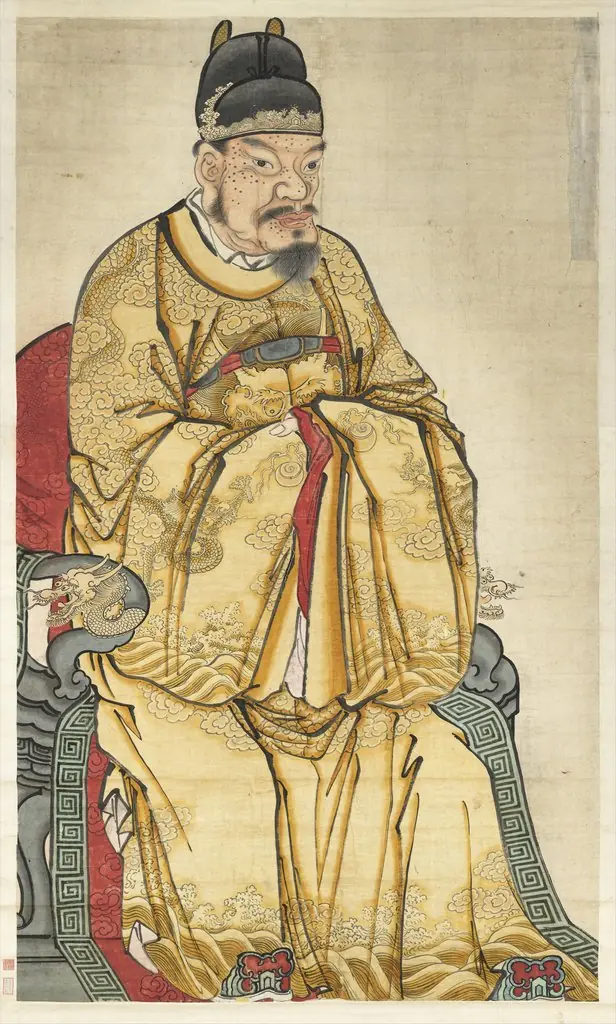
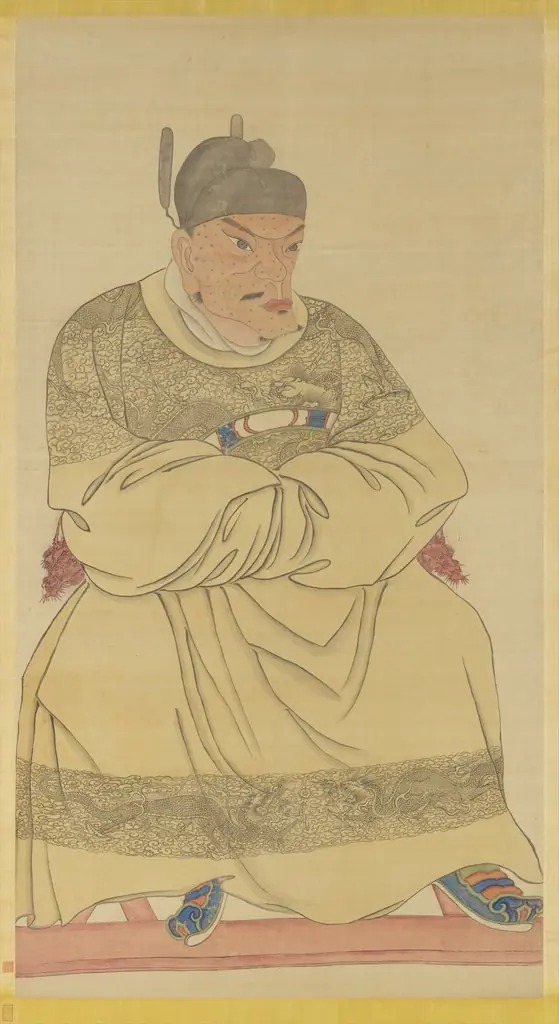
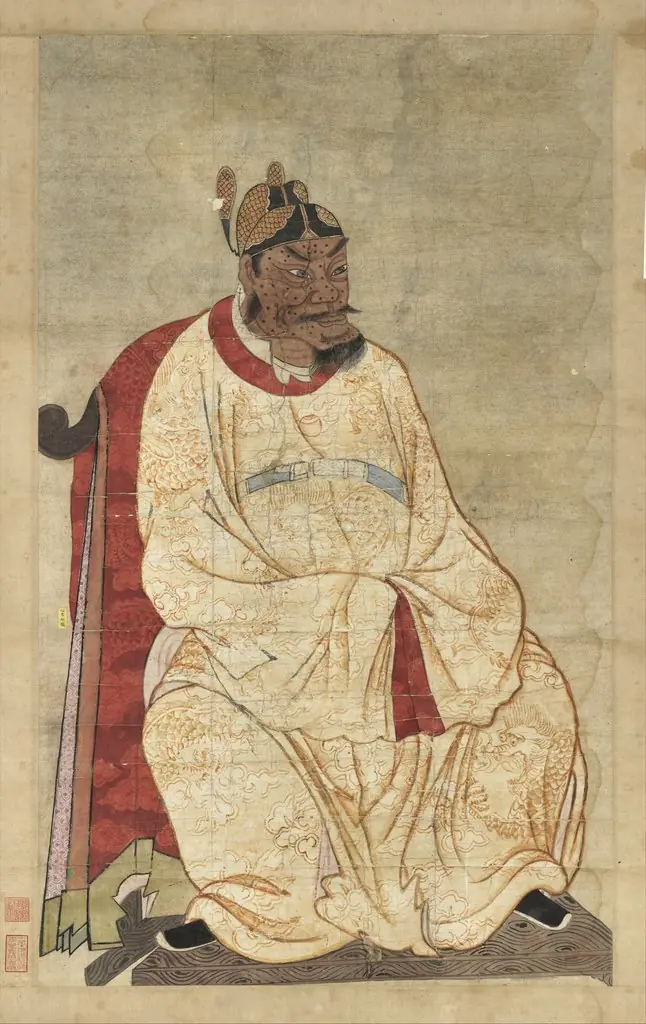
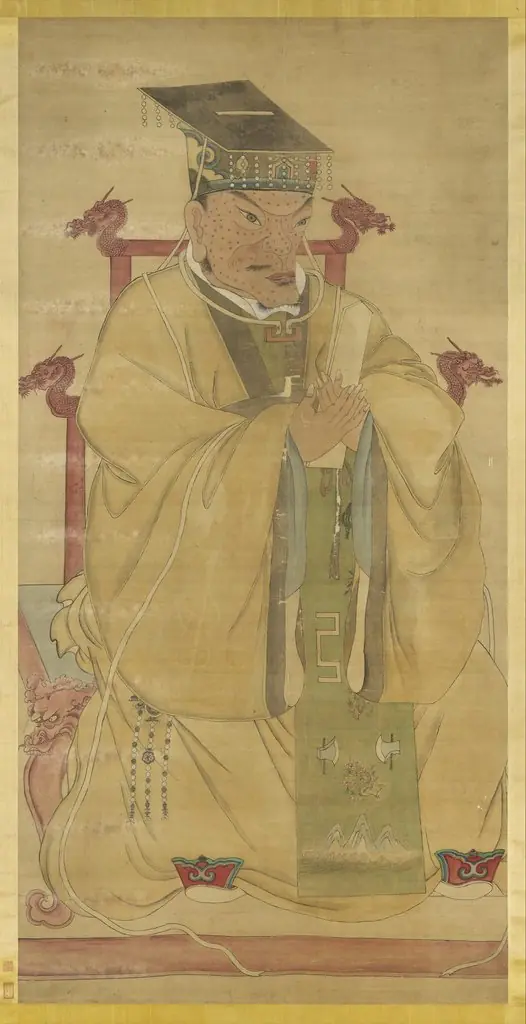
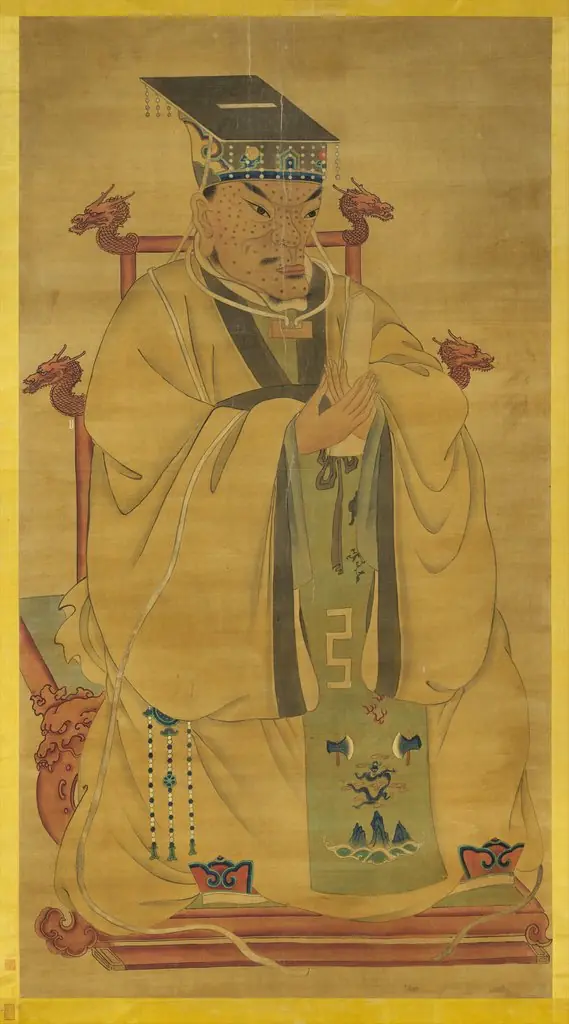
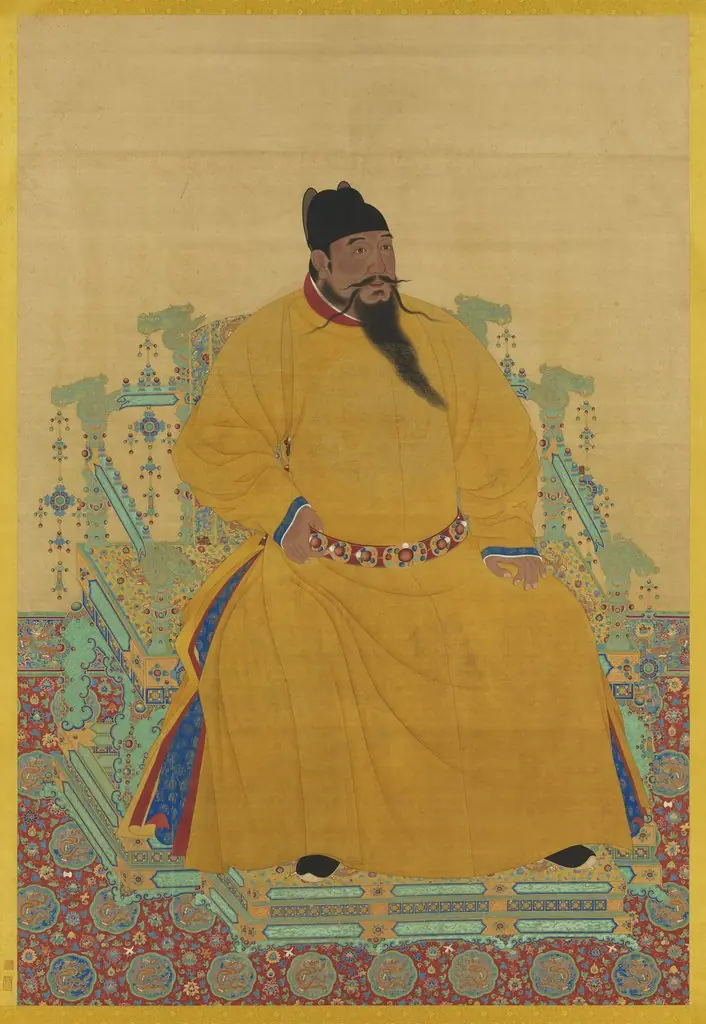
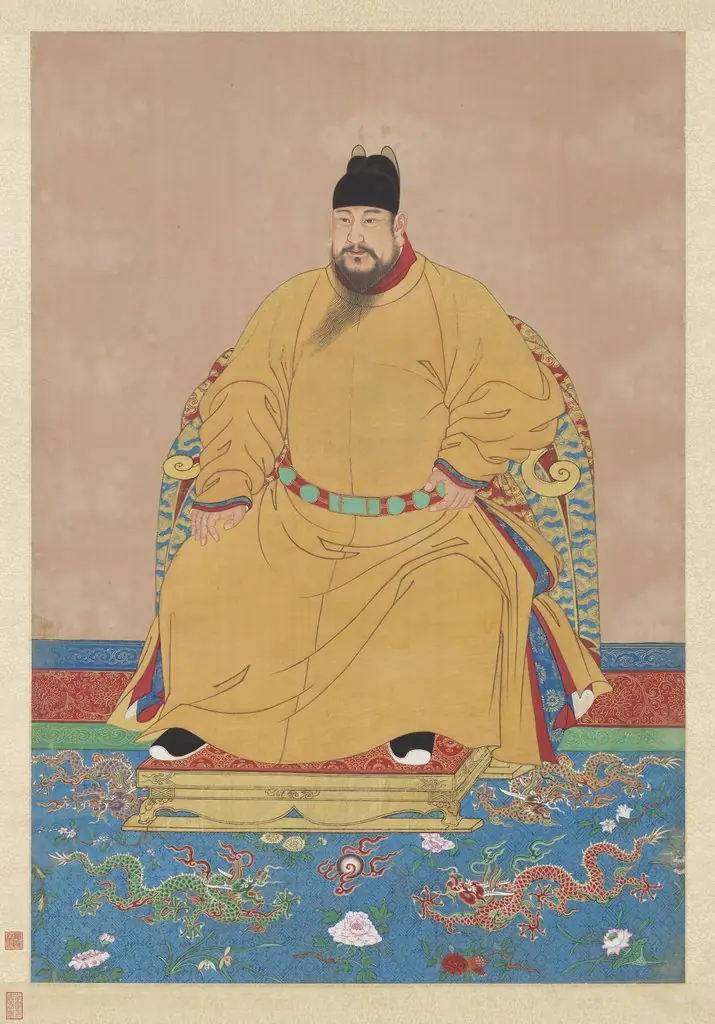
The work is a painted portrait of a seated figure, rendered on a handscroll format. The subject wears a long yellow robe with elaborate decorative motifs, a red collar, and a green hat, and is positioned on a chair with a red cushion, legs crossed. The background consists of a light brown field mottled with darker brown spots.
Subject & Meaning
The figure is identified as the founding emperor of the Ming dynasty, commonly known as the Hongwu Emperor. His solemn expression and regal attire, including a prominent dragon motif on the chest of his robe, convey imperial authority and the legitimacy of his rule.
Technique & Style
Executed with brush and pigment on silk, the painting employs fine line work for the intricate patterns on the robe and the dragon, while broader washes define the background. The use of vivid colors—yellow, red, green—contrasts with the subdued earth tones behind the figure, reflecting court painting conventions of the period.
History & Provenance
The portrait is part of the National Palace Museum’s collection in Taipei, having been transferred from the former imperial archives of the Ming court. Its survival through the relocation of the Chinese imperial collection to Taiwan in the mid‑20th century ensures its preservation as a rare example of early Ming portraiture.
Context
Created during the early Ming era, the painting aligns with the dynasty’s effort to solidify a visual language of power, employing dragon symbolism and imperial colors. Such portraits were used in ceremonial contexts and as models for official representations of the emperor.
Artist & collection

 Domestic Scene
 Giacomo and Cardinal Marco, investing Andrea, Abbot of San Zeno, with his Benefice
 The Nymph of Fontainebleau
 Portrait of a Woman
 Madonna and Child with Saints in the Enclosed Garden
 Venus and Minerva
 Family Group of Four on Sofa
 Wall painting from Room H of the Villa of P. Fannius Synistor at Boscoreale