Artwork
Kalpa Sutra
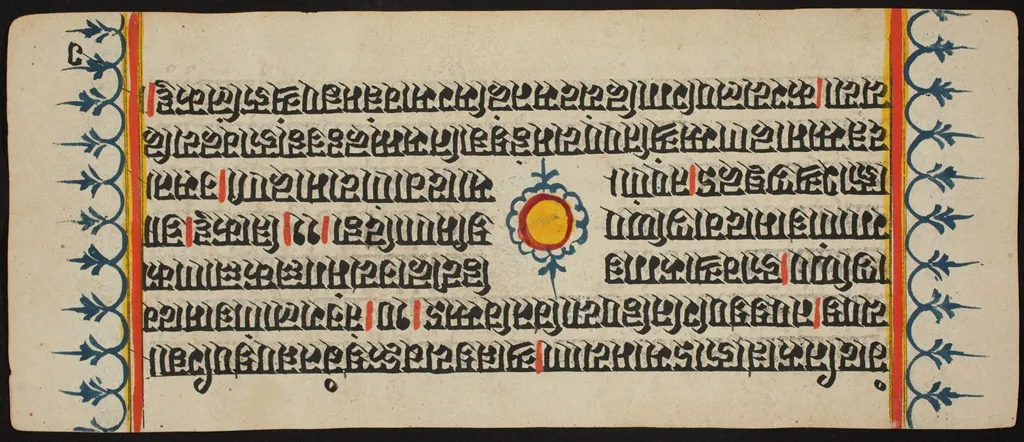
Kalpa Sutra is an unspecified painting by Unknown. It is held in the collection of the Detroit Institute of Arts.
About this work
Overview
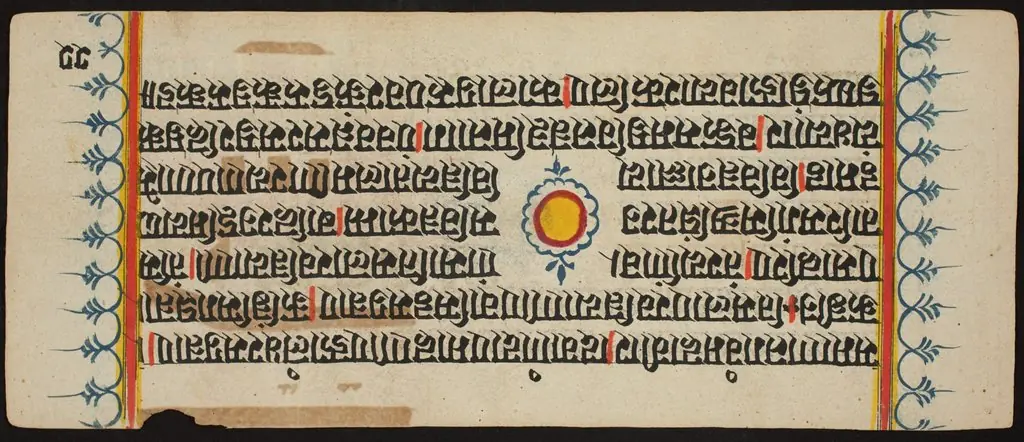
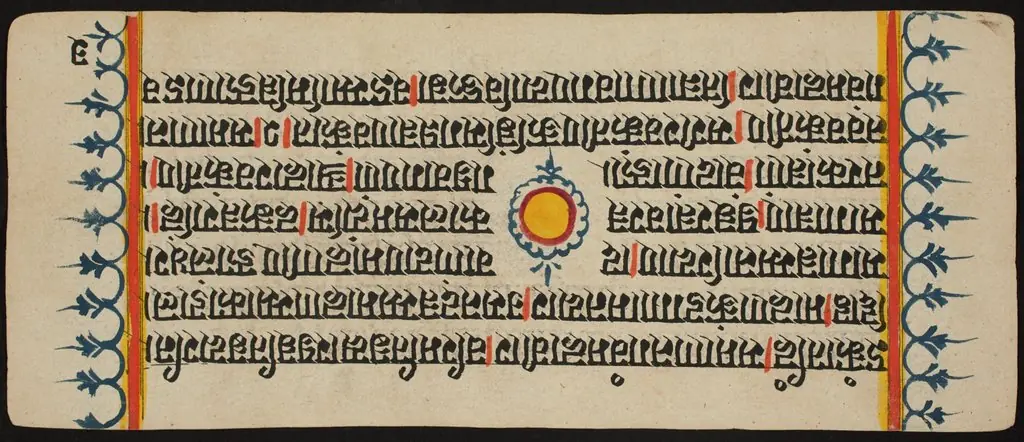
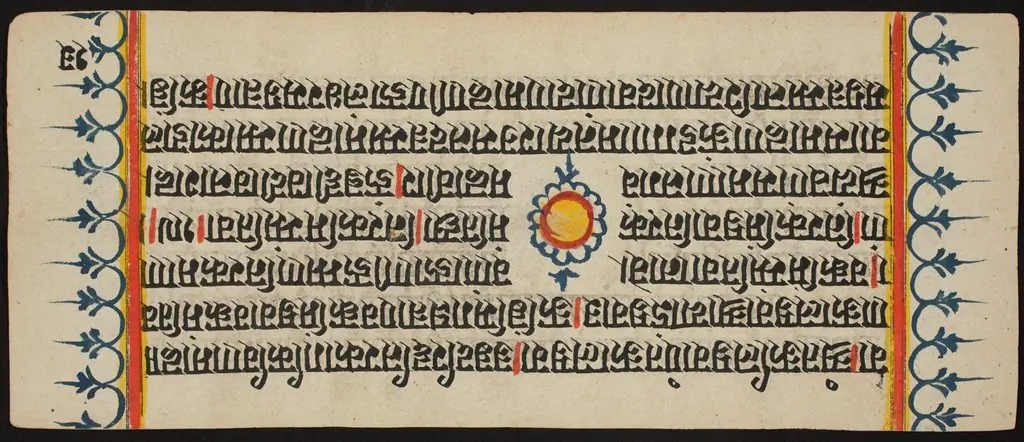
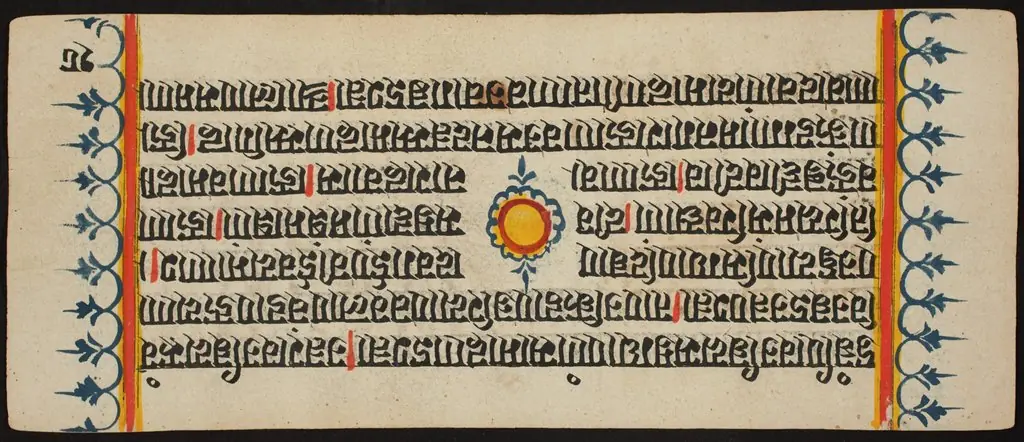
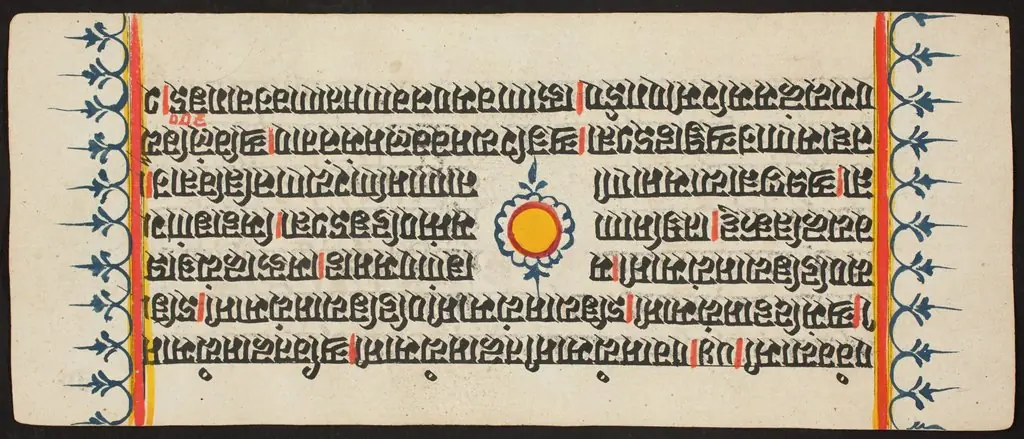
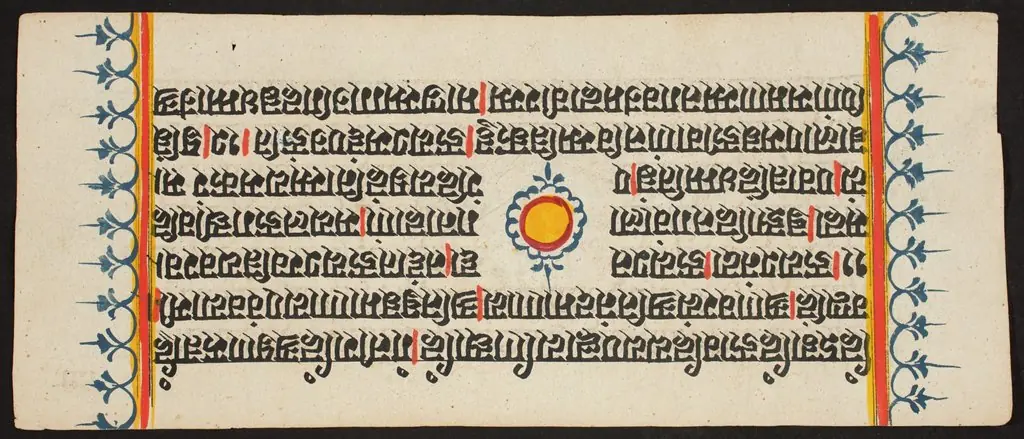
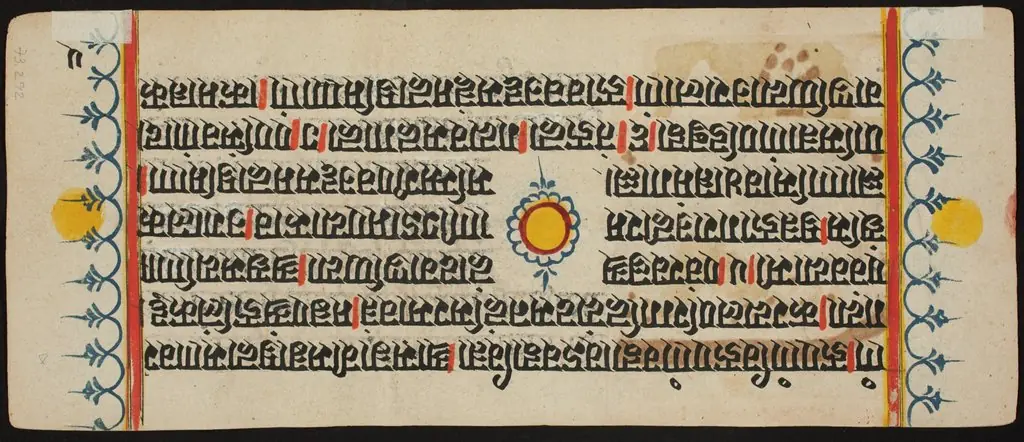
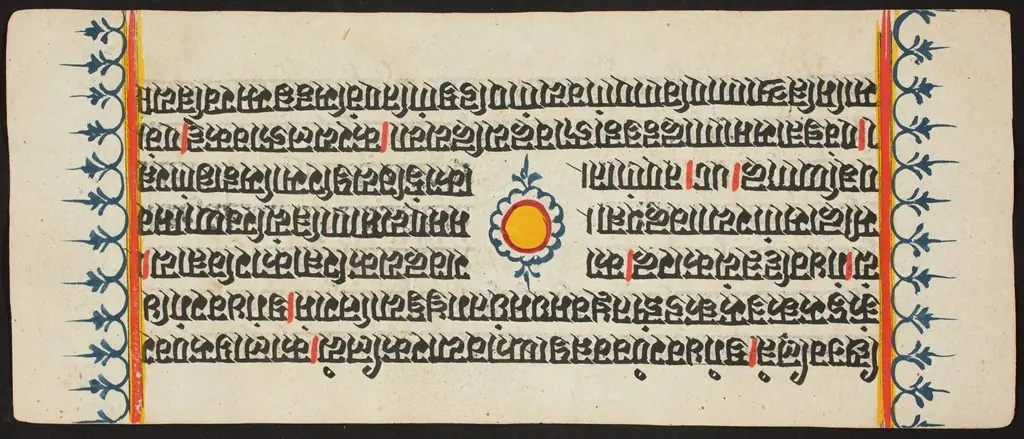
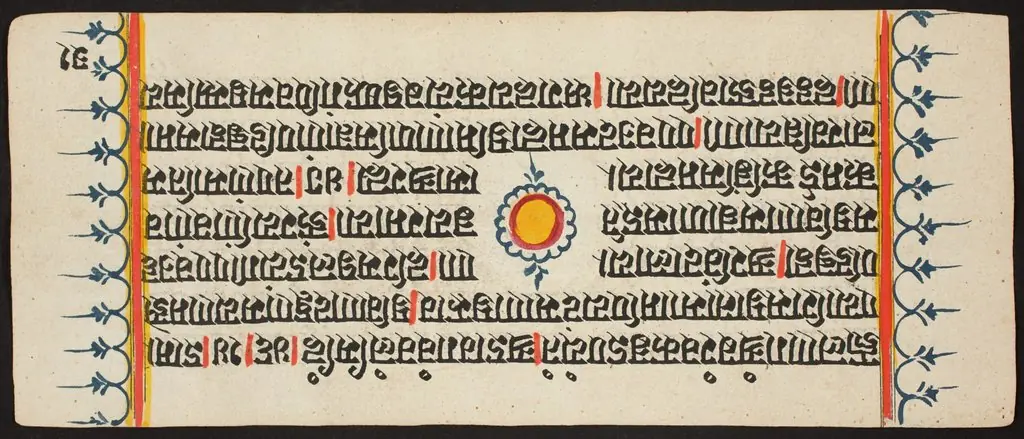
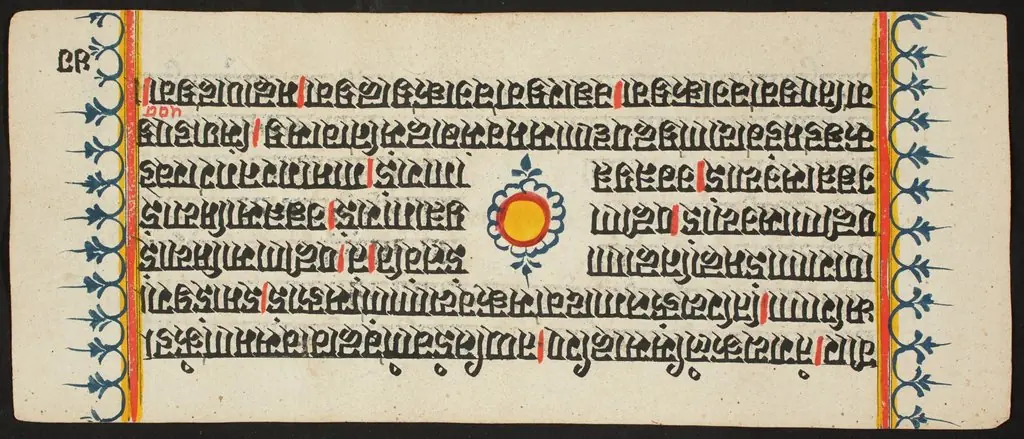
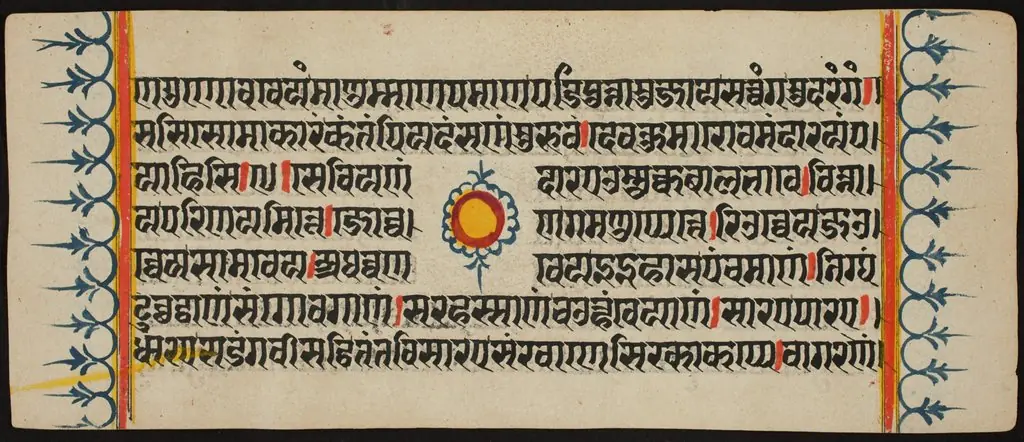
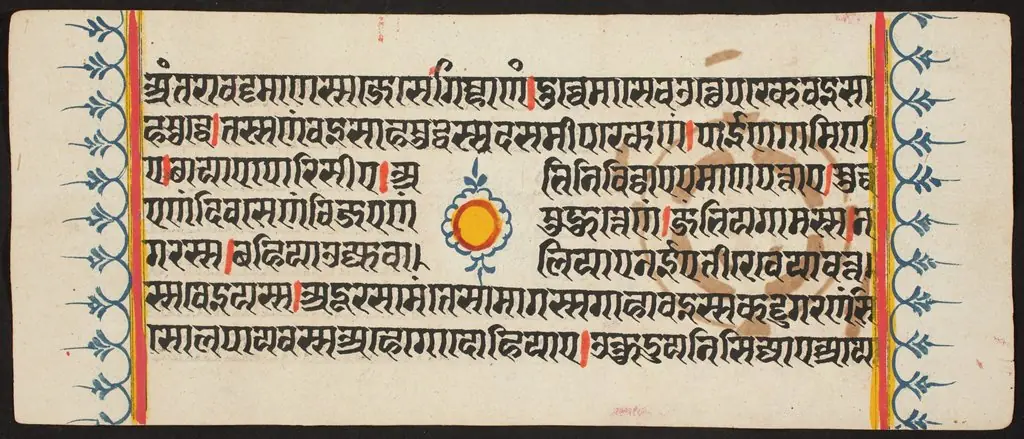
It features a beige ground with centered black script in an ancient Indic script, enhanced by red and blue ink highlights.
This painted manuscript page belongs to a copy of the Kalpa Sutra, a sacred Jain text. It features a beige ground with centered black script in an ancient Indic script, enhanced by red and blue ink highlights. A central yellow disc, edged in red, anchors the composition, encircled by stylized blue floral patterns. The border repeats a motif of blue vines and leaves, creating rhythmic texture. The work reflects meticulous handcraftsmanship typical of Jain manuscript traditions.
Subject & Meaning
The Kalpa Sutra contains biographies of Jain Tirthankaras and monastic rules. This page likely illustrates a passage from the text, with the central circle possibly symbolizing the soul or a sacred emblem. The floral and vine decorations may represent spiritual growth or the cosmic order. Color accents serve not merely decorative but symbolic purposes, guiding the reader’s focus and reinforcing sacred themes.
Technique & Style
The painting employs mineral pigments on paper, applied with fine brushes to achieve sharp lines and even washes. The script is carefully ruled, with red and blue highlights added after the main text. The border’s repeating leaf-and-vine pattern is rendered with geometric precision, suggesting the use of stencils or templates. The restrained palette and symmetry reflect Jain aesthetic values of order and restraint.
History & Provenance
This page originates from a 15th-century Jain manuscript produced in western India, likely Gujarat or Rajasthan. It was part of a larger codex used in ritual recitation by monks. The Detroit Institute of Arts acquired it in the 20th century, possibly through a private collection or scholarly donation. Its preservation reflects early 20th-century interest in South Asian religious art.
Context
Jain manuscripts like this were created by specialized scribes and artists within monastic communities, often commissioned by wealthy lay patrons. They were used in ceremonial readings during religious festivals. The emphasis on legibility, ornamentation, and durability indicates their role as both devotional objects and vessels of doctrinal transmission, distinct from purely illustrative traditions.
Legacy
This page exemplifies the enduring Jain tradition of textual veneration, where the written word is treated as sacred. Similar manuscripts survive in libraries and museums across India and the West, offering insight into pre-modern South Asian literacy, religious practice, and artisanal skill. Its preservation underscores the global recognition of Jain artistic heritage.
Artist & collection

 Domestic Scene
 Giacomo and Cardinal Marco, investing Andrea, Abbot of San Zeno, with his Benefice
 The Nymph of Fontainebleau
 Portrait of a Woman
 Madonna and Child with Saints in the Enclosed Garden
 Venus and Minerva
 Family Group of Four on Sofa
 Wall painting from Room H of the Villa of P. Fannius Synistor at Boscoreale