Artwork
Kalpa Sutra
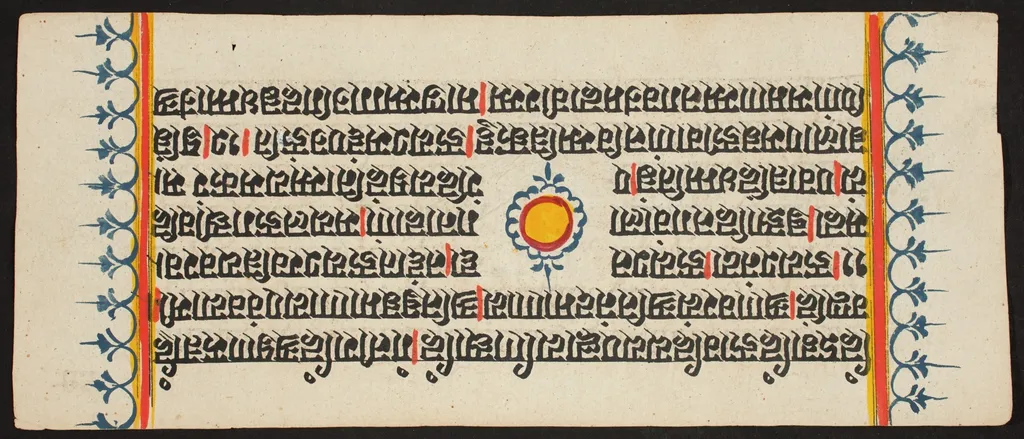
Kalpa Sutra is an unspecified painting by Unknown. It is held in the collection of the Detroit Institute of Arts.
About this work
Overview
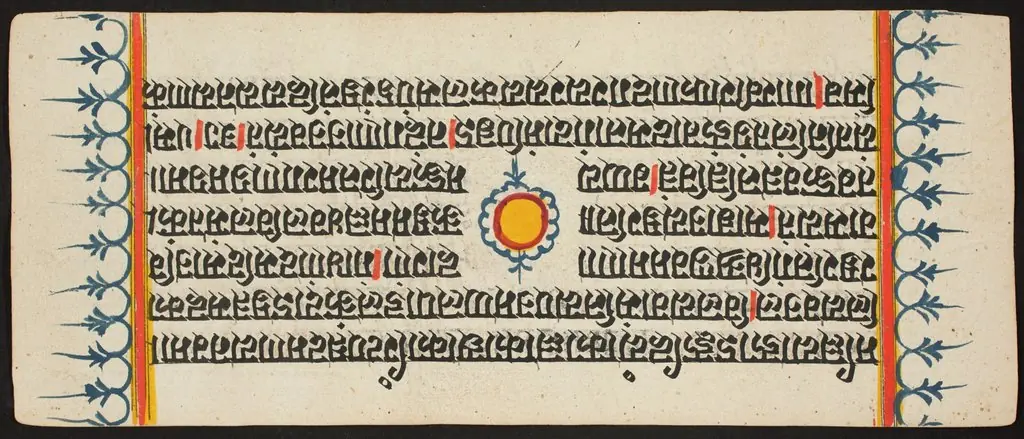
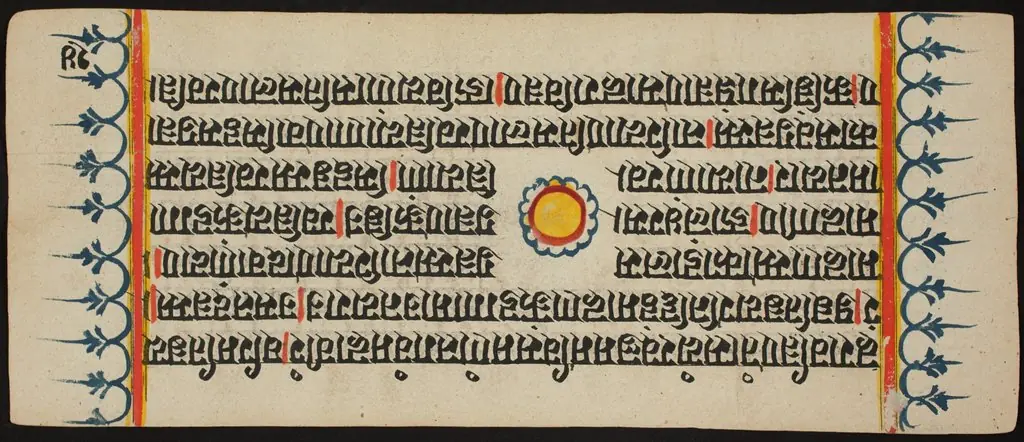
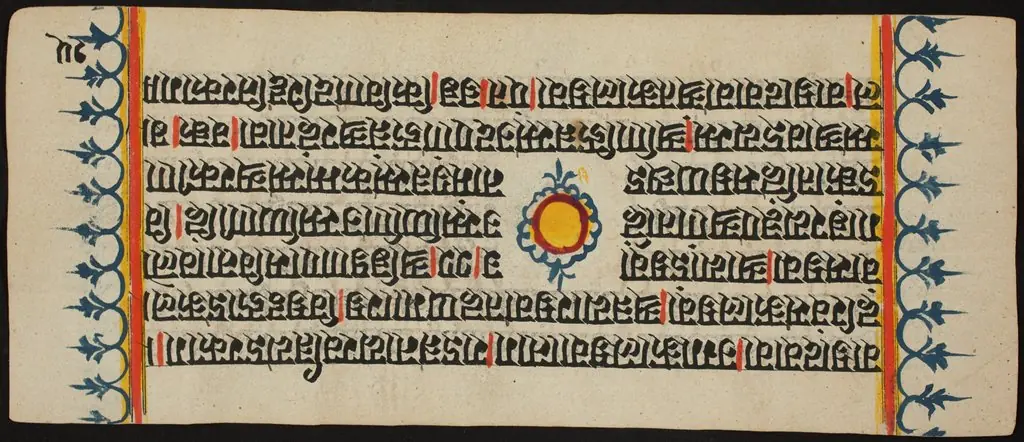
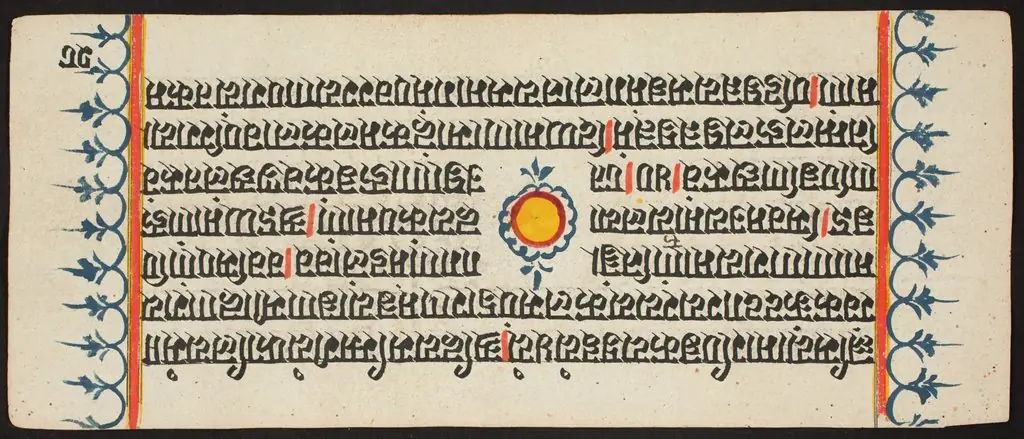
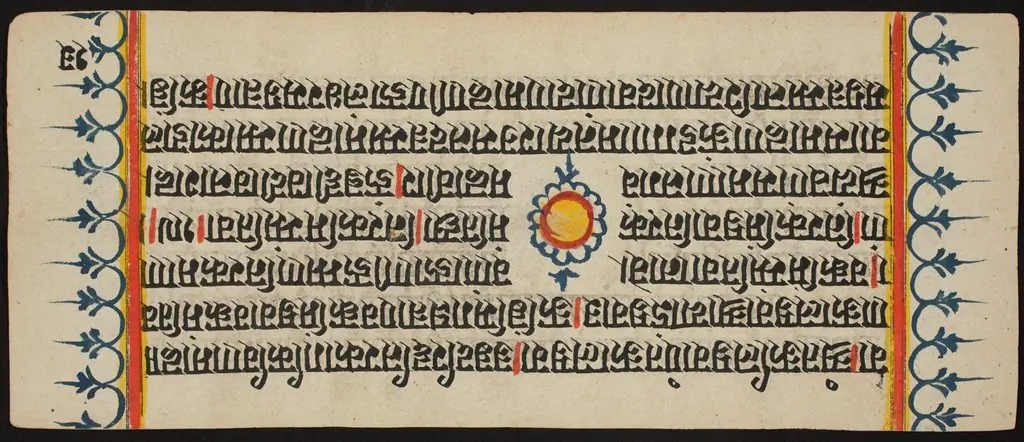
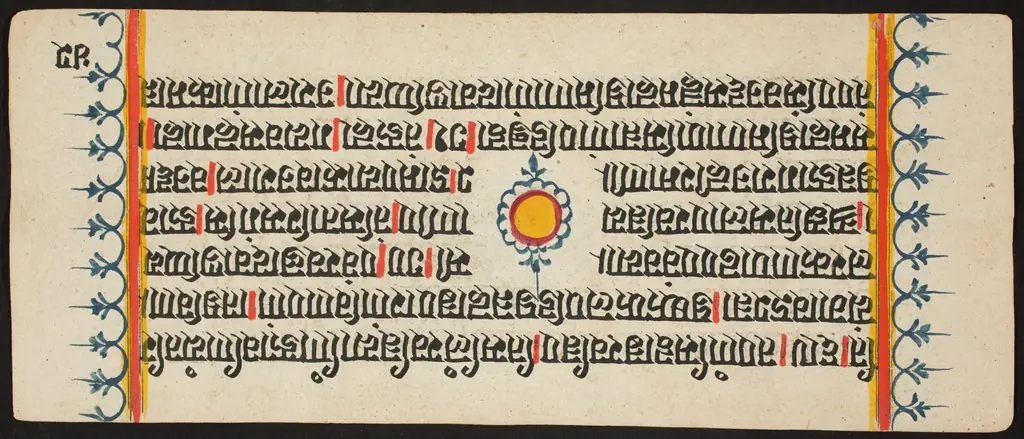
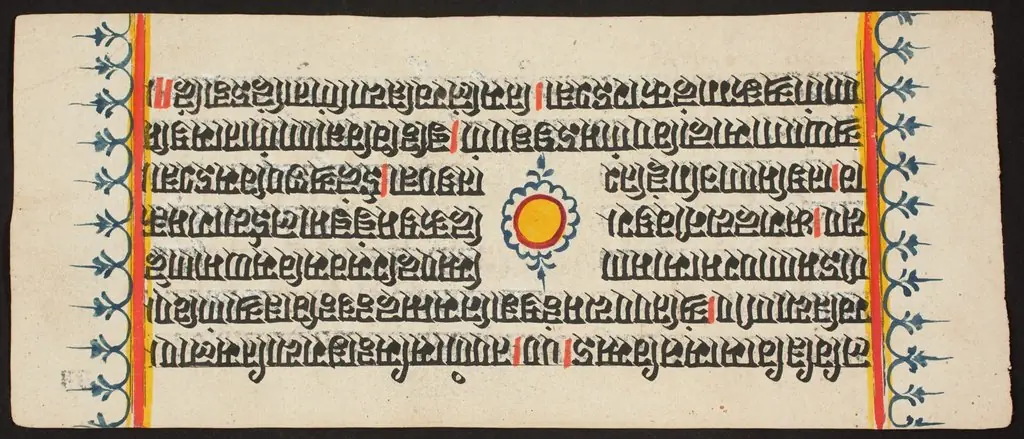
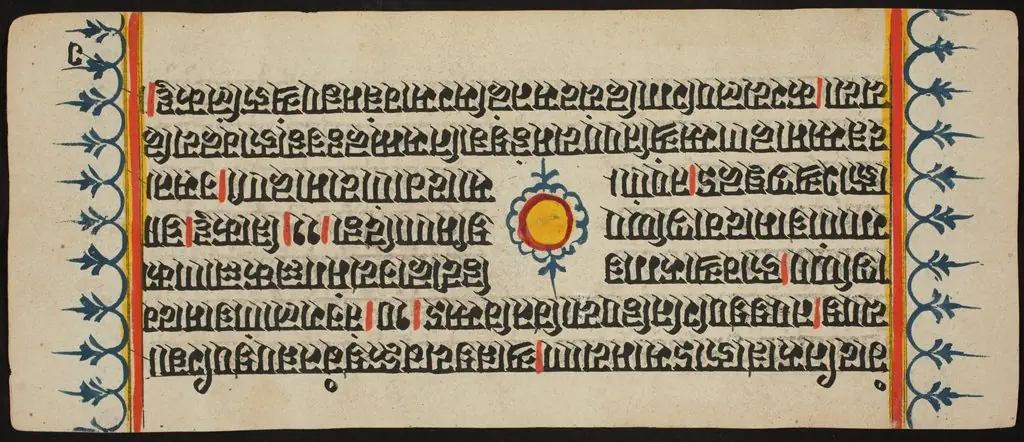
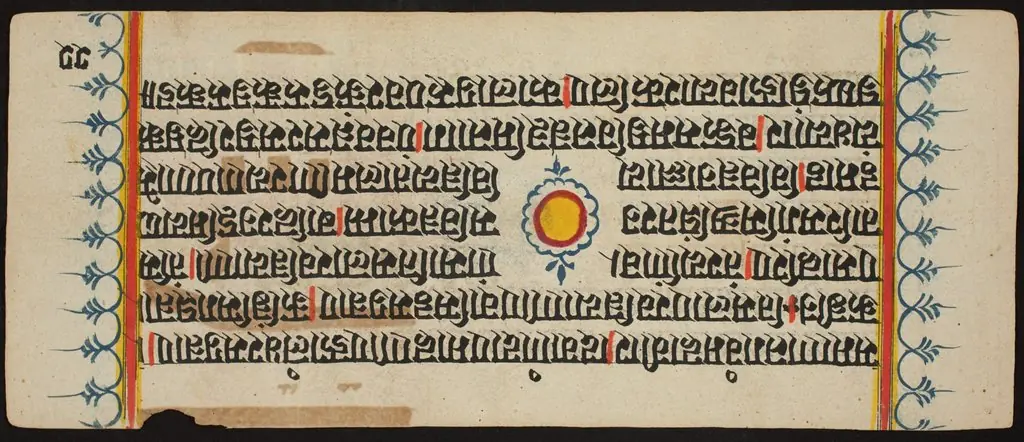
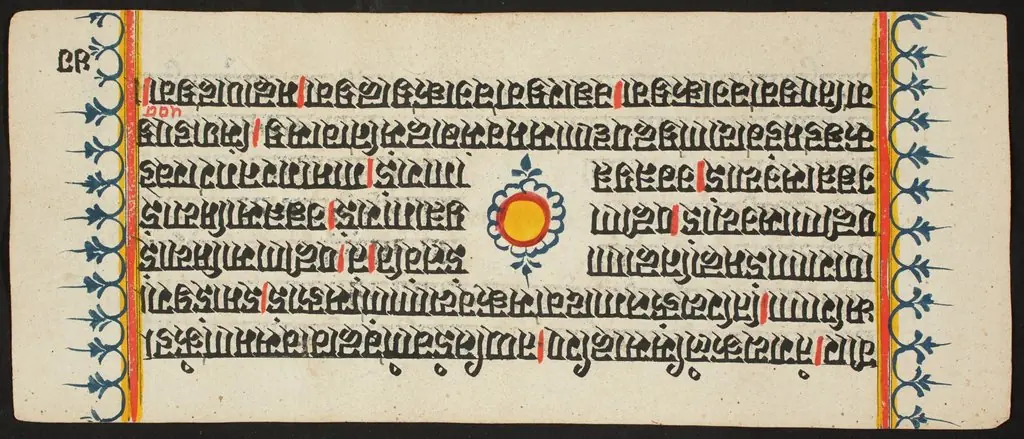
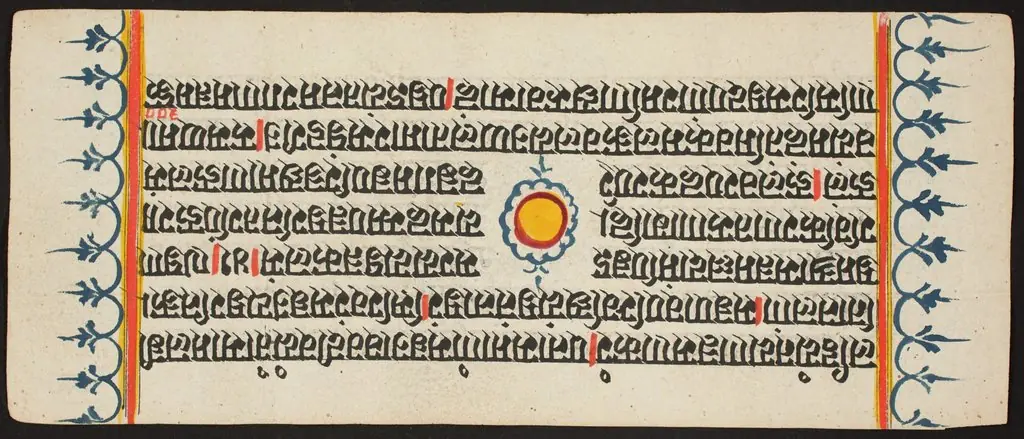
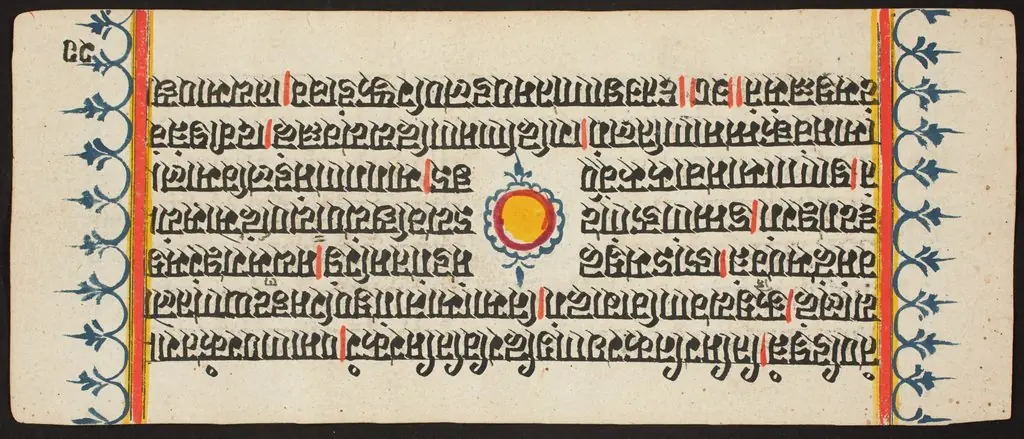
Intricate linear patterns and symbolic script frame the figures, suggesting sacred text as both content and decorative element.
This painting belongs to the Kalpa Sutra tradition, a Jain manuscript illustration style from medieval India. Rendered in mineral pigments on paper, it features a dense composition centered on religious narrative. Bold contrasts of black, red, and yellow dominate the palette, creating visual rhythm rather than naturalistic space. Intricate linear patterns and symbolic script frame the figures, suggesting sacred text as both content and decorative element.
Subject & Meaning
The scene illustrates episodes from the lives of Jain Tirthankaras, spiritual teachers revered in Jainism. Figures are arranged in hierarchical order, with the central figure likely a Tirthankara in meditation or teaching posture. Surrounding symbols and script reference doctrinal passages from the Kalpa Sutra, a canonical text detailing monastic conduct and lineage. The composition functions as both devotional aid and mnemonic device for ritual recitation.
Technique & Style
The work employs hand-ground pigments—ochres, cinnabar, and lampblack—applied with fine brushes on prepared paper. Outlines are sharply defined, with flat planes of color minimizing shading. Decorative borders and ornamental motifs echo manuscript illumination practices. The lack of perspective and rhythmic repetition of forms create a flattened, ceremonial space, emphasizing spiritual order over physical realism.
History & Provenance
Produced in western India, likely Gujarat or Rajasthan, during the 15th or 16th century, this painting was once part of a longer illustrated manuscript. It entered the Detroit Institute of Arts collection in the 20th century through a private acquisition, its origin traced through stylistic comparison with other surviving Kalpa Sutra folios. Its preservation reflects its continued reverence within Jain communities and later scholarly interest.
Context
Kalpa Sutra illustrations were created for monastic use, often carried by traveling monks for teaching. Their compact size and vivid imagery made them portable tools for transmitting doctrine. The use of specific color codes—black for asceticism, red for energy, yellow for purity—aligned with Jain cosmological principles. Such manuscripts were produced in artisan workshops under monastic supervision, blending artistic skill with religious discipline.
Legacy
This painting exemplifies a tradition that sustained Jain visual culture for centuries, influencing later regional styles across India. While few complete manuscripts survive, individual folios like this one remain vital for understanding pre-modern Indian book art. Its presence in a Western museum underscores the global recognition of non-Western manuscript traditions, encouraging renewed study of their symbolic systems and craftsmanship.
Artist & collection

 Domestic Scene
 Giacomo and Cardinal Marco, investing Andrea, Abbot of San Zeno, with his Benefice
 The Nymph of Fontainebleau
 Portrait of a Woman
 Madonna and Child with Saints in the Enclosed Garden
 Venus and Minerva
 Family Group of Four on Sofa
 Wall painting from Room H of the Villa of P. Fannius Synistor at Boscoreale