Artwork
Flowers and Fruit in a China Bowl
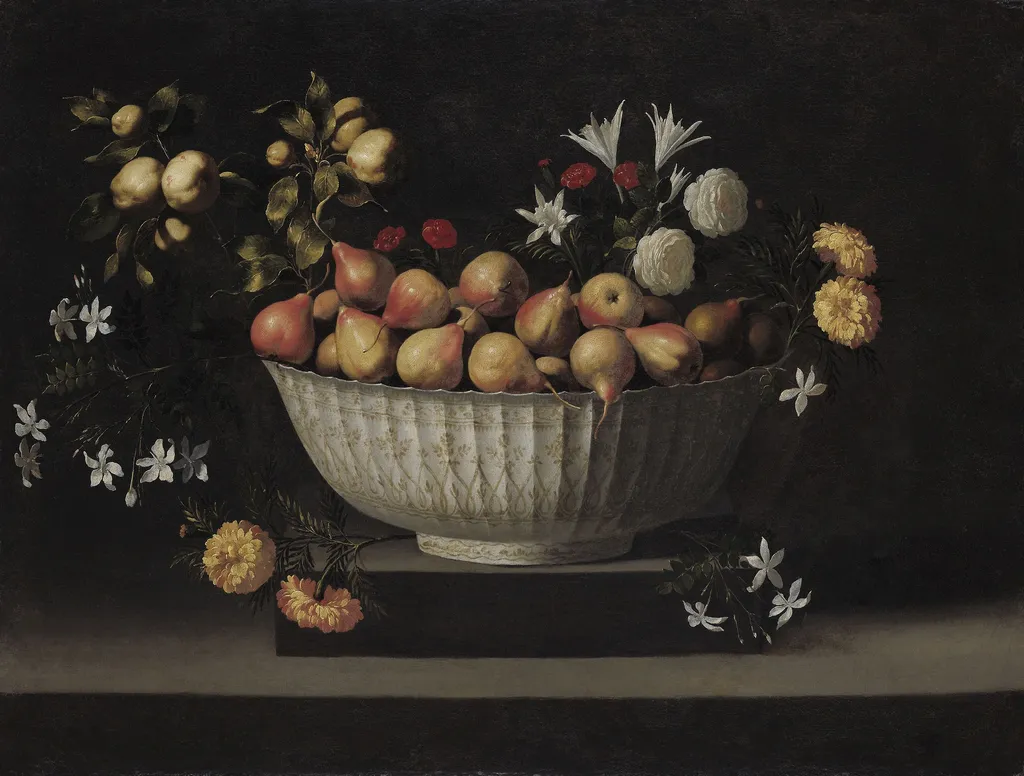
Flowers and Fruit in a China Bowl is an oil painting by the Dutch Golden Age artist Unknown. It dates from 1645 and is held in the collection of the Art Institute of Chicago.
About this work
Overview
The work is noted for its precise rendering of textures and subtle shifts in light, drawing attention to the material qualities of the fruit and petals.
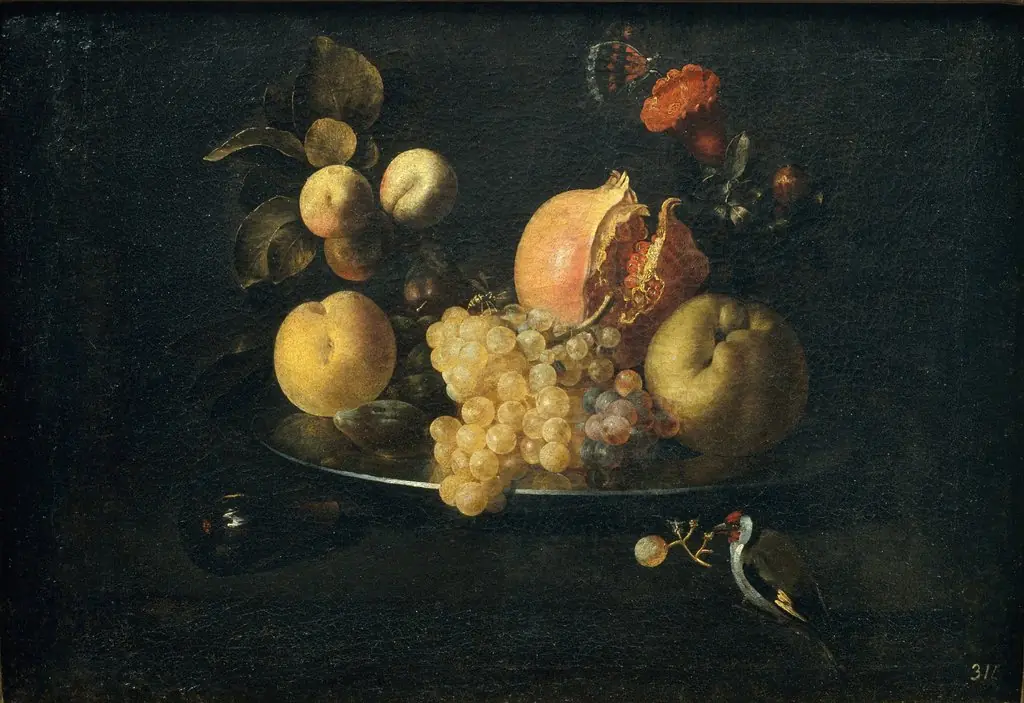
This oil painting depicts a white porcelain bowl with a scalloped rim, filled with pears and surrounded by an arrangement of flowers and foliage. Set against a dark, undefined background, the composition emphasizes the quiet stillness of domestic objects. The work is noted for its precise rendering of textures and subtle shifts in light, drawing attention to the material qualities of the fruit and petals.
Subject & Meaning
The arrangement of pears and seasonal blooms suggests a meditation on transience and natural cycles. The absence of human figures or narrative context focuses attention on the quiet beauty of everyday things. The bowl, likely Chinese in origin, may reflect broader 17th-century European fascination with imported ceramics and exotic materials, elevating ordinary still life to a contemplative subject.
Technique & Style
The artist employs fine brushwork to capture the waxy sheen of pears, the delicate folds of petals, and the glossy surface of the porcelain. Shading is subtle, creating volume without harsh contrasts. The dark background enhances the luminosity of the objects, while loose, organic placement of flora avoids rigid symmetry, lending the scene a sense of spontaneous arrangement.
History & Provenance
The painting is held in the collection of the Art Institute of Chicago, acquired as part of its broader commitment to European still-life traditions. Its provenance prior to institutional ownership is not publicly documented, but its style aligns with Dutch and Flemish still-life practices of the late 16th to early 17th centuries, a period rich in such domestic compositions.
Context
During the early 1600s, still-life paintings flourished in Northern Europe as symbols of wealth, scientific curiosity, and moral reflection. Porcelain bowls, often imported from Asia, were prized possessions. Depicting them alongside local fruit and flowers reflected both global trade networks and the cultural value placed on observing nature with precision and care.
Legacy
This work contributes to a broader tradition of still-life painting that valued observation over symbolism. While not widely reproduced, its quiet realism and technical refinement exemplify how artists of the period transformed humble objects into subjects worthy of sustained attention, influencing later generations focused on material truth in painting.
Artist & collection

 Domestic Scene
 Giacomo and Cardinal Marco, investing Andrea, Abbot of San Zeno, with his Benefice
 The Nymph of Fontainebleau
 Portrait of a Woman
 Madonna and Child with Saints in the Enclosed Garden
 Venus and Minerva
 Family Group of Four on Sofa
 Wall painting from Room H of the Villa of P. Fannius Synistor at Boscoreale
 Two Fruit Bowls on a table
 Flowers and Fruit in a Chinese Bowl
 Delft Fruit Bowl and two Vases of Flowers
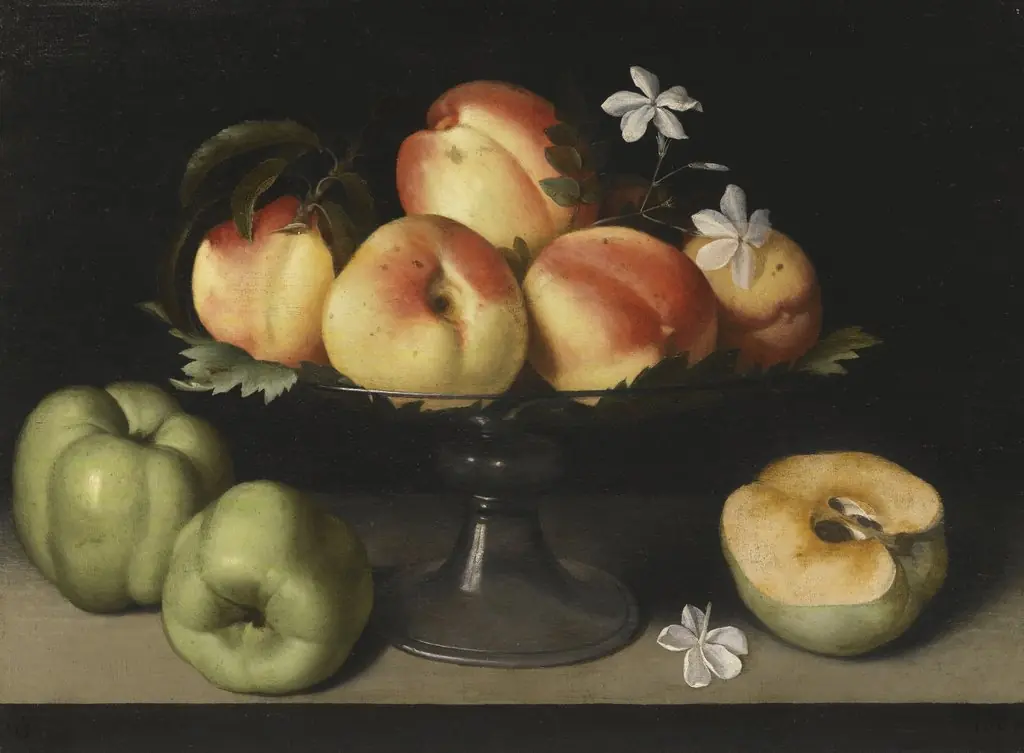 A Crystal Fruit Stand with Peaches, Quinces, and Jasmine Flowers
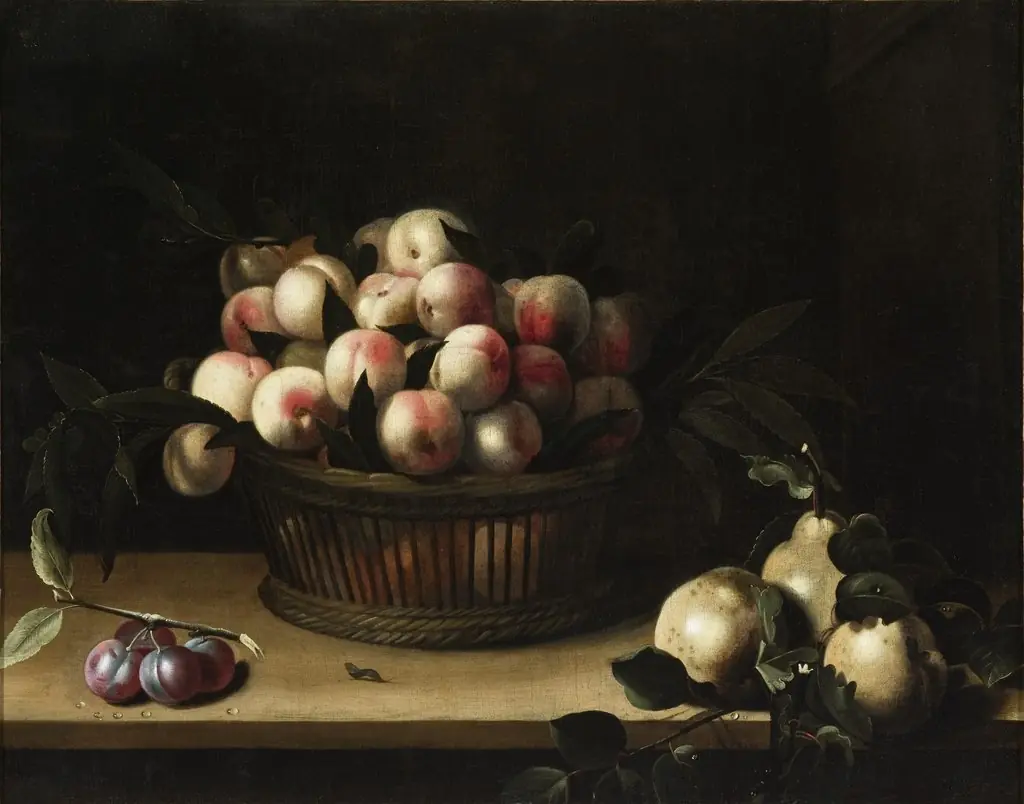 Basket of Peaches, with Quinces, and Plums
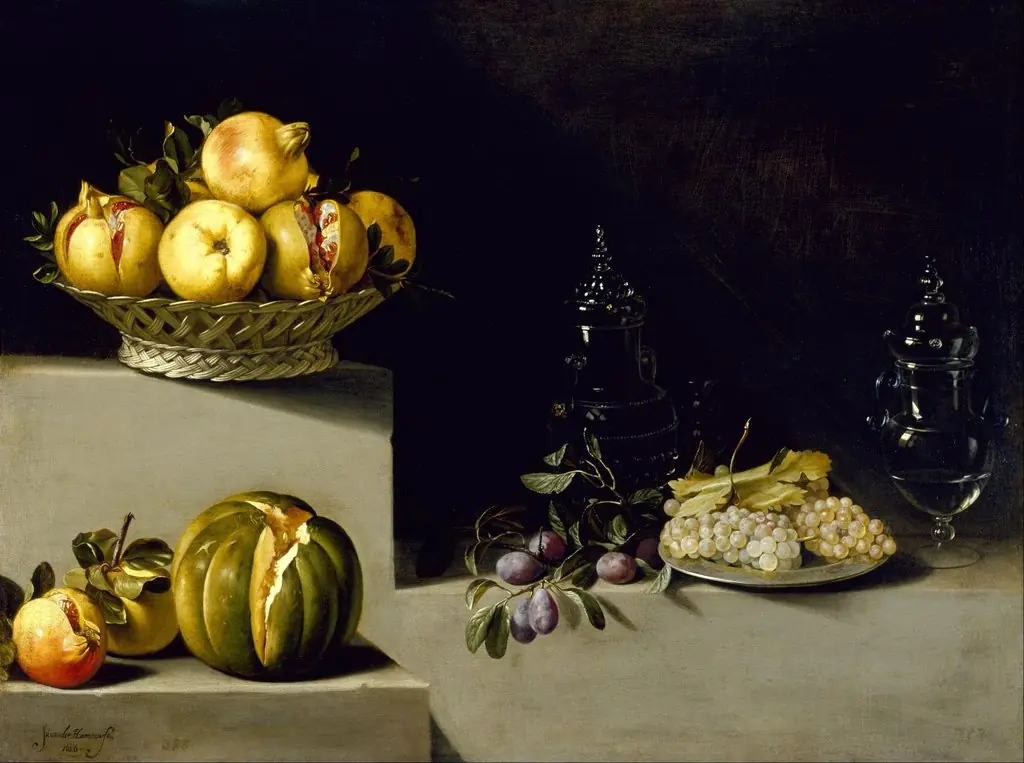 Still Life with Fruit and Glassware
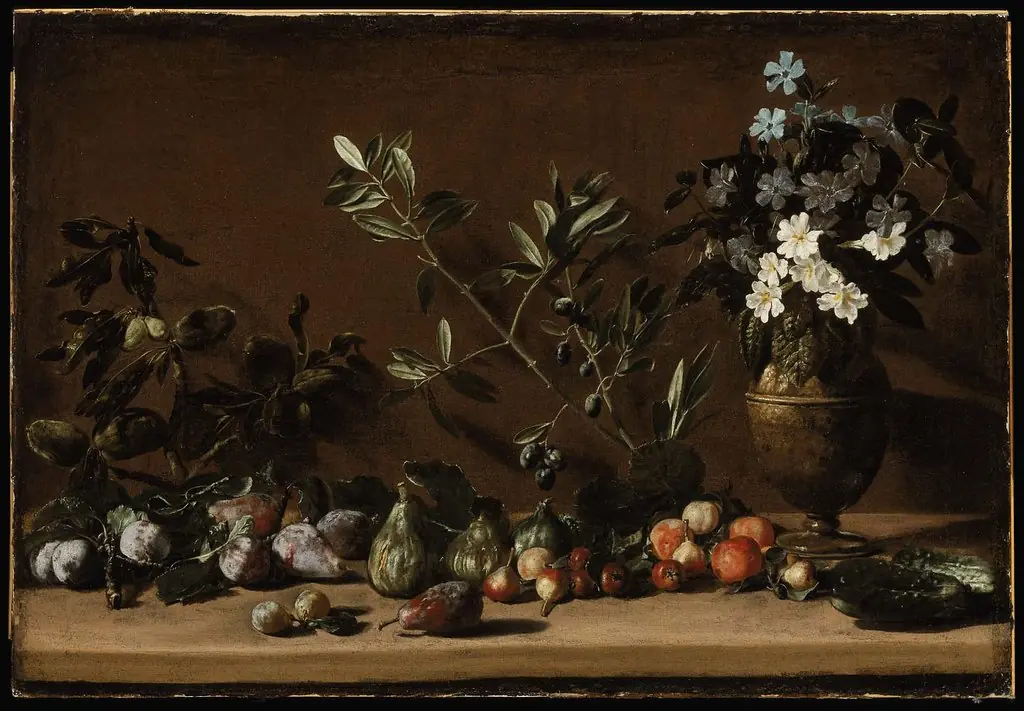 Fruit and Vase of Flowers on a Ledge
 Still Life with Fruit and Goldfinch