Artwork
Basket of Peaches, with Quinces, and Plums
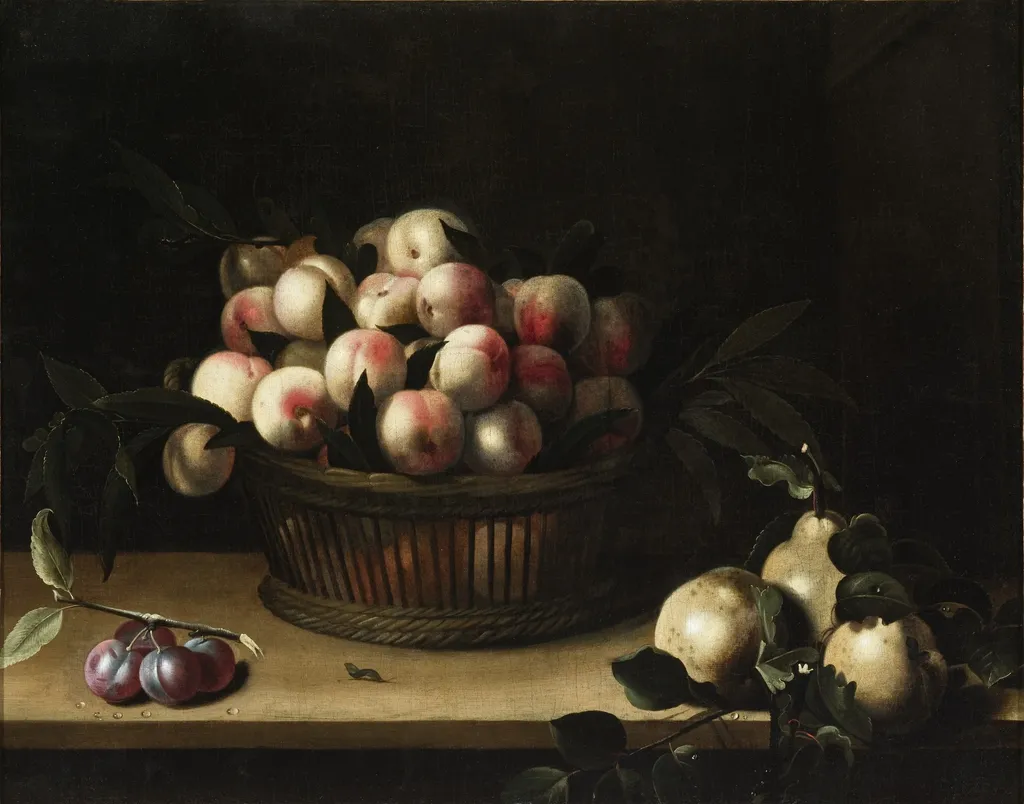
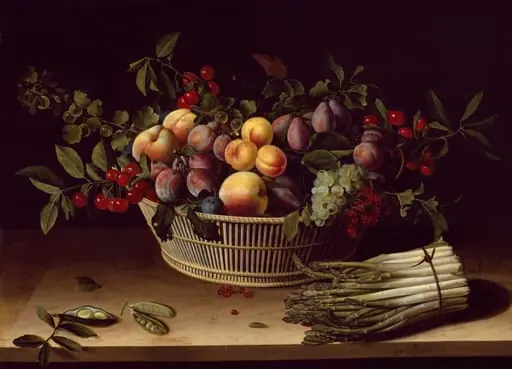
Basket of Peaches, with Quinces, and Plums is an unspecified painting by Louise Moillon. It dates from 1641 and is held in the collection of the Los Angeles County Museum of Art.
About this work
Overview
Her focus on humble domestic objects reflects a quiet precision that distinguished her from more flamboyant contemporaries.
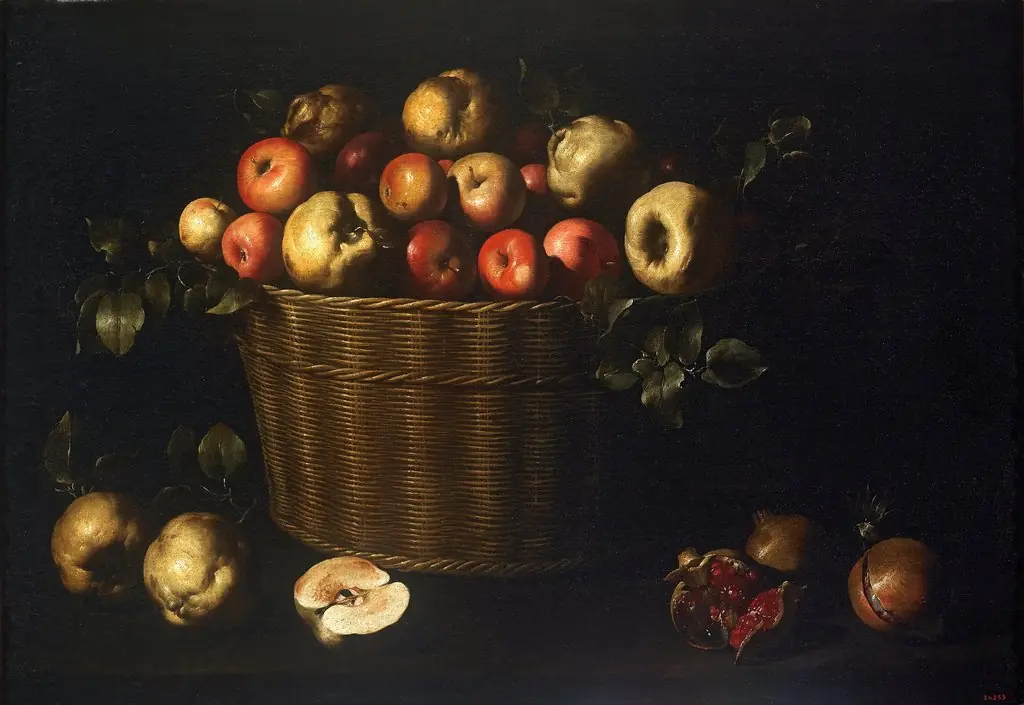
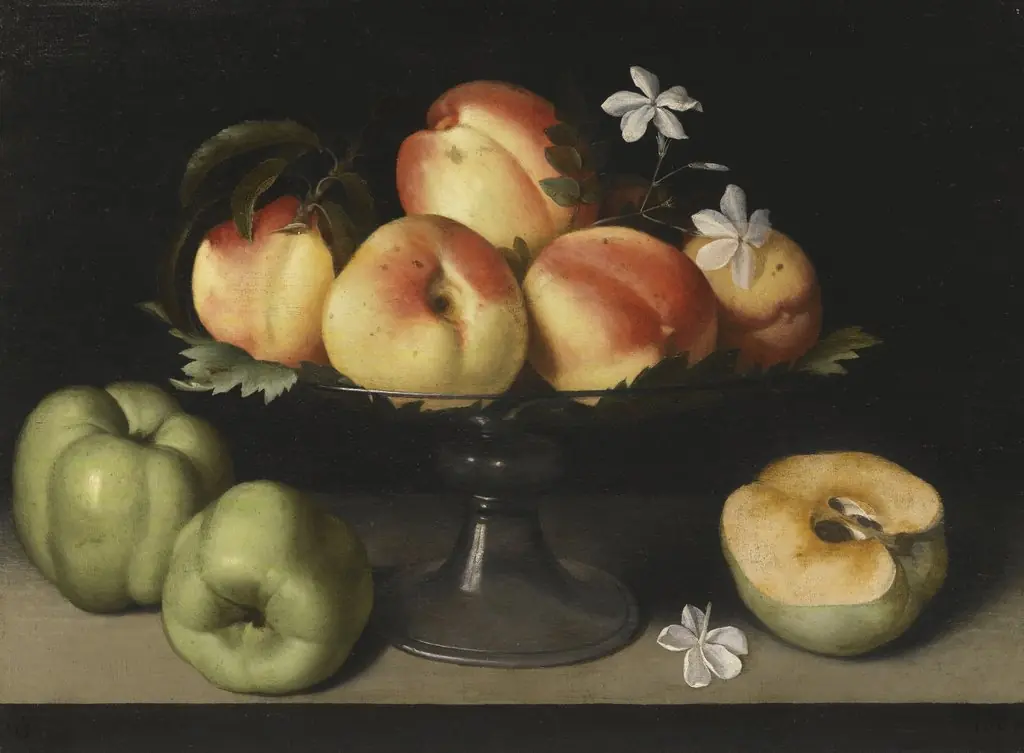
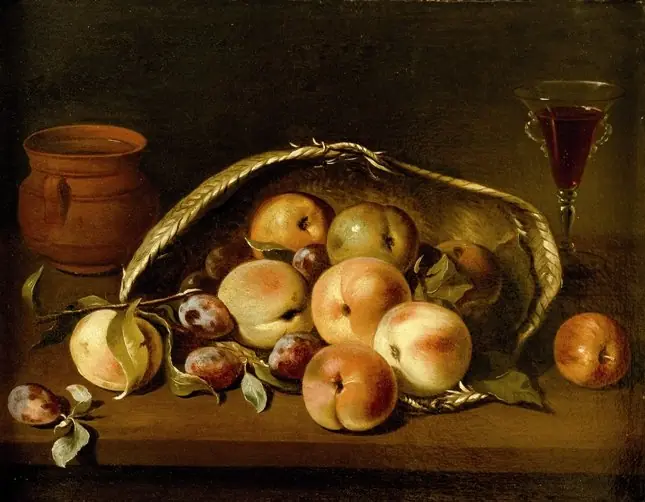
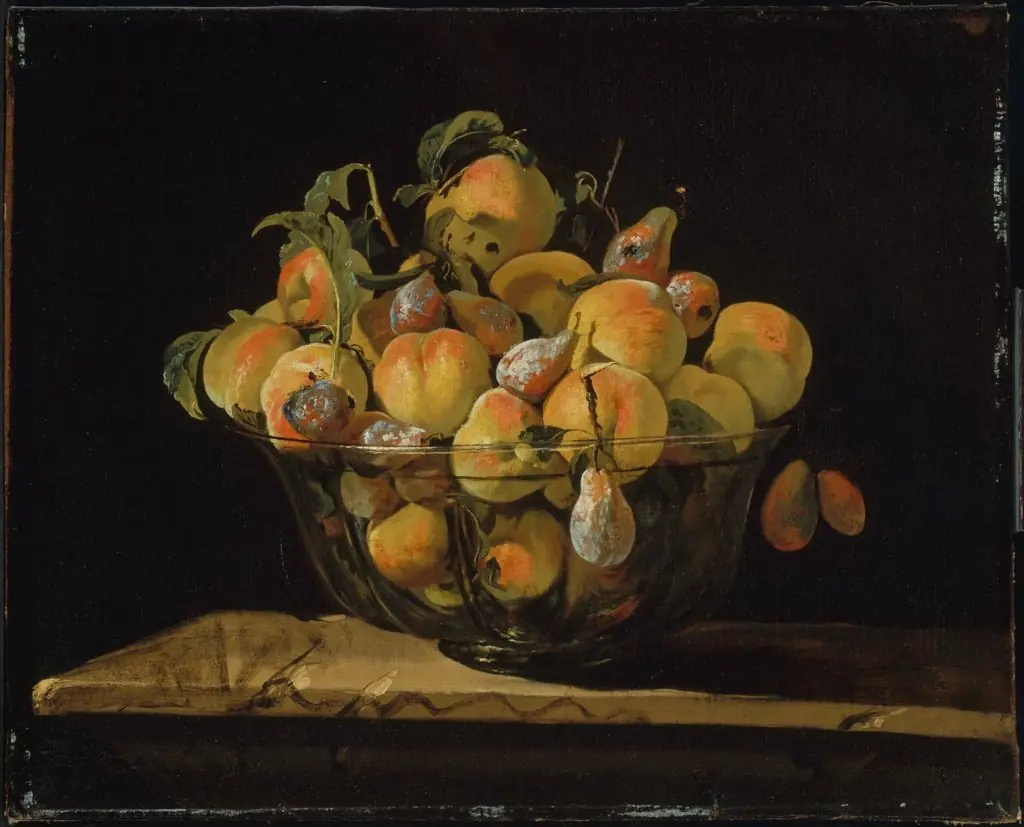
Painted in 1641 by French artist Louise Moillon, this still life presents a wooden basket brimming with peaches, quinces, and plums, their forms spilling gently onto a plain surface. Moillon, one of the few prominent female still life painters of her time, produced a small but carefully observed body of work, of which fewer than forty paintings survive. Her focus on humble domestic objects reflects a quiet precision that distinguished her from more flamboyant contemporaries.
Subject & Meaning
The arrangement of ripe and unripe fruit suggests the passage of time and the natural cycle of growth and decay. Peaches in varying shades of pink and green, alongside deep purple plums and pale quinces, convey abundance without excess. There is no overt symbolism or allegory; instead, the painting honors the sensory presence of everyday produce, valuing its transient beauty through careful observation rather than narrative.
Technique & Style
Moillon employed a restrained palette and fine brushwork to capture the subtle textures of fruit skin, the sheen of dew, and the weave of the basket. Her approach merges the detailed realism of Flemish still life traditions with the understated elegance characteristic of French painting. Light falls evenly across the composition, enhancing volume without dramatic contrast, reinforcing a sense of calm and quiet observation.
History & Provenance
The painting was likely commissioned or collected by French aristocracy or English royalty, as Moillon’s works were sought after by both courts. King Charles I of England owned several of her paintings, indicating her reputation extended beyond France. Though few of her works remain, this piece is among the better-documented, with its date and attribution firmly established through archival records and stylistic analysis.
Context
In mid-17th century France, still life painting was gaining recognition as a serious genre, though often overshadowed by history painting. Moillon worked within a male-dominated field, yet her technical mastery earned her respect. Her focus on fruit, rather than luxury items like silver or exotic goods, aligned with a growing interest in naturalism and the domestic sphere among French patrons.
Legacy
Moillon’s oeuvre, though small, helped define a quiet, observational mode of still life that emphasized authenticity over ornament. Her influence is seen in later French painters who favored restrained compositions and naturalistic detail. Today, her works are studied for their technical discipline and for the rare perspective they offer of a woman’s artistic voice in a period dominated by male practitioners.
Own this work as a print
Artist & collection
Artist
Louise Moillon (c. 1610–1696) was a French still life painter in the Baroque era. It is recorded that she became known as one of the best still life painters of her time, as her work was purchased by King Charles I of…

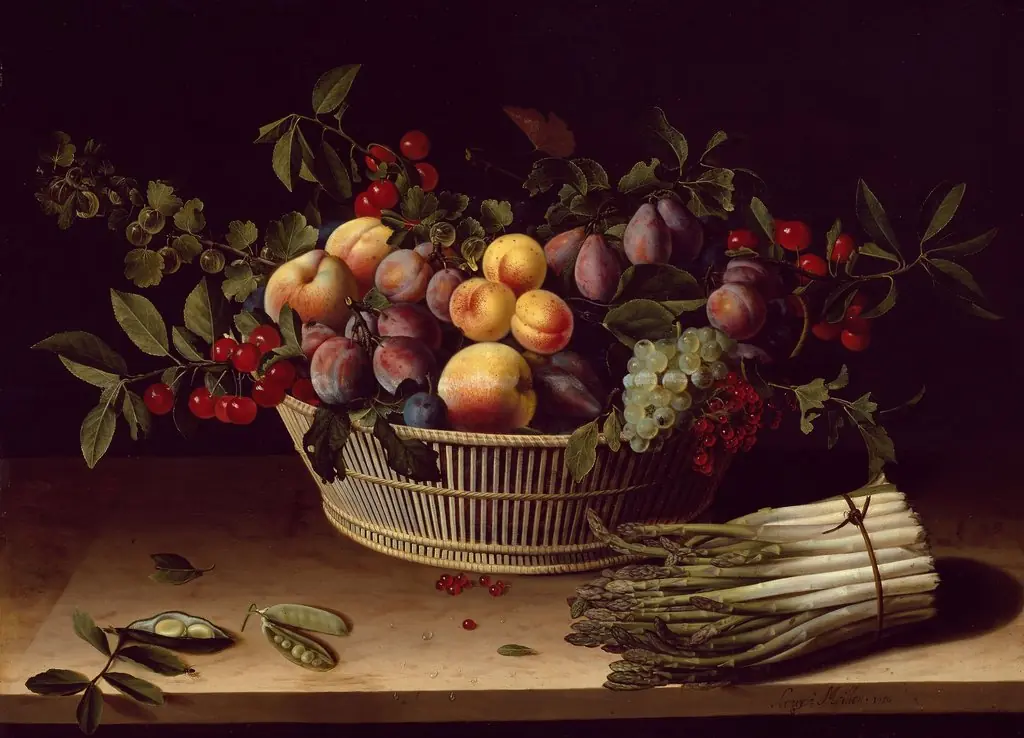 Still Life with a Basket of Fruit and a Bunch of Asparagus
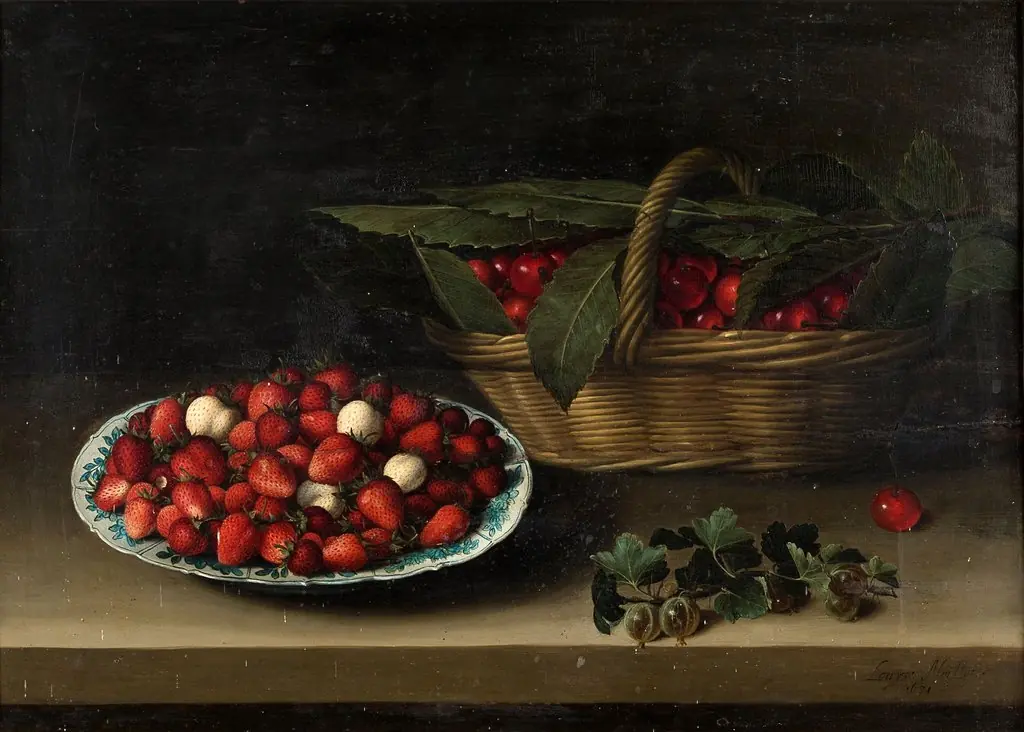 Still Life with a Bowl of Strawberries, Basket of Cherries, and Branch of Gooseberries
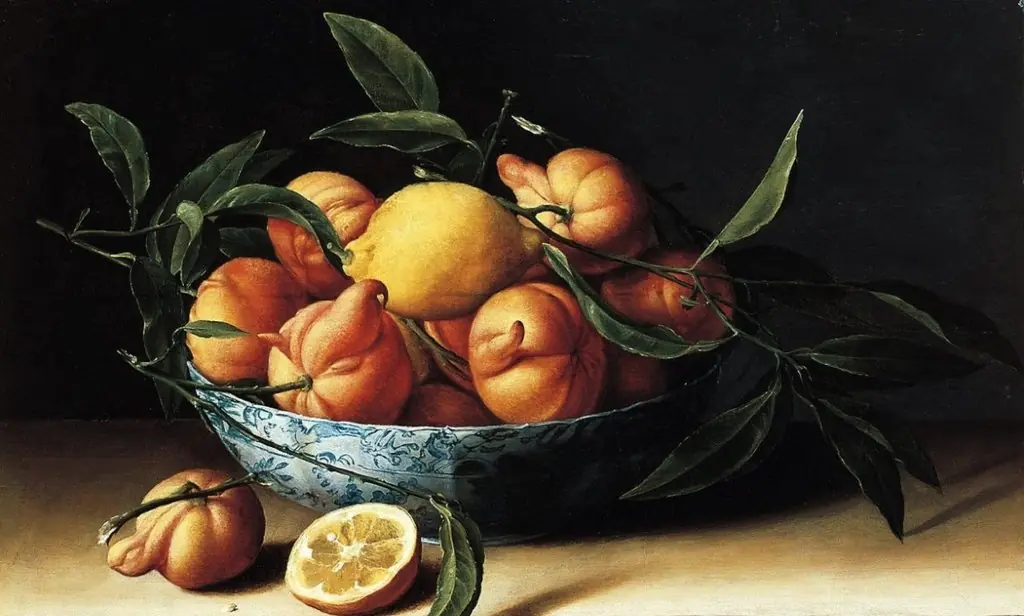 Still Life with Bowl of Curacao Oranges
 Still Life with a Basket of Peaches and Grapes
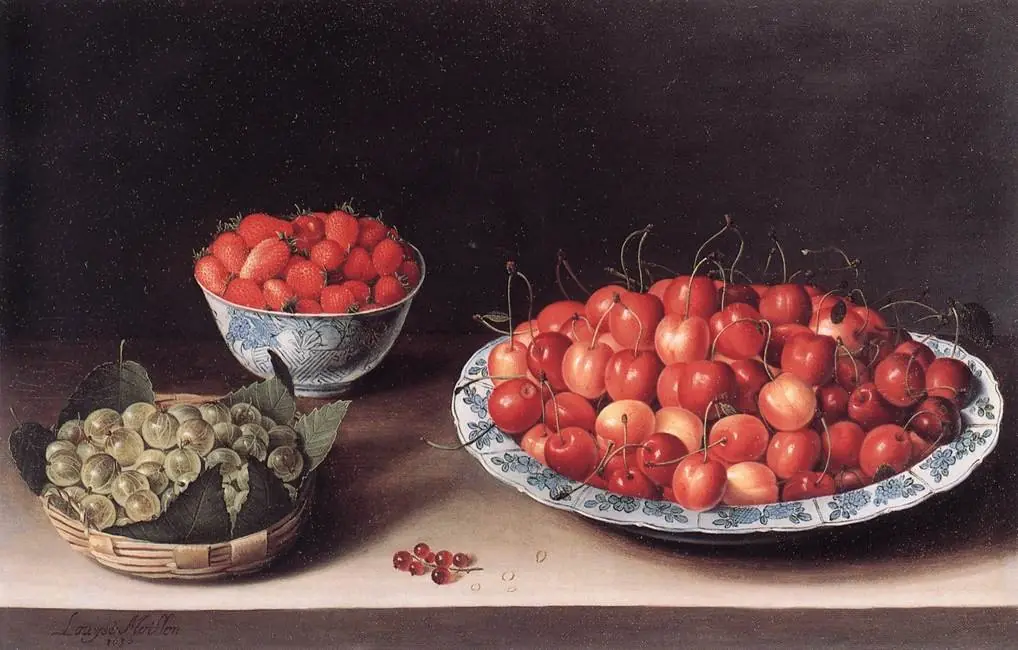 Still Life with Cherries, Strawberries and Gooseberries
 Still Life with a Basket of Fruit and a Bunch of Asparagus