Artwork
Portrait of Amalia van Solms -Braunfels (1602-1675)
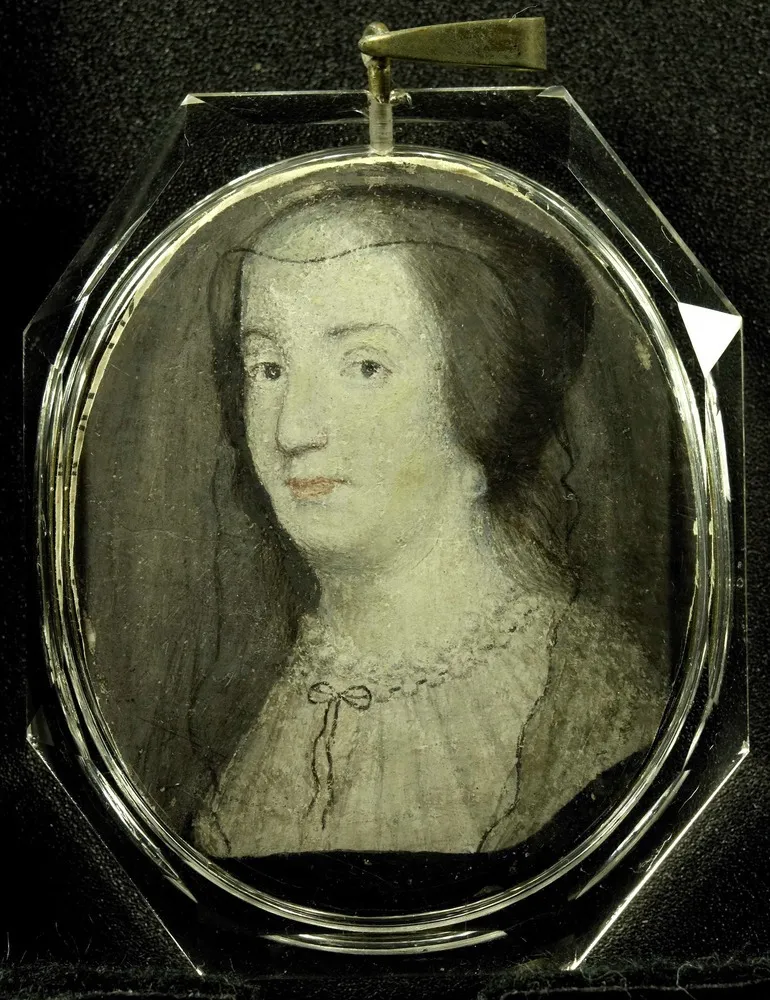
Portrait of Amalia van Solms -Braunfels (1602-1675) is an unspecified painting by the Dutch Golden Age artist Unknown. It dates from 1674 and is held in the collection of the Rijksmuseum. The work is a circular portrait executed on cardboard, depicting Amalia van Solms‑Braunfels (1602‑1675).
About this work
Overview
The work is a circular portrait executed on cardboard, depicting Amalia van Solms‑Braunfels (1602‑1675). Rendered in a restrained palette, the figure is set against a dark background that isolates her white, high‑necked dress and emphasizes the delicate modeling of her face. The composition conveys a calm, introspective mood, with the sitter’s gaze directed downward and her lips gently ajar.
Subject & Meaning
Amalia van Solms‑Braunfels, a Dutch noblewoman of the 17th century, is presented in a dignified yet unadorned manner. The neutral expression and downward glance suggest contemplation rather than overt display of status, aligning with contemporary ideals of modesty and inner virtue for women of her rank.
Technique & Style
The portrait employs a limited color scheme, with the dark ground contrasting against the luminous white of the dress and the subtle flesh tones. Executed on cardboard, the artist achieved fine detail in the hair and facial features through careful brushwork, while the circular frame adds a sense of intimacy to the composition.
History & Provenance
The painting is part of the Rijksmuseum’s collection in Amsterdam. Its provenance traces back to the Dutch aristocratic family of van Solms‑Braunfels, though specific acquisition details are not recorded in the available sources.
Context
Created during the Dutch Golden Age, the portrait reflects the period’s emphasis on realistic representation and restrained elegance in portraiture. The use of cardboard as a support was less common than canvas or panel, indicating either a private commission or a work intended for limited display.
Artist & collection

 Domestic Scene
 Giacomo and Cardinal Marco, investing Andrea, Abbot of San Zeno, with his Benefice
 The Nymph of Fontainebleau
 Portrait of a Woman
 Madonna and Child with Saints in the Enclosed Garden
 Venus and Minerva
 Family Group of Four on Sofa
 Wall painting from Room H of the Villa of P. Fannius Synistor at Boscoreale
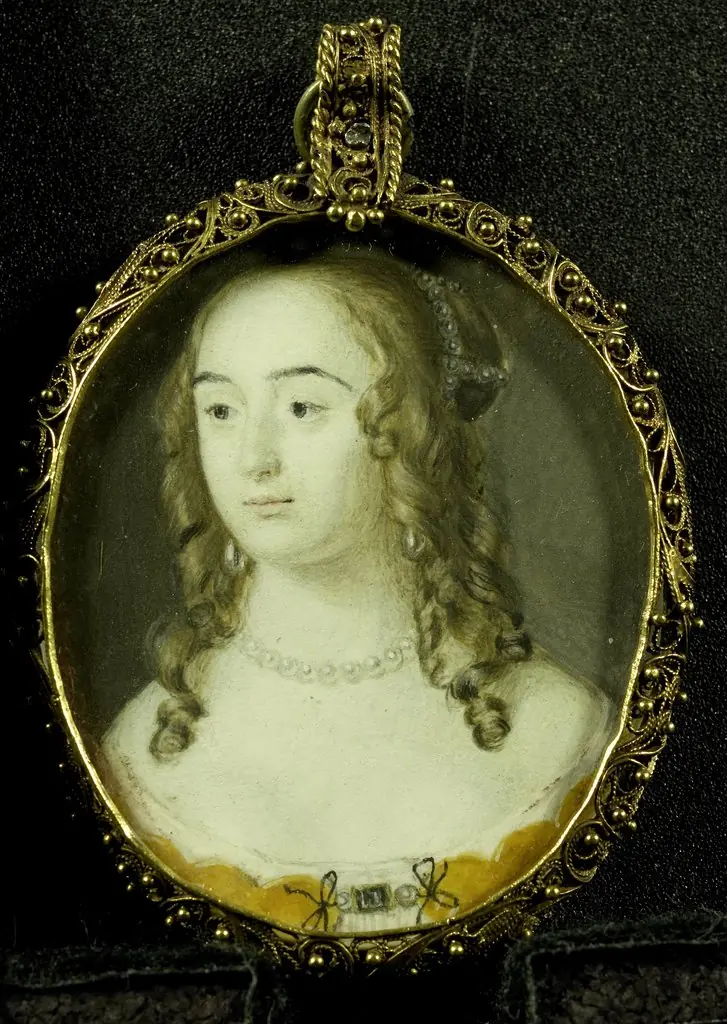 Henriette Marie (1626–51) of Paltz, daughter of Frederick V, King of Bohemia, nicknamed the 'Winter King'.
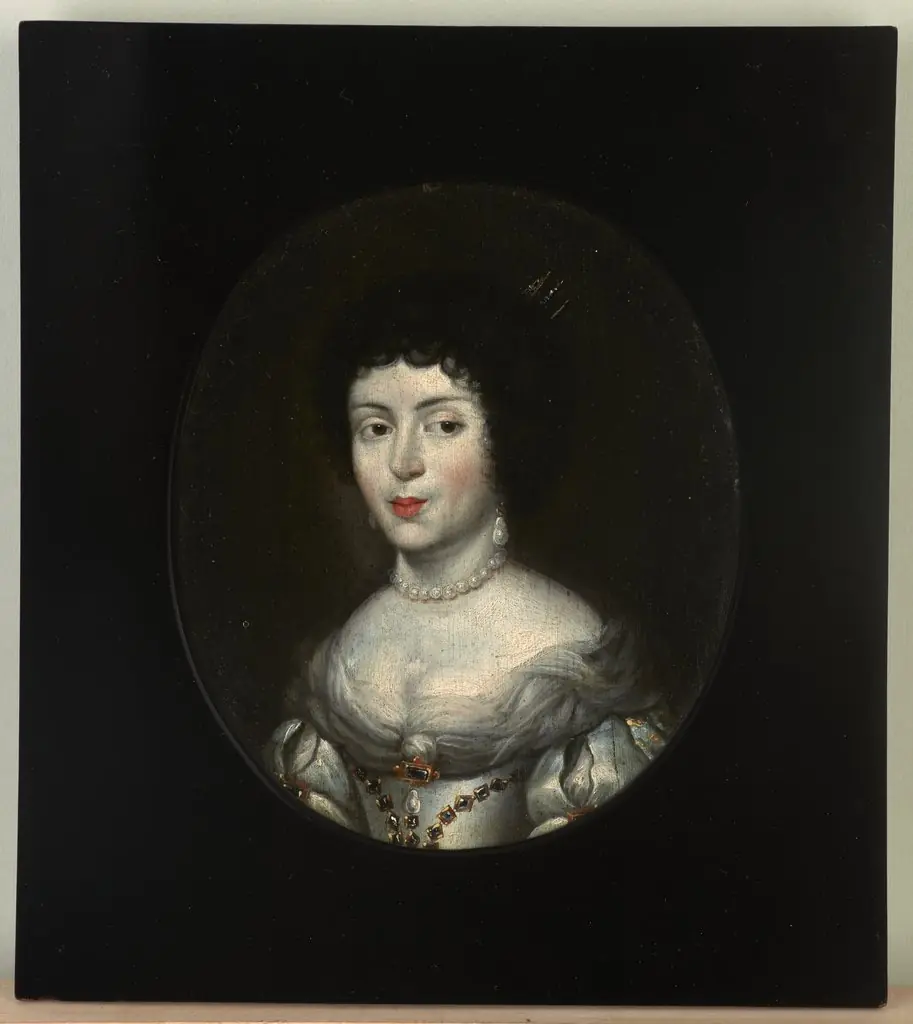 Portret Marii Kazimiery de la Grange d'Arquien Sobieskiej, zwanej Marysieńką (1641-1716), królowej Polski, żony Jana III Sobieskiego
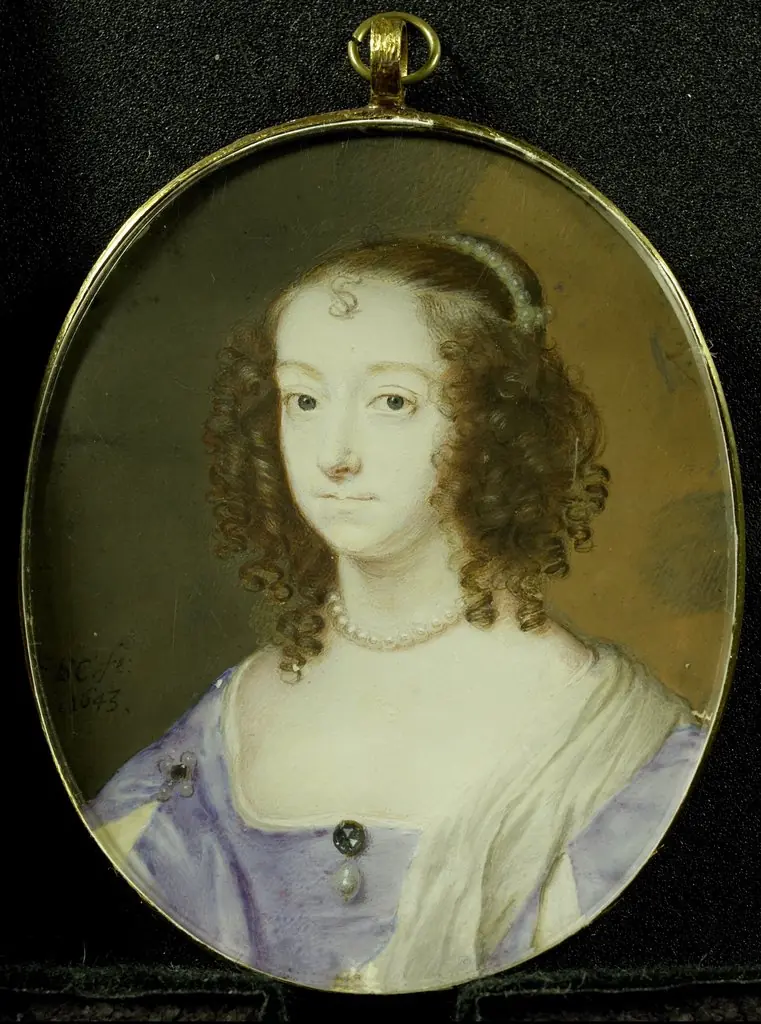 Portret van een vrouw
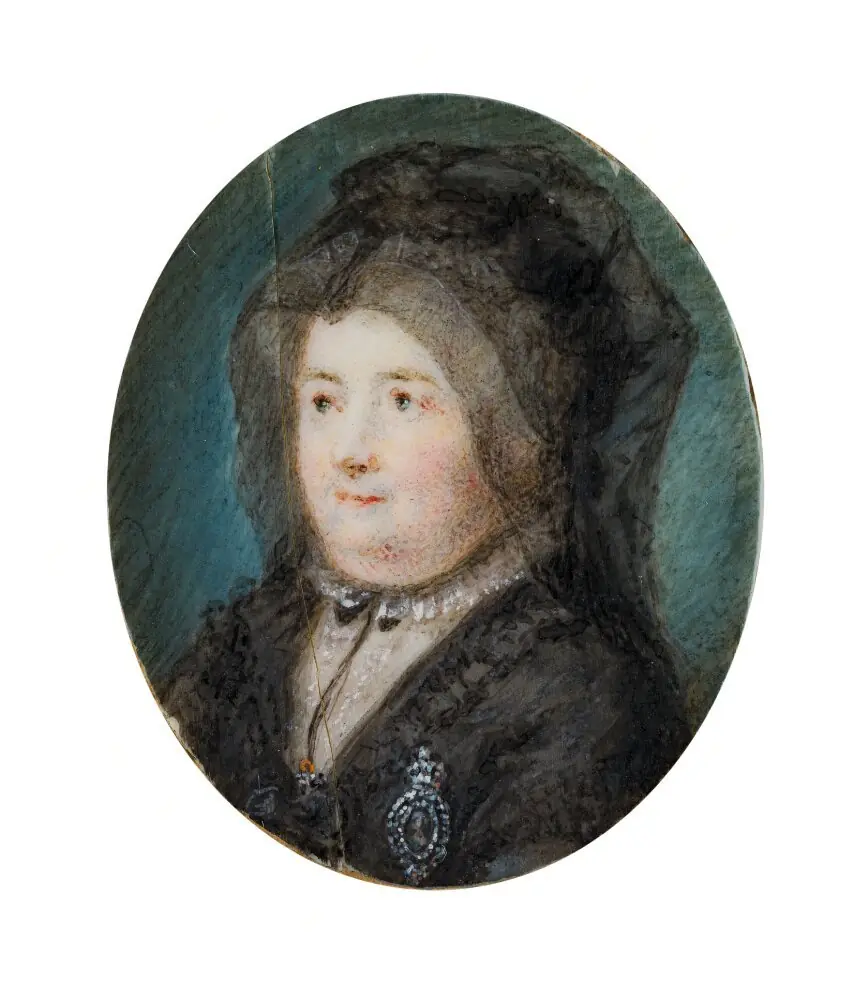 Charlotta Fredrika Sparre (1719-1795), g von Fersen, överhovmästarinna
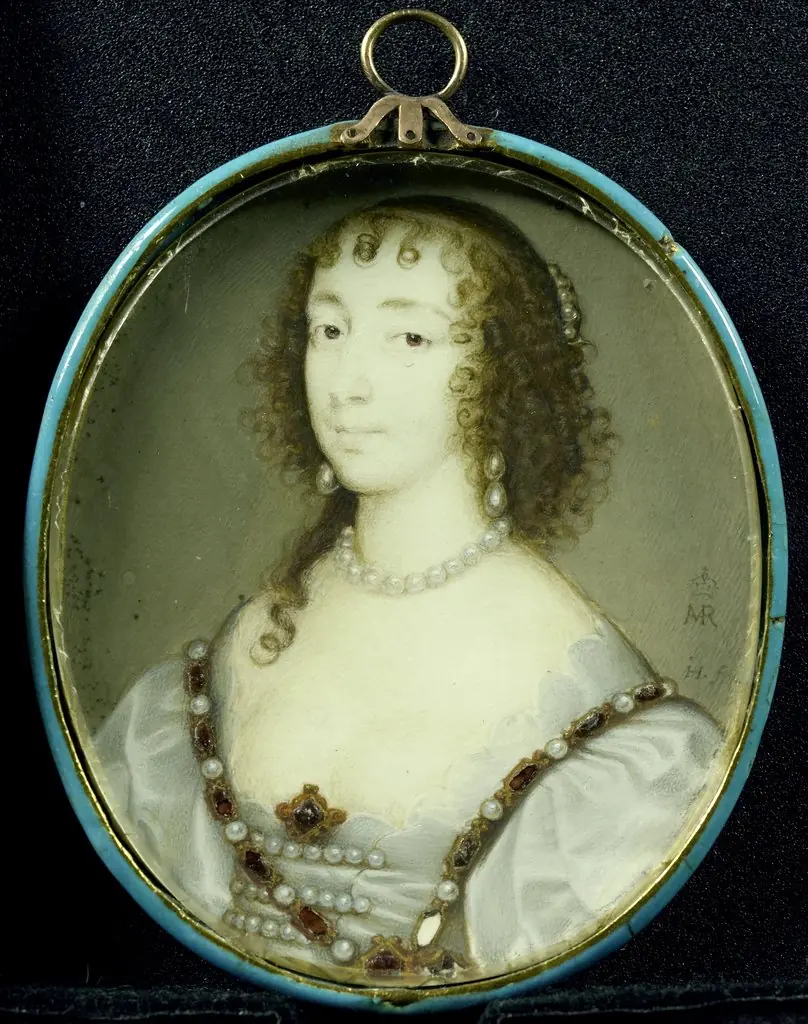 Portrait of Henriëtte Maria of France (1609-1669), wife of Charles I of England
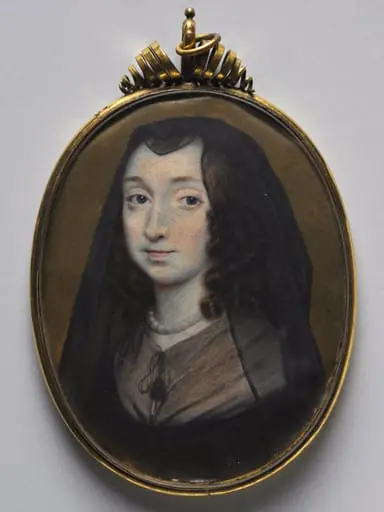 Portrait of Elizabeth Morrison, Lady Capell of Hadham
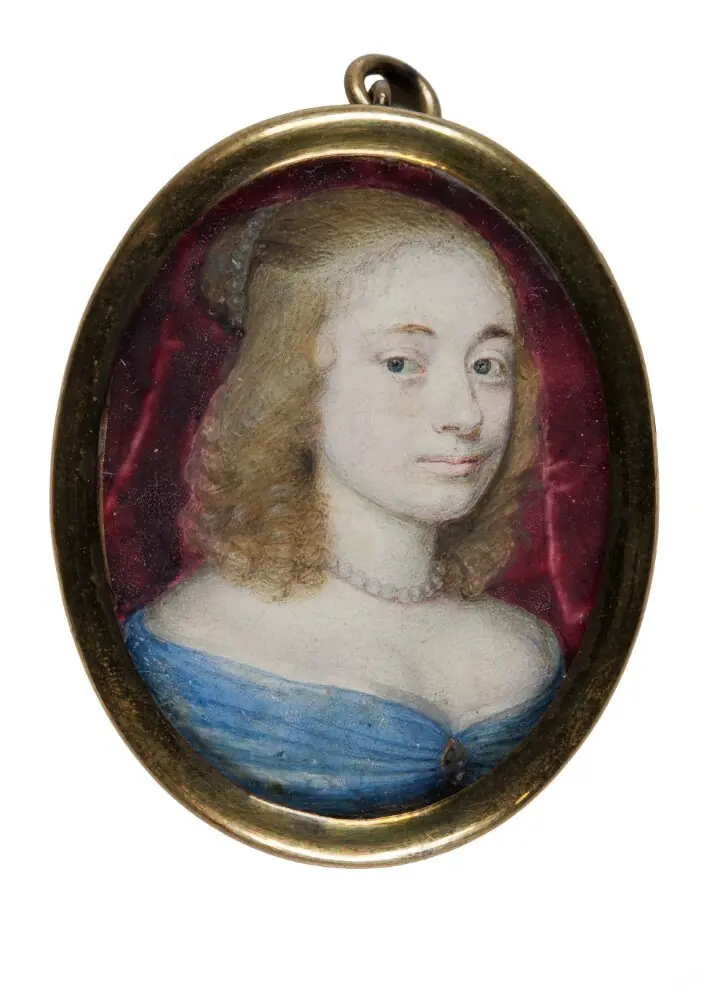 Unknown woman
 Arabella Stuart
 Portret van een meisje, vermoedelijk een dochter van George II, koning van Engeland
 Elizabeth, daughter of Sir Robert Owen