Artwork
Landscape with a Steep Cliff
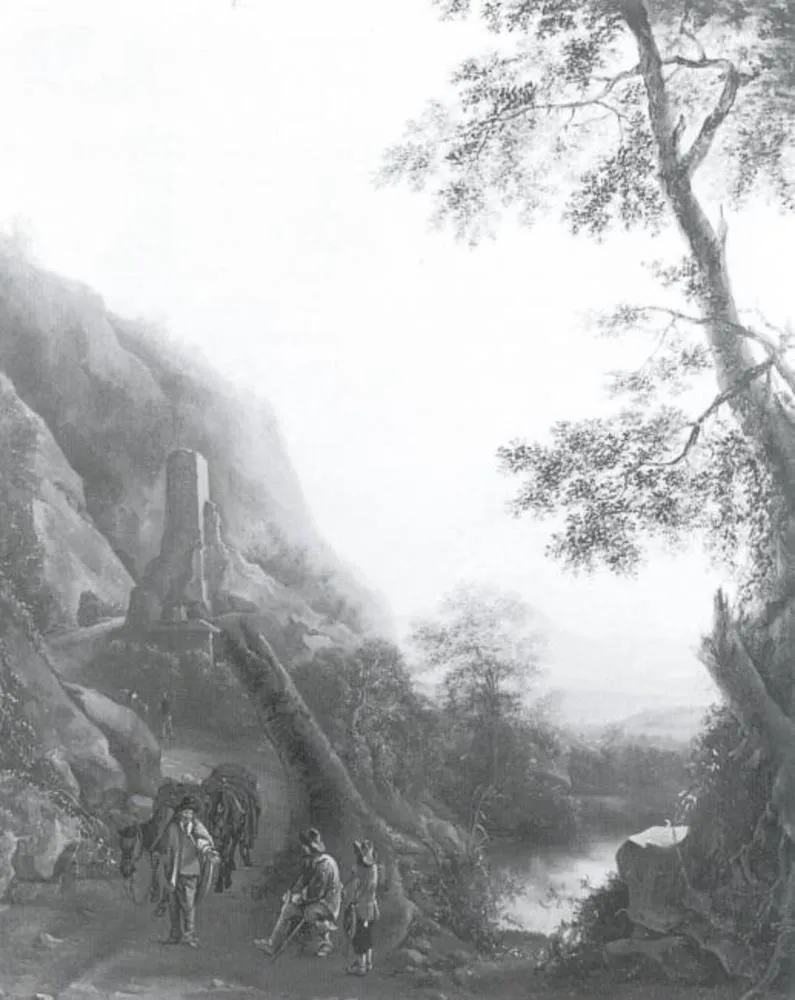
Landscape with a Steep Cliff is an oil painting by the Dutch Golden Age artist Unknown. It dates from 1649 and is held in the collection of the Nationalmuseum. This oil painting depicts a rugged natural landscape dominated by a towering cliff on the left.
About this work
Overview
This oil painting depicts a rugged natural landscape dominated by a towering cliff on the left. A winding path ascends the rock face, leading the eye upward. In the foreground, two figures—a standing man with a dog and a seated man beside a horse—anchor the scene. The composition emphasizes quiet solitude within nature, with no signs of human settlement or activity beyond these figures.
Subject & Meaning
The figures appear incidental to the landscape, suggesting a contemplative relationship between humans and the natural world. The lone man and his dog, along with the seated figure and horse, imply rest or transit rather than labor or purpose. The absence of narrative detail invites interpretation as a meditation on stillness, endurance, or the modest presence of life amid imposing geology.
Technique & Style
The artist employs chiaroscuro to model the cliff’s form and deepen spatial recession, with strong contrasts between sunlit surfaces and shadowed crevices. Textures are rendered with careful brushwork—rough stone, dense foliage, and the coarse coats of the animals are distinguished through layered pigments. The palette is restrained, favoring earth tones that enhance the scene’s quiet realism.
History & Provenance
The painting’s origin and early ownership are undocumented in available records. It has been held in private collections since at least the mid-20th century, with no public exhibition history prior to recent decades. No archival correspondence or artist’s notes have surfaced to clarify its date or commission.
Context
Created during a period when landscape painting increasingly valued naturalism over idealized scenery, this work aligns with regional traditions that emphasized topographical accuracy and atmospheric effect. It reflects a broader 18th- to 19th-century shift toward observing nature directly, though it lacks the dramatic scale or romantic tension found in contemporaneous Alpine or mountain scenes.
Legacy
Though not widely reproduced or studied, the painting contributes to a quieter strand of landscape art that prioritizes subtle observation over spectacle. Its preservation offers insight into how lesser-known artists engaged with natural forms, balancing detail with compositional restraint. It remains a quiet example of pre-modern landscape sensibility.
Artist & collection

 Domestic Scene
 Giacomo and Cardinal Marco, investing Andrea, Abbot of San Zeno, with his Benefice
 The Nymph of Fontainebleau
 Portrait of a Woman
 Madonna and Child with Saints in the Enclosed Garden
 Venus and Minerva
 Family Group of Four on Sofa
 Wall painting from Room H of the Villa of P. Fannius Synistor at Boscoreale
 Idyllische Landschaft
 Wood-Clad Rocks with Waterfall
 River Landscape with Cattle
 Southern Landscape, Sunset
 Komponierte Landschaft mit Jägern
 Bjerglandskab med ruiner
 Wood-Clad Rocks with Waterfall
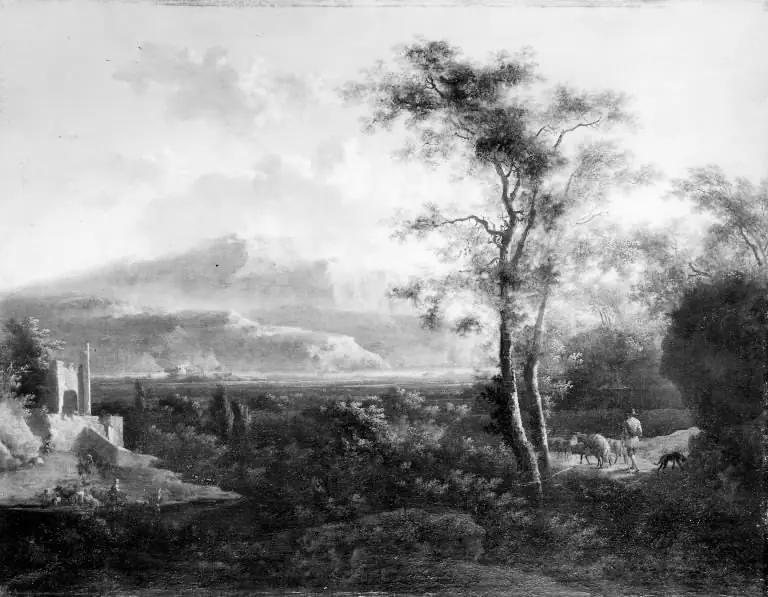 Italianate Landscape
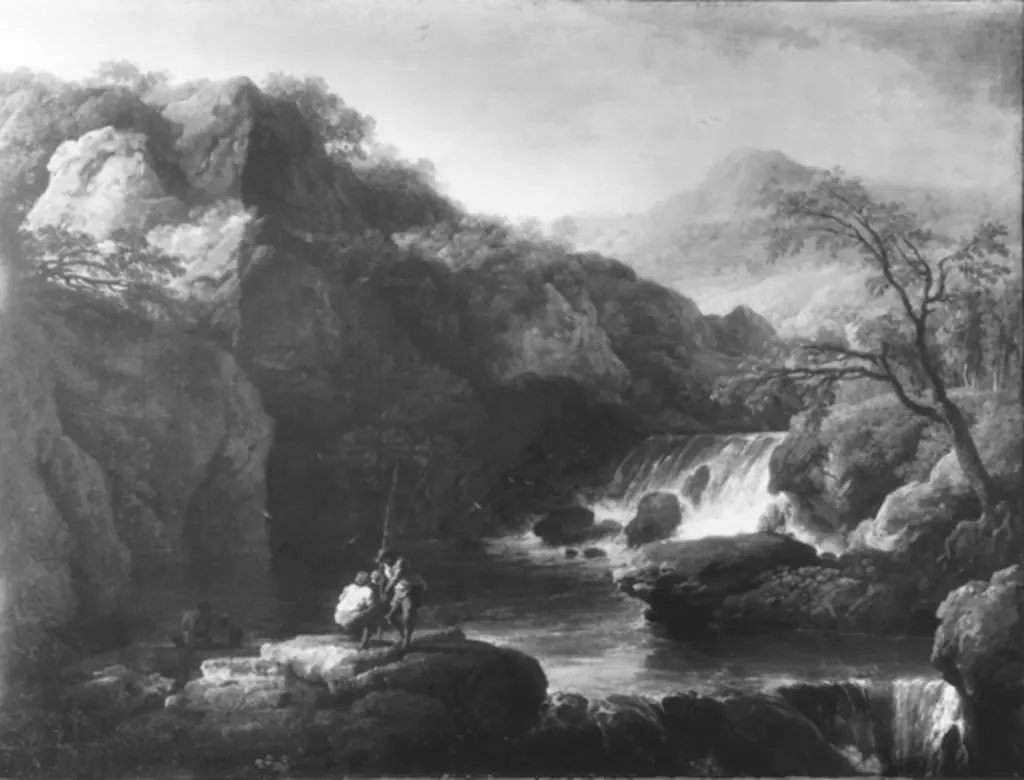 Gebirgslandschaft mit Fluss und Wasserfällen
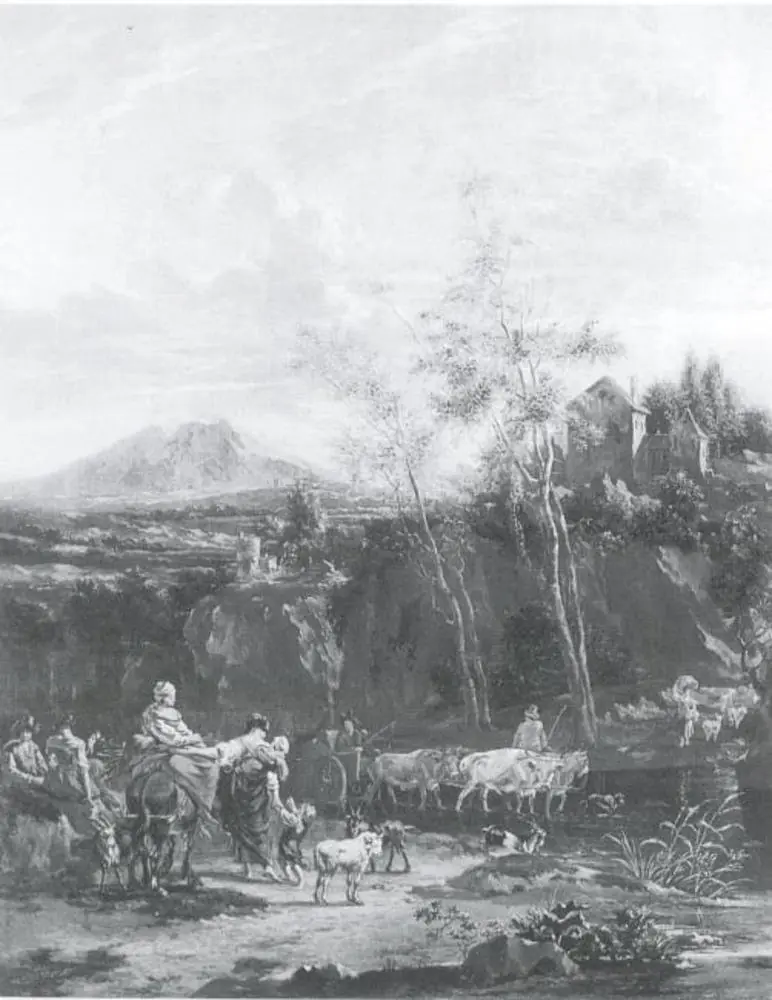 Peasants and Cattle at a Ford
 Italianate Landscape
 Forest Landscape (The Rest on the Flight into Egypt)