Artwork
Christ on the Cross with Mary Magdalene
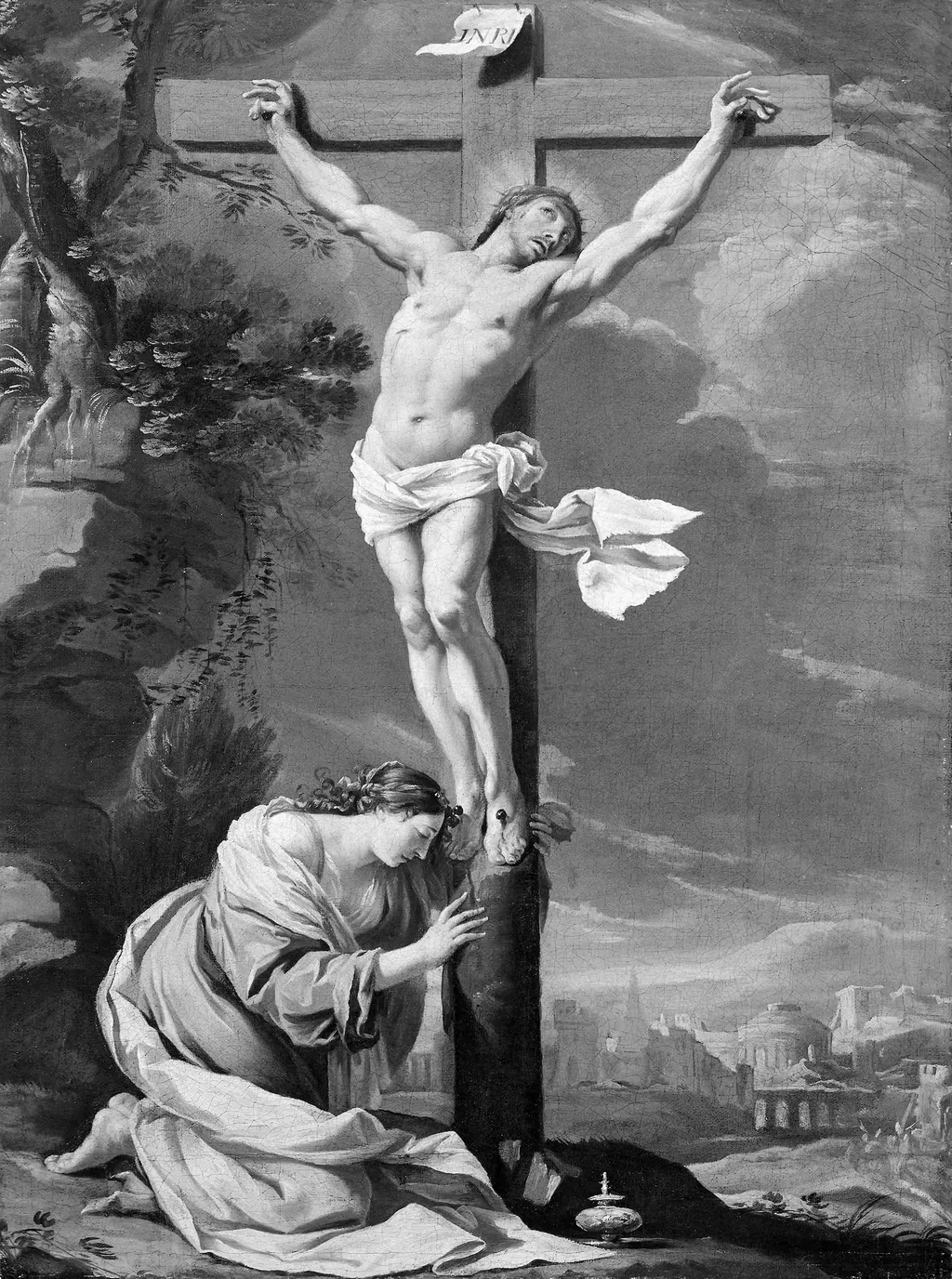
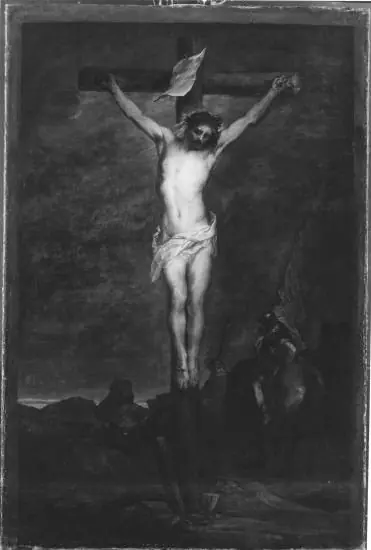
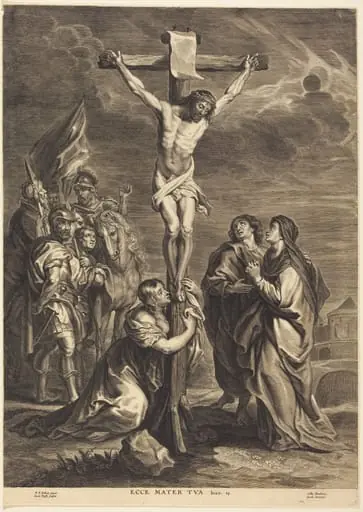
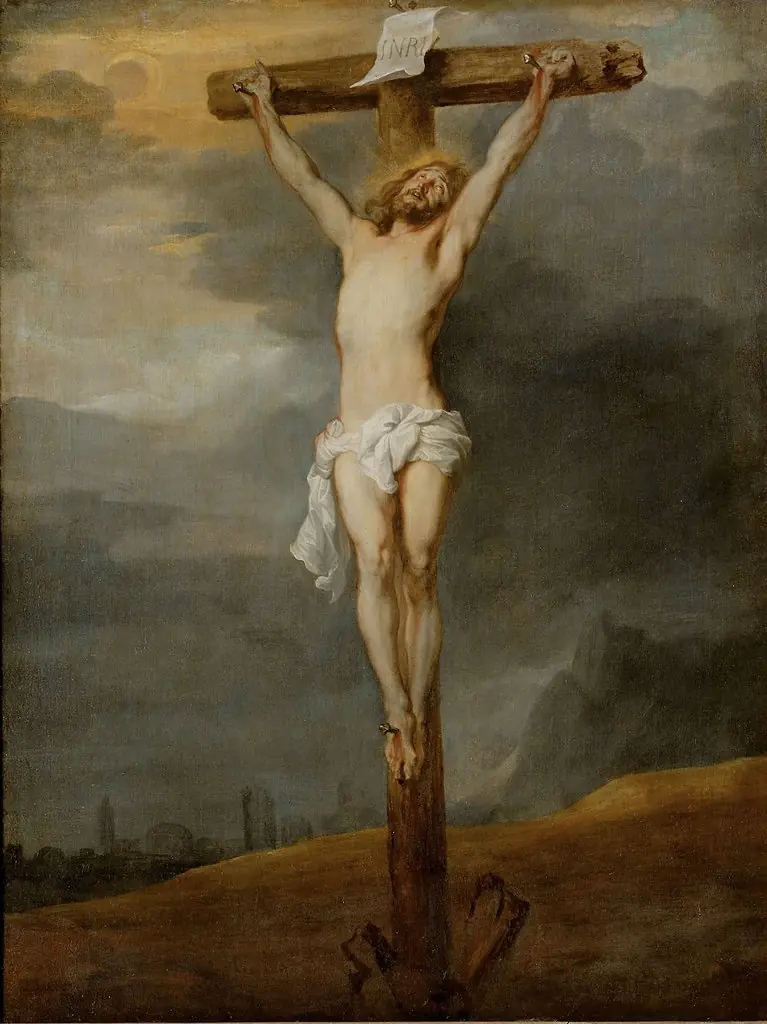
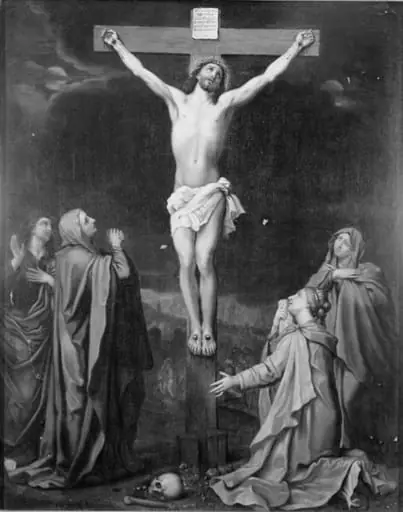
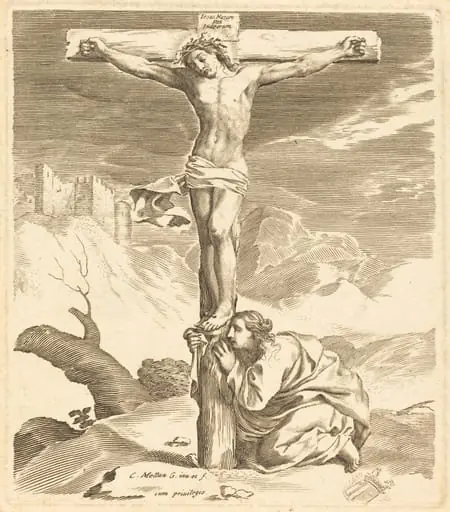
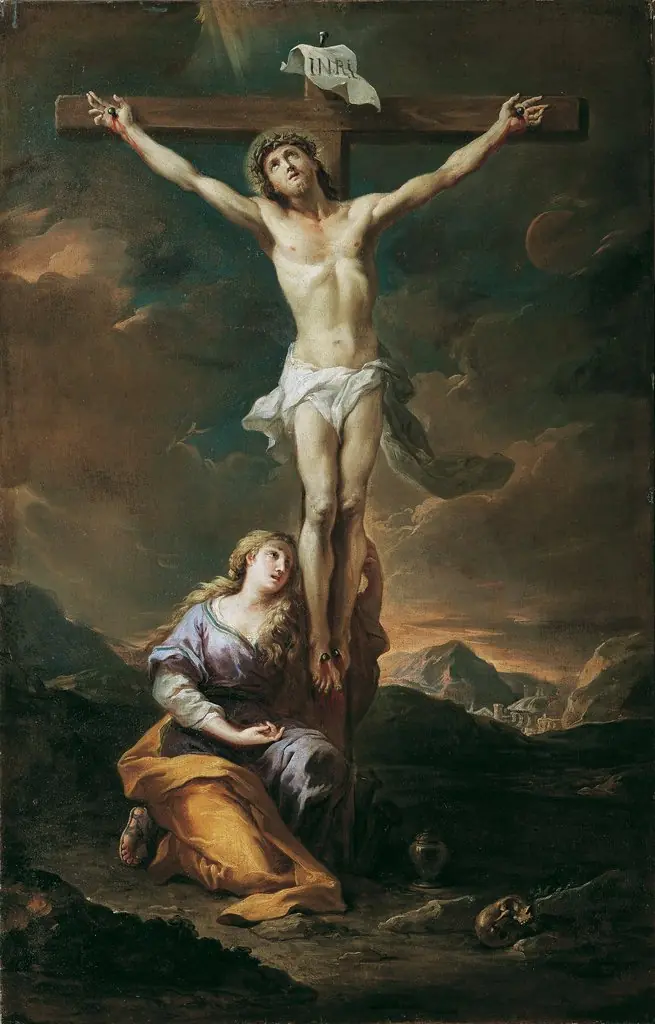
Christ on the Cross with Mary Magdalene is an oil painting by the Flemish Baroque painting artist Unknown. It dates from 1645 and is held in the collection of the Art Institute of Chicago. This oil painting depicts Christ crucified on a wooden cross, with Mary Magdalene kneeling at its base.
About this work
Overview
This oil painting depicts Christ crucified on a wooden cross, with Mary Magdalene kneeling at its base. The scene is rendered in a dim, atmospheric setting, with a distant cityscape barely visible behind the figures. The composition centers on the stillness of the crucified body and the quiet devotion of the woman, creating a contemplative mood through restrained gesture and shadow.
Subject & Meaning
The subject portrays the moment of Christ’s death on the cross, a key event in Christian theology. Mary Magdalene, often associated with repentance and devotion, is shown in silent reverence, her bowed head and upward gaze expressing grief and awe. The absence of other figures intensifies the intimacy of the moment, emphasizing personal mourning and spiritual reflection.
Technique & Style
The artist employs chiaroscuro to model form and depth, using strong contrasts between light and shadow to define Christ’s body and the folds of Magdalene’s robe. The dark, enveloping background isolates the figures, heightening emotional focus. Brushwork is subdued, avoiding theatricality in favor of quiet realism, with textures rendered through layered glazes rather than bold strokes.
History & Provenance
The painting’s origin is not documented in public records, but its style aligns with early 17th-century devotional works from Italy or the Spanish Netherlands.
The painting’s origin is not documented in public records, but its style aligns with early 17th-century devotional works from Italy or the Spanish Netherlands. It likely served a private or ecclesiastical context, intended for meditation rather than public display. No known records trace its ownership before the 20th century, and its current location remains unverified in institutional collections.
Context
Created during a period when Counter-Reformation theology emphasized personal piety and emotional engagement with sacred scenes, this work reflects a broader trend in Catholic art to foster intimate connection with Christ’s suffering. The inclusion of Mary Magdalene, rather than the Virgin Mary, suggests a focus on penitence and witness, themes encouraged by contemporary sermons and devotional literature.
Legacy
Though not widely reproduced or studied, the painting exemplifies a quiet strain of Baroque religious art that prioritized introspection over spectacle. Its restrained composition and emotional subtlety influenced later devotional works that favored psychological depth over dramatic intensity, contributing to a more personal mode of sacred representation in European painting.
Artist & collection

 Domestic Scene
 Giacomo and Cardinal Marco, investing Andrea, Abbot of San Zeno, with his Benefice
 The Nymph of Fontainebleau
 Portrait of a Woman
 Madonna and Child with Saints in the Enclosed Garden
 Venus and Minerva
 Family Group of Four on Sofa
 Wall painting from Room H of the Villa of P. Fannius Synistor at Boscoreale