Artwork
Portrait of Ivan V. Manteuffel (1771-1813)
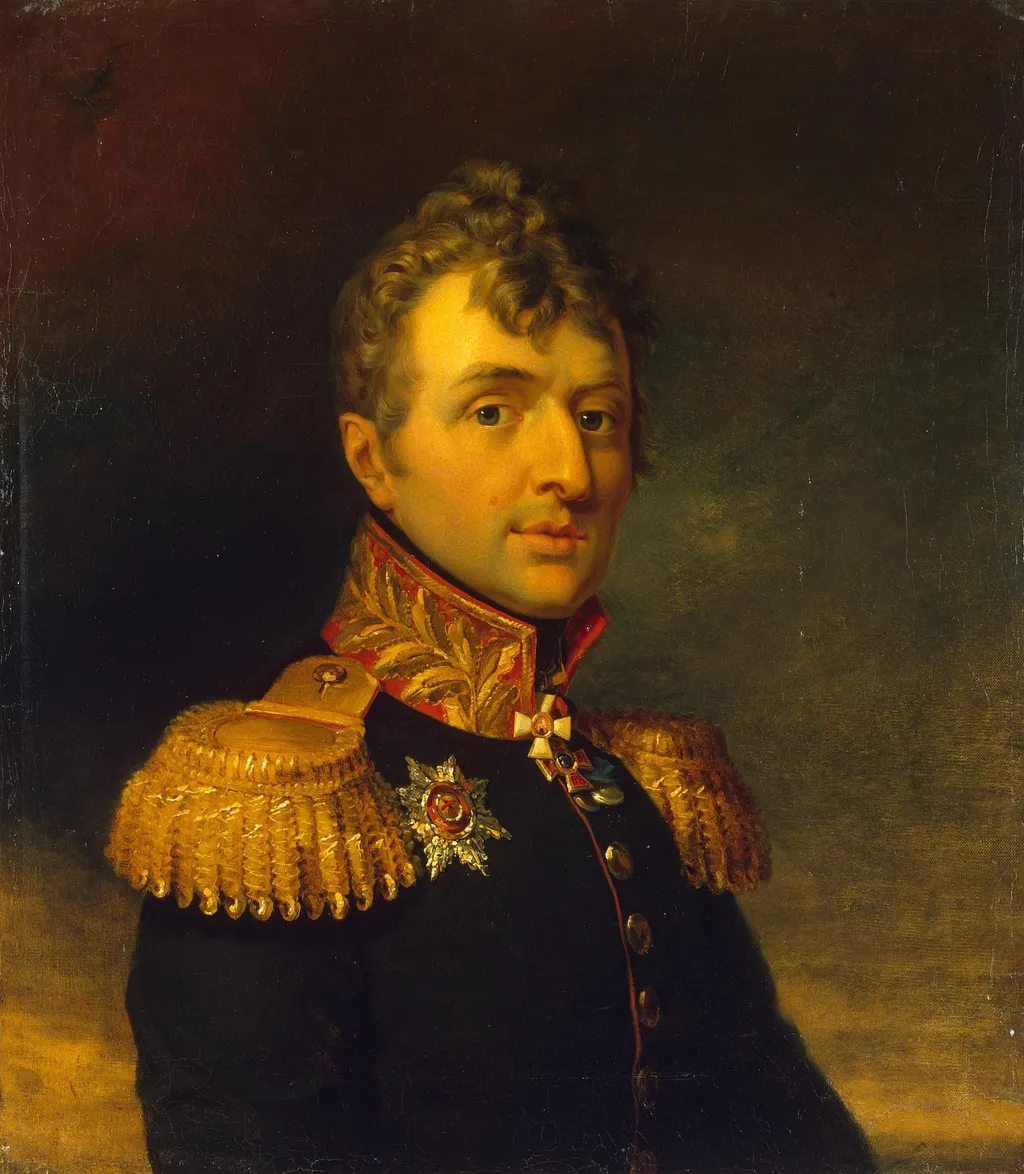
Portrait of Ivan V. Manteuffel (1771-1813) is an oil painting by Unknown. It dates from 1822 and is held in the collection of the Hermitage Museum. This oil painting depicts Ivan V.
About this work
Overview
The composition emphasizes his military bearing and composed demeanor, with visible brushwork suggesting a deliberate, tactile approach to surface and texture.
This oil painting depicts Ivan V. Manteuffel, a Russian military officer who lived from 1771 to 1813. Rendered in a formal portrait style, the subject is shown in full figure against a dark, muted background with subtle lighting on the right. The composition emphasizes his military bearing and composed demeanor, with visible brushwork suggesting a deliberate, tactile approach to surface and texture.
Subject & Meaning
Manteuffel is portrayed in uniform, signaling his rank and service. His dark jacket with gold epaulets and red collar denotes military distinction, while his direct gaze and faint smile convey quiet confidence rather than aggression. The absence of symbolic objects or elaborate settings focuses attention on his presence, suggesting an emphasis on personal character over institutional grandeur.
Technique & Style
The artist employed oil paint with loose, discernible brushstrokes, particularly in the fabric of the uniform and the rendering of hair. The dark background enhances the figure’s volume, while the soft illumination on the right adds depth without dramatic contrast. The treatment of skin and fabric shows attention to texture, balancing realism with a restrained, almost intimate brush handling.
History & Provenance
The portrait entered the collection of the State Hermitage Museum in Saint Petersburg, where it remains today. While the artist’s identity is not specified in the provided details, the work aligns with early 19th-century Russian portraiture practices, likely commissioned by the subject’s family or military circle to commemorate his service.
Context
During Manteuffel’s lifetime, Russia was engaged in the Napoleonic Wars, and military figures were increasingly depicted in portraits that emphasized duty and personal resolve. This work reflects a shift from aristocratic grandeur toward individualized representation, capturing officers not as symbols of power but as disciplined, human figures.
Legacy
The portrait contributes to a broader corpus of Russian military portraiture from the early 1800s, offering insight into how service and identity were visually articulated outside courtly traditions. Its preservation in the Hermitage underscores its role as a historical document, preserving the likeness and demeanor of a lesser-known officer from a turbulent era.
Artist & collection

 Domestic Scene
 Giacomo and Cardinal Marco, investing Andrea, Abbot of San Zeno, with his Benefice
 The Nymph of Fontainebleau
 Portrait of a Woman
 Madonna and Child with Saints in the Enclosed Garden
 Venus and Minerva
 Family Group of Four on Sofa
 Wall painting from Room H of the Villa of P. Fannius Synistor at Boscoreale
 Portrait of Ivan F. Udom (1769-1821) (1st)
 Portrait of Ivan D. Panchulidzev (1759-1815) (1st)
 Portrait of Ivan Ye. Shevich (1754-1813)
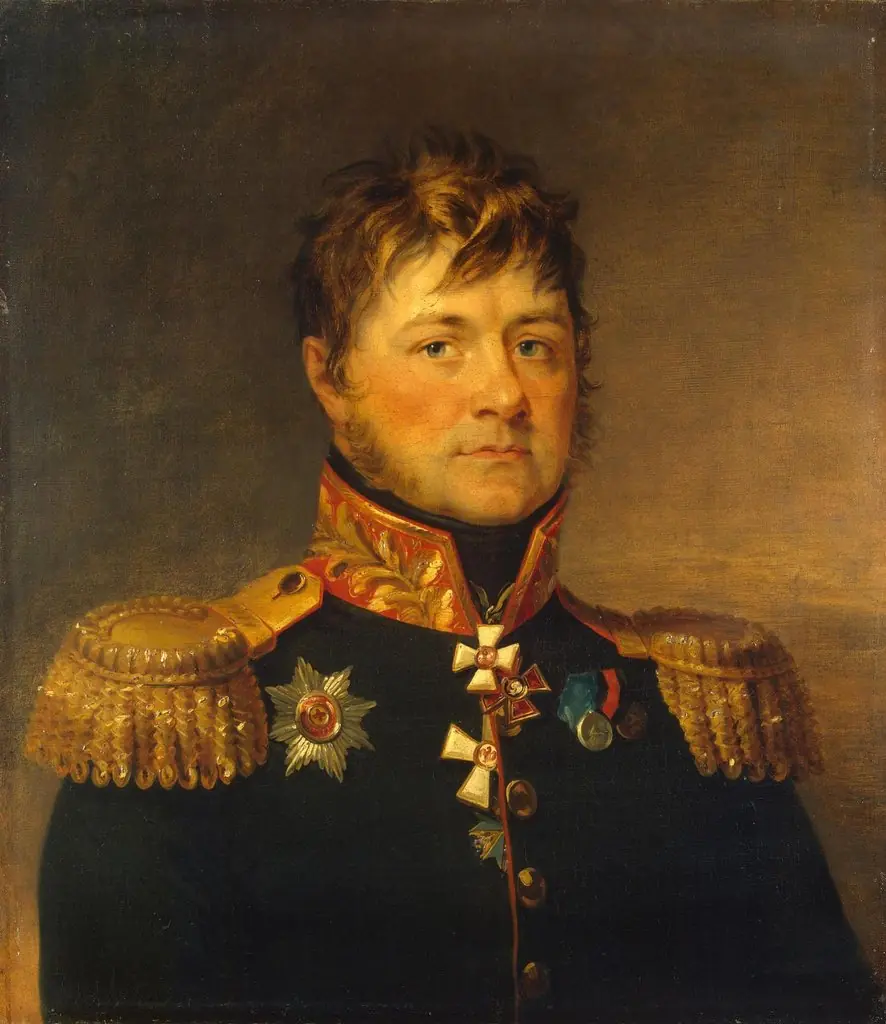 Portrait of Ivan L. Paul (1768-1840)
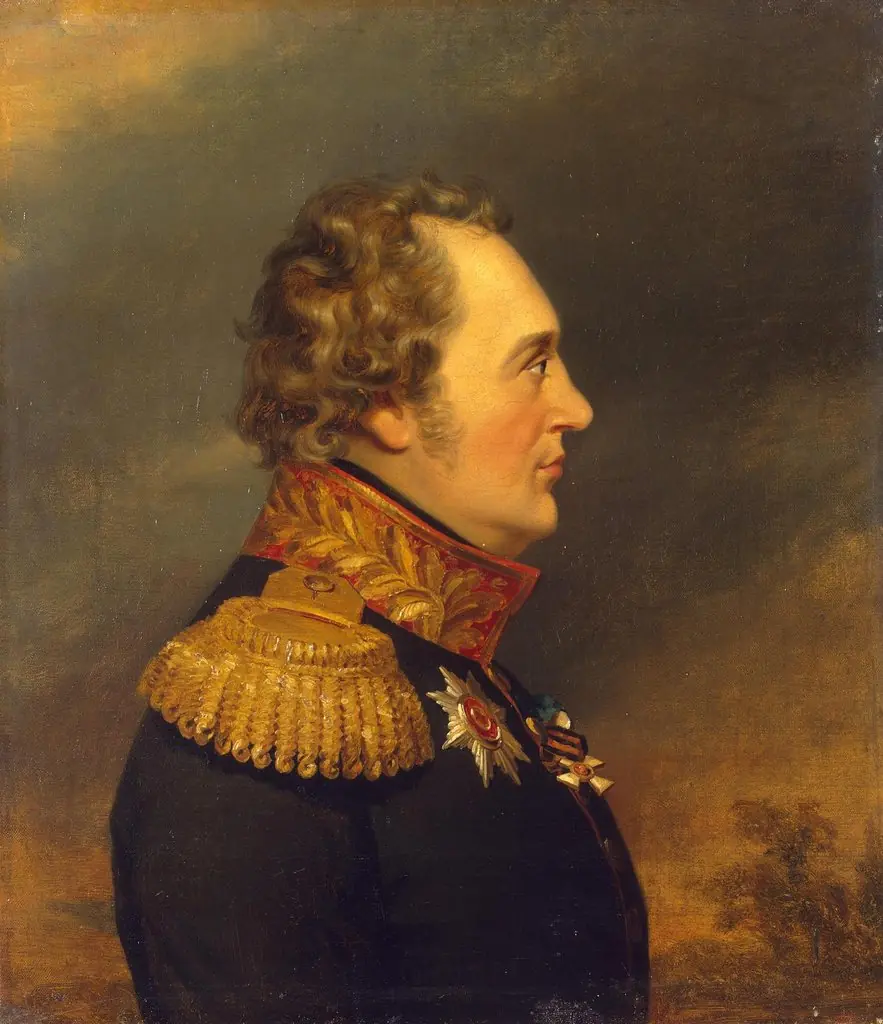 Portrait of Ivan N. (Magnus Gustav) Essen (1758/59-1813)
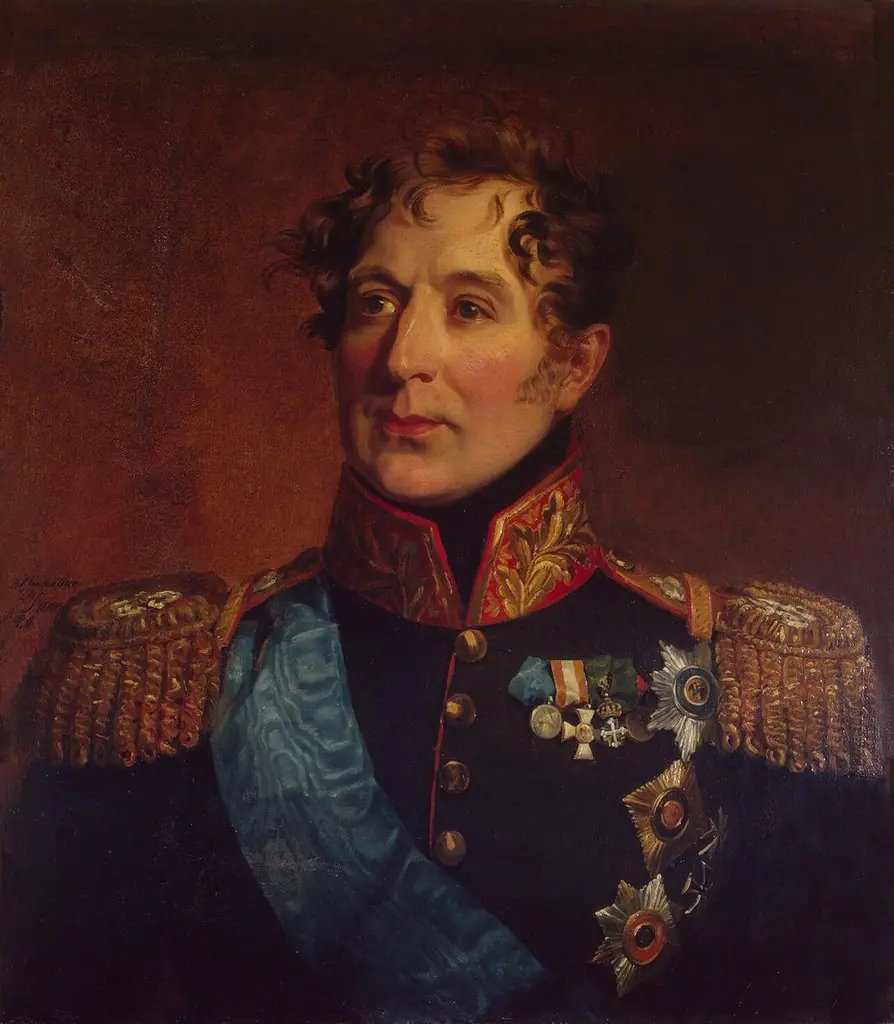 Portrait of Mikhail A. Miloradovich (1771-1825)
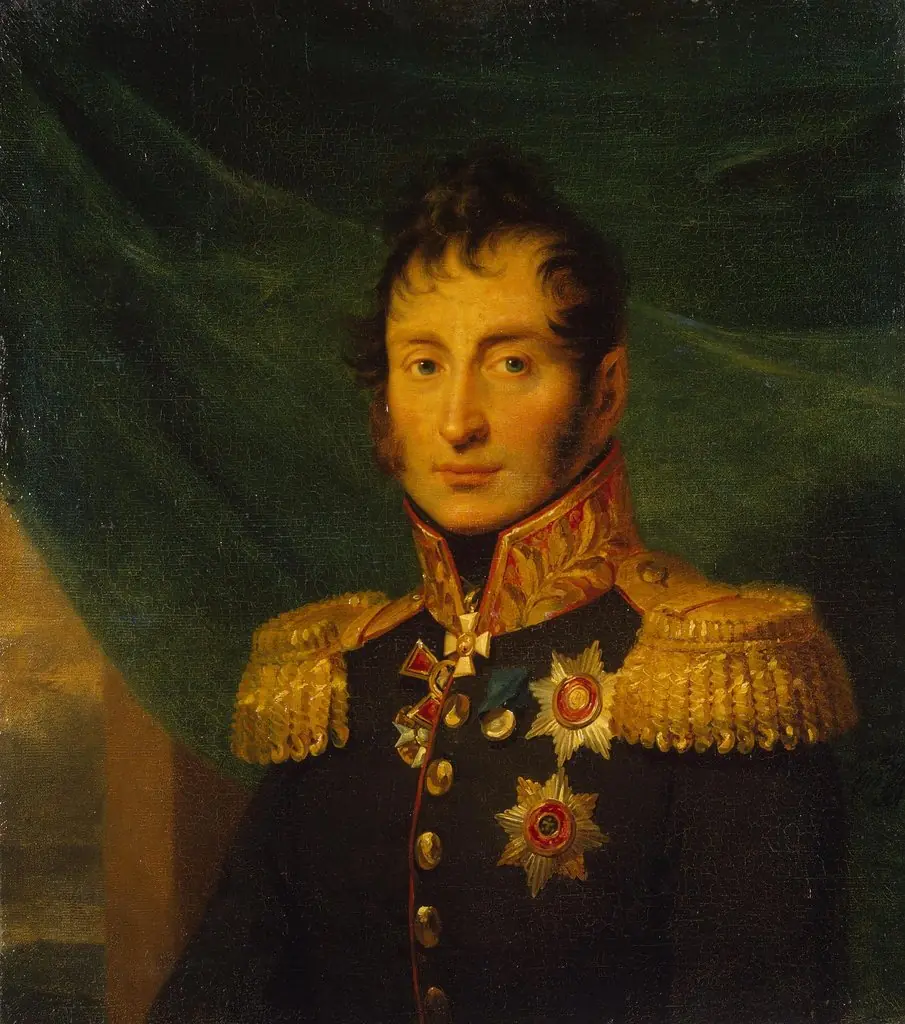 Portrait of Nikolai A. Tuchkov (1765-1812) (1st)